The Spectator

What are online shoppers most likely to snap up?

From our UK edition

Price of protest Greenpeace was fined £80,000 for defying a court order and occupying an oil rig in the North Sea. What else have protestors been fined for in Britain in recent times? £750 for spray-painting a war memorial in Whitehall in a climate change protest. £430 for spraying slogans on a pavement against Barclays, accusing it of investing in fossil fuels. £400 for eating a raw squirrel at a vegan food market in Soho. £150 for chaining themselves to the gates of a nuclear submarine base. Travel money The tourism industry is opening up again. Who spends the most: Britons holidaying abroad or overseas tourists coming here? — In the 12 months to August 2019 there were 71.6 million trips abroad by UK nationals. In all, they spent £46.

The danger of the Facebook boycotts

From our UK edition

The printed press is not a natural ally of Facebook. Silicon Valley publishers have hoovered up so much advertising that they are seen by newspapers as a mortal enemy. Facebook chief Mark Zuckerberg has ended up with more power over people’s attention than any press mogul. A slight change in his algorithms can direct millions towards any publication or argument. Facebook might not want to be seen as a publisher (especially one that did so much to enable Donald Trump, for instance) but it has ended up becoming the biggest player in the information wars. So when certain advertisers started to pull out of the social media platform — citing the ‘divisive’ content it hosts — newspapers were thrilled. The reaction is understandable, but misguided.

Portrait of the week: Boris does press-ups, pubs reopen and Leicester locks down

From our UK edition

Home Boris Johnson, the Prime Minister, said he was ‘as fit as a butcher’s dog’ and did press-ups to prove it, as he announced infrastructure initiatives to counter the economic crisis brought on by the coronavirus outbreak. With a slogan ‘Build, build, build’, he made a speech in Dudley promising £1.5 billion for hospital improvements and planning changes to make loft extensions easier. Pubs were allowed to open from 4 July, after a fashion, with table service, as were restaurants. Churches could hold services without singing and newlyweds were told to wash their hands after exchanging rings.

Letters: Police must focus on deterring crime, not responding to it

From our UK edition

Deterring crime Sir: Rod Liddle is right to highlight the politicisation of the police as a source of their inadequacies, but I think he misses the crucial point (‘Defund the police’, 27 June). We simply do not have bobbies on the beat to even feel sympathy for, and this means that constructive relationships between a recognisable police officer and their community are a rarity. As Kevin Hurley describes, many black youths in our cities have nothing but hatred towards police officers, and this cannot be a surprise when the only interactions they have with them are being forced to empty their pockets after being suspected of criminal activity.

Portrait of the week: Lockdown eases, debt rises and three killed in Reading

From our UK edition

Home Pubs in England would be allowed to reopen for table service from 4 July, Boris Johnson, the Prime Minister, told the Commons, his words being met by an exclamation from one MP of ‘Hallelujah’. But drinkers would be expected to supply names and addresses before being served. Restaurants, museums, galleries, cinemas, hotels and hairdressers could also reopen, but not bowling alleys. Churches could reopen for services, including weddings, with a limit of 30 people, provided no one sang. The ‘two-metre rule’ was reduced by way of advice to one metre, to be combined with mitigating measures, such as facing in different directions. The government discontinued its daily televised briefings.

Which former prime minister earns the most for corporate speeches?

From our UK edition

Voyage into history How did the Labour government respond to the arrival of the Empire Windrush on 22 June 1948? While the ship was at sea, Prime Minister Clement Attlee tried but failed to have it diverted to East Africa so that its passengers could work on the groundnut scheme. He later wrote to concerned MPs that it was ‘a great mistake to regard these people as undesirable or unemployables. The majority of them are honest workers, who can make a genuine contribution to our labour difficulties at the present time.

Letters: Churches have risen to the challenge of lockdown

From our UK edition

Back to schools Sir: I share Lucy Kellaway’s enthusiasm for seeing school-life return and inequality gaps closed (‘A class apart’, 20 June). I was also glad that she debunked the myth that teachers have been on holiday during lockdown. It doesn’t feel like a holiday to me, as I sit contemplating a set of essays, the second set of predicted grades of the year and my annual Ucas references, not to mention daily work postings, live sessions on Microsoft Teams, Zoom staff meetings and a long list of emails. Where we depart is at Lucy’s call for a return to school at all costs, rather than the ‘blended learning’ approach she decries.

2460: Sleaze solution

From our UK edition

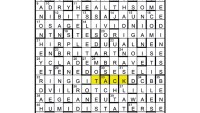
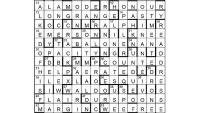
The word is TACK. In the order of the headwords in Chambers, except for the fifth, their meanings are indicated by: COURSE OF ACTION (1A), BITS (12), COMESTIBLES (16), ACUTE NOISE (33/24), LEASED TENEMENT (42) and DISTINCTIVE FLAVOUR (10/5). TACK in the tenth row was to be shaded. The title indicates the fifth headword’s meaning.

Britain must begin its recovery – before more damage is done

From our UK edition

The discovery in Britain that a £5 steroid, dexamethasone, can be effective in treating Covid marks a potential breakthrough in our understanding of the virus. Much remains to be learned about the wider potential of the drug but the claims made about its success are striking: that it reduces deaths by a third in patients on ventilators and by a fifth in patients receiving oxygen only. It has not been shown to benefit Covid patients who do not require oxygen. But this can still, in a global pandemic, mean thousands of lives saved. There are two further points to be made. With Covid-19, there is a better chance of finding a treatment for the virus than of finding a vaccine.

2459: 22 down solution

From our UK edition

22D was TABLEWARE, and the quotation from Ralph Waldo Emerson reads: ‘The louder he talked of his honour, the faster we counted our spoons.

Made to measure: where did the metre come from?

From our UK edition

Made to measure The government started reviewing whether we should stay two metres apart while social distancing or whether one metre would do. What is a metre? — Since 1960 it has been defined as the distance travelled by light in a vacuum in 1/299,792,458th of a second. — But it was originally defined by the post-revolution French government as one ten-millionth of the distance between the Equator and the North Pole, on a meridian through Paris. — The signing of the Metre Convention on 20 May 1875 by representatives of 17 nations officially established the metre as an international unit of measurement. — If everyone in Britain joined the queue for Primark it would go 1.6 times round the Earth with social distancing at one metre, and 3.

Letters: Did Bristol really want to see Colston fall?

From our UK edition

Hong Kong’s success Sir: Carl Heneghan and Tom Jefferson are right to compare the UK’s Covid-19 response with Hong Kong’s (‘Who cared?’, 6 June). We write as UK-trained emergency physicians, who have worked as specialists in both the UK and Hong Kong. In many ways, the economic and healthcare contexts are similar. The majority of care is delivered at minimal cost to the patient at the point of care; we share similar per capita GDP and human development indices. But we responded very differently to Covid. In Hong Kong, initially all patients with possible Covid were admitted to hospital until they tested negative. No one with suspected Covid was transferred to care homes. Healthcare staff, patients and the public routinely wear surgical masks.

Covid-19 update: Did Sweden have a choice?

From our UK edition

The Spectator brings you the latest insight, news and research from the front line. Sign up here to receive this briefing daily by email, and stay abreast of developments both at home and abroad. News and analysis The government has granted the NHS immediate authorisation to use dexamethasone, the 50p a day steroid that Oxford University researchers say can cut Covid-19 deaths by a third for patients on ventilators. Ross Clark has the details.Keir Starmer confirmed in PMQs today he believes it is safe for children to return to school. James Forsyth has the details below.More than half of businesses plan to make redundancies within three months of the government’s furlough scheme expiring.

Covid-19 update: £5 steroid could cut coronavirus deaths by a third

From our UK edition

The Spectator brings you the latest insight, news and research from the front line. Sign up here to receive this briefing daily by email, and stay abreast of developments both at home and abroad. News and analysis Researchers at Oxford University have said that a £5 steroid can cut Covid-19 deaths by a third.The number of people claiming work-related benefits has jumped to 2.8 million while 600,000 people have lost their jobs since March. Kate Andrews has the details below.The Department for International Development is set to be merged with the Foreign Office, which will control the £14 billion aid budget. James Forsyth explains on Coffee House.

Covid-19 update: Is London now virtually Covid free?

From our UK edition

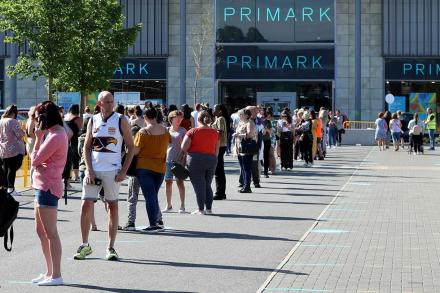
The Spectator brings you the latest insight, news and research from the front line. Sign up here to receive this briefing daily by email, and stay abreast of developments both at home and abroad. News and analysis Shops reopen in England today, with long queues outside stores like Primark (see photo below). The government is considering lowering VAT to lure back nervous shoppers, according to the Times.More than one million people have not been able to receive any support from government coronavirus schemes, according to the Treasury Select Committee.Antibody tests used by the government could miss up to 25 per cent of coronavirus cases.Controls to stop the spread of Covid-19 in hospitals were relaxed at the height of the crisis, according to a report in the Telegraph.

Portrait of the week: Schools stay shut, Colston tumbles and bell tolls for Japan’s bike bells

From our UK edition

Home The government lurched uncertainly in dealing with coronavirus. Not all years in primary schools would after all return before September, and secondary schools perhaps not even then. A 14-day quarantine was imposed on people entering the country. Churches could open for individual prayer from 15 June, as could shops of all kinds. Pubs, restaurants and hairdressers would have to wait until 4 July at the earliest. Face coverings were made obligatory on public transport from 15 June. The number of workers furloughed reached 8.9 million, and 2.6 million more had made claims under the Self-Employment Income Support Scheme. The drug company AstraZeneca began to make a planned two billion doses of a coronavirus vaccine while trials proceeded on its safety and efficacy.