Tanya Gold

Tanya Gold

Tanya Gold is The Spectator's restaurant critic.

The best lamb in London: Blacklock reviewed

From our UK edition

Blacklock is the fourth restaurant of that name – there are others in Soho, Shoreditch and the City of London. It sits in a former royal coach-makers in an alley near the Garrick Club under signage that says ‘Chop’. We descend to a cavern. The walls are exposed brick, the floors are dark wood, and the ceiling hangs over exposed pipework. There is a map of a more ancient and more interesting London on the wall, from the days in which chop houses were as common as raw sewage, or horses. It’s fiercely brown; committed to brown; washed with brown: chairs, tables, light fittings, food. There are tables of men looking expansive like Italian rugby fans. They love Blacklock for its brownness, its simplicity and its blood.

The social cost of Cornwall’s second home boom

From our UK edition

Cornwall has a boast this week and it has nothing to do with ice-cream or tides: we have made more than 2000 offers to house Ukrainian refugees. I am not surprised. The duchy is filled with second homes, and they are very often empty. Harboursides are dark in winter and the old town in St Ives is no more than a monied ghetto now. Cornwall is now more of a business than a place, with an owner and a servant class Since the war began it is often said that it is easier to offer refuge to those closest to you. The Polish don’t want Syrians, for instance, but they want Ukrainians. In Cornwall the opposite is true.

Food ruined by an existential crisis: Fallow reviewed

From our UK edition

I was going to be jolly this week, for variety and denial, but I changed my mind. Instead, I wonder if, when Vladimir Putin – insert your own nickname, mine is unprintable – talks about the weakness of western civilisation (I paraphrase) and, therefore, our unwillingness to resist tyranny in the shape of a balding paranoiac unwisely given Botox by a beautician who lied to him because everyone lies to him, he means Fallow, which is a new restaurant in St James’s. I wonder if Putin has been to Fallow wearing a prosthetic head and, if so, did he do the soft launch or the hard one? Did he steal more hair? He has stolen so much money from Russia he could afford a room full of prosthetic heads each with their own hair. (You can buy hair on racks at wedding shows.

The cult of the convertible

From our UK edition

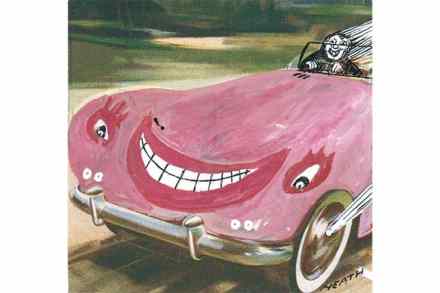
The earliest cars were technically convertibles because the technology to fit a roof did not exist. Now the dedicated retractable hardtop roof convertible is a century old – invented in 1922 and transported to America after the war because GIs loved them. These are cars of pleasure, and we know it: less than 2 per cent of cars sold are convertibles, which seems to me insane. The early ones – the MG Midget, the Triumph Roadster, the Jaguar XK150 – are the most beautiful, but they are not as safe as a Volvo. What is? I borrowed a pink Morgan LMV6 Roadster once, and my father drove me down the A4 from South Kensington to Richmond Park, muttering about death all the way. I borrowed it again and, on the way back to London, the man who delivered it crashed.

A victim of its own mythology: Langan’s Brasserie reviewed

From our UK edition

Langan’s, a brasserie off Piccadilly with curling orange neon signage calling its name, is under new management after it fell into administration in 2020. It is a famous brasserie — London’s version of La Coupole — once owned by Michael Caine, a famous actor, and Peter Langan, a famous drunk, who would crawl across the floor and bite customers’ ankles and who once put out a kitchen fire with champagne. It opened in 1976 on the site of Le Coq d’Or and was treated by the diary columns as a person in itself, as famous as Annabel’s, Peppermint Park and the Ritz Hotel. Lucian Freud and David Hockney and Princess Margaret came here.

An ecstatic piece of Americana: the Ford Mustang GT V8 reviewed

From our UK edition

I’m not sure how a family of Warsaw bakers – my own – ended up in the northeast of England, specifically Sunderland, in England in the 1860s. The family myth – and it is a myth, because we have absolutely no evidence for it – is that they planned to take ship for America, but were dropped off in Sunderland, having been assured it was New York City. Perhaps it was a foggy day. And if it wasn’t, how would they know it wasn’t New York City? This myth is powerful though. Growing up in Surrey, as I did, will do that to you. Dreaming of other lives is narcotic.

Pass on Piggy’s, head to Hide: central London breakfasts reviewed

From our UK edition

The centre could not hold, at least for Piggy’s. The drama of being the only greasy spoon in the West End — in Air Street, of all places — was too much, and it swelled, panicked, and fell apart. Yesterday I ate a mean sliver of almost cold bacon inside hard white supermarket bread. The butter had fled, possibly in the night, possibly with its luggage. There is a good, cheap bacon sandwich — I would argue the cheap bacon sandwich is the only good bacon sandwich — but it must have soft bread, crispy bacon, and butter as plentiful as a lover’s heart. This wasn’t it.

Nothing beats bathing in Bath’s waters

From our UK edition

As beautiful as Bath is, it is more interesting underground. This is where the ruins, the gods, and the waters are: the steps to the temple of Sulis Minerva near the Pump Room, the Victorian tunnels, and, in the eerie plant room below the Gainsborough Bath Spa Hotel, the water from the ancient springs, waiting to be purified before it flows into the Gainsborough’s private baths. The three springs of Bath – The Cross, the Hetling and the King’s – formed when rainwater fell on the hills 10,000 years ago, descended 2500 metres and rose through the limestone to the city. They produce one million litres a day, at a temperature of 45-46 degrees, and are filled with minerals: sodium; calcium; sulphate; chloride; magnesium; iron.

A ghost at the feast: The LaLee at the Cadogan hotel, reviewed

From our UK edition

The Cadogan hotel, Chelsea, is where Oscar Wilde was arrested for sodomy and gross indecency in 1895, in Room 118, which is now memorialised as the site of the arrest. Institutional homophobia is a weird thing to commemorate in fabrics, but everything is a tourist attraction these days. The hotel is a tall red late-Victorian castle incorporating neighbouring houses, one of which belonged to the actress and mistress of Edward VII, Lillie Langtry. It was, then, a hotel for betrayal on the corner of Pont Street. John Betjeman mentions this in his poem ‘The Arrest of Oscar Wilde at the Cadogan Hotel’, and offers disaster PR of a timeless kind: ‘More hock, Robbie — where is the seltzer?/ Dear boy, pull again at the bell!

Spectator Out Loud: Nick Moar, Tanya Gold, Cindy Yu

From our UK edition

14 min listen

On this week's episode, we'll hear from Nick Moar on Twitter’s decision to suspend Politics for All.Next, Tanya Gold on the importance of chicken soup. And finally, Cindy Yu who has reviewed The Kingdom of Characters, a book on Chinese language.Subscribe to The Spectator today and get a £20 Amazon gift voucher:spectator.

The secrets of chicken soup

From our UK edition

Catherine Chicken is sickly. She has swollen up like a barrage balloon with an evil face and dinosaur feet. She lumbers about. It is peritonitis, the vet says, after I make my husband drive her to the animal hospital in Falmouth. She will not recover without an implant that prevents her ovulating. Chickens are ever in danger of reproduction, like human women, and that is why I find them so touching. They are feathered paradigms. (There is a novel on this called Brood.) They counsel implants on the chicken welfare site — they counsel deification on the chicken welfare site — but it’s £250 for a chicken that cost less than a tenner, and my husband is from a farming family and says he couldn’t live with the shame.

The best schnitzel in London: Schnitzel Forever reviewed

From our UK edition

It is a truism that there is never enough schnitzel (‘slice’, German); or, rather, schnitzel does not get the attention it deserves. Restaurants do serve it, of course. Fischer’s does a fine Wiener schnitzel, as part of its riotous pre-war Vienna tribute act, and elderly people, I am told, queue for it while wearing slankets. Brasseries sell it often: the perhaps unconscious desire to re-enact the meals of the Weimar Republic is one of the stranger things of the age. The Coffee Cup in Hampstead serves it with a jaunty side order of spaghetti pomodoro. But the (chicken) schnitzel has never had the stardust of the less interesting but more widely beloved hamburger; perhaps it is because cows are bigger.

The Audi e-tron GT: stylish enough to tempt Prince William

From our UK edition

2030 is the deadline: the end of petrol cars in Britain. Because nothing lasts forever. 'This may be the last petrol car that I design,' said a British marque designer, sketching lines on a napkin wistfully. I threw the napkin in a trunk in the attic for memorial. I have become addicted to petrol cars in these last years because they are so conventionally masculine: driving them feels like theft, and it is mind-altering. If you don’t agree, drive an Aston Martin DB11 round a small bend. It will change you. I could write about the unspoken, unconscious joy of polluting – if you trash a planet it won’t forget you – but, like me, you are probably here for the car. So, electric. So far, I have only driven a Tesla model X.

Will the real Mel Brooks please stand up?

From our UK edition

‘I went into show business to make a noise, to pronounce myself,’ Mel Brooks told Kenneth Tynan in 1977, in a New Yorker profile entitled, with appalling relish, ‘Detours and Frolics of a Short Hebrew’. ‘I want to go on making the loudest noise to the most people.’ His memoir All About Me! may be his final act of this pronunciation. He is 95. His real name is Melvin Kaminsky but that wouldn’t fit on a drum — a drum is his natural instrument — and he shortened it to Brooks. He was the youngest of four boys of Max and Kate. His father died when he was two, and Mel created Maxes wherever he could — Max Bialystock in The Producers, a man too vivid to be forgotten; and a son with Anne Bancroft, Max Brooks.

The torment of a tasting menu: Hélène Darroze at the Connaught reviewed

From our UK edition

The Connaught Hotel’s formal dining room was always, to me, a place of childish myth; more comforting for being mythical. I am certain it is the dining room in Judith Krantz’s novel Princess Daisy, to which a Russian prince takes his daughter in the 1970s. In this tableau you find Robert Maxwell, Margaret Thatcher and people willing to pay for newspapers. I had, in a crowded field, my best ever celebrity encounter here, with the Netanyahus, in what used to be the breakfast room overlooking Carlos Place. ‘Shalom,’ I said, thrilling to the Waspy-ness we were subverting with our very presence. (I meant it. I meant it more than they did. I think that is clear.) ‘Shalom,’ Mrs Netanyahu said back. That was it.

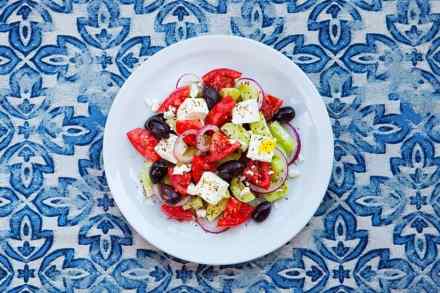
The best Greek salad I’ve ever tasted: INO Gastrobar reviewed

From our UK edition

Soho is so gilded nowadays that even drug addicts look down on it. The wasteland without must match the wasteland within. That is harmony. Soho is not a wasteland now: it is no longer that interesting. It is, rather, a shopping district with restaurants and hotels: whimsical, trivial, overpriced. People say it is our youth we lament when we moan about Soho, not the filthy streets we lay in and were fond of, but I am not sure if this is true. Every great city needs a district for wanking and sobs. But this is not it, not anymore. The gateway under the grand hotel by Piccadilly is now an Ugg shop and I have not seen an Orthodox Jew leap into a sex shop with a great, subversive skip — he was vaulting through cultures, after all — for years. Those days are over.

A small victory in a bad year: José Pizarro at the RA reviewed

From our UK edition

Piccadilly is losing its patina of dirt, its cadaverous character. It is overpriced and over-renovated,a meeting place for luxury goods. Perhaps I cannot forgive it for not actually containing Dracula’s ‘malodorous’ house; but who has a resentment against a street except this column and Hillary Clinton, who set a terrorist attack here in her new novel State of Terror (written with Louise Penny), which describes her resentment towards Donald Trump through the prism of genre fiction? Piccadilly does, though, now have three excellent restaurants: HIDE; the Wolseley; and José Pizarro at the Royal Academy of Arts, which opened this summer. I am used to good art and bad food: one can’t have everything.

The Toyota Land Cruiser Invincible: a formidable rival to Land Rover

From our UK edition

In the latest James Bond movie, which passes for the National soul – though I think Roald Dahl was closer to nailing it – a Toyota Land Cruiser Prado wins a fight with a Land Rover Defender in Norway. Or rather two Land Rover Defenders. Out they bounce from forest to stream and back to forest. Kiss-kiss, bang-bang, snort, rattle. I long to know what conversations marketing executives have with the Bond franchise. Do you pay to have your car win a fight with a commercial rival? And, if your car doesn’t win, can at least it be beaten by a minimum of two cars, and one of them not a Kia? And, do they get it in writing?  At the end of the car fight, the minor villain ends up crushed by his own Land Rover Defender. From COP with love, you might say.

Mary Wakefield, Lloyd Evans, Tanya Gold

From our UK edition

17 min listen

On this week's episode, we’ll hear from Mary Wakefield about the pattern of misandry in modern media. (00:48)Then Lloyd Evans on the British tradition of the pub theatre. (07:19)And finally, Tanya Gold on getting drunk on tiramisu. (13:55)Produced and presented by Sam HolmesSubscribe to The Spectator today and get a £20 Amazon gift voucher:spectator.

Sentenced to chicken: NoMad reviewed

From our UK edition

NoMad is a new hotel in what used to be Bow Street Magistrates’ Court: a preening piece of mid-Victorian classicism opposite the Royal Opera House that is clearly too fine for the half-hearted criminal classes these days. I was judged in this court once for the very boring crime of cannabis possession (I think I did it), as was Giles Coren for something else (he says: ‘I never done nuffink’), General Pinochet, Dr Crippen (VeryMad) and Oscar Wilde. It heard its last case in 2006: the breaching of an Asbo by a man called Jason. Now it sells cocktails. NoMad has a restaurant named, as if in homage to a public relations panic attack, the NoMad Restaurant. (I thought NoMad was named after a refugee but I checked and I was wrong.