Tanya Gold

Tanya Gold

Tanya Gold is The Spectator's restaurant critic.

My steak cooking lesson turned into a sitcom

From our UK edition

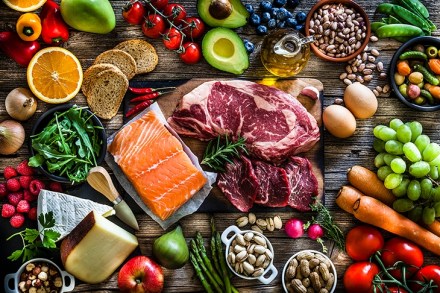
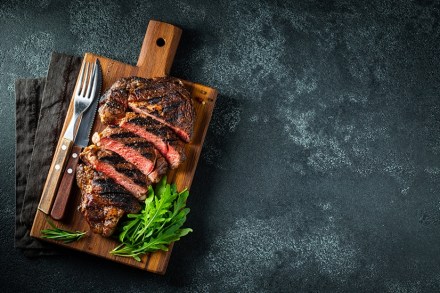
Pandemic has brought many truths, the most minor of which is: I can’t cook steak. I thought I could. I burnt butter and seared meat and — lo! — perfect steak. Then I asked Matt Brown, the executive chef at Hawksmoor, the best steak restaurant in London excepting Beast (and Beast is a charnel house and a metaphor, and it is weird) to help me improve my steak in a Zoom lesson and — lo! — I cannot cook steak. I was kindly disposed to Hawksmoor because of its name. Names are important. I have fallen in love with people because of their names. Hawksmoor is the real hero of the English Baroque. You cannot review a name though. You cannot eat a name. But you can review the breakfast at the Guildhall branch. (There are nine branches now.
A great Dane: Snaps + Rye reviewed

From our UK edition

Snaps + Rye is a Nordic-themed restaurant and delicatessen on the Golborne Road, at the shabby and thrilling edges of Notting Hill, just north of the Westway, a road I uncomplicatedly love, probably because it takes me from Notting Hill to places I like better. Notting Hill fell to gentrification long ago — it gasps with boredom — but here London feels like a real city, though only just. ‘This home is not a shop,’ says a sign in a nearby window, with as much feeling as signage can muster. Or should muster. ‘Nothing is for sale.’ It is a bitter time for restaurants and those who love them.

Stringfellows with fish instead of women: Sexy Fish reviewed

From our UK edition

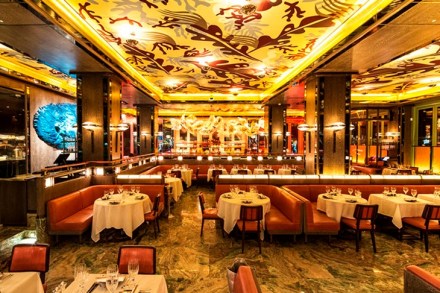
Sexy Fish is an Asian fusion barn in Berkeley Square, near the car dealerships and the nightingales, if they are still alive. It used to be a bank — NatWest! — and it still feels like it cares for nothing but money, even as it deals in sticky chicken, which means a good deal more than money to chickens. I wonder whether the blazing vulgarity of such restaurants — it has a large mirrored crocodile crawling up the wall, and that is the subtle part — will survive the terror of Covid-19, or whether it will go the way of the Russian Tea Room in New York City, which is empty apart from a glass dancing bear. We are initially refused entry due to my companion’s flip-flops.

Returning to what makes us happy: Brasserie Zedel reviewed

From our UK edition

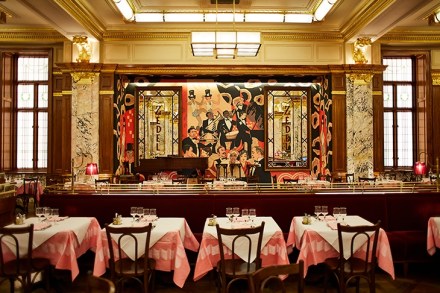
Brasserie Zédel is a grand salon under Piccadilly Circus and the only place I desired when lockdown (or lock-in) ceased and I was allowed to visit London. It is, for me — and everyone is different in their yearnings — everything a restaurant should be: very beautiful; well run (by Corbin & King of the Wolseley and the Delaunay); not insultingly priced; and, as it is windowless, pleasingly unreal: an enchanted basement, if you will — a depository for dreams. I arrive early on the first night, walking through silent London, resisting the urge to lie down in the road. This used to be the Regent Palace Hotel, the grand hotel of Soho. The restaurant was its dining room: Edwardiana at its most gilded and absurd.

Drive-in cinemas are back – but for how long?

From our UK edition

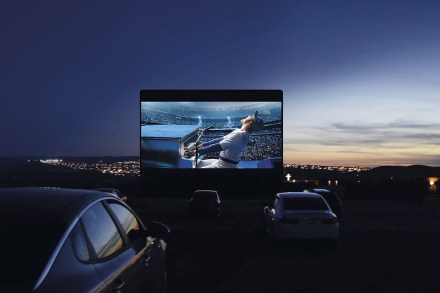
Pandemic creates the oddest phenomena: here, for instance, is a British drive-in cinema. They exist for people who won’t go to a conventional cinema for fear of infection, which sounds like a film in itself. But that is the charm: attending a drive-in cinema feels like living inside a film, because every British drive-in cinema until now has failed.

Can a chef teach me to cook over Zoom?

From our UK edition

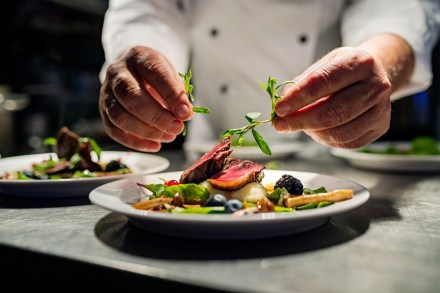
We cannot bear more drive-through or take-out or near-fatal snack. I am convinced of the boredom of my female ancestors, which is another truth pandemic threw out, and eventually all gags run out to dust. I am happy to leave my review of Penzance McDonald’s where it belongs, which is unwritten. Food is love after all; or it should be. So I email Ollie Dabbous, formerly of Dabbous, now of Michelin-starred Hide and the most gifted chef working in Britain today. His food looks exquisite but — and this is unusual — it tastes better than it looks. He says he will give me a cooking lesson on Zoom from the kitchens at Hide. He sends over menus.

More drug than nutrient: KFC drive-through reviewed

From our UK edition

Drive-through restaurants were invented so Americans could spend more time in their cars. I don’t blame them. American cars are wonderful if you like cars with fins; so, in theory, is fast food, which is more accurately called fast death, even if they did not know that in 1947. There is a contradiction to the drive-through method of collecting food, a puzzle: if you drive, you have time to wait. But such things are not designed to be sensible. I wonder what other services could be made drive-through: lawyers and podiatrists, but my preference is for libraries and, possibly, sex. These restaurants have thrived in pandemic, which again contradicts the Twitter craze for slow food and banana bread, which I think is a media invention, like the PM.

Audio Reads: Fraser Nelson, Douglas Murray, and Tanya Gold

From our UK edition

14 min listen

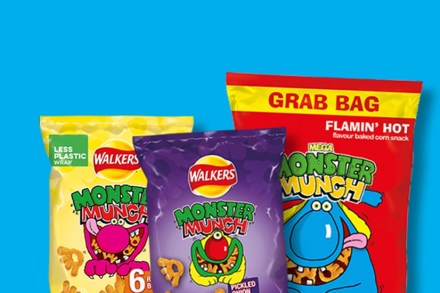
Fraser Nelson reads his cover piece campaigning for the British government to offer citizenship to the Hong Kong Chinese; Douglas Murray asks - why do the Black Lives Matter protestors get to be exempt from the lockdown? And Tanya Gold reviews: Monster Munch.

Repulsive, depraved and oddly political: Monster Munch crisps reviewed

From our UK edition

Now that I have considered Monster Munch I decide to eat one mindfully. I put it in my mouth, and it is as if I can taste it for the first time. It is repulsive, and I feel cheated. This is, then, an intervention. My husband wrote in these pages that I am always watching Spooks and eating Monster Munch. It was a giggle that went on for 400 words but is eating Monster Munch really so depraved? Doesn’t Jay Rayner eat Skips in the darkness when he is alone? Didn’t A.A. Gill eat Frazzles? I know I do, but only when I am depressed — which is quite often these days — and then I wish I hadn’t. I could say I eat Monster Munch for the metaphor. I will do almost anything for metaphor I could say I do it for the metaphor.

The horror of socially distanced restaurants

From our UK edition

What does a critic do when her genre collapses? Mostly I panic. I speak to restaurateurs who believe that without government help into 2022, many British restaurants will close. Most restaurants rent their premises; even if landlords defer collection, the debt will be unpayable. Most restaurants operate on slender margins; they cannot secure finance even in happy times. It is a scandal that the government has excluded monies from the service charge ‘tronc fund’ from the 80 per cent calculations in the Job Retention Scheme, even though it has received National Insurance contributions on it for years, and many restaurant staff are getting only 40 per cent of their earnings. Restaurants predict a summer slaughter. What will survive?

Hope in a takeaway bag: Mackerel Sky reviewed

From our UK edition

You don’t dine in the age of pandemic: you scuttle about in the wreckage. If you can afford food, and you aren’t afraid of your neighbours, who don’t understand the government strategy and believe that if they stay indoors for eight years they will survive, and so should you, you can eat out; or rather you can collect takeaway in the comforting dusk. It is not because I want the food. My husband, with whom I re-enact Sunset Boulevard in lockdown, each taking it in turns to be crazy Norma or Max the butler, is a superb cook. It is that I want local restaurants to survive. It is my version of painting a rainbow in a window and calling it political activism, which it isn’t. It is praying with crayons.

Fare game: life as The Spectator’s restaurant critic

From our UK edition

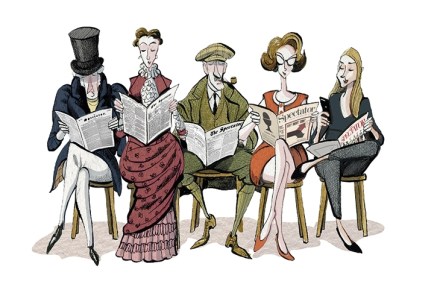
A fictional Spectator restaurant critic called Forbes McAllister appeared on Knowing Me, Knowing You with Alan Partridge. He was played by Patrick Marber and was obviously based on Keith Waterhouse — bow tie, mad eyes — even if Waterhouse was never the restaurant critic at this magazine. McAllister was on TV to show off Lord Byron’s duelling pistols ‘and a lock of his stupid hair’. He bought them to annoy Michael Winner, then restaurant critic at the Sunday Times. ‘Are you entirely motivated by hatred?’ Partridge asked McAllister. It was his best ever question. ‘Yes, I think I am,’ said McAllister. ‘Rather perceptive of you. I hate you.’ Partridge then shot McAllister with a duelling pistol, and he died.

Much of it is pointless, but that only adds to its charm: Fortnum & Mason hampers reviewed

From our UK edition

Stop the clocks: Fortnum & Mason is still delivering hampers. I am not surprised, because this shop — or rather this myth disguised as a shop — sold condiments to the Empire, and it wouldn’t let a global pandemic thwart the consumption of those condiments. It was among the earliest fans of globalisation, which is now something I have to explain to my son. He doesn’t understand globalisation, although he knows some dogs come from abroad. He does understand a Fortnum & Mason hamper though; he knows it is a consolation, although he wouldn’t call it that. As soon as the lockdown began, I ordered an Easter basket and an Easter egg.

There’s nothing romantic about Cornish fishermen, whatever tales they may spin

From our UK edition

Lamorna Ash came to the fishing port of Newlyn in south-west Cornwall to write a memoir. This is not unusual. There is a tendency, as old industries die, to watch them covetously and with awe; to paint them a paradigm of all that is lost. In the 19th century, fishwives posed for the artists of the Newlyn School on the quayside. Today, journalists are found at the Star Inn, which featured in Gavin Knight’s The Swordfish and the Star, buying pints for Ben Gunn, a ‘celebrity’ fisherman, for a tale. Ash is a woman who can lose herself ‘along the simplest of paths’. She immerses herself in the real Newlyn, which is doughty, and the Newlyn of her imagination, which is mournful and filled with legends.

Audio Reads: Douglas Murray, Tanya Gold, and Mark Mason

From our UK edition

17 min listen

The Spectator is meant for sharing. But in the age of coronavirus, that might not be possible. This new podcast will feature a few of our columnists reading out their articles from the issue each week, so that you don't miss out. It's a new format, so tell us what you think at podcast@spectator.co.uk.Douglas Murray asks, where do we find purpose? Tanya Gold writes on the Cornish revolt against second-home owners, and Mark Mason's gives tips from history on working from home.

Dining in the time of pandemic: takeaways reviewed

From our UK edition

I love eating while watching bad films like Battleship, so I love takeaway food from local restaurants. I am not rich enough to like the idea of takeaway from Simpson’s in the Strand and a plastic lid does not have the drama of a silver-plated dome. But eating takeaway food while watching Battleship is not my job, or at least it wasn’t until now, in the era of pandemic. The fine restaurants shuttered swiftly but the local restaurants offered takeaway, and I supported them. It is not indolence to order takeaway in the time of pandemic and, if you don’t, when this is over there will only be either Simpson’s in the Strand or KFC and Domino’s Pizza, and that is not a world anyone would wish to live in.

The Cornish revolt against second-home owners

From our UK edition

It was sunny on Monday so I took the children swimming in Mousehole harbour. It was almost empty but a woman sanding a boat on the quayside scowled at me. She couldn’t hear the children’s Cornish accents, which might tell her that I live here. There have been tensions for years between native Cornish and the incomers who buy houses and drape them with nautical-themed junk. With pandemic, they have developed into hostility. A sign appeared on the bus stop in Mousehole: ‘If you have travelled from a hotspot area outside Cornwall (like London) you are putting vulnerable people in this village at risk of death. Please come back when the virus peak has passed, until then travel is selfish and unkind.’ But it was grey and windy that day, and the sign blew away.

How I became Miss World 1970

From our UK edition

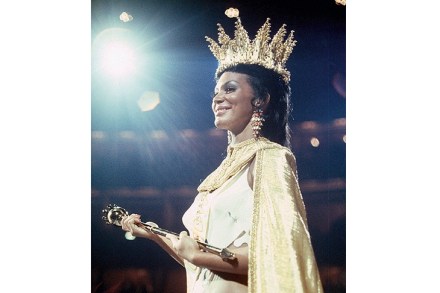
‘Miss World 1970’ is the rather glorious title that Jennifer Hosten won. That was the year that the contest, then the greatest show on earth, was disrupted by feminist activists, who threw flour bombs at the host, Bob Hope. It is retrospectively called the foundation of the woman’s movement.The immediate trigger was Hope’s gag that he was happy to be in a ‘cattle market’, after which he mooed. The contest, and the protest, now dramatised in the film Misbehaviour, stars Keira Knightley — a world-class beauty — as Sally Alexander, the feminist leading the attack on the objectification of women that Miss World embodies.

A tax on intellectuals: Terrace Cafe at the British Library reviewed

From our UK edition

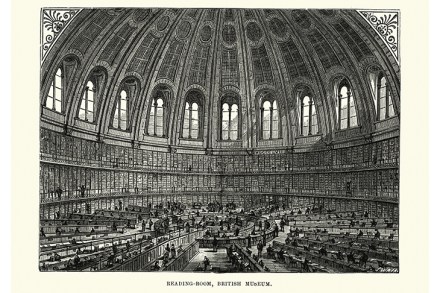
The British Library is the national library of the United Kingdom, and it sits like a red-brick crab on the Euston Road, on the site of an old goods yard between St Pancras and Euston. The older British Museum Library, whose collection was founded on the books of George III, Sir Hans Soane, Robert Harley and Sir Robert Cotton, was in the British Museum, but that gorgeous reading room is now a glass atrium with overpriced cafés and shops selling historical tat for children: cultural vandalism, then, and incitement to migraine. Instead we have the red-brick crab. It was opened by the Queen in 1998 and it is Grade I-listed, so, unless there is a war, we are stuck with it. Perhaps architects don’t read books. When I look at this library, I wonder if they have eyes.