Tanya Gold

Tanya Gold

Tanya Gold is The Spectator's restaurant critic.

‘I wanted to lie face down in the hummus’: Erev reviewed

From our UK edition

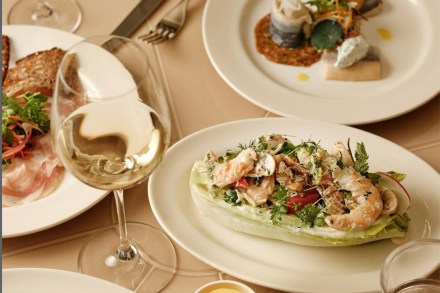
Erev is an Israeli restaurant in Notting Hill, though Israeli restaurants do not call themselves Israeli nowadays. They have rebranded to Eastern Mediterranean and I don’t blame them. These are bad days for Zionists. I tried to buy an almond croissant at the progressive coffee shop in Newlyn last week while wearing an Israeli flag as a cape. My excuse was: it was election day, and Gaza was on the ballot. I didn’t get the almond croissant. They didn’t have any. Erev, though, is the subject of real protests from real people who think that eating is, under certain circumstances, a genocidal act. They stand outside and shout at diners. If you think genocide and restaurants have nothing to do with each other, meet 2026.

Why non-Jews didn’t come to the Extinguish Antisemitism rally

From our UK edition

The internecine fights before the Extinguish Antisemitism rally in Whitehall are typical of British Jews, who tend to only speak with one voice when we think people are listening.  The Campaign Against Antisemitism had originally planned to demonstrate separately from the Board of Deputies, the Jewish Leadership Council, Stop the Hate and the Office of the Chief Rabbi, so there would be two rallies in two days. That is a variant of a Jewish joke: a Jew on a desert island builds two synagogues, one to attend, and one to refuse to set foot it. It’s not funny anymore, and someone backed down. The rallies merged. We are told that most of the country is with us.

‘A constant good in this world’: Simpson’s in the Strand reviewed

From our UK edition

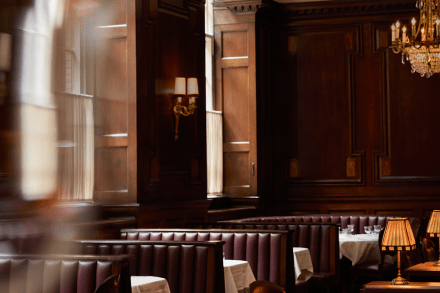
Simpson’s in the Strand is a dream palace, and its fortunes are as tidal as the river. It is on the site of John of Gaunt’s Savoy Palace, destroyed in the Peasants’ Revolt. It began as a cigar divan and chess club, was subsumed into the Savoy Hotel, built with the profits from The Mikado, and was beloved by Churchill and Wodehouse, who described it as an Elysium where you were ‘at liberty to eat till you were helpless, if you felt so disposed’. It then decayed. I’ve come here for 30 years and, grand as it was, Simpson’s smelt of beef and the 1922 committee by the end. No restaurant can live on that indefinitely, and it closed in 2020. I did not enjoy my last meal here, but I took part of its myth: when it sold off its crockery in 2023 I bought what I think is a milk jug.

London’s dystopian ‘cocoon’ hotels

From our UK edition

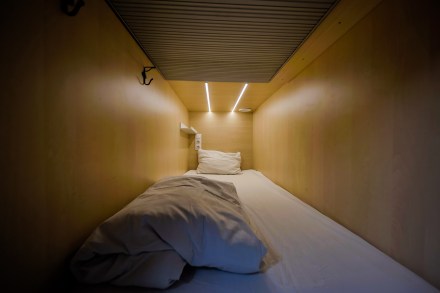
Before the cocoon I had never met a hotel I didn’t like. I thought all hotels were interesting. There was the hostel in the walls of old Jerusalem, so dirty I had to sleep in my clothes but riveting; the pale box in Oświęcim, Poland (Auschwitz in German) by the haunted square; the best hotel in Batumi, Georgia, pleased with itself because it was nearly an Ibis; the vampire-themed hotel which felt weirdly normal in the Carpathians; the lovely Narnian winter of Claridge’s. Then I stayed at the Zedwell Hotel near Piccadilly and I didn’t like it because there is nothing to like. It’s inside the Trocadero, the old Victorian pleasure palace, so it will have known a world of pain.

‘An adequate meal for a Cornish giant’: Brasserie Angelica reviewed

From our UK edition

Brasserie Angelica is the – is the word signature? – restaurant inside the Newman, Fitzrovia, a new hotel that has landed in the capital like a spaceship containing aliens who are into menswear. I don’t mind buildings that look like they don’t belong. Fitzrovia is charming because it feels like remnants left by other places. We have too much Edwardiana already: in the Aldwych– formerly the best surviving medieval part of London after the Great Fire – I feel like I am stomping through cakes of stone. The Newman is a wail in glass and brick on a quiet lane near Gower Street. There are pale awnings, brass fittings and uplighting: Manhattan in its last boom. It is attached to a Victorian house renovated to the standards of a grouter with OCD.

Food to slake boredom: Le Café by Nicolas Rouzaud reviewed

From our UK edition

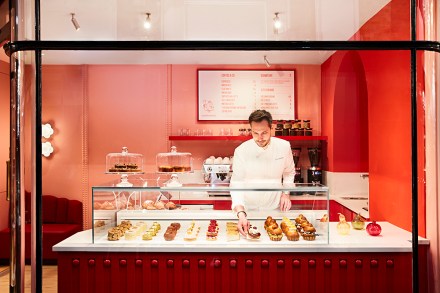
Burlington Arcade on Piccadilly has a caff down from Charbonnel et Walker, where you can buy a box of chocolates as big as a cow, though I never have. Perhaps the time is now? I am being facetious of course: it is Le Café by Nicolas Rouzaud, who oversees the Maison de Haute Pâtisserie at the Connaught Hotel, and two unfortunate branches in Qatar. I wonder if the Hamas leadership visit and stick their fingers in pistachio gâteaux. The café is a marvellous construct, as the arcade is. It exists so that spoilt Regency women, the Chelsea hags of then, could shop without walking in horseshit. I know how they feel. It isn’t lunch in the common sense of it.

The Bentley Continental GT is a car for the upper-middle classes

From our UK edition

Bentley’s Continental GT has a name to suit it: four voluptuous syllables then two emergency stops. This is the first car I reviewed, and it is still my favourite. I think this is because I grew up in Esher, and this is the car of the functional aspirant upper-middle class. It is important to remember that the state limousines – the pair of sinuous maroon sharks that transport the monarch from one demonstration of public magic to the next - are Bentleys, based on the long-gone Arnage, elongated for majesty. The Bentley is for people who work hard: the still responsible. Just enough flash. Not too much. If Aston Martin is British romance and Rolls Royce British violence in lambswool, Bentley is British functionality and taste.

In days of war, we need trifles: Mezzogiorno reviewed

From our UK edition

Mezzogiorno is a very serious, golden Italian restaurant inside the Corinthia London Hotel on Northumberland Avenue. Restaurants are increasingly gold these days, as if for a crocodile of Scrooge McDucks trooping through the wreckage of liberalism looking for money, nuts and guns. It follows the trajectory of my beloved Raffles at the OWO [Old War Office] round the corner. What was once a Ministry of Defence building – though formerly a hotel – is now a (quite good) pizza joint. When the time comes, I hope the drones know. Ignore the lie that gold restaurants serve tiny portions for tiny people. These are vast Mezzogiorno is by the gifted Francesco Mazzei, previously of Sartoria in Savile Row. Here, because this is an age in denial about hierarchy– ha!

An ode to Blackpool

From our UK edition

Ballroom dancers, suicide cases, charlatans: Blackpool has them all. No place has so much possibility or holds so much of the British soul on one bright, windswept drag. I first came here for Conservative party conference, where the cognitive dissonance of pre-Coalition Tories in funeral suits and the reality of the country they sought to govern – love, loss and candyfloss – felt wild. Did these people even know each other? It turns out they didn’t. Then I came to watch Russell Brand pretend to be Jesus Christ at the Winter Gardens for people alienated enough to think Russell Brand is a viable alternative to anything. They all meditated together.

Food for adults remembering childhood: Dover Street Counter reviewed

From our UK edition

Dover Street Counter is the tiny sister of The Dover, a very good restaurant on – who knew? – Dover Street, Mayfair. This is the site of P.G. Wodehouse’s fictional Drones Club, if following Wodehouse’s paths is your way of coping, and there is nothing wrong with that. There are some bad restaurants in Mayfair now, with slutty Roman gods and monumental Caesar salads; passive-aggressive tributes to Elizabeth II in bad cake, and enslaved fish staring at sex workers with the mute anguish of recognition. This is better. Good restaurants have the gift of suppressing fear, and this is one such The Dover is delivered by professionals for adults – that is, people who do not put intimacy on expenses, and who can recognise neo-Stalinist soft furnishings when they see them.

Like dining with Elrond in Rivendell: Corenucopia reviewed

From our UK edition

Corenucopia by Clare Smyth is in Belgravia, amid a line of interior-design shops, and it is prettier than all of them. It is a female paradise on the ground floor of a mansion block, dedicated to art nouveau and ‘comfort’ food. There are plaster tree branches peeking from the walls and the menu script looks elvish. It is rare that whimsy does not make me kick things, and few things are more whimsical than plaster forests, but Smyth, also of the three-Michelin-starred Core, is one of the great cooks working now. From her, whimsy is merely voice; or, rather, I forgive her. We eat malted sourdough with Ampersand butter and wild venison salami. Both are glorious There is a sanity to this restaurant, even if it is gilded for native Belgravia blondes.

A Vermeer of a car – the Rolls-Royce Ghost Series II

From our UK edition

A Rolls-Royce press trip is like being taken by Mary Poppins – Mary of the novel, not the film, she is more savage and interesting – and shown a thing you would not otherwise know. When you arrive at the destination – it is Provence today, but it could be California or Ibiza tomorrow – you find the cars at the airport, laid out in blue and lilac and grey. Among them stand smiling men, whose job it is to help you drive the car: during the self-drive part they stand at roadsides smiling at you, though I think they have had weapons training. If you know this is a Rolls-Royce press trip, fair enough.

Beloved by Chinese tourists – and the Labour party: Phoenix Palace reviewed

From our UK edition

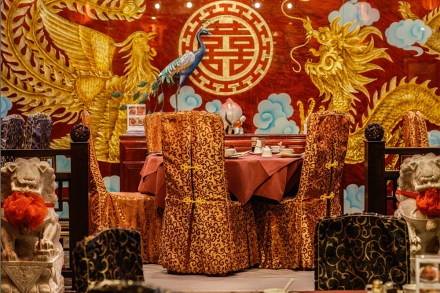
The exterior of the Phoenix Palace is cream with golden letters like the napkin and the Laffer curve, and it is squeezed below an Art Deco mansion block in Baker Street. The street is self-effacing, stuck between the Marylebone Road and the Sherlock Holmes museum, which exists because London is, among other things, morbid. The cuisine is Cantonese. Understatement is a feint here, though; the Phoenix Palace is famous, and always on the best dim sum lists. It is beloved by Chinese tourists and students, and, weirdly, the Labour party, whose grandees smile uneasily from photographs, like hostages to the economy, and rice. The food comes near instantly.

A restaurant so perfect I hesitated to review it

From our UK edition

Sometimes you find it, H.G. Wells’s door in the wall, but to tapas: a restaurant so perfect you hesitate to review it. Each critic kills the thing she loves, because to love it is to change it. But I can’t just review palaces for psychotics containing lamps that should not exist, comforting though the idiocies of the very rich are. So here is a review of 28 Church Row, Hampstead. I will try not to make it read like a Hampstead novel about the unreliability of memory, but I might forget to do this. Church Row is the prettiest street in Hampstead: a ragtag of Georgian houses beloved by television stars who wake up one day, understand they are vulgar and buy a house that isn’t. I can’t afford one, but I saved a man from death in Church Row once, which is unusual for this column.

Scott’s vs Mayfair

From our UK edition

Kingsley Amis was obsessed with Scott’s on Mount Street, Mayfair, and he knew a lot about food. He ate himself to death. In his unwise James Bond continuation novel Colonel Sun – Ian Fleming also loved Scott’s – Amis had Bond ponder that ‘every meal taken in those severe but comfortable panelled rooms [is] a tiny victory over the new hateful London of steel and glass matchbox architecture’. Bond then presumably dropped his knickers, because there is as much projection in Amis and Fleming as there is in this column. Even so, I know how they feel about Scott’s. Mayfair is now the UAE with democracy and rain. It is gold and pink for toddler princes, and Scott’s, which is the colour of a Barbour, remains a tiny victory in brown. Of course Amis loved it.

Survival here is about logistics: Disneyland Paris reviewed

From our UK edition

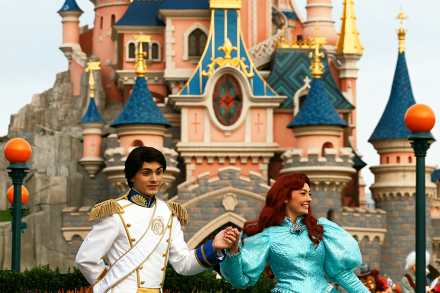
Alcoholics know that hell is denial, and there is plenty at Disneyland Paris in winter. This is a pleasure land risen from a field and everyone has after-party eyes, including the babies. The Disney hotels operate a predictable hierarchy: princesses at the top, Mexicans at the bottom. We, the Squeezed Middle, are at the Sequoia Lodge with Bambi, where I learn that I like canned birdsong, and that is fair. You don’t consume dream worlds, because that is not their nature. They consume you. We stand in the Magic Kingdom and stare at Mickey Mouse-shaped food and a fake Bavarian castle – it’s Ludwig’s, not Sleeping Beauty’s – painted pink. Disney culture is impregnable: hence the fortress. It only needs – it only feeds on – itself.

Peril in Prague: The Secret of Secrets, by Dan Brown, reviewed

From our UK edition

Robert Langdon is a symbologist, and that is the meta joke – the only joke – of Dan Brown’s series of blockbusters, of which this is the sixth. Langdon, an Everyman – Frodo Baggins but taller, and with a professorship at Harvard – is a monied, moderate intellectual who likes swimming. And he is very ordinary – until he isn’t. All novels have subtexts, even if they don’t really want them. They can’t help it. This one is: a monied, moderate intellectual can be interesting, and interesting things can happen to him. (I think Brown spends a lot of time at his desk. I also think he prefers ideas to people.) Langdon can set off the fire alarm in his hotel and jump out of the window into the river.

A right royal travesty: Lilibet’s reviewed

From our UK edition

Elizabeth II was a god and a commodity: now she is gone it is time for posthumous exploitation. Lilibet’s is a restaurant named for her childhood nickname at 17 Bruton Street, Mayfair, on the site of the house where she was born. It was inevitable that Elizabeth II would eventually get a personal restaurant. Princess Diana ate in the Café Diana – English breakfasts and kebabs – on the Bayswater Road and George VI is the inspiration for the superb Guinea Grill – mostly sausages, or rather it is the sausages I remember – near Lilibet’s. Because that is what the British do to our monarchs and their intimates. We eat them and call it love.

With Tanya Gold

From our UK edition

21 min listen

A woman that needs no introduction for regular Spectator readers, Tanya Gold has been the Spectator’s restaurant critic since 2011. On the podcast she tells Lara why – while it might be annoying – fellow critic Jay Rayner is never wrong, why the pandemic was ‘disgustingly great’ for food critics and how she has become ‘enslaved' to her aga. Plus, she discusses her favourite restaurants from Hampstead to Cornwall – though it sounds like she would trade them all in for the mini egg, which she calls 'the highest form of food’. Produced by Patrick Gibbons.

‘The food is not the point here’: Carbone reviewed

From our UK edition

People say that Carbone is Jay Gatsby’s restaurant – Gatsby being the metaphor for moneyed doomed youth – but it is something more awful and, because people are asleep, no London restaurant has been this fashionable since the Chiltern Firehouse a decade ago. It lives in the basement of the former American embassy in Grosvenor Square, which is now the Chancery Rosewood Hotel. I thought this building would smell of fear, of why-can’t-I-have-a-visa-please? The truth is that it does, but that fear is now a commodity: you can be the person saying no-visa-for-you. (‘Uniquely yours,’ says the advertising copy. It means it.