Stephen Daisley

Stephen Daisley

Stephen Daisley is a Spectator regular and a columnist for the Scottish Daily Mail

Police Scotland has lost its way

From our UK edition

One of the most fascinating cases of institutional self-harm in modern Britain is policing. Not just the oft-criticised Met (though it is spectacularly adept at inflicting needless wounds on itself) but police forces up and down the country. The two-tier policing of crimes against ethnic minorities is a particularly pungent example, but there is also the plainly divergent approaches to managing large-scale protests which might feasibly pose threats to public order. Then there’s the treatment of Susan Smith, the Scottish feminist. She is one of the For Women Scotland campaigners who got the Supreme Court to say in black and white that, for the purposes of the Equality Act, a woman is a biological female.

Why doesn’t Kate Forbes want the SNP to talk about currency?

From our UK edition

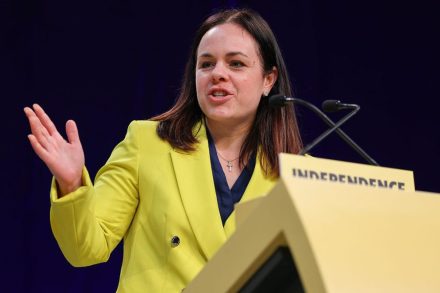
What’s the Gaelic for ‘Streisand effect’? I would guess buaidh Streisand but someone should ask Skye, Lochaber and Badenoch MSP Kate Forbes, who is experiencing first-hand what the 'The Way We Were' singer learnt the hard way two decades ago: attempts at censorship only bring attention to the material you wish to keep secret. The deputy first minister, it is claimed, told a meeting of her local SNP branch two months ago: ‘We must avoid publicly talking about currency. The priority is an element of stability, and then move to a Scottish currency.’ And so, naturally, the purported quote has been leaked to the Times, with the SNP declining to comment on 'hearsay' but not contesting the accuracy of the quotation.

The hate-filled campaign against professor Ben-Gad

From our UK edition

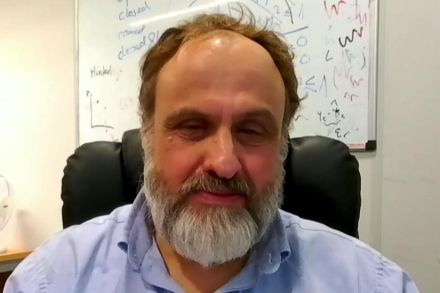
If I didn’t tell you professor Michael Ben-Gad was an Israeli, you could probably figure it out from his response to a hate-filled campaign to drive him out of his job at City St George’s, University of London. On Wednesday, a masked, keffiyeh-wearing mob stormed his lecture hall and helpfully filmed themselves doing so. Asked for his response to the intimidation tactics, Ben-Gad told Sky News: ‘Their video is on social media and it makes for difficult viewing. They captured me in profile. I need to lose weight.’ It’s a very Israeli response. The economics don is being targeted because, as an Israeli youth in the 1980s, he did his compulsory service in the Israel Defence Forces.

Anti-Jewish sentiment has poisoned our police

From our UK edition

Amid the grim fluorescence of a police interview suite, a glimpse of where we are and where we are heading. The place is Hammersmith police station, the date August 30, and the time a little after 2 a.m. An unnamed lawyer in his 40s, whom we are told is Jewish, has been detained for allegedly repeatedly entering an area set aside for anti-Israel protestors.  He was there, he says, as an independent legal observer and was documenting a demonstration outside the Israeli embassy in Kensington and the police response thereto. Since October 7, 2023, Jewish and pro-Israel groups have grown concerned at the Metropolitan Police’s handling of pro-Palestine marches. This police interview is hardly likely to reassure them.

Middle East experts got Trump all wrong

From our UK edition

Whenever Donald Trump proposes a policy that runs counter to the progressive consensus, there are three stages of response: it’ll never work, it’s a disaster, it was our idea all along. We are at stage three on Trump’s truce in Gaza. Antony Blinken, Secretary of State in Joe Biden’s administration, says: ‘It’s good that President Trump adopted and built on the plan the Biden administration developed after months of discussion with Arab partners, Israel and the Palestinian Authority.’ It’s true that Joe Biden secured a two-month ceasefire at the start of the year and with it the release of a sizeable contingent of hostages.

Donald Trump deserves the Nobel Prize for his Hamas-Israel deal

From our UK edition

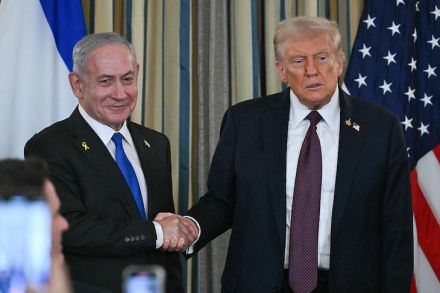
In confirming the Israel-Hamas peace deal on Truth Social last night, Donald Trump referenced the seventh Beatitude from the Gospel of Matthew: ‘Blessed are the peacemakers, for they shall be called the children of God.’ Trump has been called a lot of things, many of them words you won’t find in the Bible, but could his next monicker be Nobel laureate? Even some of Trump’s critics, among whom I count myself, see a case for awarding him the Nobel Peace Prize The Gaza war did not begin on his watch and it was not the backdrop to his second term that he wished for.

Scotland doesn’t need independence. It needs rid of the SNP

From our UK edition

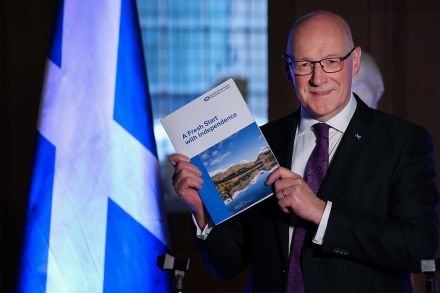
The SNP government in Edinburgh has published another white paper on the constitution, ‘A Fresh Start with Independence’. It’s a bold title when your last white paper on this issue was published a whole 34 days ago. Indeed, between June 2022 and April 2024, the Scottish Government produced 13 white papers on independence. Putting out yet another and branding it ‘a fresh start’ is a bit like Taylor Swift releasing an album of diss tracks about her exes and calling it A New Direction. (Not that I’m comparing John Swinney to Taylor Swift. Taylor Swift has actually contributed to the Scottish economy.

Immigration isn’t working

From our UK edition

The Manchester synagogue attack requires us to ask three questions: where are we, how did we get there, and where now? Where we are is British Jews attacked on Yom Kippur, two dead, more injured, countless more afraid. This requires an acknowledgement by the governing classes that multiculturalism and mass immigration are false doctrines which have severely harmed this country and its people. Jihad al-Shamie is the latest in a grim roll call of first or second-generation immigrants to be welcomed to Britain only to repay that welcome with carnage.

Do Palestinians want Hamas gone?

From our UK edition

Discussion of Donald Trump’s peace proposal for Gaza revolves around one question: who is for it and who is against it? Israel is for it, though mostly because it is backed into a corner and has no choice. The Arab states are for it, which is to be expected since they wrote it. The European Union is for it, which is to be expected since the Arabs are for it. Palestinian Islamic Jihad and the Houthis are against it, and Hamas is expected to be too. I don’t know what the UK government has said and, in concert with the rest of the world, I don’t really care. This is all helpful to know, but there’s a more important question, the answer to which will decide the fate of Trump’s framework in the long run: has anyone asked the Palestinians?

They don’t make MPs like Ming Campbell any more

From our UK edition

Tributes are pouring in for Menzies Campbell, former leader of the Liberal Democrats, and generally considered a decent chap for a politician. He hailed from the Scottish Liberal tradition, one which dominated politics north of the border in the 19th century, and made a modest return in the second half of the 20th. His instincts were broadly centre-left but he was not a firebrand like Jo Grimond. He articulated his party’s internationalist conscience with the passion, if not the glitz, of an Archibald Sinclair.

Keir Starmer’s Palestine doesn’t exist

From our UK edition

King Cnut is misremembered as a deluded fool who tried to subdue the sea. In fact, he was a wise and pious man who wished to demonstrate to his subjects the limitations of regal power. ‘You and the land on which my throne is standing are subject to me,’ Cnut admonished the tide. ‘No one has ever defied my royal commands and gone unpunished.’ When the waters began splashing at his feet, the monarch turned to the crowd and proclaimed: ‘Let all the world know that the power of kings is a vain and trifling thing.’ There was, Cnut said, only one true sovereign: ‘That King whose commands heaven, earth and sea obey, according to eternal laws’. Keir Starmer is no Cnut.

The problem with ABC’s Matt Gutman

From our UK edition

Matt Gutman has the hairstyle of Anderson Cooper and the literary style of Danielle Steel.  In a special report on the Charlie Kirk assassination, ABC News’s chief national correspondent wistfully described text messages between the suspect, Tyler Robinson, and his roommate and alleged boyfriend. The exchanges were, Gutman gushed, ‘very touching in a way that I think many of us didn’t expect’ and ‘a very intimate portrait into this relationship’. Gutman quoted Robinson’s sweet nothings (‘my love’ and ‘I want to protect you, my love’) and mused on a ‘duality’ between the aggravated murder charge and ‘on the other hand, he was, you know, speaking so lovingly about his partner’.

Six questions the National must answer

From our UK edition

Scottish daily the National is known for its inimitable approach to journalism. The mainstream media bombards SNP ministers with impertinent questions about missed NHS targets, widening attainment gaps, and delayed ferries. The National, on the other hand, does proper reporting, like its front page denouncing the inclusion of Reform on a Question Time panel, the hard-hitting coverage of a Tory politician’s quip about Nicola Sturgeon’s hairdo, and an uncompromising expose on a Labour candidate’s ‘deeply disrespectful’ attitude towards the Gaelic language. While other newspapers fixate on the actions of government, the National is out there bravely holding the opposition to account.

Britain needs a First Amendment

From our UK edition

Well, if they’re arresting comedians, at least Nish Kumar is safe. Graham Linehan, not so much. The British like to sniff that Americans don’t get irony. Arresting a comedian fresh off the plane from the US after months of dismissing US concerns about freedom of speech is one way to teach them. Not only was Linehan detained by the police for tweets attacking an establishment-approved ideology, he was subsequently bailed on the condition that he not post any further tweets. Britain is never beating the allegations.  I’m a Glinner (his X handle) sceptic.

How the West infantilises Palestinians

From our UK edition

Belgium will become the latest western country to recognise a Palestinian state. Its foreign minister Maxime Prevot cited ‘the violence perpetrated by Israel in violation of international law’ and Belgium’s obligation to ‘prevent any risk of genocide’. He maintained his government was not ‘sanctioning the Israeli people’ but ‘ensuring that their government respects international and humanitarian law’. Belgium, he added, was ‘taking action to try to change the situation on the ground.

Farage, flags and the forgotten English

From our UK edition

The flag-raisings in towns and cities across the country are an inevitable consequence of elites’ seeming preference for every flag but England’s. High-status flags: Ukraine, Palestine, Pride. Low-status flags: Union Jack, St George’s Cross. It is possible, of course, to favour multiple flags. Although a Scot, I am quite partial to St George’s Cross, a simple emblem that stirs up a thousand years of English history – of blood and bravery, trial and triumph – in a crisp, snapping flutter of its folds. The Ukraine flag is the banner of a people who, rather than surrender their homeland, have chosen to fight to the death for it. However you feel about your compatriots flying another country’s flag, Kyiv’s is at least an honourable one to fly. Honour.

Ed Davey should stick to his silly stunts – not lecture us on Gaza

From our UK edition

Ed Davey’s got this Middle East business figured out. The Liberal Democrat leader has tweeted — because, honestly, what else is there to do as Lib Dem leader other than tweet? — his latest insight into the Gaza war: ‘Now the Hamas terrorists behind the October 7 atrocities are trying to erode support for recognition of a Palestinian state by falsely claiming it would be a victory for them. Hamas do not represent the Palestinian people and have no future in Gaza with a two-state solution.’ I know who we can ask about what the Palestinians really think. Let’s ask…the Palestinians That’s nice, Ed.

Kate Forbes showed real bravery

From our UK edition

There is a certain worldly cynicism aroused by the announcement that a politician is stepping down to spend more time with their family. It was for a long time the refuge of MPs who had earned themselves an entry in the News of the World, the Who’s Who of romeos, rogues and reprobates, for their activities with ladies – or young gentlemen – of the night. Less commonly, it was regarded as an admission that someone could not hack it or was frustrated by their slow progress up the greasy pole. After all, no one wants to quit politics. Contra the cynics, Kate Forbes. Scotland’s deputy first minister will stand down from Holyrood at next May’s elections, having somehow crammed a whole political life into ten tempestuous years.

There is no escaping politics with Palestine

From our UK edition

Foreign relations are among the most political functions of a government. Ministers favour or disfavour other states based on calculations about which relationships might better serve the national interest. Human rights violations are condemned here, while a blind eye is turned there. Dictators are treated as democrats and democrats as dictators depending on the diplomatic needs of the day. It’s a dishonest, venal, hypocritical business conducted by people with almost no morally redeeming characteristics. Like I said, it’s politics.  Too many state actions are compelled – or claimed to be compelled – by law or judicial interpretation of the law.

Israel should make its own statehood claims

From our UK edition

Britain intends to follow France, and now Canada, in recognising a Palestinian state in September. I’ve already set out the practical and theoretical problems inherent in such a policy, not least the absence of a functioning Palestinian state to recognise. But we shouldn’t lose sight of another effect of this policy: in recognising a state which claims territory also claimed by Israel, Britain, France and Canada harm Israel’s sovereign interests in territories where Jewish self-government can be traced back three millennia. This is one of the most inflammatory acts possible in statecraft, one which Whitehall has noticeably refrained from in other conflicts.