Stephen Daisley

Stephen Daisley

Stephen Daisley is a Spectator regular and a columnist for the Scottish Daily Mail

What has Benjamin Netanyahu achieved?

From our UK edition

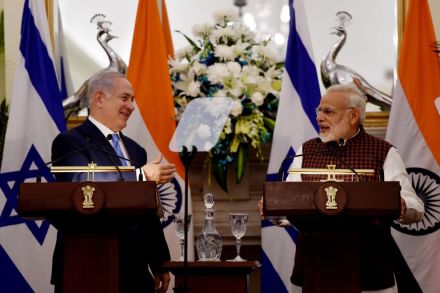
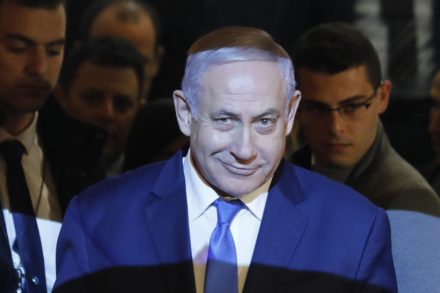
There are little in the way of festivities but today is nonetheless a landmark in Israeli history: Benjamin Netanyahu becomes the country’s longest-serving prime minister, displacing beloved founding leader David Ben-Gurion. Netanyahu has been in charge for 4,876 days, governing for a three-year term in the late 1990s then continuously since 2009. His Israel would be unrecognisable to Ben-Gurion. Where the Old Man presided over an agrarian society surrounded by almighty Arab armies sworn to its destruction, the land of Bibi is the ‘Start-Up Nation’, an economy powered by technology and pharmaceuticals and undergoing a diplomatic spring with the Arab world.

Why I’m delighted for Darren Grimes

From our UK edition

Darren Grimes has won his appeal against a £20,000 fine imposed by the Electoral Commission. Grimes, the 25-year-old who ran the BeLeave campaign group, was accused by the watchdog of breaching expenditure rules during the EU referendum. Following proceedings which saw Grimes crowdfund his legal campaign, Judge Marc Dight has ruled that the fine be withdrawn. The Guardian reports: ‘Dight agreed with Grimes’ counsel that the campaigner had not intended to mislead and had been confused by the Electoral Commission’s registration form. He further concluded that the commission had failed to satisfy itself beyond reasonable doubt that BeLeave was not a genuine unincorporated association, and therefore was not able to conclude an offence had been committed.

Ilhan Omar is a troll

From our UK edition

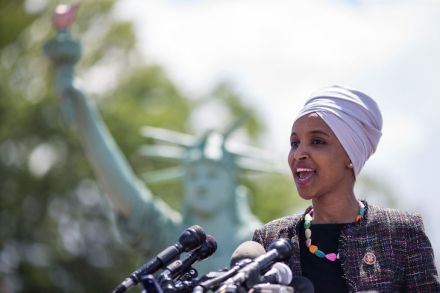
The Democratic Party faces a test of character. Most mainstream institutions have failed such tests in recent years but, in the spirit of Samuel Beckett, let’s try again and fail better this time. The trial confronting the electoral vehicle of American liberalism is whether liberals still have a firm grip on the wheel or the extremists in the back are doing the driving. This week, Donald Trump tweeted that Ilhan Omar, a freshman congresswoman from Minnesota’s fifth district and a Somali-born refugee who became a US citizen in 2000, and three other US-born congresswomen should ‘go back and help fix the totally broken and crime infested places from which they came’.

Neither Boris Johnson nor Jeremy Hunt is up to the job of being PM

From our UK edition

The Final Showdown, as the Sun/Talkradio’s debate between Boris Johnson and Jeremy Hunt was billed, clarified some important points for Tory members still deciding how to cast their vote. Both candidates ruled out a general election before the UK leaves the EU, though Hunt warned that setting a deadline as Johnson has means we could ‘trip ourselves into an accidental general election before October 31’. Both men were also clear that the backstop has had its day, with Hunt declaring it ‘dead’. The Foreign Secretary talked up technological solutions to the Irish border, while stressing the need for a ‘cast-iron guarantee’ to Dublin that there would be no hard border.

Nicola Sturgeon has fallen into a trap of her own making

From our UK edition

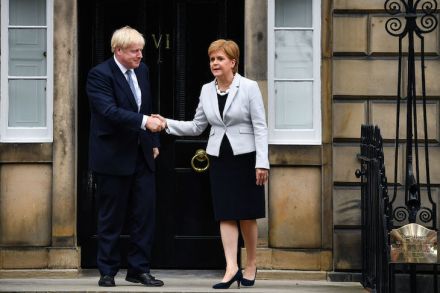
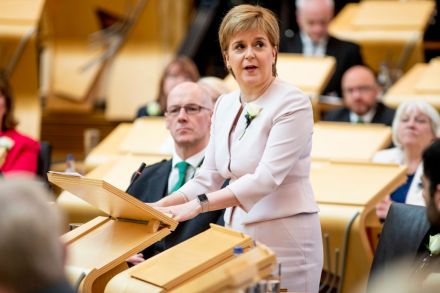
Nicola Sturgeon is expert at laying traps for her opponents but this time she may have ensnared herself. During the May 2016 Holyrood elections, the SNP leader and occasional First Minister said a Leave vote in the upcoming EU referendum should be grounds for a second ballot on independence. This, of course, was when Remain was expected to win and when England voted Out while Scotland voted In, Sturgeon’s bluff was called. She has spent the past three years devising evermore elaborate ruses to distract her restive grassroots. The latest is a Citizens’ Assembly, a forum used in Ireland to ease in constitutional changes on gay marriage and abortion.   The idea is to bring together 120 randomly-selected Scots to ruminate on the future of the nation.

The routine and horrific anti-Semitism in Labour

From our UK edition

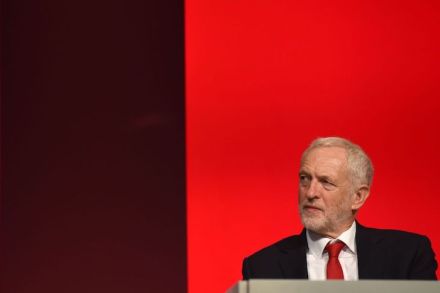
In the run-up to Wednesday night’s Panorama on Labour anti-Semitism, one whistleblower received a lawyer’s letter, the party demanded the BBC director-general ‘suspend and reconsider the planned broadcast’, and Momentum did a pre-emptive hit job on presenter John Ware. Now we know why. Panorama: Is Labour Anti-Semitic? levelled serious charges, chief amongst them that senior figures close to Jeremy Corbyn, including his spin doctor Seumas Milne and Labour’s general secretary Jennie Formby, interfered in the disciplinary process. Ware interviewed more than 20 Labour officials for the documentary.

When will Britain recognise Jerusalem as the capital of Israel?

From our UK edition

In less turbulent times, the disappearance of the Home Secretary would lead the television news bulletins and clear the next morning’s front pages. Yet Sajid Javid went missing on Monday with barely an eyebrow raised. The former Conservative leadership candidate travelled to Jerusalem and visited the Western Wall, the second-holiest site in Judaism and buttressing the holiest site: the Temple Mount. His pilgrimage to the destination of millennia of Jewish prayers is the first by a UK Cabinet minister in 19 years and especially noteworthy because while there he had, in the eyes of his own government, dropped off the map.  The UK does not recognise Jerusalem as the capital of Israel and in fact doesn’t recognise it as even being inside Israel.

It’s time to no platform the Labour party

From our UK edition

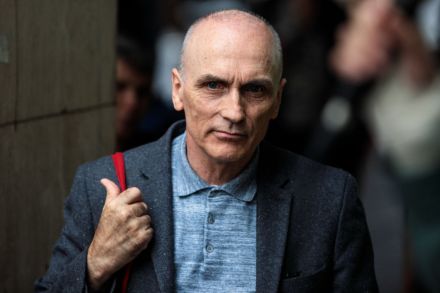
This evening in Britain, the Jewish Shabbat dinner will follow the traditional order: blessing the candles and the wine, washing hands, giving thanks for the bread and trying to get through the first serving of noodle kugel before someone brings up the Labour party. The decision by the national executive committee to restore the whip to Chris Williamson will be on the menu tonight. The Jew-baiting Nosferatu was suspended in February for ‘a pattern of behaviour’, that pattern taking the shape of a giant middle finger to the Jewish community and culminating in a grisly speech declaring Labour ‘too apologetic’ about anti-Semitism.

Holyrood’s trans rights pause is a good thing

From our UK edition

A revolution stopped in its tracks is an uncanny sight. After impatiently pursuing reforms to the Gender Recognition Act (GRA), the Scottish Government has suddenly hit the brakes. Shirley-Anne Somerville, SNP social security minister, announced the halt in a statement to the Scottish Parliament on Thursday. Although Nicola Sturgeon, at her minister’s side for support, remains committed to ditching medical diagnosis in favour of self-identification, she has made substantial concessions to feminist dissenters.  The proposed three-month wait for a gender recognition certificate will be extended by a ‘mandatory three-month reflection period’.

Does Rorymania have a future in the Conservative party?

From our UK edition

'Rorymania is over,’ Isabel Hardman pops into my inbox to tell me, in last night’s Evening Blend. Rory Stewart’s elimination from the Conservative leadership race cuts short a seductive insurgency that began with pseudo-selfies and flirted with the opportunity, however wishful, of a political realignment. One place Rorymania never took off was inside the Conservative party, where Stewart’s campaign was viewed with something between bewilderment and resentment. At its electoral apex, Rorymania commanded support from just 11.8 per cent of the parliamentary Tory party.

The questions the BBC must answer about Abdullah in Bristol

From our UK edition

One of the most awkward moments of Tuesday night’s Conservative leadership debate was when a Muslim voter challenged the candidates on anti-Muslim prejudice within their party. The BBC identified the man as ‘Abdullah Patel from Gloucester, speaking from a studio in Bristol’, and described him as an imam. His question stood out because it left Boris Johnson flustered and eventually falling back on his Muslim great-grandfather who immigrated to the UK a century ago. The question also prompted Sajid Javid to urge his rivals to back an independent inquiry into anti-Muslim bigotry within the Tory Party, something they all appeared to agree to.

Why the Tory party should worry about this leadership debate

From our UK edition

If you’ve ever been in group therapy, you will have recognised many of the behaviour types in the BBC’s Tory leadership debate. There was Mr Avoidance (Boris Johnson), who kept his head down and let the clock run out, and Mr Calculating (Jeremy Hunt), who kept his interjections to a minimum and studiously ignored his rivals in favour of speaking directly to the inquisitive punters. There was The Overachiever (Michael Gove), trying to one-up everyone by boasting about his achievements in government and his many plans to solve all of Britain’s ills. Sajid Javid was the Passive-Aggressive Snarker, agreeing with Gove here, jabbing Boris there, and mugging sceptically throughout Rory Stewart’s every answer.

Nicola Sturgeon needs to do more for children in care

From our UK edition

If you’ve glanced at a photograph of Nicola Sturgeon in the past year or two, you won’t have failed to spot a recurring theme. The SNP leader surrounds herself at every opportunity with young people who have been in care. It is Sturgeon’s current cause – with education and social justice having fallen by the wayside. Scotland’s First Minister has been in the job four and a half years and deputy for seven before that. She is in the market for a legacy, and with every passing day it is less likely to be Scottish independence. Whatever the politics, that Sturgeon has taken an interest is an indisputable good.

The remarkable life of Tom Derek Bowden

From our UK edition

When good men who did great things pass into the next life, they leave an example for this one. Tom Derek Bowden was 17 when he first set foot in the land that once was – and would again be – Israel. It was 1938 and he was stationed in Palestine under the mercurial British officer Orde Wingate, an ardent Zionist. Bowden was awed by Wingate and his commitment to training local Jews to defend themselves from their Arab tormenters. While there, Bowden fell in love with a young kibbutznik, Hannah Appel, but the outbreak of war frustrated their plans to marry. In 1941, he was despatched to Vichy-held Syria-Lebanon, where he was badly injured and his sergeant, Moshe Dayan, lost an eye, 26 years before becoming Israel’s defence minister.

Jo Brand and the death of comedy

From our UK edition

I have celebrated John Bercow, eulogised Martin McGuinness and urged Spectator readers to vote Labour. So I appreciate I’m on thin ice with a defence of Jo Brand, and since the hefty lefty and I are of similar girth, that metaphor could end badly. Yet the news she is being investigated by police over a joke ought to bring even the most phlegmatic conservative to the barricades. Some things are just wrong, even if Brendan O’Neill is against them too.  Appearing as a guest on Radio 4 panel programme Heresy on Tuesday, Brand riffed on the phenomenon of ‘milkshaking’, in which progressives throw chilled beverages over people they disagree with because when they go low, we go high.

A Boris Johnson victory spells trouble for Ruth Davidson

From our UK edition

You might not have realised from his lack of appearances but Boris Johnson is standing to be Tory leader. There are MPs on the left of the party, and so he’s told them he’s a One Nationer. There are MPs on the right of the party, and so he’s told them he’s a tax-cutter. And what a tax-cutter he is. Johnson says in this morning’s Daily Telegraph that he wants to hike the higher rate income tax threshold from £50,000 to £80,000. This, the paper estimates, will cost £9.6bn annually and will be paid for using the £26.6bn fund for No Deal Brexit preparations and by raising National Insurance contributions. So far, so Tory, but what about Scotland?

The NHS privatisation conspiracy

From our UK edition

Nigel Lawson said the NHS was the closest thing the English had to a religion but for progressives it now forms the basis of a viral conspiracy theory. Namely, that a shadowy nexus of Tory ministers, private insurance giants, Big Pharma and the United States government is working to abolish the NHS before our eyes. As with all conspiracy theories, this one pieces together facts and semi-facts (private health firms would, of course, like a bigger slice of the market; yes, some Tory politicians want more privatisation) into a collage of inferences, connections forced and motives assigned, at the top of which sits the Emmanuel Goldstein du jour.

The Conservative Party need to look beyond Brexit if they are to survive

From our UK edition

The Conservative Party was founded 185 years ago and may not survive the next five. YouGov and Opinium both put the Tories in third place and on less than 20 per cent of the vote. They managed just 8.8 per cent in the European election, coming fifth behind the Greens and losing all but four of their MEPs. The primary cause of la crise actuelle is the government’s failure to deliver Brexit and it is to this which much of the Tory leadership conversation is addressed. However, there are other factors, structural and social, which have depressed the Tory vote and candidates to replace Theresa May are keen to prove they can win voters back to their party’s tarnished brand.

Brexit and the great liberal crack-up

From our UK edition

Brexit may yet kill the Conservative party but it is exacting a cruel psychological torture on liberalism. Liberals are supposed to be the measured voice of reason – earnest, insufferable but reliably level-headed. Not anymore. Liberals – or at least some of them – have gone quite mad over Brexit. There is almost no intrigue they will not seize on if it might explain away the last three years. TV historian Dan Snow tweeted a photograph of his postal ballot and the Brexit Party leaflet he claimed had been delivered inside the same envelope. When celebrity Twitter flicks on its blue-tick sirens, craven officialdom comes running but they brought bad news.

Scott Morrison’s ‘miracle’ win in the Australian elections

From our UK edition

‘I have always believed in miracles,’ Scott Morrison beamed. Australia’s first Pentecostal prime minister was addressing a victory rally after an upset in Saturday’s federal election. Throughout the campaign, pollsters and pundits had been as one: the Coalition (a centre-right alliance between Morrison’s Liberal Party and the agrarian National Party) was finished and Labor was headed into government after six years in opposition. Morrison was the fractious Coalition’s third prime minister since 2013, his ministry was divided over climate change and Labor leader Bill Shorten had tapped into public anger at the banks and the top end of town. Then they voted.