Stephen Daisley

Stephen Daisley

Stephen Daisley is a Spectator regular and a columnist for the Scottish Daily Mail

Have Arab nations forgotten about Palestine by accepting Israel?

From our UK edition

The Palestinians are entering one of the most precarious periods in their nation’s history. The normalisation of relations between Israel and the United Arab Emirates is only the beginning as other Arab and Muslim states are expected to follow. Yesterday, Haidar Badawi Sadiq, spokesman for the Sudanese foreign ministry, confirmed talks between Khartoum and Jerusalem and predicted a treaty before the end of the year. Today, Sadiq was fired and the ministry denied all knowledge of secret negotiations. Maybe Sadiq spoke out of turn; maybe he jumped the gun; maybe he floated the test balloon that he was told to. No matter.

The rise of Scotland’s Covid nationalism

From our UK edition

Whenever some London celebrity with a hamster’s grasp of Scottish politics simpers about moving north to escape the flaxen-fringed Franco in No. 10, the cybernat rank-and-file briefly down pitchforks to assure them ‘we’ll get the kettle on’. Like all megachurches, Scottish nationalism loves nothing more than a convert and English progressives all the more so for their loathing of the political and cultural character of England today. In so far as Scottish nationalism has anything as coherent as a philosophy, it is that Scotland is more politically progressive and therefore more virtuous than England.

The joyous Israel-UAE peace deal

From our UK edition

There is a time for war and a time for peace, Ecclesiastes tells us. Joyously, in the middle of a joyless year, a time for peace is upon us. For only the third occasion since 1948, Israel has secured a deal for peace with an Arab state. The United Arab Emirates will put an ambassador in Israel and accept one in Abu Dhabi. Relations will reportedly go beyond formalities and include economic and scientific cooperation, in particular on developing a vaccine for Covid-19. The normalisation of relations with the UAE follows a courtship at first clandestine but in recent years open and candid. Israel and the Gulf states share a common security threat in the Iranian regime and have figured that cooperation will strengthen their hand against Tehran.

The case for a new Act of Union

From our UK edition

Scexit, not Brexit, will be the word that defines Boris Johnson’s premiership. The Times has a new poll from YouGov showing the SNP on 57 per cent with nine months to go until devolved elections. The same poll puts support for Scotland’s exit from the United Kingdom at 53 per cent. This confirms earlier polls from Panelbase: Scexit is now the majority position. That support for the SNP has leapt along with Nicola Sturgeon’s approval ratings (up 45 per cent on this time last year) is confounding observers, not least given the Scottish exam results scandal of the past week. Sturgeon has, of course, benefited from fronting televised daily Covid-19 briefings, carried live on the BBC, but her polling is as much to do with longer trends in Scottish politics.

The SNP’s Hate Crime Bill is turning the law into a culture war

From our UK edition

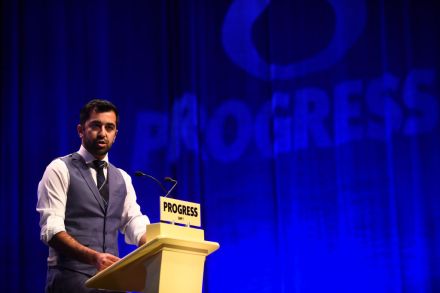
Every time I re-read the SNP’s Hate Crime Bill, I become more convinced that its author, Humza Yousaf, is trying his hand at a Titania McGrath style satire of wokeness. Scotland’s justice secretary is woke but his draft legislation is such a smash-’n’-grab of every item on the wishlist of coercive progressivism that he can’t be entirely serious. It’s not everyone who can forge common cause between the Catholic Church and the National Secular Society, the Law Society and the Scottish Police Federation, so Yousaf is gifted in that regard. Now the Faculty of Advocates, Scotland’s answer to the Inns of Court, has issued a 35-page examination of the Bill, warning among other things of serious ‘potential unintended consequences’.

Can Douglas Ross stop Scexit?

From our UK edition

Douglas Ross is the new leader of the Scottish Conservatives and since his predecessor lasted all of 167 days, best of luck might be more in order than congratulations. The Moray MP was awarded the position unopposed after Jackson Carlaw resigned entirely of his own volition and without any input from Downing Street. Ross inherits a party 35 points behind in the polls with a Holyrood election on the cards for next May. The SNP currently controls the Scottish parliament with the help of the nationalist Greens but, on present polling trends, would likely win a majority of seats in its own right. Worse, during Carlaw’s tenure, support for Scexit — Scotland’s exit from the United Kingdom — crossed over into the majority.

Why ‘progressives’ love to hate Rosie Duffield

From our UK edition

There can be a hallucinatory quality to the progressive mind, a tendency to see enemies in allies and demons in opponents, to imagine a public consensus for niche propositions and to experience even mild-mannered political disagreements as near-physical attacks. One or more of these behaviours can be found across the spectrum — lefties hate other lefties, righties hate other righties, centrists hate everyone — but it is in progressivism that they most vividly concentrate. Rosie Duffield is experiencing this phenomenon rather roughly after expressing the wrong view about that deathless fixation of a disastrously overeducated generation: gender identity.

Is Scotland changing the law on gender by stealth?

From our UK edition

It’s not often that feminists threaten legal action over plans to increase women’s representation on public boards, so the Scottish Government has managed something of a feat. 'For Women Scotland', a volunteer-funded gender-critical lobby group, isn’t against the principle of the Gender Representation on Public Boards Act. It’s the Scottish Government’s definition of ‘women’ they have a problem with.

Jackson Carlaw’s successor and the fight to save the Union

From our UK edition

The Scottish Conservatives are now in crisis. Jackson Carlaw has resigned six months into his leadership and less than a year on from Ruth Davidson’s departure. The party is polling 35 points behind the SNP with another Scottish Parliament election due next May and a string of polls have shown a majority of Scots are now in favour of Scexit. Carlaw accepts that he is not the man to turn this around, but it is not entirely clear who is. There are few on the Scottish Conservative benches at Holyrood capable of taking on Nicola Sturgeon. The Tories might have to look beyond the confines of the Edinburgh assembly for their next leader. Carlaw’s leadership was credible at first. He stepped in when Ruth Davidson quit last August and served six months in an interim capacity.

Network Rail’s cowardly JK Rowling decision

From our UK edition

I  ❤ JK Rowling. There, now I’m a hate-monger, too. A digital advert reading just that — ‘I ❤ JK Rowling’ — has been removed from Edinburgh Waverley station, the city’s main rail terminus. The ad was taken out by Kellie-Jay Keen-Minshull, a women’s rights campaigner better known as Posie Parker, who paid for a billboard in Liverpool during the 2018 Labour Party conference which read ‘woman: adult human female’. That was removed, too. Her latest display doesn’t quote anything as wildly controversial as the Oxford English Dictionary. It simply expresses affection for the Harry Potter author. So why has it been removed?

Olivia de Havilland’s Red Scare

Olivia de Havilland, who has passed aged 104, will forever be remembered for the role of Melanie Hamilton in Gone with the Wind, a performance that earned her a Best Supporting Actress nod from the Academy. She would go on to star in acclaimed romantic dramas like To Each His Own and The Heiress, both of which brought her Oscars for Best Actress, but to fans of classic movies she will always be Scarlett O’Hara's sickly cousin, love rival but ultimate ally. She was cinema’s quintessential southern belle: genteel on the surface, steel underneath. Less well known is that de Havilland was a lively anti-communist and worked to expose and counter the influence of Soviet sympathizers in Hollywood.

olivia de havilland

Nicola Sturgeon’s care homes catastrophe

From our UK edition

Nicola Sturgeon is fond of telling Scots that the prevalence of Covid-19 is ‘five times lower’ in Scotland than in England. Or at least she was, until the Office for Statistics Regulation released a statement calling her data source ‘unclear’ and adding that ‘we do not yet have evidence to support the validity of these comparisons’. The SNP has been retailing the notion that Sturgeon’s response to the pandemic far outstrips that of Boris Johnson. The public may be on her side, but the facts are not. One of the starkest — and deadliest — failures in handling coronavirus has been the Scottish Government’s care homes strategy.

Why Putin wants Scottish independence

From our UK edition

The Russia report was supposed to prove once and for all that the Kremlin rigged the EU referendum, Boris Johnson is an FSB asset and Dominic Cummings a bot operated from Saint Petersburg. Anything but the glum reality that the Leave campaign was more effective than its rival. That is not to say Vladimir Putin’s regime did not attempt to influence the 2016 vote. It is almost inconceivable that it didn’t, but the government’s complacent attitude towards democratic security means there was insufficient monitoring to know for certain. Ministers and intelligence agencies should have been alive to the threat of Russian interference because, as the report confirms, the Kremlin intervened in the Scottish referendum six years ago.

The West failed to stop the Holocaust – now we’re failing the Uyghurs

From our UK edition

In 1944, Slovak rabbi Michael Dov Weissmandl sent the US government a 30-page report detailing an extermination facility in Poland where Jews were being murdered en masse. The document included maps pin-pointing the exact locations of gas chambers and crematoria. Rabbi Weissmandl pleaded: ‘We ask that the crematoria of Auschwitz be bombed from the air… Such bombing will delay the work of the German murderers.’ Franklin Roosevelt rejected the proposal. FDR had no love for Jews but his decision was at least as much about practicalities and in these concerns he was not alone. Further calls came to bomb either the railroad tracks leading to Auschwitz or the gas chambers themselves, but such initiatives divided Jewish organisations.

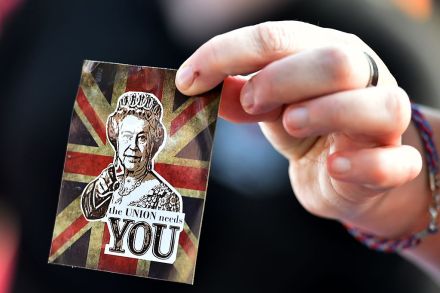
The continued existence of the United Kingdom is now at stake

From our UK edition

When they come to write the history of the Union’s demise, there will be three guilty men. Tony Blair was a transformative prime minister, but he nodded through devolution after allowing himself to be convinced that it was an administrative change, rather than an unravelling of the United Kingdom. Many believe Iraq to be the blot on his legacy but contracting out the rewriting of the constitution to the Scottish Labour Party would cut against anyone’s greatness. David Cameron has no claim to greatness, but he deserves to be the toast of Scottish nationalists.

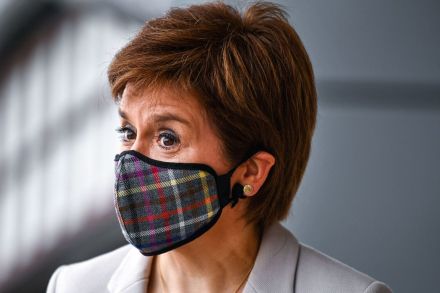
Nicola Sturgeon’s coronavirus failings

From our UK edition

The numbers have seldom been better for Nicola Sturgeon. Ten months from the next Holyrood election, the SNP is polling 55 per cent on the constituency ballot and 50 per cent on the regional vote. Support for Scexit has swung into the majority. Almost three-quarters of Scots say she has handled the Covid-19 pandemic well, compared to just 21 per cent for Boris Johnson. Yet in terms of the record, Sturgeon’s response to coronavirus has been at least as impaired as that of Boris Johnson. The UK Government has been criticised for its lack of pandemic preparedness despite the findings of a 2017 simulation called Exercise Cygnus. However, the Scottish Government had its own review, conducted the previous year and codenamed Silver Swan, which heard warnings of PPE and staff shortages.

Will the BBC become a victim of its own bias?

From our UK edition

The BBC is losing me. It’s a sudden estrangement and an unwelcome one but I can’t seem to shake it off. The cause is the Corporation’s coverage of this thing that is happening that we still don’t have a name for but definitely should not call a ‘moment’.  The butterfly effect from George Floyd’s killing is one of the biggest stories in a generation. Once revered men have been torn down; a new history is being written; radical propositions about race, identity and the regulation of ideas have burst into the mainstream. This may well be an overdue reckoning with a racist past and present, but it is accompanied by an intellectual terror that is making honest debate impossible. Liberal society itself is under attack.

Will you clap for Nicola?

From our UK edition

What will you be doing next Sunday at 8pm? If you live north of the border, the ideologically correct answer is clapping for ‘Oor Nicola’. Nicola Sturgeon is turning 50 and several thousand of her more enthusiastic admirers are planning to hold a clap in her honour. The news was reported, amazingly enough, not in the pages of Rodong Sinmun but in the Daily Record. The salutation to the Supreme McLeader is being organised through Facebook by Siobhan McCann. The Record quotes McCann saying: ’Our First Minister has done an exceptional job throughout what's been a strange year so far, to say the least. We clapped for our fantastic NHS. We even clapped for Boris at some point (why, I’m not quite sure).

Scotland’s Covid nationalists

From our UK edition

One of the rare upsides of living in a country run by nationalists is that nationalists are not great at hiding their true feelings. When you’ve got a superiority complex, it’s hard to prevent it from bursting out, often at the most inopportune times. Efforts to explain to outsiders that the SNP isn’t actually a more left-wing version of Labour, but a strategically savvier version of Ukip may fall on deaf ears but, sooner or later, the subjects of your hand-wringing will just come out with it by themselves. On Saturday, a modest band of Scottish nationalists just came out with it in dramatic fashion on the border with England.

Boris doesn’t understand the Union

From our UK edition

Boris Johnson’s statement that ‘there is no such thing as a border between England and Scotland’ is born of ignorance and neglect. In a legal sense, there is and always has been a jurisdictional boundary separating the two nations. It is what has made a separate legal system possible and the divergent laws and regulations that come with it. It is why homosexuality was still a criminal offence in Scotland until 1981, 14 years after decriminalisation in England and Wales, and why Gretna Green became an improbable destination for eloping English teenagers.