Stephen Daisley

Stephen Daisley

Stephen Daisley is a Spectator regular and a columnist for the Scottish Daily Mail

It’s time for Westminster to take on the SNP

From our UK edition

There will not be a legally binding referendum on Scottish independence next year. It’s important to bear this in mind when chewing over Nicola Sturgeon’s latest pronouncement. The SNP leader held a press conference on Tuesday morning to publish a paper on independence in advance of a plebiscite Sturgeon says will be held in 2023. She claims a mandate for such a vote from the 2021 Scottish Parliament election, in which the SNP and Greens ran on pro-referendum manifestos and won a majority of seats between them.

When will companies end their embarrassing Pride hypocrisy?

From our UK edition

June is Pride Month, the annual exercise in rainbow-washing, and if you listen very carefully you may even hear gay rights mentioned. You might be familiar with Pride Month from past years. On 31 May, the bank is offering you a fixed rate with a four per cent APRC; on 1 June, it wants you to know that, on the off chance you’re non-binary, your mortgage-lender thinks that’s valid. The most obvious way for a corporation to signal its commitment to inclusivity is to emblazon its corporate branding with the Pride flag, but this is increasingly fraught with difficulty. Because, you see, the Pride flag is no longer inclusive.

Is this the answer to Scotland’s drug death epidemic?

From our UK edition

Scotland could pioneer a scheme to cut drug deaths by allowing users to consume narcotics under supervision and with medical assistance on hand. The establishment of overdose prevention centres (OPCs) is proposed in a consultation launched yesterday by Labour MSP Paul Sweeney, who believes his Bill will 'implement changes that will save lives'. Sweeney, a former Royal Regiment of Scotland reservist, previously volunteered in an unofficial safe injection van in Glasgow and has told the Scottish parliament that he saw people saved from overdose. These centres would take what volunteers have already done and give it a legal framework. Although these centres are already used in parts of the US and Europe, Scotland would become the first UK jurisdiction to introduce them.

Are the Australian election results a bad sign for the Tories?

From our UK edition

Scott Morrison’s Liberals were absolutely thrashed in the Australian elections this weekend. The party’s vote collapsed, and there were big-name defeats, with the man touted as Morrison’s successor – Josh Frydenberg – ousted in Kooyong, a suburb which had been in the party’s hands for 121 years. Whatever went wrong for the Morrison government, Saturday’s results might have relevance closer to home, even if teasing out domestic lessons from elections on the other side of the world is problematic. Australia is a different country, with a different political culture and a different electoral system. Scott Morrison was also an unloveable figure — stolid, gaffe-prone and not outwardly empathetic.

The partygate scalp hunters can’t complain about the fallout now

From our UK edition

Robert Peston, the fiercely well-connected political editor of ITV News and a contributor to Coffee House, reports ‘a sense of injustice and considerable upset’ in Downing Street that ‘the 126 Partygate fines have been levied disproportionately on women and junior officials’. Robert quotes a source who complains that ‘the majority’ of those fined are ‘very junior diary managers’ on salaries of roughly £24,000 and that ‘these fines are really stacking up for them’. It seems there is considerable discontent among female staff fined ‘for events they were at with their male bosses who seem to have got away no problem’, and that ‘lawyering up’ appears to have made the difference.

Why is Lee Anderson boosting Laurence Fox’s Reclaim?

From our UK edition

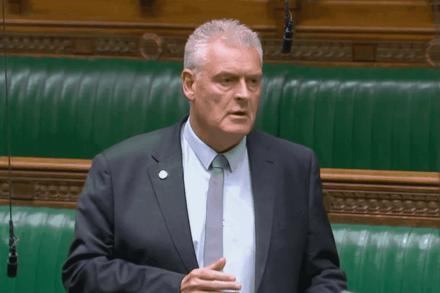
Tory MP Lee Anderson has been having quite a week. It began with his declaration in the Commons that there was no ‘massive use for food banks in this country’ and that the problem was ‘generation after generation who cannot cook properly’ and who ‘cannot budget’. This earned him a few front pages and a ministerial disavowal on Sky News, plus a scathing response from food writer and anti-poverty campaigner Jack Monroe. Then, on Friday, Anderson popped up on Lozza’s Lock-in, a podcast co-hosted by Laurence Fox, the actor turned scourge of wokery who founded and leads the right-wing Reclaim party. Monroe’s criticisms were put to Anderson who responded with his assessment of the Guardian writer.

Lee Anderson is wrong about food banks

From our UK edition

Who says the Tories don’t understand the cost-of-living crisis? So far obliviousness to the desperate circumstances of low-income (and not so low-income) families has been in evidence on the posho wing of the Conservative party. There was Rishi Sunak who said it would be ‘silly’ to provide more help with energy bills right now and better to wait and see what things looked like in the autumn. Not to mention environment secretary George Eustice who, offering some belt-tightening tips to struggling Brits, suggested ‘going for some of the value brands rather than own-branded products’ as a way to ‘contain and manage their household budget’.

Why are progressives scared of Elon Musk?

From our UK edition

Billionaire edgelord Elon Musk has just given progressives another reason to dread his ongoing attempt to buy Twitter. The founder of Tesla and SpaceX has confirmed that, should he succeed in acquiring the social media site, he would rescind the ban on Donald Trump’s account. Musk told the FT’s Future of the Car conference he would ‘reverse the permaban’ because it was ‘a morally bad decision and foolish in the extreme’. Twitter had managed to ‘amplify (Trump’s voice) among the right’, which was ‘morally wrong and flat-out stupid’. The culprit, Musk said, was the company’s ‘strong left bias’, adding: ‘Twitter needs to be much more even-handed.

Starmer must go – and take Boris with him

From our UK edition

Sir Keir Starmer has spent the past 24 hours in the witness protection programme. After the Mail on Sunday published an itinerary of the now infamous visit to Durham, complete with a gathering for beer and curry, the Labour leader’s version of events appears to be in doubt. This afternoon he was a no-show at an Institute for Government event. Then he turned up at a press conference at 4 p.m. and took a gamble: No rules were broken — I’m absolutely clear about that — but, in the event that I’m wrong about that and I get a fixed penalty notice, I’ll do the right thing and step down. The Labour leader is trying to outmanoeuvre the Prime Minister. Confident that he won’t be fined, he wants to draw a contrast between himself and Boris Johnson.

The Scottish Tories have been given a drubbing

From our UK edition

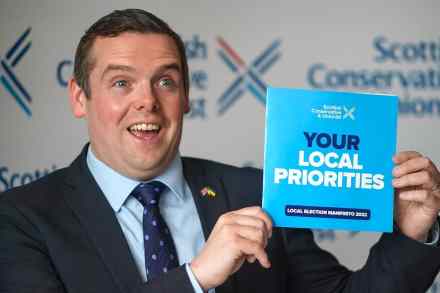
The Scottish Tories have suffered a meltdown in the local elections. The party, which came second in 2017, looks set to poll far behind Scottish Labour, marking an ignominious return to third place. Labour’s Scottish leader Anas Sarwar has seemingly made Unionist politics competitive once again. So, what happened? Boris happened. Specifically, partygate. The public’s fury was always going to burn the Scottish Tories but there was a moment when it looked like the party would insulate itself. Back in December, Scottish leader Douglas Ross drew a clear line, saying the Prime Minister should resign if he misled parliament. When it emerged in January that Boris had attended a party himself, Ross stood firm: the PM had to go.

Progressives are right about our rotten prisons

From our UK edition

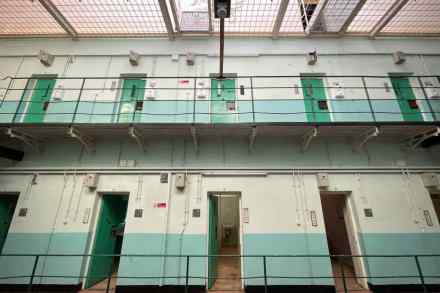
When we talk about ‘under-served communities’, we typically think in terms of an absent or neglectful state. Yet one of the most under-served groups of all is one for whom the state is never absent: prisoners. Justice secretary Dominic Raab is in the headlines after he sent prison and probation staff a style guide instructing them to avoid ‘woke’ terminology such as ‘service-user’ and ‘room’ and stick to ‘inmate’ and ‘cell’. On the face of it, Raab’s orders are another salvo in the culture wars and a bit of positioning by an ambitious deputy prime minister, but the Lord Chancellor might be onto something, if perhaps inadvertently.

This is how to save the Union

From our UK edition

Devolution has failed in Scotland. Nothing that follows will be of use to you if you remain in denial of this fact.  Facing up to a quarter-century of needless, self-inflicted constitutional harm is the admission price to any credible conversation about how to go about fixing the problem. Devolution, sold with the assurance that ‘the Union will be strengthened and the threat of separatism removed’, has weakened the Union and armed the separatists. All historic errors have their guilty men and devolution has an unholy trinity. Labour loves legends, especially those felled on the cusp of greatness, and Donald Dewar — MP at 28, architect of devolution, inaugural First Minister, dead at 63 — ticks all the boxes.

Israel is an apartheid state

From our UK edition

If you’re after evidence of apartheid in Israel, you don’t have to look very far. Amid rioting by Palestinians and Arabs, the Israel Police has declared the Temple Mount in Jerusalem off-limits. For ten days, only practitioners of one religion will be allowed to visit. For context, Temple Mount is home to the Holy of Holies, the most sacred site in Judaism, and is where the First and Second Temples stood until their destruction by the Babylonians and Romans, respectively. Following Jerusalem’s conquest by Islamic imperialists in the 7th century, a succession of caliphs worked to Islamise the Temple Mount by erecting Muslim worship sites including the Dome of the Rock, built on top of the old Jewish temple, and Al-Aqsa Mosque, the third-holiest site in Islam.

Free speech shouldn’t depend on billionaires

From our UK edition

If you take any interest in social media, Silicon Valley, or the culture wars — which all seem to be the same thing these days — you will be aware that the world is currently ending. At least, that is the impression given by those reacting to an attempt by Elon Musk to buy Twitter. Robert Reich, Bill Clinton’s former labour secretary, inveighs against Musk’s ‘libertarian vision’ for the internet as ‘dangerous rubbish’ and intones that it would be ‘the dream of every dictator, strongman, demagogue and modern-day robber baron on Earth’. (He also seems pretty peeved that Musk blocked him.

The problem with Boris’s Rwanda solution

From our UK edition

Is the Prime Minister’s plan to divert some asylum seekers to Rwanda racist? Is it inhumane? Is it a dead cat to distract from his fixed-penalty notice for breaching Covid rules? These are the questions fixating the political-media-activist class today and while they are not necessarily unimportant, they neglect a question that might be of more immediate concern to the average voter concerned about border integrity and abuse of the asylum system. Namely, will the Prime Minister’s plan work? To answer this, we must acknowledge its provenance in Australia’s policy of offshore processing, detention and turn backs, introduced in 2001 as John Howard’s Pacific Solution and reintroduced by Tony Abbott in 2013 as Operation Sovereign Borders.

Who governs Britain? Not ministers, it seems

From our UK edition

Who governs Britain? It’s a dangerous question, as Ted Heath learned half a century ago. But while he was concerned with untrammelled unions, ministers today must contend with another unelected cadre calling the shots. The difference is that now, like in so many horror movies, the calls are coming from inside the house.  The Telegraph reports that the Ministry of Justice has appointed a ‘transgender employee support officer’. That in itself is hardly surprising. What does stand out is the reason for the appointment.

Douglas Ross has become Boris Johnson’s human shield

From our UK edition

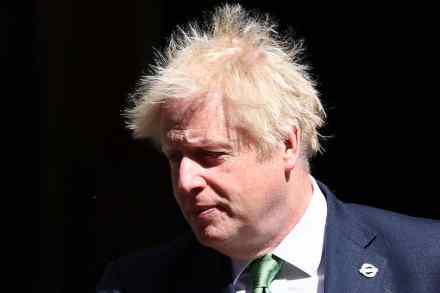
If Boris Johnson has a superpower, it is the ability to make others pay the price for his wrongdoing. Today the whipping boy is Scottish Conservative leader Douglas Ross, though it must be said Ross walked clear-eyed into the path of the scourge. That’s another of the Prime Minister’s skills: he can convince people that it would be in everyone’s interest if they maximised their exposure to political risk so that he may minimise his. In the run-up to the Iraq War, a bunch of peace-mongering oddballs flew to Baghdad to offer themselves as human shields and Tories who volunteer to take flak for Boris give off much the same energy.

Boris deserves credit for his Ukraine response

From our UK edition

Boris Johnson’s visit to Kyiv is notable not only for its unannounced nature but for the additional package of support for Ukraine it has heralded. The Prime Minister pledged 120 armoured vehicles, new anti-ship missile technology, and a further £385 million in World Bank lending. The government will also permit tariff-free imports of Ukrainian goods to the UK, something requested by Volodymyr Zelensky. The announcement followed on the heels of extra military hardware, set out yesterday, which included anti-aircraft and anti-tank missiles, as well as precision-strike kamikaze drones. That package totalled £100 million and is additional to the £394 million in grant aid to fund humanitarian services.

Is Israel facing a new Intifada?

From our UK edition

Dizengoff Street is one of the busiest thoroughfares in Tel Aviv, a strip of bars, restaurants and Bauhaus architecture that is typically bustling with young people on a Thursday evening. Last night, it was the scene of the latest Palestinian terror attack when a gunman opened fire outside the Ilka bar, killing three and wounding nine. One of those killed was Olympic kayaker Barak Lopen, who represented Israel at Beijing 2008 and London 2012. In the past two weeks, 14 Israelis have been killed by a mixture of Palestinian and Israeli-Arab terrorists. For comparison, there were 17 terrorism-related fatalities in the entirety of last year. I asked on Coffee House last week if Israel was in the midst of another wave of terrorist violence. Dizengoff Street answers that question.

The revealing backlash to Boris’s Channel 4 sell off

From our UK edition

Why is there so much anger over the sale of Channel 4? Tonnes of slebs are very cross and have signed a petition. But there’s no guarantee it will actually happen now that some Tory backbenchers have expressed their misgivings. If I were a Tory and cared at all about this issue — which, to be clear, you shouldn't — I’d be mindful of the Prime Minister's track record when it comes to matters requiring a backbone. Grassroots and instinctive Tories bear the brunt of his laziness and disloyalty. It is, after all, the things they care about – the things they love and hate and believe in and fear – that are sidelined by a Prime Minister who doesn't govern like a conservative for the wholly legitimate reason that he isn’t one.