Sebastian Payne

Slashing and burning the civil service, or just skimming off the top?

From our UK edition

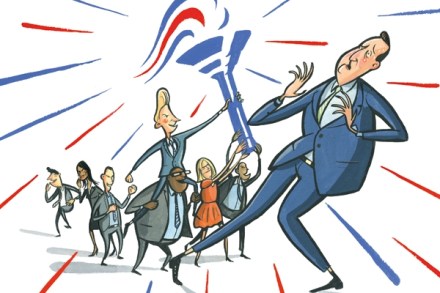
Are Francis Maude's £5.5bn savings in central government spending a significant step forward in his battle to shrink the public sector? In today's Telegraph, the Cabinet Office minister explains the beneficiaries and sources of the latest cutbacks: Today I can announce that in 2011-12 we saved £5.5 billion. This is the equivalent of around £500 for each working household in Britain or enough money to fund 1.6 million primary school places. How did we make these savings? Within the first days of this Government we introduced tough temporary spending controls. These limited expenditure on IT contracts, property, marketing, temporary staff and consultancy. While civil service spending has steadily decreased — £3.
The View from 22 — Unionist gold and the coalition’s new economic strategy

From our UK edition

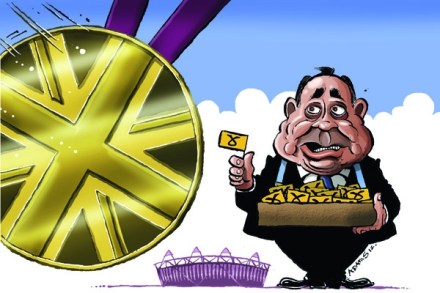
Have Alex Salmond’s hopes for Scottish independence died, thanks to the Olympics? In this week’s cover feature, Iain Martin writes that the national pride and spiritual unification emanating from the 2012 games have finished off the SNP’s hopes of a break from the union. On this week’s View from 22 podcast, Iain recounts when he first realised Salmond had a serious problem: I was sitting on Friday and Saturday on the shore of Loch Fyne in the Highlands watching Team GB do these extraordinary things. I felt a wonderful feeling of togetherness and it seemed to me that it was the perfect riposte to narrow nationalism and the peevish attitude of Salmond and the nationalists. Salmond knew when the Olympics started this was going to be a problem for him.

Labour’s lead doesn’t mean Miliband’s a winner

From our UK edition

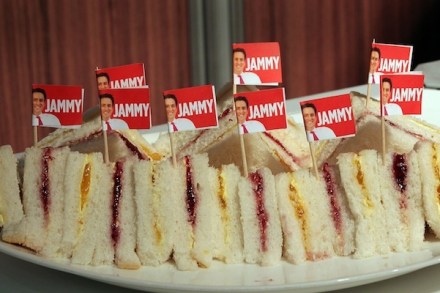
He's the main beneficiary of the failure of the boundary reforms, and he's also leading the most popular party, according to the latest poll from YouGov. Things are looking rosy for Labour leader Ed Miliband, with his party holding a 10-point lead over the Conservatives. Labour is also the party of choice on the NHS, education, taxation and unemployment. Of course, it's not exactly unprecedented for an opposition party to be ahead in the polls at this stage in a parliament, and it's worth looking at Miliband's own position too when assessing whether he can lead his party to glory in 2015.

What is in Nick Clegg’s shopping basket for the Lib Dem conference?

From our UK edition

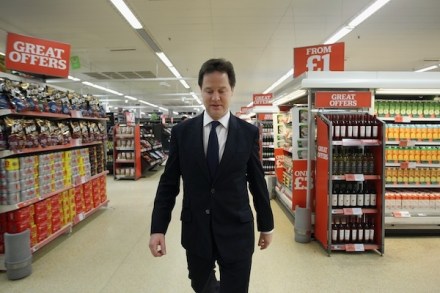
Now that Lords reform is entirely off the agenda, Nick Clegg faces the complicated task of negotiating a policy battle to keep his party happy. Pursuing AV and an elected House of Lords were core to Clegg's justification to his party for power, so he now has to find something significant to avoid 'going naked' to his conference in September. We'll find out more in the next hour about what the Lib Dems' intentions are for the boundary reforms, which they have linked with Lords reform, but Clegg will want other policy victories, not just battles, to show he is delivering. These are some of the likely policies the Lib Dems may now push for: More representation in the government Likely.

The morning-after for Borismania

From our UK edition

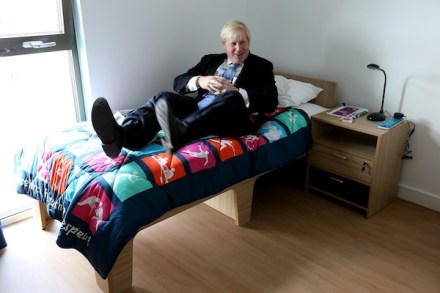
If yesterday was the peak of enthusiasm for Boris Johnson's hopes for the Tory leadership (Guido noted that every broadsheet commentator discussed the Mayor of London in their Saturday columns), then today is very much the morning after. The first sobering voice came from William Hague as he popped up on Sky News to warn Boris against a leadership putsch. 'Boris is doing a great job as Mayor of London and people love him the more they see him, and that's great… but I think it is true to say - and certainly it is true for me - that I hope and believe that we are not looking for a long time for any new leader of the Conservative Party.

The rise of tougher exams

From our UK edition

The case for reform of secondary school exams gained further momentum today with the revelation that the number of schools using Cambridge IGCSEs has increased by 300 per cent since 2010. Michael Gove allowed state schools to enter pupils for these 'tougher' tests two years ago, and the state sector now accounts for almost half of IGCSE entries: But not everyone is enamoured with Gove’s plan to return to more exams and less coursework.

The View from 22 – Drone wars and Olympic triumphs

From our UK edition

Are flying killing robots about to change our lives? Mary Wakefield interviews technology expert turned thriller writer Daniel Suarez in this week's magazine, who believes the day of killing drones is fast approaching. In our latest View from 22 podcast, Mary examines the fast approaching juncture faced over drone warfare: 'One of these [fast approaching technologies] is giving drones, which are military planes without pilots, the ability to make decisions to kill themselves. At the moment, drones are piloted by remote control operators — young kids with joysticks in the Nevada desert — but they've got the technology now to let the drones decide to kill things.

The house price slide continues

From our UK edition

Hidden behind today’s gushing Olympic headlines lies more disappointing economic news. Nationwide’s latest House Price Index release today shows that house prices are continuing to fall, with a 0.7 per cent decline in July. As the graph below shows, the fall in prices is a continuation of a trend that began when the country re-entered recession earlier this year: The latest figures put prices down 13 per cent on their 2007 peak and 2.6 per cent lower than this time last year. Last year the average house price was £168,731: now it is £164,389. But if you look at these trends in an international context, Britain's prices appear relatively resilient.

Comments closed for maintenance

From our UK edition

UPDATE: Comments are now open again. Historic comments are trickling through and should all appear within the next 24 hours. As part of our transition to our new home for Spectator Blogs, we are closing comments while we transition the system back over to Disqus. Please bear with us, and they will be back soon.

New home for Spectator Blogs

From our UK edition

If you are reading this, you have successfully made the jump to Coffee House's new home on blogs.new.spectator.co.uk. Since relaunching the Spectator website six weeks ago, we've listened to all of your feedback and have been working to improve the experience for our loyal readers. To bring you a faster, more flexible and reliable site, we have split off the blogs to this new address. You should notice nothing, except things simply working better. All of your comments have been lovingly preserved, although there may be a slight gap as they make the journey across over the next few days. All of your old links will continue to work and all of the blogs going back to 2007 is present and correct.

The View from 22 – Cameron on the run

From our UK edition

Have the Tories' manoeuvres over Lords reform signalled the end of the coalition? In this week's magazine, our leader argues that Tuesday's rebellion shows that Tories are back in full force, while James Forsyth writes that a coalition break-up date before 2015 is now not a case of if, but when. But Nick Clegg is not the only party leader to suffer from Tuesday's Lords revolt. In this week's View from 22 podcast, recently-resigned PPS Conor Burns MP accuses David Cameron of not appealing sufficiently to his own party: You see this so often when you watch interviews on television - someone speaking for the coalition, you see someone speaking for the Liberal Democrats but you rarely see someone who is poised to speak for the Conservative Party.

The censorship Olympics

From our UK edition

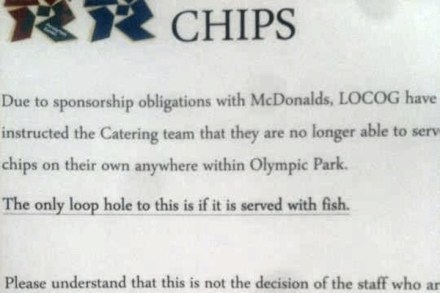
The Olympics may just 16 days away but will the spectators be able to find chips? The shocking picture above shows the real effect of the Censorship Olympics. Thanks to a lucrative sponsorship deal with McDonalds, all other catering teams are forbidden from serving chips anywhere within the area of London categorized as Olympic Park — unless they come with fish.   The Soviet-style roadlanes are bad enough, but the right to sell a bag of chips to anyone who wants one is fairly fundamental in Britain — and Nick Cohen writes the cover story tomorrow on how many other fundamental rights have been flogged to the IoC and their sponsors. The result, Cohen says, is a 'corporatist dystopia.

The View from 22 — chancellor on the charge

From our UK edition

Did those around Gordon Brown create the conditions for the Libor fixing scandal? According to George Osborne, the answer is yes.  In his cover feature this week, James Forsyth speaks to the Chancellor of the Exchequer, who takes aim at his opposite number, stating those in the last government were 'clearly involved.' In our latest View from 22 podcast, James discusses how the trail may lead to these key figures from the last government: 'During the 2008 financial crisis, it seems there was a concerted effort to keep Libor low. This prevented banks from being nationalised. But it also raises the question of whether anyone from the last government was involved in these attempts to keep the Libor rate down.

The Whitehall monster would kill any data revolution

From our UK edition

Could the government save £33 billion a year through better use of data? That's the claim of a new report from Policy Exchange, which highlights how the government has failed to modernise and make efficient use of huge amounts data sitting at its disposal. Although playing with information isn't exactly glamorous government, the inefficiency highlighted by this report makes its own case. The report's author Chris Yiu argues: 'Across the public sector, extraordinary quantities of data are amassed in the course of running public services – from managing welfare payments and the NHS, through to issuing passports and driving licences. Finding ways to share or link this data together has the potential to save time for citizens and money for taxpayers.

Warm words on a referendum won’t kill off UKIP

From our UK edition

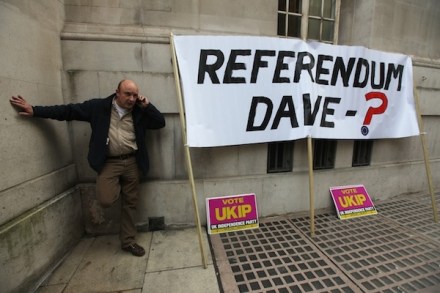
Has David Cameron now shot the UKIP fox? The Prime Minister has now put a referendum on the political agenda. No.10's thinking, as revealed by James Forsyth weeks ago, is that the weekend's high-profile posturing will see off the UKIP threat. The PM has given it a decent amount of welly in the Commons today too, calling for a 'fresh deal' and 'fresh consent' on Europe. We can take this to mean renegotiation followed by a referendum on membership. But today, Cameron also made clear he'd campaign for an 'in' vote, stating: 'I don't believe leaving the EU would be right for Britain, but nor do I believe voting to maintain the status quo would be right either.

The View from 22 – rage against the machine

From our UK edition

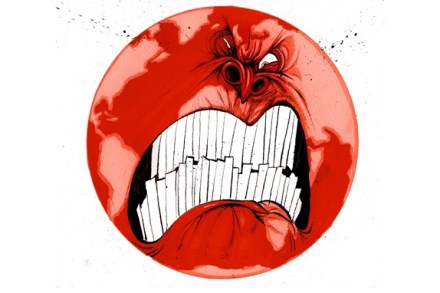
Has the world become one huge ball of anger? As a follow-up to his book A Bee in the Mouth, Pete Wood examines how ostentatious rage — once the preserve of Americans — is now spreading to Europe and taking over the world in this week's cover feature. In our latest View from 22 podcast, Freddy Gray and Fraser Nelson discuss this growing anger, much of it resonating from technology: 'If you look at internet commenters or trolls, you can see the natural human default position when in front of technology is to be as angry as possible. But only if you are anonymous, the internet has given the cloak of anonymity. If people were forced to give their name they would be more polite. But there is a lot of bile swirling around the internet right now...

Blair’s bid for elder statesmanship

From our UK edition

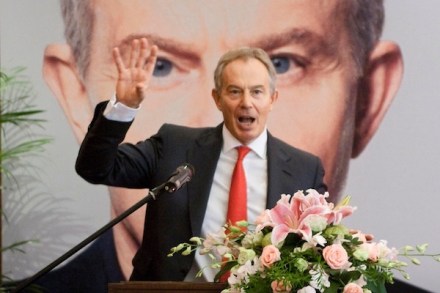
Tony Blair has chosen this summer to launch his re-entry mission into British politics. He hired a UK communications director in May, guest-edited the Evening Standard yesterday and agreed to a rather intriguing interview in same paper, stating he would like to return to office, while accepting it was not likely. So what is the aim of Mr Blair's new campaign? Blair had little choice than to take a back seat during the Brown premiership. But the dismal failure of his successor, followed by Miliband's growing authority and strong Labour polling, makes now the perfect time for the former prime minister to start rehabilitating his image. Until now, he has yet to take up a peerage, as many former Prime Ministers have done.

Working together is crucial to beat cyber threats

From our UK edition

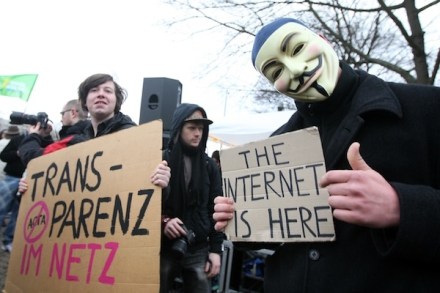
A speech earlier this week by unmasked-spy Jonathan Evans has put the threat of cybercrime back into the national consciousness. The MI5 director general spoke at Mansion House earlier in the week to warn of ‘real damage’ caused online — highlighting one London business which suffered a £800 million loss following an attack. He stressed the need to introduce snooping powers: ‘It would be extraordinary and self-defeating if terrorists and criminals were able to adopt new technologies in order to facilitate their activities while the law enforcement and security agencies were not permitted to keep pace with those same technological changes,’ he said.

The View from 22 – the rise of the 2010ers

From our UK edition

Is David Cameron's greatest threat sitting inside his own party? In this week's cover feature, James Forsyth examines the radical new mood that is taking shape among some of the 2010 intake of Tory MPs. On our View from 22 podcast this week, Liz Truss MP, a member of the 'Free Enterprise' group, gave us a flavour of her views on how the government should be improving the economy 'When we joined Parliament, we'd already seen the financial crisis from the outside. We were questioning the basis on Europe and the US was being run — increasing debts at the expense of a productive and competitive economy. What we wanted to do with the Free Enterprise group is to say to people in Britain, we need enterprise to get the economy going. Making a profit is a good thing.

The ideological quandary over Gove’s curriculum reform

From our UK edition

Primary school children studying subordinate clauses and foreign languages? What an outlandish but suddenly very real idea. Michael Gove announced earlier this week a curriculum reshuffle to restore rigour and aptitude to primary education. But why is liberalising Gove instigating a top-down approach, prescribing what teachers teach?   It’s not the first time that Gove’s policies have become contradictory. Earlier this year, Tristram Hunt MP wrote a magazine article about the Tory divide over forcing secondary schools to teach British history while also increasing their freedom.   The Times’ Alice Thompson (£) provides an answer for these dilemmas in her column this week.