Sarah Crompton

The pioneering women of modern dance

From our UK edition

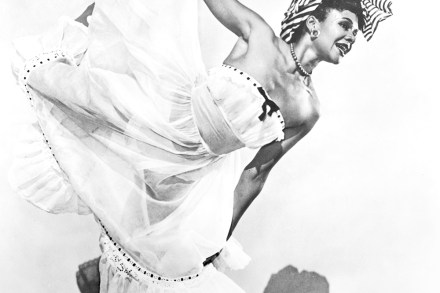
Arms outstretched, head thrown back, flounced skirt rippling over a raised leg. The 1942 photograph of Sophie Maslow dancing in her own creation Folksay makes her look as if she is performing in Seven Brides for Seven Brothers or some MGM musical spectacular. Yet Maslow was a radical artist, who asserted that modern dance was a transformational power for good, and devoted her 50-year career to the belief that it belonged to everyone. In Folksay, she danced to the Dust Bowl ballads of Woody Guthrie, conjuring an inclusive version of America by reshaping the view of its pioneer spirit. Loie Fuller’s groundbreaking serpentine dance transformed her into a flame, or an orchid, or a cloud She told Dance Magazine in 1946: This is the Age of the Common Man.
Lord of the dance: the genius of George Balanchine 

From our UK edition

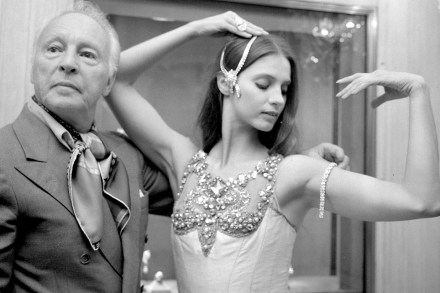
Sex and dance were the twin themes of George Balanchine’s life. ‘I am a cloud in trousers,’ he said, using a phrase borrowed from the Russian poet Vladimir Mayakovsky. Jennifer Homans quotes the sentence early in her biography of the man who co-founded New York City Ballet: What this suggested, and it was a central theme of his life, was that he felt like a man with two bodies and he lived in them both simultaneously, with at times heartbreaking personal consequences. The first was the trousers – the earthly man, delighted by sensual feelings and desires, who loved good food, fine wine, beautiful women... The cloud or breath was something else, and he saw it as the source of his gift.

The lonely genius of Bronislava Nijinska

From our UK edition

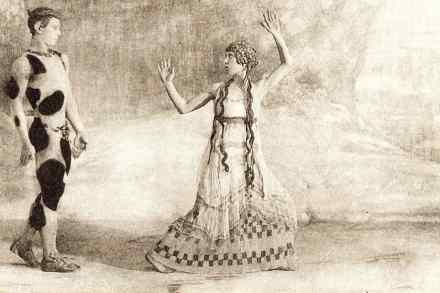
Even in her lifetime, people had a habit of overlooking the talent of Bronislava Nijinska. Her famous brother Vaslav Nijinsky initially refused to recommend her to his lover Sergei Diaghilev when the impresario was signing up dancers for the 1909 Paris season of Ballets Russes. He didn’t introduce her to his friends, either and – in what can only be seen as an act of cruelty – took away her roles in the ballets she had helped him create. Diaghilev himself, whom she regarded as a father figure, treated her with something like disdain, declaring: ‘I cannot have two geniuses of the dance from one family’, and asked her to dye her hair red ‘and dress more like a ballerina’.

Rip it up: the vaccine passport experiment needs to end

From our UK edition

38 min listen

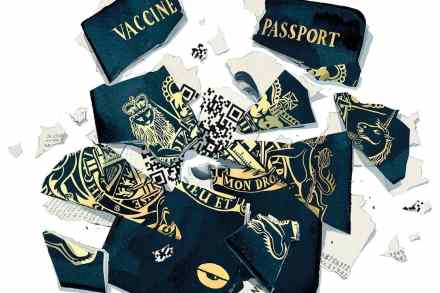
In this week’s episode: Is it time to rip up the idea of vaccine passports? In The Spectator’s cover story this week, our economics editor Kate Andrews writes about her disdain for the idea of vaccine passports after being exposed to their flaws first hand. She joins the podcast along with Professor Julian Savulescu from the University of Oxford. (01:01)Also this week: Is Covid putting a spotlight on understudies?In this week's Spectator, Sarah Crompton champions the understudy as one of the heroes of the pandemic. These are the community of stand-in actors who have kept productions alive during Covid. She is joined on the podcast by Chris Howell, understudy to Michael Ball in Hairspray last year and currently stand-in for Julian Clary at the Palladium, to discuss.

In praise of understudies

From our UK edition

The actor Ronald Fraser was famous for two things: his comic timing and his liking for a drink. On one occasion in the 1960s, he was happily sitting three sheets to the wind in a local hostelry, when he remembered that he was supposed to be on stage at a matinee. After walking unsteadily to the theatre, he stood in the wings and heard someone else in his role: the understudy, holding the audience in the palm of his hand. His name was Donald Sutherland, and he was revealing the quality that took him from bit parts on the London stage to worldwide stardom. The importance of understudies and covers has been elevated to new heights by the Covid pandemic. Leading men and ladies are dropping out the world over.

Watching from the wings

From our UK edition

The story of Sweetpea Slight is a footnote to a footnote in the annals of British theatre. Even her name suggests it — a gentle, fragrant vanishing off the bottom of the page. In fact, it isn’t even her real name (which is Jane), but one given her by her formidable boss, the theatre producer Thelma Holt. She spotted her as a gangly, impressionable 18-year-old on an internship at the Theatre of Comedy in 1984, deflected her from her plan to become an actor and swept her into the role of factotum, where she remained for 20 years. The moniker caused one moment of confusion, when it emerged that Dustin Hoffman, in London to play Shylock in Peter Hall’s production of The Merchant of Venice, produced by Holt, answered to the same.

Dancing like a demon

From our UK edition

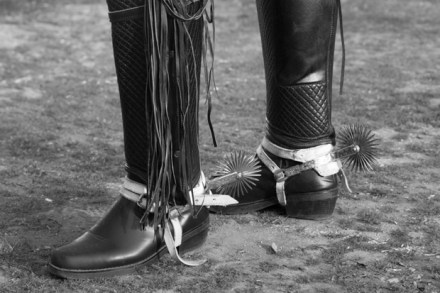
‘Anything becomes interesting if you look at it long enough,’ said Gustave Flaubert. He might have been talking about this slim volume, which takes a slimmer subject and inflates it to an epic of noble proportions. The subject is unpromising. ‘This is the story of a man who took part in a dance contest,’ runs the opening line. It’s hardly one to set many hearts racing, especially since the event in question is no glitzy Strictly Come Dancing, screened on television for millions. Instead, Leila Guerriero’s focus is the world championships in malambo, an obscure Argentinian dance, whose annual apogee takes place in Laborde, a town of 6,000 inhabitants in the middle of the flat, fertile pampas.