Sarah Churchwell

The evasions of smalltown Alabama: The Land of Sweet Forever, by Harper Lee, reviewed

From our UK edition

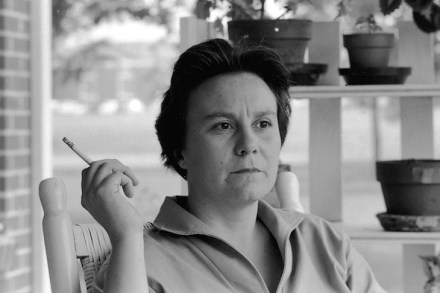
Harper Lee’s writing career was brief, but her single novel became one of the most famous in American history. To Kill a Mockingbird (1960) won the Pulitzer Prize, sold tens of millions of copies and remains a fixture of classrooms and popular memory. She published almost nothing else until Go Set a Watchman – an earlier draft of Mockingbird – appeared in 2015, just before her death and perhaps without her meaningful consent. The Land of Sweet Forever gathers apprentice stories written before Mockingbird, along with a few later magazine pieces. Most are slight and the volume is more commercial than literary.

Murder at the funeral

From our UK edition

Harper Lee’s To Kill a Mockingbird remains one of the most beloved American novels of all time. Famously, Lee never completed another book, once declaring she’d ‘said what I wanted to say and I will not say it again’. But a journalist who went to Lee’s home in Monroeville, Alabama in 2015 learned of another book that Lee had worked on, perhaps for decades — again the story of an Alabama courtroom trial with a black defendant and white lawyer, but this one was true. Lee does not appear to have finished that book, but the journalist who discovered the story, Casey Cep, has: the result is Furious Hours: Murder, Fraud and the Last Trial of Harper Lee.

The final frontier

From our UK edition

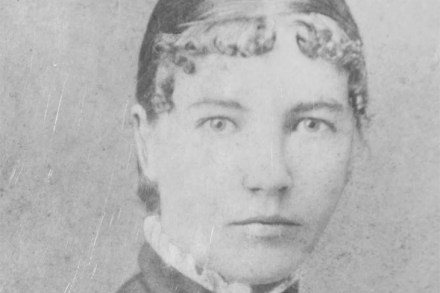
In 1932, the Daily Plainsman of Huron, South Dakota, ran a feature about a local woman convalescing in hospital. Grace Dow had been visited by her sister, Carrie Swanzey, who read a children’s book to her. What made this mundane story newsworthy was that the book was called Little House in the Big Woods, and the women sharing it were the sisters of its author, Laura Ingalls Wilder. The book told of their family’s decision 50 years earlier to leave the Big Woods of Wisconsin and head west as pioneers, travelling by covered wagon through Iowa, Missouri, Kansas, Nebraska, Minnesota and into South Dakota, where they eventually settled in nearby De Smet, in 1879.

What the secretary saw

From our UK edition

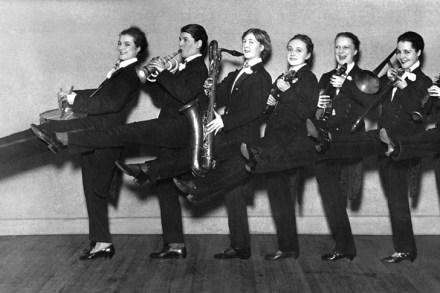
What the secretary sawSarah Churchwell Big Bosses: A Working Girl’s Memoir of the Jazz Age by Althea McDowell AltemusUniversity of Chicago Press, £10.50, pp. 220 In 1922, writing a facetious review of her husband’s second novel, The Beautiful and Damned, Zelda Fitzgerald made an ironic reference to the fact that Scott Fitzgerald had used sections from her diary in his novel: ‘It seems to me that on one page I recognised a portion of an old diary of mine which mysteriously disappeared shortly after my marriage…’. 1922 was the same year in which Fitzgerald would later set The Great Gatsby, in part as a tribute to the other great modernist works of that literary annus mirabilis.

A rollicking satire on the way we live now

From our UK edition

Jonathan Franzen’s latest novel, Purity, comes with great expectations. Its author’s awareness of this fact is signalled by a series of lampoons of writers expected to produce ‘big books’, writers named Jonathan and an assortment of other self-referential gags, but also the fact that its eponymous heroine, Purity Tyler, is nicknamed Pip. This Pip’s expectations are played off against those of Franzen’s readers: she won’t get what she expects, of course, any more than Dickens’s original Pip did. But to a great extent, our expectations will be met: this is a ‘big book’, a rollicking, sharply observed contemporary satire of family life and cultural politics.

Snow White or black beauty?

From our UK edition

God Help the Child, Toni Morrison’s 11th novel, hearkens back to two of her earliest. Like The Bluest Eye, it is a story of internalised racism and paedophilia; like Tar Baby it is a fable about sexual and racial autonomy in the form of a love story between a beautiful, vain woman and a man who thinks she has lost her moral compass. But unlike those earlier efforts, Morrison’s latest book offers only the most inconsequential answers to questions of grave consequence. Her abiding interest has always been self-possession and self-recovery, an especially charged problem for black people in a racist culture; but this novel reads like a précis of those themes, in which conviction substitutes for complexity — a colouring book that no one bothered to colour in.

Eugene O’Neill: the dark genius of American theatre

From our UK edition

George Bernard Shaw called him a ‘Yankee Shakespeare peopling his isle with Calibans’. He was dubbed ‘a fighting Tolstoy’ and ‘the great American blues man of the theatre’. Before he was 35, Eugene O’Neill had emerged as the first real titan of American theatre, a preeminence he has never lost. When Sinclair Lewis was awarded the Nobel Prize in 1930, he responded that they should have given it to O’Neill, because he had done ‘nothing much in American drama save to transform it utterly… from a false world of neat and competent trickery to a world of splendour and fear and greatness’. O’Neill’s struggle to wrench American theatre into splendour, fear and greatness is the subject of Robert M.

The thrill of the chaste

From our UK edition

Sarah Churchwell says the American craze for Amish romance novels — ‘bonnet-rippers’ — is just one part of a strange new fashion for conservatism and abstinence It has been 25 years since Peter Weir’s hit film Witness, in which Harrison Ford plays a policeman who falls in love with an Amish woman while investigating a murder. In America the Amish existence has a romantic appeal, it’s a return to a simpler way of life, and Witness exemplified this in its most famous scene, when the detective and the Amish woman dance to Sam Cooke’s 1960 classic oldie ‘Wonderful World,’ a song that begins, appropriately enough, ‘Don’t know much about history’.

The supernatural is as British as fish and chips

From our UK edition

We’re all accustomed to stories about credulous Americans; as an American living in Britain I am constantly asked to defend the 43 per cent of my compatriots who believe in creationism. We’re all accustomed to stories about credulous Americans; as an American living in Britain I am constantly asked to defend the 43 per cent of my compatriots who believe in creationism. Naturally, I can’t begin to; they’re the same people who voted for Bush, after all, which I find a far more mind-boggling proposition. But before British readers get too cocky, let it also be remembered that last year a poll showed that 22 per cent of Britons believe in creationism; 43 per cent believe in telepathy and 36 per cent believe in ghosts.

Sex and the City has nothing on screwball comedy

From our UK edition

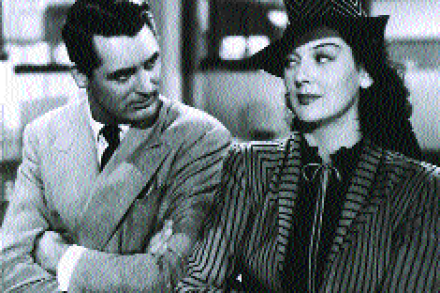
You can learn a great deal about a culture from its fantasies. If Sex and the City is anything to go by, ours are pretty impoverished. The first film version of the HBO series is going into production and will be released next year, guaranteed to offer its trademark view that femininity today is defined by shoes, shopping and sex. I like all three as much as the next girl — unless the next girl is a character on Sex and the City — but my fantasies are rather more ambitious. They were formed years ago by a passionate devotion to the peerless romantic comedies of the 1930s, known as screwballs.