Sam Meadows

Sam Meadows is a journalist based in South America.

Chile flirts with a rightward turn

From our UK edition

A border ‘ditch’ may prove to be the thing that brings the right back to power in Chile. Although the communist-affiliated candidate Jeannette Jara leads the polls going into this weekend’s election, a second-round run-off seems almost certain, with a consolidated right-wing alliance – running on a platform to cut illegal immigration – likely to win the final showdown. Jose Antonio Kast, the leading right-wing candidate, is a hardliner who admires both Donald Trump and El Salvador’s President Nayib Bukele. He has promised to rule with ‘mano dura’ (an iron fist). He says drug dealers will be held in in solitary confinement and has pledged to construct a series of ditches and walls to secure Chile’s northern border.

Is it curtains for Milei?

From our UK edition

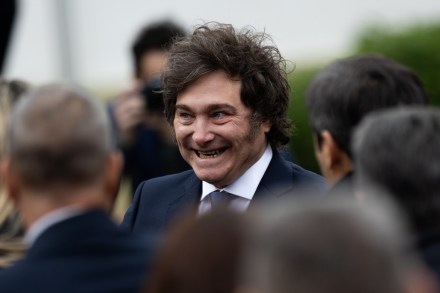
Javier Milei never professed to be humble. But publishing a book about his presidency entitled Constructing the Miracle? Fronting a rock concert to launch it? Singing ‘I am the king’ to the crowd? He did all this on 7 October, and well, it was a step up. Perhaps Milei should be more humble. In recent weeks he borrowed some $20 billion from Donald Trump and the United States to prop up the remnants of his ‘miracle’. Despite being lauded internationally for much of his first two years as president for reining in inflation and delivering a fiscal surplus, the cracks Milei has been papering over have now become chasms.

Trump has bought Milei some time

From our UK edition

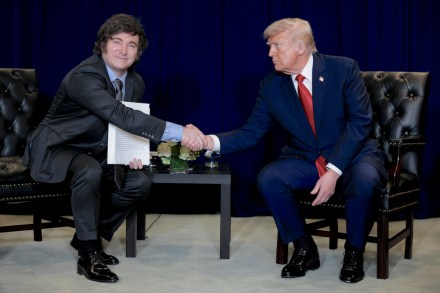
As he stared up from the bottom of an increasingly deep economic hole, Javier Milei has been offered a ladder from the likeliest of sources: Donald Trump. The US president has called Argentina’s leader his ‘favourite president’, and he appears to be a fan of the sideburned iconoclast’s libertarian ideals. But in Argentina, Milei’s ideals are becoming increasingly worthless. Midterm elections are approaching, and the Argentine government has spent more than $1 billion propping up its currency. US Treasury Secretary Scott Bessent offered a significant shot in the arm to Argentina when he said this week that the US ‘stands ready to do what is needed’ to support their economy. Argentina is already in deep with the US-based International Monetary Fund.

Javier Milei is struggling

From our UK edition

Is patience with Javier Milei finally wearing thin? The bombastic leader of Argentina was sent a clear message of discontent by the electorate last week when he lost the province of Buenos Aires in a landslide local election. Although the contest has little consequence for the national picture, it will be causing consternation in Milei’s camp. The province, which does not include the capital city’s metropolitan area, is home to roughly 40 per cent of Argentine voters. Such a heavy loss just over a month before national midterms is a serious cause for concern. Milei is used to winning. He swept into power in 2023 with a crushing defeat of the Peronist opposition.

Inflation could not end soon enough for Javier Milei

From our UK edition

In Wild Tales, one of the most famous Argentine films of recent years, the character played by the actor Ricardo Darin decries the cost of a birthday cake he is buying for his daughter. ‘Is it imported?’ he asks the women behind the counter, a nod towards the eye-wateringly high cost of imported goods in Argentina. At the end of May, in a case of life-imitating-art, Darin inadvertently sparked a row with Javier Milei’s government over the cost of another staple foodstuff: the empanada. Appearing on La Noche de Mirtha, a cozy evening talk show, Ricardo Darin decried their cost, saying a dozen empanadas can now easily cost 48,000 pesos – roughly equivalent to £30.

Illegal gold mining is blighting Peru

From our UK edition

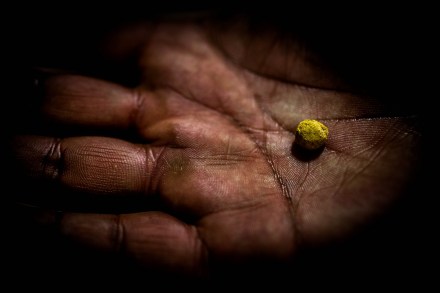
It was gold that brought the Spanish conquistadors to Peru in the 1500s. More than 500 years on and the precious metal is still causing problems. Gold mining came into sharp focus at the end of April when 13 miners were found, naked, bound and gagged, at the bottom of a mine in Pataz which had been taken by an armed gang. Some bore signs of torture and there was evidence they had been executed. The main suspect behind the attacks was arrested last week. Peru’s illegal gold rush has become increasingly bloody in recent years. Some 39 workers at the Pataz mine have been killed in the past three years, according to the Peruvian mining company Poderosa, which was the victim of the recent attacks. Criminal groups are vying for control over a resource which represents big business.

Bolivia’s fuel crisis could cause a populist turn

From our UK edition

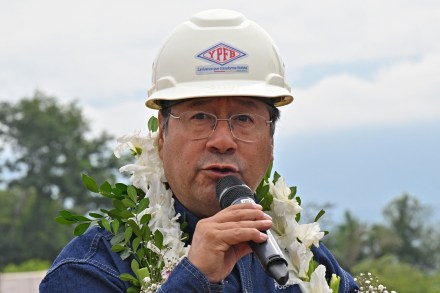
‘Some of them will have been waiting for two days.’ My taxi driver was pointing at a queue of lorries, vans and cars stretching essentially the entire length of Villazon, a small town on Bolivia’s border with Argentina. At the front of the queue? A petrol station. Bolivia is in the grip of a severe fuel crisis. Bolivia has traditionally been heavily reliant on natural gas exports, but a collapse in production after years of government neglect has sparked shortages, causing the long queues at petrol stations. The country, the only landlocked nation in South America, and also one of the poorest, is currently importing substantial amounts of fuel. The drop in exports has also seen reserves of foreign currencies dry up, putting further pressure on government finances.

Milei freed the peso. Argentina’s economy survived

From our UK edition

It was Argentina’s ‘liberation day’, Javier Milei proclaimed last week after meeting US Treasury Secretary Scott Bessent in the Pink House, Argentina’s presidential palace. On Friday, he had shocked the country by lifting the cepo – ‘clamp’ in Spanish – which has restricted currency trades in South America’s second-largest economy for so long. ‘After 15 years of capital controls, we have cast off the anvil to which we were chained,’ Milei said. Lifting the cepo was a key part of Milei’s policy agenda. Nevertheless, few expected him to do anything before mid-term elections in October. But doing so was a key requirement of the disbursement of $20bn from the International Monetary Fund, also announced on Friday.

Javier Milei has cut poverty

From our UK edition

Javier Milei has reduced poverty in Argentina. This week brought the publication of a tranche of government poverty figures, covering the period from July to December last year. Much had been made of the immediate surge in poverty that occurred in Milei’s first six months in office. The fall – down to 38.1 per cent from 41.7 per cent in the same period last year, when the country was governed by the Peronists – would seem to be a vindication of the chainsaw-wielding libertarian and his policies. But is there more to it than that? Milei came into office promising to shatter the country’s economic approach and bring the country’s inflation crisis – which had been teetering on the edge of disaster – under control. He has been successful at doing this.

The reason Javier Milei is releasing Argentina’s secret Nazi files

From our UK edition

In the Oscar-nominated movie The Holdovers, one of the characters says in a moment of frustration: ‘I thought all the Nazis ran away to Argentina.’ This line got a big laugh in cinemas in Buenos Aires. But while the events this joke alludes to now lie far enough in the past for today’s Argentines to chuckle at, the flight of Nazis to its shores remains an extremely uncomfortable period in the history of the South American country. Many former Nazi officers and party members fled Europe for South America in the years after the war and Argentina became a popular destination.

The crypto crash haunting Javier Milei

From our UK edition

When Javier Milei took power in Argentina there was one group whose ears pricked up with interest: the global crypto bros. After all, here was a president who seemed perfectly aligned with their values. A lover of economic freedom who harbours a deep hatred for state regulations and government spending. Surely this ‘anarcho-capitalist’ was a fan of cryptocurrencies? Twitter filled with threads about why Milei’s election victory was a ‘big moment for Bitcoin’. Once in power, however, he did not seem all that interested. That is until Friday, when he took to his X account to post about a new crypto coin that was ‘dedicated to boosting the growth of the Argentine economy by funding small businesses and entrepreneurs’.

What Elon Musk can learn from Javier Milei

From our UK edition

Did Argentina pave the way for Elon Musk’s Doge? At the very least, Javier Milei’s famous chainsaw has provided a roadmap for the South African billionaire to follow as he tries to slash the size of the US government budget. Musk has spent much of the past few days and weeks decrying supposed ‘fraud’ and ‘abuse’ his team has discovered in its analysis of US government spending, a message he reiterated in his Oval Office interview this week. Set aside his rather peculiar and broad definition of fraud for a moment and a straight line can be drawn between his messaging and Milei’s.  The self-described anarcho-capitalist president waged his successful electoral campaign by lambasting his opponents as corrupt socialists and decrying government spending as waste.

How Javier Milei found $18 billion

From our UK edition

When Domingo Cavallo implemented at the start of December 2001 a restriction on cash withdrawals, he unwittingly unleashed a month of rioting and looting across Argentina that would leave 39 people dead. Police brutally cracked down on protests that quickly spread as the country’s economy fell to pieces. The basket of laws enforced by the then-finance minister became known as the Corralito and were a desperate response to a devastating – and worsening – economic crisis. A series of setbacks had caused both individual Argentines and companies to convert their pesos into dollars and get them out of the banks. Some 25 per cent of the country’s cash had been spirited away since the beginning of the calendar year. The corralito put a stop to this.

Uruguay’s elections have become overshadowed by a referendum

From our UK edition

Uruguayans have long been able to look across the Rio Plata to their larger and louder neighbours in Argentina and roll their eyes at the endless economic crises and political chaos. Not for much longer, perhaps. Uruguay heads to the polls today to elect its next president, but election fever has been roundly overshadowed by (if economists are to be believed) referendum also taking place today. Analysts have described it as a possible ‘Brexit moment’ The national plebiscite has been proposed by trade unions and would radically overhaul the country’s entire pension system.

Javier Milei could be in trouble

From our UK edition

President Javier Milei isn’t believed to have attended Sir Paul McCartney’s Buenos Aires concerts last weekend, but if he had, he would have heard thousands of Argentines belting out ‘Getting Better’.  Are things getting better for Argentina? There’s enough in the World Bank’s latest assessment to give Milei optimism. While his brutal austerity measures have caused the economy to shrink by 3.5 per cent in 2024, according to projections, GDP is also primed to grow by 5 per cent next year. One consequence of Milei’s success has been a stark increase in poverty Now the main concern for Milei – and South America’s great libertarian experiment – is whether he will still be around to reap the benefits.

Why is Javier Milei spending more on Argentina’s army?

From our UK edition

Bitter austerity is biting in Argentina as the new president enacts the brutal cuts he promised in a bid to reign in one of the world’s worst inflation rates. Entire government departments – including the Culture Ministry – have been canned and consumer spending has slumped across the board as Argentines find their stacks of pesos aren’t going as far as they once did. In a stark sign of the times, consumption of beef – reared by the country’s rural gauchos – slumped in the first quarter of 2024 by the biggest margin seen in 30 years. Milei is still attempting to hold things together in Congress However, one area of civic life hasn’t been exposed to Javier Milei’s chainsaw in quite such dramatic fashion.

Javier Milei wants AI to predict crime

From our UK edition

In the sci-fi movie Minority Report, Tom Cruise plays a police officer investigating ‘pre-crimes’ – those which are yet to happen, but are predicted by super-intelligent psychic beings. Real-life Argentina might not be relying on psychics, but President Javier Milei has unveiled plans to use AI to ‘predict future crimes’ in a move which has alarmed civil rights activists. As any software engineer will tell you, a predictive algorithm is only as good as the data you put into it The creation of the catchily-named ‘Artificial Intelligence Applied to Security Unit’ is an attempt to integrate AI into modern law enforcement practices in South America’s second-largest economy.

A football chant is causing problems for Javier Milei

From our UK edition

When the final whistle blew and Argentina’s players celebrated another Copa America triumph – the icing on the cake of a three-year spell of dominance in international football – few would have predicted that it would cause a rift to appear in government. But, just days and a racism scandal later, that is what appears to have happened.  Javier Milei is no stranger to diplomatic incidents. The libertarian ‘anarcho-capitalist’ has called Pope Francis an imbecile and Brazil’s president Lula a communist – but his vice president’s defence of (some) of the Argentina’s players’ use of a racist and homophobic football chant has proven to be beyond the pale.

Javier Milei is popular, despite Argentina’s protests

From our UK edition

A glimpse into the mindset of Javier Milei was given by his decision this week to retweet a picture on social media depicting himself, prophet-like, gazing down from the clouds. As his flight to Italy for the G7 summit took off he would have been feeling rather smug – he had finally secured a long-awaited win back home in Argentina. Given the protests on the streets, it is maybe surprising that Milei’s approval ratings remain so high. His monumental â€˜Bases Law’ â€“ which has been the subject of months of fevered debate and frantic toing and froing – has been passed â€˜in general’, a major step towards its safe passage into the statutes’ book.

Javier Milei is torn between the West and China

From our UK edition

Javier Milei pledged to ‘make Argentina great again’ when he took to the stage in February at the CPAC meeting of right-wing thinkers in the United States. The Argentine president is a self-proclaimed anarcho-capitalist who, like Donald Trump, rose to prominence promising to deliver shockwaves to his country. The first six months of Milei’s presidential term have been notable for the sudden domestic reforms he has enacted – cutting government ministries, devaluing the peso and slashing subsidies – but he has also found himself at the heart of tensions between the world’s two great powers, America and China. On this, he is acting uncharacteristically carefully.