Sam Leith

Sam Leith

Sam Leith is literary editor of The Spectator.

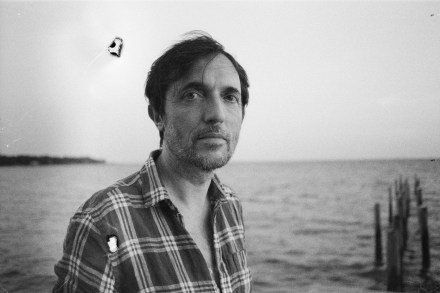
Colin Greenwood: How to Disappear – A Portrait of Radiohead

From our UK edition

33 min listen

Sam's guest on today’s Book Club podcast is the musician, writer and photographer Colin Greenwood, who joins me to discuss his new book of photographs and memoir How To Disappear: A Portrait of Radiohead. Colin tells me about the band’s Mr Benn journey, photographing what you want to see… and what it takes to make Radiohead open a gig with 'Creep'. Produced by Patrick Gibbons and Oscar Edmondson.

Philip Marsden: Under A Metal Sky

From our UK edition

34 min listen

My guest in this week's Book Club podcast is Philip Marsden, whose new book Under A Metal Sky: A Journey Through Minerals, Greed and Wonder looks in thrilling and surprising detail at the wonders that are to be found beneath our feet. On the podcast he takes me through the meanings that rocks and metals have had through human history, from the bronze age, via the alchemist's quest for the philosopher's stone, to the present day.

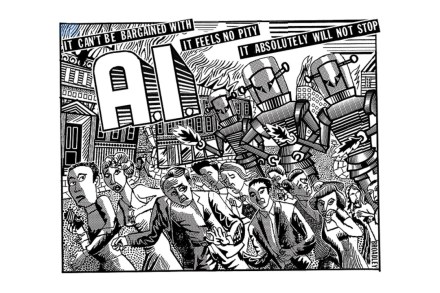
The AI industry has been given a taste of its own medicine

From our UK edition

Life comes at you fast, eh? Only a few weeks ago I was grumbling in this very slot about the way in which the big AI companies were stealing copyright material in unimaginable quantities and using it to train their models without so much as consulting the owners of the work, still less compensating them. The reaction of the tech bros to people calling them out about it has been a colossal shrug of contempt. Fussing about intellectual property is for the little people, they seemed to say. We can make a lot of money stealing your work, and our machines don’t work at all without stealing your work, so tough. And anyway, what are those little people going to do about it? Then, along came DeepSeek.

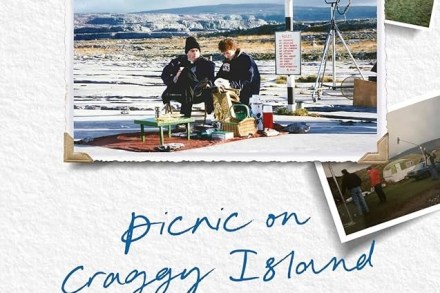
Lissa Evans: The Surreal Joys of Producing Father Ted

From our UK edition

30 min listen

My guest on this week's Book Club podcast is the novelist Lissa Evans, talking about her previous life as the producer of the sitcom Father Ted – as described in her new book Picnic on Craggy Island: The Surreal Joys of Producing Father Ted. She tells me about the collaborative genius of Graham Linehan and Arthur Mathews, the unusual experience of having to cut laughter out of episodes because there was simply too much of it, and sending a sheep to make-up.

Scrapping Oxford’s ‘traditional’ exams won’t make things fairer

From our UK edition

Are exams... racist? Are exams snobs? If a report in yesterday’s Sunday Telegraph is to be credited, academics at Oxford and Cambridge are taking this question seriously. In the hopes of closing the 'achievement gap' between white middle-class students (who scoop more of the firsts and 2.1s) and students from disadvantaged backgrounds or other ethnicities, Russell Group universities are said to be considering replacing traditional exams with more 'inclusive assessments' such as open-book papers or even 'take-home exams'.  Call me a reactionary, but this sounds quite nuts. We can acknowledge that an achievement gap exists. We can certainly credit, too, that it might be in the interests of everybody to seek to understand and remedy it.

Visual ingenuity and wit: Monument Valley 3 reviewed

From our UK edition

Grade: A The original Monument Valley was a handheld puzzle game of beautiful design and high originality. Why it was called that I have no idea: the title suggests a desert landscape of red dust and sand-scoured buttes, but the playspace was a series of architectural arabesques hanging in space, around which the player navigated a mournful little stick princess. It made wonderfully clever use of isometric perspective: knobs and handles allowed you to rotate the playspace and slide structures together or apart. As you fiddled with the architecture, Escher-like perspectival tricks would open fresh paths or surfaces for Ida to walk on. The atmosphere was absorbing and the puzzles were great.

What we get wrong about The Great Gatsby

From our UK edition

43 min listen

In this week’s Book Club podcast, we’re contemplating the astounding achievement of F. Scott Fitzgerald’s The Great Gatsby in its 100th year. My guest is Professor Sarah Churchwell, author of Careless People: Murder, Mayhem and the Making of The Great Gatsby, as well as the introduction to Cambridge University Press’s new edition of the novel. Sarah tells me what we get wrong about this Jazz Age classic, why Fitzgerald’s antisemitism shouldn’t necessarily get him cancelled, and how Fitzgerald’s great novel traces the arc that leads from 1925 to Donald Trump’s second inauguration.

The difference between Trump 45 and Trump 47

From our UK edition

Him again? Donald Trump’s back in the White House. Those who thought his first term in office was an aberration – a dismaying blip in the long arc of history towards liberal democracy, properly corrected by Biden’s 2020 victory – have been proven wrong in the most painful possible way. He wasn’t some brainfart of the internet era, some moment of madness. He’s back, and all the evidence seems to suggest that what he represents is much more in tune with the global zeitgeist than what Kamala Harris or, for that matter, Keir Starmer, are selling. Trump once made a performance of fighting the deep state. Today he wants to install a new one. But there has, I think, been what the young people like to call a ‘vibe shift’.

Orlando Reade: The Revolutionary Life of Paradise Lost

From our UK edition

36 min listen

My guest in this week’s Book Club podcast is Orlando Reade, whose book What in Me Is Dark: The Revolutionary Life of Paradise Lost describes the life and afterlife of one of the greatest poems in the language. Orlando tells me how Milton’s epic has been read with – and against – the grain over the centuries; how it went from being a totem of English exceptionalism to being an encouragement to postcolonial revolutionaries and political thinkers from Malcolm X to C. L. R. James; how the modernists wrestled with Milton… and how Jordan Peterson gets it wrong.

The truth about Dominic Cummings and Elon Musk’s ‘sabotage plot’

From our UK edition

A few centuries ago, when I worked on the Daily Telegraph under the editorship of the now Lord Moore, there was a very sensible item in the style book. It said (I paraphrase) that when a story sounded too good to be true, you should pause, give your head a wobble and apply a bit of common sense. That local newspaper, for instance, reporting that a giant pike in the village pond had been taking small dogs and toddlers that strayed too close to the edge of the water…Really? Musk and Cummings are, superficially, aligned in certain respects This is the heuristic I think we need to apply to a splash headline this week in the Mail on Sunday: “Musk and Cummings ‘In Plot To Sabotage UK Politics’”.

Rachel Cooke: The Virago Book of Friendship

From our UK edition

43 min listen

In this week’s Books podcast, I am joined by Rachel Cooke, who edits the new book The Virago Book of Friendship. Rachel unpacks the intense, often enigmatic dynamics of female friendships in a spry and very dip-in-and-out-able anthology of writing about female friendship in an exhilaratingly wide array of forms, from high culture to low. There are many gems to cackle over, including: an incomparably tender and exact description of Hannah Arendt by Mary McCarthy; a wonderful, worm-turning character assassination of the ghastly Susan Sontag by her former disciple, Terry Castle; and the revelation that Elizabeth Bishop and Marianne Moore were boon companions for two whole years before they stopped calling each other ‘Miss Bishop’ and ‘Miss Moore’.

A winter’s tale: Brightly Shining, by Ingvild Rishoi, reviewed

From our UK edition

With Christmas only just gone, I hope it’s not too late to recommend Ingvild Rishoi’s bittersweet seasonal novella – a bestseller in Norway which now comes into English in Caroline Waight’s crisp and fluent prose. Here’s a child’s-eye story about adult griefs and troubles which uses dramatic irony to consistent effect; a skinny little narrative halfway to being a fable which nevertheless keeps its roots in reality, with mobile phones, Frosties, casual swearing, the workings of child protection services and the logistics and microeconomics of the Christmas tree business. The narrator, ten-year-old Ronja, and her teenage sister Melissa are growing up in Oslo with their alcoholic single dad. Things are pretty bleak.

Is it time to lay off Tulip Siddiq?

From our UK edition

We all have generous aunties, right? My own once let me live rent-free in her London flat for several months while I was teenaged, and broke, and working as a slave for Auberon Waugh’s Literary Review magazine. I can’t count the number of family dinners in the years since where I’ve had second helpings pressed on me at her groaning table. Aunts are often like that.

James MacMillan, Sebastian Morello, Amy Wilentz, Sam Leith and Lloyd Evans

From our UK edition

32 min listen

This week: composer James MacMillan reads his diary on the beautiful music of football (01:11); Sebastian Morello tells us about the deep connection between hunting and Christianity (07:17); Amy Wilentz explains how Vodou fuels Haiti’s gang culture (16:14); The Spectator’s literary editor Sam Leith reviews The Virago Book of Friendship (22:38); and – from the arts pages – The Spectator’s theatre critic Lloyd Evans writes about a new play on the last days of Liz Truss and also about Bette and Joan, which includes 'brutal' and 'brilliant' portraits of Bette Davis and Joan Crawford (26:37). Presented by Oscar Edmondson. Produced by Patrick Gibbons and Oscar Edmondson.

Orhan Pamuk: Memories of Distant Mountains, Illustrated Notebooks

From our UK edition

37 min listen

In this week's Book Club podcast I'm joined by the Nobel Prize winning novelist Orhan Pamuk to talk about the publication of Memories of Distant Mountains: Illustrated Notebooks. Right up to early adulthood, Orhan had imagined he was destined to be a painter, but then his life took another turn. In these illustrated notebooks he marries words and images in an elliptical sort-of diary. He tells me about what he puts in and what he leaves out, how his imagination works, the artists and writers he admires, what fame has given him, and why he wishes he didn't have to talk about politics.

The downside of charity

From our UK edition

I blame Charles Dickens, personally: he of David Copperfield, Little Nell, Oliver Twist and, of course, Tiny Tim. He’s the father of what you might call the orphan-industrial complex, which is to say, the discovery that there is a fantastic amount of money to be made out of the sentimental feelings aroused in the well-heeled and tender-hearted by waifs in general and orphans in particular. It has taken more than a century for the orphan-industrial complex to reach its final form, but I think we’re there.  A report in yesterday’s Sunday Times described the experiences of a young Nepali girl called Rijya, who grew up in a privately run orphanage in Kathmandu. Rijya’s papers said that she had no parents, and the staff at the home assured her of the same thing.

The intensity of female friendship explored

From our UK edition

‘From the days of Homer on,’ Vera Brittain wrote, ‘the friendships of men have enjoyed glory and acclamation, but the friendships of women, in spite of Ruth and Naomi, have usually been not merely unsung, but mocked, belittled and falsely interpreted.’ Rachel Cooke’s anthology – inspired in part by her own ardent friendship with the late Carmen Callil – seeks to redress that. It was, as Cooke reports in her introduction, more of a challenge than she’d anticipated. Every other popular novel these days may be about female friendship (‘The result,’ Cooke semi-grumbles, ‘both of feminism and, I think, of capitalism’), but before Jane Austen, ‘fully realised and articulated friendships between women in literature’ were as rare as full stops in Henry James.

Should AI be allowed to train itself off this column?

From our UK edition

If you’re a writer, should AI companies be allowed to use your work to train their models without your permission? This is a matter of concern for many writers – as it is for artists, musicians, and anyone whose work is being harvested by the industry and spewed out as AI glop. It’s not just that it’s a bit galling to think that our work is being ripped off for free: it’s that, in the medium to long term, these large language models, if they can, will put writers out of jobs. (It’s Christmas – feel free to make the obvious jokes in the comments.) At present, AI companies have shown few scruples in hoovering up any number of copyright works – be they books, paintings, or pieces of music – and using them to train their generative models.

Chris Ware: The Acme Novelty Datebook Volume Three

From our UK edition

39 min listen

My guest in this week's Book Club podcast is Chris Ware — author of Jimmy Corrigan, Building Stories and Rusty Brown, and a man widely regarded as one of the greatest living cartoonists. Chris's new book, The Acme Novelty Datebook Volume Three, opens his sketchbooks for public consumption: a potentially painful move for an artist as self-conscious and perfectionist as Ware. He tells me a bit about the relationship between cartooning and architecture, what he's trying to do with his graphic novels, the importance of R Crumb and Art Spiegelman to his work, and what gave him the confidence to turn his back on fine art.

The hypocrisy of Nick Candy

From our UK edition

The property tycoon Nick Candy, interviewed in yesterday’s Sunday Times, appears to be hoping to position himself as a UK equivalent of Elon Musk – a billionaire political kingmaker for Nigel Farage just as Musk was for Donald Trump. Newly anointed as the treasurer of Reform UK, he has pledged a 'seven-figure' sum to the party and hopes to raise between £25 million and £40 million before the next general election. Candy indicates that he’s angling for an invitation stateside in the hopes of picking up some tips from Musk as to how he did what Candy calls 'an incredible job for president-elect Trump [which] sort of changed the political spectrum in America'.  Tips might not be all he’s hoping to pick up.