Sam Leith

Sam Leith

Sam Leith is literary editor of The Spectator.

How the EU youth mobility scheme could save Brexit

From our UK edition

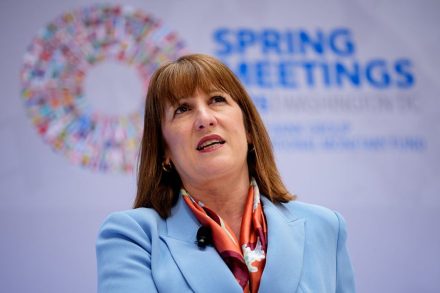
Rachel Reeves sounds surprisingly perky. The Chancellor of the Exchequer has, of course, been forced – we may think, through gritted teeth – to say nice things she cannot possibly have believed about the Trumpian tariff programme that threatens to take a guillotine to her beloved fiscal headroom without her being able to do a damn thing about it. But, interviewed by the Times, she professed herself encouraged by better-than-expected statistics on consumer spending. And she also showed signs of doing something rather interesting, i.e. rolling the pitch for a bit of a climbdown on youth mobility. 'No plans for a youth mobility scheme' had been the line before the election.

Winning little narrative adventure: South of Midnight reviewed

From our UK edition

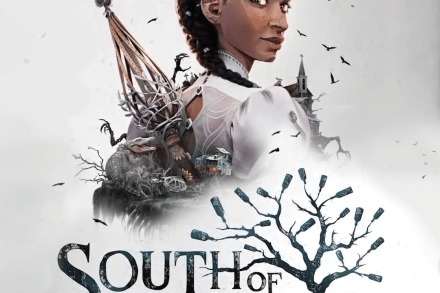
Grade: A– For this winning little narrative adventure we are in the South – all gris-gris gumbo yaya, decaying mansions and ghosts of the underground railway – and it is a bit midnighty, what with the sinister otherworldly beings you fight.  Our protagonist is sassy, cornrowed Hazel, a mixed-race Lara Croft, who sets out to rescue her social-worker mother after her mobile home is swept downriver in a hurricane. Her snooty grandma Bunny, rotting in her vast plantation house, is no help whatever. But Hazel does manage to half-inch some magic hooks from granny’s ottoman, which allow her to manipulate glowing magic strands in the air and use them to unravel ‘haints’, the ropey-looking demon-things that pop up from time to time to attack her.

Lamorna Ash: why are Gen Z turning to Christianity?

From our UK edition

40 min listen

My guest on this week’s Book Club podcast is Lamorna Ash, author of Don’t Forget We’re Here Forever: A New Generation’s Search for Religion. She describes to me how a magazine piece about some young friends who made a dramatic conversion to Christianity turned into an investigation into the rise in faith among a generation that many assumed would be the most secular yet — and into a personal journey towards religious belief.

Keir Starmer’s Easter message wasn’t offensive

From our UK edition

Fun though it is to bash Keir Starmer for everything he says or does, there’s surely a point at which the self-respecting anti-Starmerite will want to cut the man a bit of slack – if for no other reason than that if the spite grows too ridiculous you will sound deranged, and it will recruit the odd floating voter to his cause out of sympathy.  Such a point, I submit, might be the Prime Minister’s Easter message. Sir Keir, or some minion, put out a tweet yesterday saying the following: ‘Wishing a very happy Easter to Christians across the UK and around the world, as they celebrate the resurrection of Jesus Christ. As we look to the future with hope, I want to thank Christians for their huge contributions to our country.

Philippe Sands: 38 Londres Street – On Impunity, Pinochet in England and a Nazi in Patagonia

From our UK edition

58 min listen

Sam Leith’s guest on this week’s Book Club podcast is the lawyer and writer Philippe Sands, whose new book 38 Londres Street describes the legal and diplomatic tussle over the potential extradition of the former Chilean dictator General Pinochet. Philippe tells Sam why the case was such an important one in legal history, and presents new evidence suggesting that the General’s release to Chile on health grounds may have been part of a behind-the-scenes stitch-up between the UK and Chilean governments. He sets out some of that evidence and pushes back on our reviewer Jonathan Sumption’s scepticism about the case. Here’s an old case, but not yet a cold case. Produced by Oscar Edmondson and Patrick Gibbons.

Schools should butt out of parent WhatsApp groups

From our UK edition

As if schools didn’t already have their work cut out for them controlling the behaviour of their students, they’re now trying to discipline parents too. The head of Mishcon de Reya’s education department says his firm is being asked by headteachers in both the private and state sectors to help draw up codes of conduct for parents’ WhatsApp groups. As he says, ‘Schools are very concerned about the impact on staff, and being held liable, for what’s been said in class WhatsApp groups.’ Operative phrase there: being held liable. Demanding parents subscribe to a ‘code of conduct’ is, apparently, the best way to make sure you’re not held responsible for the actions of a parent.

Fara Dabhoiwala: What Is Free Speech?

From our UK edition

45 min listen

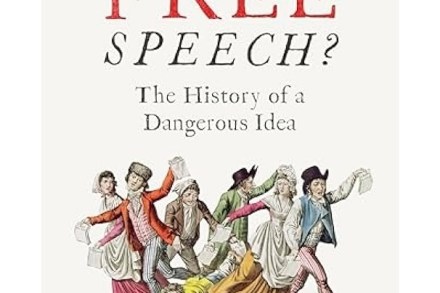
My guest on this week's Book Club podcast is Fara Dabhoiwala, whose new book What Is Free Speech? The History of a Dangerous Idea looks not just at the origins of free speech as an idea, but also its uses and misuses. Fara tells me the bizarre story of how he found himself ‘cancelled’, gives us the scoop on who actually invented free speech and explains how to think more deeply about free speech as a global as well as a local question – by tracing how we got into our current predicaments.

ai chatgpt

ChatGPT is destroying creativity

There are two accounts of the negative effects on humanity of the explosion of generative AI: one minatory, one trivial. The minatory – the existential – version is that AI will poison the information ecosystems on which our democracies depend, crash our economies by doing a very large number of us out of a job, give every lunatic and terrorist the means to engineer novel pathogens at home and administer the coup de grâce by sending terminators into our recent pasts and/or overstocking the cosmic stationery cupboard by turning all of us into paperclips. None of these scenarios shows any signs of imminently coming to pass, though, since experts in the field take them seriously, we should, too. But what we’re dealing with now is not the existential, but the trivial.

AI slop is flooding the zone

From our UK edition

There are two accounts of the negative effects for humanity of the explosion of generative AI: one minatory, one trivial. The minatory, the existential, version of it is that AI will poison the information ecosystems on which our democracies depend, crash our economies by doing a very large number of us out of a job, give every lunatic and terrorist the means to engineer novel pathogens at home, and administer the coup de grâce by sending terminators into our recent pasts and/or overstocking the cosmic stationery cupboard by turning all of us into paperclips. None of these scenarios shows any signs of imminently coming to pass, though since experts in the field take them seriously, we should too. But what we’re dealing with now is not the existential, but the trivial.

Joe Dunthorne: Children of Radium

From our UK edition

40 min listen

My guest in this week’s Book Club podcast is the poet and novelist Joe Dunthorne, who is here to talk about his new non-fiction book Children of Radium: A Buried Inheritance. In it, he describes how he criss-crossed Europe in search of the truth about his great-grandfather, a Jewish scientist who found himself working on chemical weapons for the Nazis. Joe talks to me about historical guilt, the accidents of fate and human psychology – and making comedy out of tragedy.

The police raid on a Quaker meeting house is unforgivable

From our UK edition

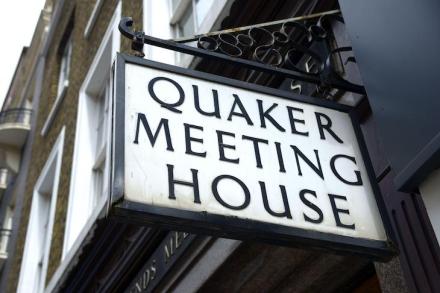
Is there anyone in the Met Police, I wonder, low-minded enough to think of things in PR terms? “I’ve got a good wheeze, guv," I imagine some grizzled lifer piping up. “Let’s get tooled up, kick in the door of a Quaker meeting house and chuck a bunch of unarmed young women in the back of the paddy-wagon.” Could such a move, his superior might have wondered fleetingly, look in any way heavy-handed if reported on the front page of a newspaper? If they did, the thought evidently soon evaporated. It was an advertised meeting, not a terrorist cell So here we are. No fewer than twenty – twenty! – officers, some equipped with tasers, raided the Quaker Meeting House in Westminster on Thursday and cuffed and hauled off no more than six – six!

Ridiculously fun: Assassin’s Creed – Shadows reviewed

From our UK edition

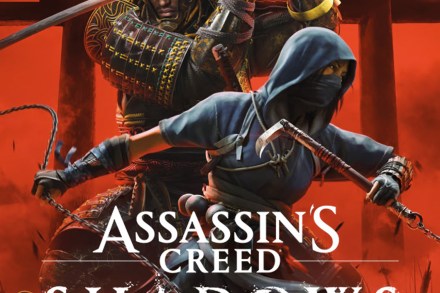
Grade: A Sometimes you want to admire the pluck and inventiveness of an indie developer. At other times, you just want to sink into some thumping AAA franchise that’s thrown all the time, design talent and VC megabucks in the world at the screen. The new Assassin’s Creed has you covered there. Irresistibly, it’s set in a richly detailed and (kinda) historically accurate 16th-century Japan – which means, as all teenage boys will know, ninjas and samurais. Be warned, though: I downloaded the PC version, but the screen appeared to announce that I don’t have an STD so my new game wouldn’t run. Talk about a mixed blessing. Turns out it meant an SSD, or solid-state drive – me neither – and they’re harder to catch than theother thing. The PS5 version worked just fine.

Francesa Simon: Salka

From our UK edition

32 min listen

My guest in this week’s Book Club is Francesca Simon. Best known for her Horrid Henry series of children’s books, Francesca has just published her first novel for grownups, a haunting reworking of a Welsh folk tale called Salka: Lady of the Lake. She tells me how she came to shift direction, what myths offer in terms of storytelling possibility – and why she never tired of her best-known creation.

Why is Keir Starmer pretending he ‘likes and respects’ Donald Trump?

From our UK edition

Anyone who relishes the humiliation of Sir Keir Starmer – and I know that in this respect, if only this one, many Spectator readers will make common cause with the supporters of Jeremy Corbyn – was presented with a delicacy this weekend. Here was a humiliation so exquisite, so public and so unrecoverable-from, that you could use it instead of Vermouth to flavour a martini. The British Prime Minister told the New York Times, with every semblance of earnestness, that he 'likes and respects' Donald Trump – and saw that interview blazoned internationally. 'On a person-to-person basis, I think we have a good relationship,' Starmer said 'On a person-to-person basis, I think we have a good relationship,' he told the paper. 'I like and respect him.

Who is Government? edited by Michael Lewis

From our UK edition

40 min listen

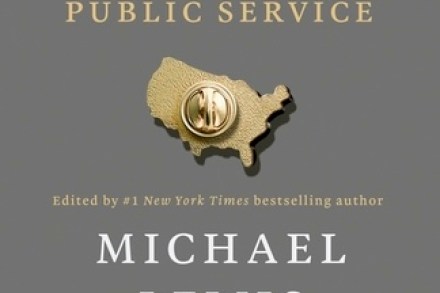
My guest in this week's Book Club podcast is the novelist and journalist John Lanchester, one of the contributors to Michael Lewis’s very timely new anthology of reportage on the United States federal government, Who Is Government?: The Untold Story of Public Service. Can the public learn to love a bureaucrat? John tells me why he thinks the workings of government are misunderstood and under appreciated, why we should marvel at the making of the consumer price index, and why he thinks Elon Musk has ‘the wrong handle of the shopping bag’.

Is ‘good enough’ all we want from TV?

From our UK edition

For those people with a therapeutic bent of mind, the phrase 'good enough' has an almost magical power. It says: don’t beat yourself up because your child isn’t a straight-A student, your marriage isn’t the best thing since Ted Turner and Jane Fonda, and your sobriety is patchy. Sure, you hit your kid – but you didn’t stab them. Sure, you hate your husband – but you haven’t plotted with a stranger to have him killed. Sure, you're depressed – but you got up this morning and went to work like any other normie. All these instances of your fallibility are opportunities for growth. As they say in twelve-step programmes, it’s 'progress not perfection'. 'Good enough', though, as a mantra, isn’t what we look for in the arts.

Anthony Cheetham: A Publisher’s Memoir

From our UK edition

26 min listen

My guest in this week's Book Club podcast is the publisher Anthony Cheetham, one of the biggest figures in British publishing through the second half of the twentieth century and into this one. In his new book A Life in Fifty Books: A Publisher's Memoir, he looks back on his career. He tells me why he had a soft spot for Robert Maxwell; how he launched Ken Follett's career on the top deck of a bus; how losing a press-up competition changed the landscape of publishing (and upset his then wife); how publishing has changed – and how it hasn't; and why Confessions of a Window-Cleaner has a special place in his heart.

The moral shortcomings of Palestine Action

From our UK edition

Pro-Palestinian activists under the banner of Palestine Action have been waging what it’s not too much of an exaggeration to call a war against companies and institutions in this country that are seen to support Israel’s offensive in Gaza. In one attack last summer at a Bristol facility owned by the British subsidiary of the Israeli defence company Elbit, a van was used to smash through fencing before activists laid about the building with sledgehammers, and two police officers and a security guard were injured in the ruckus. In dozens of ‘actions’, these activists have caused millions of pounds worth of damage to companies that supply equipment not just or even mainly to Israel, but to the British armed forces.

Why Ukraine’s minerals matter, the NHS’s sterilisation problem & remembering the worst poet in history

From our UK edition

42 min listen

This week: the carve-up of Ukraine’s natural resources From the success of Keir Starmer’s visit to Washington to the squabbling we saw in the Oval Office and the breakdown of security guarantees for Ukraine – we have seen the good, the bad and the ugly of geopolitics in the last week, say Niall Ferguson and Nicholas Kulish in this week’s cover piece. They argue that what Donald Trump is really concerned with when it comes to Ukraine is rare earth minerals – which Ukraine has in abundance under its soil. The conventional wisdom is that the US is desperately short of these crucial minerals and, as Niall and Nicholas point out, the dealmaking president is driven by a nagging sense of inferiority in comparison to rare earth minerals powerhouse China.

The anti-genius of William McGonagall, history’s worst poet

From our UK edition

‘Not marble nor the gilded monuments of princes,’ wrote Shakespeare, ‘shall outlive this powerful rhyme.’ To be a great poet, as the Stratford man knew, is to be immortal. But there’s another way to achieve immortality through verse – and that is the route taken by William McGonagall, the ‘worst poet in history’, who was born 200 years ago this month. His star, I’m pleased to say, shows no sign of fading. He has, as is only proper, an adjective. You can be Keatsian, Eliotian, Homeric. Or, like most of us when we sit down to write a poem, you can be McGonagallesque. His name is so much a byword for doggerel that a version of him – William Rees-McGonagall – is a Private Eye running joke to this day. It’s not nothing to be the worst poet in history.