Sam Leith

Sam Leith

Sam Leith is literary editor of The Spectator.

The Book Club: a literary history of 20th century Britain

From our UK edition

In this week’s Spectator Book Club, my guest is Christopher Tugendhat, whose new book offers a refreshing and thought-provoking survey of twentieth-century history; not through wars and treaties and policies, but through the pages of the books from his extensive private library. In A History of Britain Through Books: 1900-1964, Christopher argues that we can get a special understanding the temper of a given time through the pivotal works of fiction and nonfiction that expressed it; books written without the historian's hindsight. Here’s a survey of familiar landmarks — as well as texts that have fallen into undeserving (and sometimes deserving) obscurity.

Spectator Books: is meritocracy a trap?

From our UK edition

For this week’s books podcast, I’m joined by Daniel Markovits, the Guido Calabresi Professor of Law at Yale Law School. In his new book The Meritocracy Trap Daniel advances an argument that will seem startling to partisans of Left and Right alike: that meritocracy isn’t the solution to our social and political discontents, but the central part of the problem. Our notion that hard work and proven ability should be the route to wealth and success has, he says, created a miserable underclass and a comparably miserable overclass — and is responsible for a damaging and eventually unsustainable reorganisation of Western economies. Among other sophisticated questions, I ask him: how so? And: aren’t you sounding a bit like a Marxist, there, Mr Yale Professor?

The Books Podcast: the tragic self-destruction of the House of York

From our UK edition

In this week’s Spectator Books, I’m talking to the award-winning historian Thomas Penn about his new book The Brothers York: An English Tragedy — in which he argues that the 'Wars of the Roses' weren’t determined by a struggle between the houses of York and Lancaster so much as by the catastrophic white-on-white conflict that cause the House of York to implode. He tells the story of three brothers — Edward IV; George, Duke of Clarence; and Richard III — and their extraordinary and ultimately disastrous relationship. How did Tudor history — including, of course, Shakespeare — distort the real story of those years? Who really drowned the Duke of Clarence in that butt of wine?

Spectator Books: Greek myths, reimagined

From our UK edition

This week the Books Podcast leaves its dank burrow and hits the road. I travelled to the southern Peloponnese to catch up with the Orange-prize winning novelist Madeline Miller, where she was hosting a reading weekend at the Costa Navarino resort. Madeline’s first novel, The Song of Achilles, retold the Iliad from Patroclus’s point of view. Her second, Circe, takes on the great sorceress of the Odyssey. She talked about how — as a classicist as well as a novelist — she approached reworking these canonical stories; about taking liberties with Circe; and about how the 'rape culture' of Ancient Greece speaks to us in the age of #metoo.

Spectator Books: how fake news took over the world

From our UK edition

My guest in this week’s Spectator Books is Peter Pomerantsev. Peter lived in Moscow for a decade as a TV producer, and chronicled the metastasis in that country of 'post-truth politics' in his bestselling Nothing Is True and Everything Is Possible. His fascinating and dismaying new book, This Is Not Propaganda: Adventures in the War Against Reality, describes how Russia’s surreal new information politics turned out not to be a weird exception, but the harbinger of a worldwide phenomenon.

Spectator Books: the sisters who founded modern China

From our UK edition

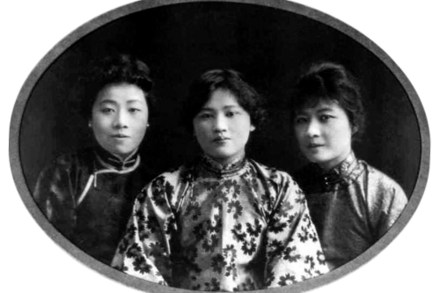
In this week’s Spectator Books podcast my guest is Jung Chang — whose latest book is the gripping story of three sisters whose political differences put the Mitford even the Johnson clans in perspective. In Big Sister, Little Sister, Red Sister, Jung narrates the lives of the Soong Girls — one of whom was married to Chiang Kai-shek, another of whom became one of the richest women in the world and helped run Chiang’s government; and the other one of whom (the widow of the founding father of modern China, Sun Yatsen) threw her lot in with Chiang’s deadly enemy and eventual usurper, Mao Zedong. Every family has its little ups and downs!

For political discourse to survive, we must be more honest about language

From our UK edition

When I was an English literature undergraduate, we were all very careful to avoid what used to be called the ‘intentional fallacy’. This is the idea that you can use a text to get at what the author ‘really meant’. The so-called New Critics said, quite reasonably, that the text is all you’ve got to go on and, what’s more, it’s impertinent and irrelevant for a critic to start trying to figure out, say, whether Shakespeare is a racist from the evidence in ‘My mistress’ eyes are nothing like the sun’. This is a useful principle in academic literary criticism (or one sort of academic literary criticism; that’s an argument for another day).

Spectator Books: who was Susan Sontag?

From our UK edition

My guest in this week’s books podcast is Benjamin Moser, author of an acclaimed new biography of one of America’s most celebrated (and controversial) intellectuals of the twentieth century: Sontag: Her Life. I asked Benjamin how he sorted fact from myth, about tracking down the inventor of that haircut, and about Annie Leibovitz’s take on their stormy love affair. Why could someone as brave as Sontag never come out? Did she have a sense of humour? And what of her will last?

Books Podcast: Israeli short stories with Etgar Keret

From our UK edition

This week’s podcast features the Israeli writer Etgar Keret, talking about his new collection of short stories Fly Already. Topics on the agenda: how an Israel writer can address the Holocaust, why one of Etgar’s stories caused a dear friend of his to have to change his name, whether writing stories is a useful thing to do, whether smoking dope is a help or a hindrance to creativity, and why — alas — Brits so far don’t seem to 'get' Etgar’s sense of humour.

Spectator Books: Elif Shafak on life after death

From our UK edition

My guest in this week’s podcast is the Turkish novelist Elif Shafak, whose latest novel 10 Minutes 38 Seconds in this Strange World has just been shortlisted alongside Salman Rushdie and Margaret Atwood for this year’s Man Booker Prize. Elif talks to me about living in exile, writing in a second language, her relationship with Istanbul, and how the West’s culture war over 'free speech' looks to someone from a country where free speech can get you thrown in jail, or worse.

Spectator Books: what makes dictators vulnerable

From our UK edition

This week's books podcast was recorded live at a Spectator event in Central London. My guest is the distinguished historian Frank Dikötter, whose new book - expanding from his award-winning trilogy on Chairman Mao - considers the nature of tyranny. How To Be A Dictator: The Cult of Personality in the Twentieth Century looks at what unites and what divides the regimes of dictators from Mussolini to Mengistu.

Spectator Books: the best and worst of Auden

From our UK edition

Eighty years on from the start of the Second World War, my guest in this week’s podcast is Ian Sansom — who’s talking about 'September 1, 1939', the Auden poem that marked the beginning of that war. Ian’s new book is a 'biography' of the poem, and he talks about how it showcases all that is both best and worst in Auden’s work, how Auden first rewrote and then disowned it, and how Auden’s posthumous reputation has had some unlikely boosters in Richard Curtis and Osama Bin Laden.

Spectator Books: the struggles of the care system

From our UK edition

My guest on this week’s Books Podcast is the poet and playwright Lemn Sissay. Lemn’s new memoir My Name Is Why describes his early life — given up for fostering in the late 1960s as the son of an unmarried Ethiopian mother — and his progress, when his foster family gave him up, through the care system and out the other side. It’s a powerfully affecting story, and Lemn joins me to fill in some of the gaps. How does he feel towards his foster parents now? Do the racism and institutional cruelty he experienced belong to a vanished age? And… what did Errol Brown need with an afro comb?

Spectator Books: Mick Herron on how to be a crap spy

From our UK edition

The spy writer Mick Herron’s Slough House series of comic thrillers has steadily established him as perhaps the most influential author in the genre since Le Carre. The latest in the series, Joe Country, is out now — and we thought to celebrate its publication with another opportunity to listen to my conversation last year with Mick — when London Rules came out -- about Slough House, slow horses and his unkillable, curry-stained antihero Jackson Lamb. Normal post-holiday service will be resumed next week with a box-fresh podcast featuring Lemn Sissay.

Spectator Books: books for the beach

From our UK edition

Even books editors have to go on holiday sometimes, so Spectator Books is taking a hiatus for a couple of weeks. But so there's not a gaping gap in your life where the podcast used to be, we're bringing out some of our favourite episodes from our archive. This week, I am joined by the critic Alex Clark and Damian Barr — memoirist and host of the Savoy’s Literary Salon — to talk about summer reading. What do you take? What do you regret taking? Kindle, dead-tree or — 19th-century-style — cabin trunk full of books sent on ahead? Our discussion yielded a host of recommendations — from the brand new to the reliable old friends — that we hope will help you plan your own travelling library.

Spectator Books: when Coleridge met Wordsworth

From our UK edition

In this week’s books podcast, we’re getting Romantic. I’m joined by the writer Adam Nicolson and the artist Tom Hammick to talk about their new book The Making of Poetry: Coleridge, Wordsworth and their Year of Marvels. In it, Adam describes how — inspired by Richard Holmes’s 'footsteps' approach — he attempted to imaginatively inhabit the worlds of Coleridge and Wordsworth in the crucial year in the late 1790s when they lived near each-other in the Quantocks in Somerset. That meant, for him, living in the same landscape, walking the same paths, reliving the struggles with lines of verse in manuscript.

Spectator Books: is there a meaning to life?

From our UK edition

The star New York Times columnist David Brooks has never been afraid to go beyond the usual remit of day-to-day politics. His new book The Second Mountain: The Quest for a Moral Life is exactly what it sounds like: a guide to the Meaning of Life, somewhere between a spiritual autobiography and a manual for living. He joins me to explain how he’s changed his mind about the meaning of life since his previous book The Road To Character (he’s cagy about whether refunds are available), about how his own humbling after the breakdown of his marriage made him a wiser and better person, and about whether a new-found appreciation for altruism could make him a socialist.

Spectator Books: how pigeons won the War

From our UK edition

Pigeons: revolting pests who can’t tell the difference between fag-butts and chips, right? Not so, according to my latest podcast guest Jon Day, distinguished man of letters, critic, academic and… pigeon-fancier. Jon’s new book Homing describes how — suffering an early midlife crisis in young married life with fatherhood approaching — he took up racing pigeons. His book will make you look at pigeons in a new light — and also reflect on what these extraordinary birds have to tell us about the relationship between humans and animals and about the idea of home.

Books Podcast: the double agent who changed the Cold War

From our UK edition

There’s nobody who writes true-life spy stories like Ben MacIntyre — and with his latest book The Spy and the Traitor out in paperback, Ben joins me to talk about the astonishing career of Oleg Gordievsky, a single spy who really did change the whole course of the Cold War. Ben tells me about Oleg's rise, his downfall, his daring escape from Moscow — and how he lives now and what he thinks of the situation between Russia and the West these days.

Spectator Books: Caroline Crampton’s forgotten histories of the Thames

From our UK edition

My guest on this week’s podcast is Caroline Crampton — whose fine and lyrical new book The Way To The Sea twines travelogue and memoir to pay tribute to the neglected mystery and beauty of the downriver portions of the Thames. Evoking Joseph Conrad and Dickens, ranging from prehistory to the sunken wrecks (and still live explosives!) of wartime ships that foundered on its shoals, from the 18th-century maritime madness to the modern day rejuvenation or social cleansing of the London docklands, Caroline tells a remarkable and fascinating story.