Sam Leith

Sam Leith

Sam Leith is literary editor of The Spectator.

Why I’m mourning Lee Child’s retirement

From our UK edition

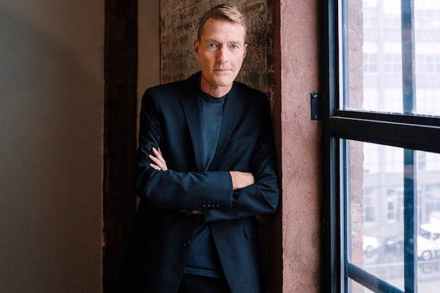
There is mourning in my household, as in many households, this morning at the news that Lee Child - the bestselling thriller writer, from whom we have been able to expect a new Jack Reacher novel every autumn - is laying down his pen. You can well see why he might. He has all the money he will ever need and nothing to prove to anyone. Why not quit while he’s ahead? Reacher would. But what a loss to the rest of us.

The Book Club podcast: what do T.S. Eliot’s letters reveal?

From our UK edition

In this week’s Book Club podcast, we’re talking about the life and loves of the greatest poet of the twentieth century. Professor John Haffenden joins me to discuss the impact of the opening of an archive of more than 1,000 of Eliot’s letters to Emily Hale — his Harvard sweetheart and the woman who for fifteen years he believed to have been the love of his life. Was he really in love with her or, as he later claimed, simply imagining it? What does he mean when he says that marriage to Emily would have killed him as a poet? And what light does it shed on his poetry? John — who as the editor of T. S.

‘I was a tortured, obviously brilliant child’: James Ellroy interviewed

From our UK edition

James Ellroy is occasionally quoted as saying he’s the greatest American crime novelist ever. The man sometimes called the ‘demon dog of American letters’ has no hesitation in affirming it when he arrives in The Spectator’s London offices to record a podcast. ‘Oh yes, I think that’s been proven,’ he says matter-of-factly. Has he always thought that? ‘When I finished the LA Quartet. I knew there was nobody like me and there wasn’t.’ Ellroy’s new book, This Storm, is the second novel in a projected set of prequels to his LA Quartet (The Black Dahlia, The Big Nowhere, LA Confidential and White Jazz) set between LA and the Baja peninsula in Mexico in the aftermath of Pearl Harbor.

The Book Club: James Ellroy on God, drugs and his mother’s murder

From our UK edition

In this week’s Book Club podcast, I talk to the 'demon dog' of American letters, James Ellroy — whose latest book is This Storm. In a wide-ranging and somewhat NSFW conversation, we talk about misquoting Auden, why Ellroy hates Orson Welles, how he maps out the byzantine plots of his novels, why as a recovering addict he fills his books with pill-poppers and juice heads, why he thinks he's the best crime writer living — and what his dad’s '20-inch wang' had to do with Rita Hayworth.

Who are today’s fictional heroes?

From our UK edition

What’s a hero? There are probably at least two answers to that. One is that heroism is a moral quality: to do with courage above all but, in its wider connotations, to do with altruism or protectiveness and self-sacrifice. The answer that probably precedes that one, though, is a more technical, narratological one: the hero is the star of a story. In storytelling terms it’s a matter of narrative focus, and the reader’s implied identification with one character above the others — or, perhaps, admiration rather than identification. Heroes are bigger, braver, more purposeful, more important than the ordinary run of humanity. It happens that on the whole the aforementioned moral qualities have come to be attached to heroes.

The Book Club podcast: the magic of children’s books

From our UK edition

In this week’s Book Club podcast, my guest is the children’s writer Piers Torday, author of the Last Wild trilogy and, most recently, The Frozen Sea. Why is winter such a powerful thing in children’s writing? How come children’s books are such a booming publishing sector when so many people thought that screens would all but kill them off? Why do so many children’s writers have catastrophic personal lives? And how do the stories of today repurpose and live in the stories of the past?

Remembering the genius of Clive James

From our UK edition

‘Clive James Stirs.’ That was the standard subject line for the emails I used to get from the great Australian polymath. I liked it. It cast him, I thought, as a sort of barnacled kraken — still hanging in there, occasionally roused to action. He was usually submitting a new poem. For a while, after he first announced his illness and his poem ‘Japanese Maple’ had gone viral thanks to a tweet from Mia Farrow (Clive found this funny, and was pleased), there was a faintly ghoulish cachet in the thought that we might be the publishers of Clive’s last poem. But of course, he didn’t die — and the poems kept coming. ‘In the meantime I hope to have a couple more poems for you,’ he wrote in spring 2015, ‘if I am granted life.

The Book Club: Tom Holland on Christianity’s enduring influence

From our UK edition

In this week's Book Club, my guest is the historian Tom Holland, author of the new book Dominion: The Making of the Western Mind. The book, though as Tom remarks, you might not know it from the cover, is essentially a history of Christianity -- and an account of the myriad ways, many of them invisible to us, that it has shaped and continues to shape Western culture. It's a book and an argument that takes us from Ancient Babylon to Harvey Weinstein's hotel room, draws in the Beatles and the Nazis, and orbits around two giant figures: St Paul and Nietzsche. Is there a single discernible, distinctive Christian way of thinking? Is secularism Christianity by other means?

‘My wife sends me sleep bubbles’: The extraordinary world of Pete Townshend

From our UK edition

When most rock stars have trouble sleeping, they fall back on Valium, temazepam, heroin or Jack Daniel’s. But Pete Townshend, guitarist and songwriter for The Who and — we’re pleased to discover — Spectator subscriber, isn’t much like most rock stars. Sober now for three decades, he calls instead on his wife Rachel’s psychic powers. ‘Sometimes,’ he says, ‘when I’m having difficulty sleeping, Rachel — who has some… certainly, some kind of healing powers — will say to me, “Do you want me to send you a sleep bubble?” Now, I often go’ — he mimes squirming like a reluctant child — ‘“No, of course I don’t need you to send me a bloody sleep bubble!

The Book Club podcast: The Who’s Pete Townshend on his new novel

From our UK edition

My guest in this week’s Book Club is the rock musician, writer and sometime Faber editor Pete Townshend. Pete has just published his first novel The Age of Anxiety, an ambitious work jointly conceived as an opera. We talk about madness and creativity, Who lyrics popping up in the fiction, how he settled on an Aristotelian plot, and the unusual way his psychic second wife sends him off to sleep.

The Book Club podcast: a conversation with Clive James

From our UK edition

Clive James is gone. What a great spirit, what a lively and curious mind, what an instinct for laughter we’ve lost. I had the chance to talk to him in 2017 at his home in Cambridge about poetry, fame, late style, discovering Browning, being silly and serious, watching box sets, facing the end, and why he wants to be buried back home in Australia. I found a Clive still curious, still engaged, and fiercely in love with life. If you didn’t hear it first time round - or if you did, and are feeling Clive’s loss - you can listen to our conversation here.

Spectator Book Club: who was the poet Laurie Lee?

From our UK edition

I’m joined from beyond the grave on this week’s Spectator Book Club by the late Laurie Lee — to talk about Gloucestershire’s Slad Valley, the landscape that made him as a writer. Acting as medium, so to speak, is David Parker — whose 1990s interviews with Lee before his death provide the material for the new book Down In The Valley: A Writer’s Landscape — and who’s here to talk about the pleasures and difficulties of coaxing reminiscences out of this laureate of English rural life. Essential listening for anyone for whom Cider With Rosie and As I Walked Out One Midsummer Morning formed part of a literary education.

Sordid confessions of a Centrist Dad | 17 November 2019

From our UK edition

I have a shameful secret. I’ve been watching these… videos online. Amazing what you can get in a couple of clicks these days. Being what the Corbynistas deride as a Centrist Dad, I have taken to seeking out short films of taboo figures like Tony Blair and Barack Obama, talking about current affairs and being pained, maturely -analytical, and thrillingly reasonable. If Brexit is your problem, Mr Blair asks, if parliament can’t decide between two or more -different flavours of Brexit and lots of people think the flavours on offer are worse than no Brexit at all, doesn’t it make sense to ask the question directly in a referendum rather than muddling it with a raft of other issues in a general election? Ooh. That’s the good stuff right there.

Sordid confessions of a Centrist Dad

From our UK edition

I have a shameful secret. I’ve been watching these… videos online. Amazing what you can get in a couple of clicks these days. Being what the Corbynistas deride as a Centrist Dad, I have taken to seeking out short films of taboo figures like Tony Blair and Barack Obama, talking about current affairs and being pained, maturely -analytical, and thrillingly reasonable. If Brexit is your problem, Mr Blair asks, if parliament can’t decide between two or more -different flavours of Brexit and lots of people think the flavours on offer are worse than no Brexit at all, doesn’t it make sense to ask the question directly in a referendum rather than muddling it with a raft of other issues in a general election? Ooh. That’s the good stuff right there.

The Book Club: a literary history of 20th century Britain

From our UK edition

In this week’s Spectator Book Club, my guest is Christopher Tugendhat, whose new book offers a refreshing and thought-provoking survey of twentieth-century history; not through wars and treaties and policies, but through the pages of the books from his extensive private library. In A History of Britain Through Books: 1900-1964, Christopher argues that we can get a special understanding the temper of a given time through the pivotal works of fiction and nonfiction that expressed it; books written without the historian's hindsight. Here’s a survey of familiar landmarks — as well as texts that have fallen into undeserving (and sometimes deserving) obscurity.

Spectator Books: is meritocracy a trap?

From our UK edition

For this week’s books podcast, I’m joined by Daniel Markovits, the Guido Calabresi Professor of Law at Yale Law School. In his new book The Meritocracy Trap Daniel advances an argument that will seem startling to partisans of Left and Right alike: that meritocracy isn’t the solution to our social and political discontents, but the central part of the problem. Our notion that hard work and proven ability should be the route to wealth and success has, he says, created a miserable underclass and a comparably miserable overclass — and is responsible for a damaging and eventually unsustainable reorganisation of Western economies. Among other sophisticated questions, I ask him: how so? And: aren’t you sounding a bit like a Marxist, there, Mr Yale Professor?

The Books Podcast: the tragic self-destruction of the House of York

From our UK edition

In this week’s Spectator Books, I’m talking to the award-winning historian Thomas Penn about his new book The Brothers York: An English Tragedy — in which he argues that the 'Wars of the Roses' weren’t determined by a struggle between the houses of York and Lancaster so much as by the catastrophic white-on-white conflict that cause the House of York to implode. He tells the story of three brothers — Edward IV; George, Duke of Clarence; and Richard III — and their extraordinary and ultimately disastrous relationship. How did Tudor history — including, of course, Shakespeare — distort the real story of those years? Who really drowned the Duke of Clarence in that butt of wine?

Spectator Books: Greek myths, reimagined

From our UK edition

This week the Books Podcast leaves its dank burrow and hits the road. I travelled to the southern Peloponnese to catch up with the Orange-prize winning novelist Madeline Miller, where she was hosting a reading weekend at the Costa Navarino resort. Madeline’s first novel, The Song of Achilles, retold the Iliad from Patroclus’s point of view. Her second, Circe, takes on the great sorceress of the Odyssey. She talked about how — as a classicist as well as a novelist — she approached reworking these canonical stories; about taking liberties with Circe; and about how the 'rape culture' of Ancient Greece speaks to us in the age of #metoo.

Spectator Books: how fake news took over the world

From our UK edition

My guest in this week’s Spectator Books is Peter Pomerantsev. Peter lived in Moscow for a decade as a TV producer, and chronicled the metastasis in that country of 'post-truth politics' in his bestselling Nothing Is True and Everything Is Possible. His fascinating and dismaying new book, This Is Not Propaganda: Adventures in the War Against Reality, describes how Russia’s surreal new information politics turned out not to be a weird exception, but the harbinger of a worldwide phenomenon.

Spectator Books: the sisters who founded modern China

From our UK edition

In this week’s Spectator Books podcast my guest is Jung Chang — whose latest book is the gripping story of three sisters whose political differences put the Mitford even the Johnson clans in perspective. In Big Sister, Little Sister, Red Sister, Jung narrates the lives of the Soong Girls — one of whom was married to Chiang Kai-shek, another of whom became one of the richest women in the world and helped run Chiang’s government; and the other one of whom (the widow of the founding father of modern China, Sun Yatsen) threw her lot in with Chiang’s deadly enemy and eventual usurper, Mao Zedong. Every family has its little ups and downs!