Sam Leith

Sam Leith

Sam Leith is literary editor of The Spectator.

The outstanding beigeness of Keir Starmer

From our UK edition

‘“I’ll be PM this time next year,” Starmer tells BBC.’ Such was the headline on the BBC’s website over the Prime Minister’s interview with Laura Kuenssberg, in a place of some prominence. I feel like I’ve read this one before, don’t you? It is, hilariously yet also, oddly, boringly, the headline that now goes on every interview our useless PM gives. Out he sets, determined, as I expect he sees it, to draw a line under the speculation about his future and talk about the things that really matter to hardworking families, salt-of-the-earth toolmakers, and so on – and the most interesting thing he manages to say is that he’s still going to be in his job a year from now. Which hardly draws a line.

Spotify wouldn’t exist without the musicians it exploits

It used to be said that you could walk from the west of Ireland to Nantucket on the backs of the cod, so thick was the Atlantic with the fish. But as readers of a certain age will remember, by the last decade of the last century, it was looking doubtful that the cod population would see this century out to the end. By 1992, the cod population was one hundredth of its historic level.   We knew that the way we were fishing was, in that unappealing but apt vogue-word, unsustainable. The fishermen themselves knew that it was unsustainable – that they were destroying the very resource on which their livelihoods and futures depended; that they were, in effect, sawing off the branch they were sitting on. And yet, for years, the overfishing... just sort of happened.

What binds the celebrities featured in the Epstein files

The new naughty list just dropped, as the kids say these days. The pre-Christmas release of the Epstein files, or at least some of them – elves heavily redacted – has brought much-needed good cheer to all of us. Not every red face on Christmas afternoon will be down to port and brandy this year. And the cast of characters – Mick Jagger, Bill Gates, Bill Clinton, Michael Jackson, Richard Branson and all the rest – sounds like the guest list for the worst Graham Norton Christmas Special ever. The release of the files as they stand, though, seems to me to add fuel to all sorts of conspiracy theories. In the first place, they really do seem to confirm what many of us normies have long suspected.

Why was this old man fined £250 for spitting out a leaf?

From our UK edition

'I celebrate myself, and sing myself,' wrote Walt Whitman in his rhapsodic celebration of freedom, Leaves of Grass. 'And what I assume you shall assume,/ For every atom belonging to me as good belongs to you.// I loafe and invite my soul,/ I lean and loafe at my ease observing a spear of summer grass.' Dog walkers have complained of being asked to provide evidence of having poo-bags about their person A century and a half later Roy Marsh, 86, was leaning and loafing at his ease by a boating lake in Skegness when he, too, interacted with a spear of grass. This spear of grass was blown into the poor fellow’s mouth by a gust of wind.

Jonathan C. Slaght: The Journey to Save the Siberian Tiger from Extinction

From our UK edition

49 min listen

My guest on this week’s Book Club podcast is Jonathan C. Slaght, whose new book is Tigers Between Empires: The Journey to Save the Siberian Tiger from Extinction. He tells me about these remarkable animals, the remarkable people who studied them, and how their fates have been entwined with the shifting politics of post-Soviet Russia.

James Geary: A Brief History of the Aphorism

From our UK edition

43 min listen

My guest in this week’s Book Club podcast is James Geary, talking about the new edition of his classic The World in a Phrase: A Brief History of the Aphorism. He tells me about what separates an aphorism from a proverb, a maxim or a quip; about the long history of the form and his own lifelong infatuation with it; and about whether – given our dwindling attention span and appetite for zingers on social media – we can expect to be living through a new golden age of aphorism.

Leon Craig: The Decadence

From our UK edition

29 min listen

On this week’s Book Club podcast I’m joined by debut author Leon Craig to talk about her novel The Decadence – a story of millennial debauchery in a haunted house which uses a knowing patchwork of literary influences from Boccaccio and Shirley Jackson to Martin Amis and Mark Z. Danielewski to make an old form fresh. She discusses how and why it took her so long to write, how she first acquired a taste for the gothic, and why she thinks the horror novel, that seeming relic of the 1970s, is making such a dramatic comeback.

Benjamin Myers: Jesus Christ Kinski

From our UK edition

36 min listen

Ben Myers joins Sam Leith to discuss his book Jesus Christ Kinski, which he describes as a ‘novel about a film about a performance about Jesus’. Klaus Kinski was one of Germany’s biggest actors of the 20th Century – but he was also one of the most controversial, and Ben questions if he was one of the worst people to have ever lived. In this novel, Kinski returns for a one-man performance about Jesus Christ, and it nearly becomes his last as the audience turn on him and violence is threatened.  Ben tells Sam about how he came to be fixated on Kinski, why the worst people can be some of the most compelling and why there are no great movies about writers. Plus, how exposed are artists to cancel culture when making art about evil characters? Produced by Patrick Gibbons.

Wikipedia founder on his ‘friend’ Elon Musk & finding truth online

From our UK edition

35 min listen

Sam Leith’s guest this week is Jimmy Wales, the founder of Wikipedia and author of The Seven Rules of Trust. They discuss why trust is such an important value for public debate, and how it can address polarisation in society. Jimmy addresses the challenge Elon Musk has posed to Wikipedia after the entrepreneur branded the site as ‘woke’, despite the pair having a personal relationship. Sam also asks whether the internet is getting worse – and if it can be fixed.

I’m a fan of the BBC – but even I’m struggling to defend it

From our UK edition

Another Director-General bites the dust. And the number two with him. What a facepalm. What a honking, stupid, first-day-in-the office sort of error to make. What cost Tim Davie his job, and presents the BBC with its latest existential crisis, was not just an error: it was an unforced error of the most wince-making kind. Defenders of the BBC regard this as a confected row, a political hit job, and affect outrage that it cost the top man his job. I’m afraid I don’t think it is Those of us who, in general, think of the BBC as a good thing – and certainly a much better thing than the various privately-owned alternatives – would like to defend it.

Graham Robb: The Discovery of Britain

From our UK edition

40 min listen

Sam Leith's guest this week is Graham Robb. In his new book The Discovery of Britain: An Accidental History, Graham takes us on a time-travelling bicycle tour of the island's history. They discuss how Graham weaves together personal memories with geography and history, his 'major cartographic scoop' which unlocks Iron Age Britain and contemporary debates about national identity. Graham also has a discovery of interest for those who hold out hope that King Arthur really existed. Produced by Patrick Gibbons and James Lewis.

Welcome to the age of the troll

From our UK edition

We’re accustomed, by now, to Catholic priests having eccentric hobbies. Even so, 57-year-old Father Mark Rowles turned out to have a humdinger. At the end of last week, he admitted in court that while, by day, he was a sad sack of a man in late middle age with thinning hair and specs who ministered to a congregation in Cardiff, by night he took on the persona of 'skinheadlad1488' in a series of neo-Nazi chatrooms, claiming to be a 16-year-old race warrior who fantasised about bombing mosques and shooting black people in the head. Father Mark Rowles admitted to taking on the persona of 'skinheadlad1488' in neo-Nazi chatrooms What are we to make of this?

Nat Jansz: Comet in Moominland turns 80

From our UK edition

36 min listen

Nat Jansz joins Sam Leith to celebrate the 80th anniversary of the Moomin novels. The first of these, Comet in Moominland, was revised by author Tove Jansson a decade after the original publication date. To celebrate the anniversary Sort of Books, co-run by Jansz, is publishing this revised edition for the first time in English. Jansz discusses why she finds the books so compelling, the influence of the war on author Jansson and why she feels Jansson’s ‘quest for the truth’ was written in a way that was easy for children to understand. For Jansz, the Moomin novels had a mix of light and dark which broke the mould of previous children’s literature which was often prefaced with something traumatic.

Max Jeffery, Sam Leith, Michael Henderson, Madeline Grant & Julie Bindel

From our UK edition

37 min listen

On this week’s Spectator Out Loud: Max Jeffery examines Britain’s new hard left alliance; Sam Leith wonders what Prince Andrew is playing; Michael Henderson reads his letter from Berlin; Madeline Grant analyses the demise of the American ‘wasp’ – or White, Anglo-Saxon Protestant; and, Julie Bindel ponders the disturbing allure of sex robots. Produced and presented by Patrick Gibbons.

In praise of the Children’s Booker Prize

From our UK edition

The Booker Foundation announced on Friday what it called its most ambitious project in twenty years: the launch of a Children’s Booker Prize. Well, heavens: what am I to do with that? As a columnist, most of my business is moaning and carping. Happiness, as it is said, writes white, and the default position of the comment hack in search of a subject is to find something that annoys him. Aerodynamically speaking, if you’re throwing something from the cheap seats towards the stage, you get a whole lot more range and accuracy when you’re throwing a beer-bottle full of piss than when you’re throwing a bouquet. And yet, here is something that, walk around it as I will, prodding and muttering, I can find nothing to complain about.

Why I love blowing up worms

From our UK edition

Grade: B+ War, as we all know, is hell. But if it involves small squeaky annelids blowing each-other up with bazookas, it is also hella fun. And so to the newest installment in the long-running turn-based strategy series Worms. Can it be a coincidence that Worms Across Worlds arrives on Apple Arcade just in time for the release of Philip Pullman’s final His Dark Materials book? Yes, it absolutely can. Nevertheless the latest Worms, like Pullman’s work, is set in a multiverse in which intrepid heroes travel through portals between worlds. The world of Worms, like the world of His Dark Materials, mingles science and experimental theology: you can see off rival worms with a nuclear strike or a holy hand grenade.

Prince Andrew: from playboy to PlayStation

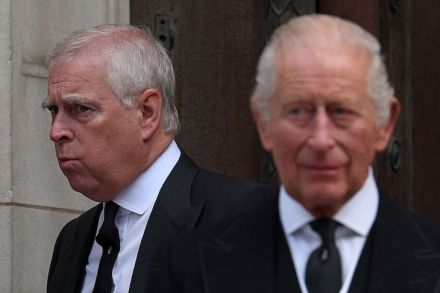
Oh God, not that. That’s all we need, I thought, reading in a long account of Prince Andrew’s current travails that ‘according to visitors to Royal Lodge’, he now ‘spends much of his time playing video games’. Even before all the unpleasantness with Jeffrey Epstein’s child-rape allegations, one of the Prince’s more embarrassing qualities was his appearing as an ‘ambassador’ for this or that – usually accompanied by a helicopter trip to a golf course. Now he’s reduced – no chopper, no putting green; woe is him – to being an ambassador for adults who play video games. As an adult who plays video games, and even writes about them from time to time, I generally welcome news of figures in public life who do the same. Not on this occasion.

Peter James: Jack Higgins’s The Eagle Has Landed

From our UK edition

40 min listen

Sam Leith's guest on this week's Book Club podcast is the crime writer Peter James. Peter has contributed the introduction to a new edition of the classic thriller The Eagle Has Landed, which is 50 years old this month. He tells Sam what it was that made Jack Higgins's novel so groundbreaking, about what it takes to make you root for the bad guys, how thrillers and detective stories differ – and about his own history with Jack Higgins. Plus, he tells me about his own new novel The Hawk Is Dead — which comes, more or less, by Royal Appointment...

In defence of the rules-based order

From our UK edition

The last time I saw my cousin, the former Tory MP Danny Kruger, I found myself trying to ginger him up a bit. I said, which I thought then and thought now – and which I can’t think it is betraying a confidence to say publicly – that the low state of the Conservative party was a bummer for those who sat on its benches, but also an opportunity for the likes of him.   After years of drift, venality, lurching ideological changes and idea-free opportunism, they had the chance to rebuild. Danny looked well placed to take a leading part in that project. Tory intellectuals are thin on the ground these days, and he is one.