Sam Leith

Sam Leith

Sam Leith is literary editor of The Spectator.

Even Rishi Sunak can’t save the Tories

From our UK edition

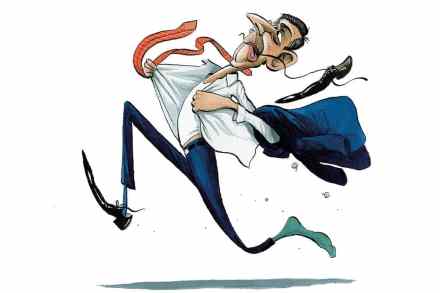
Once again, 357-odd Conservative MPs have complete control over what happens next in this country. There are three questions that each of them will be urgently considering. One is: what’s best for the country? The second is: what’s best for the Conservative party? The third is: what’s best for me personally? It will not have escaped the attentive student of recent Tory politics that these things do not always point in quite the same direction. So, question one. The country, poll after poll now tells us, wants rid of the whole shower of these blue-rosetted bozos as soon as is humanly possible. It seems to follow from that – even if the rules allow you to dodge it – that calling a general election would be the right thing to do for the good of the country.

Matt Lodder: Painted People

From our UK edition

60 min listen

My guest in this week’s Book Club podcast is the art historian Dr Matt Lodder, whose new book is Painted People: Humanity in 21 Tattoos. He tells me how much more there is to the history of painting on the body than we commonly suppose; and how over the years the history of tattooing (and public attitudes to it) have been shaped by religion, imperialism, class and fashion.

Can you feel sorry for Liz Truss?

From our UK edition

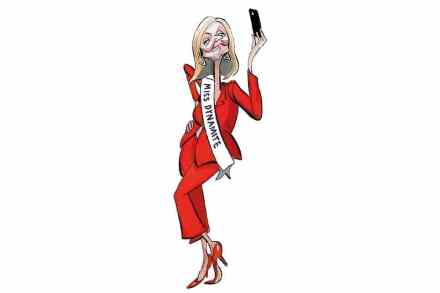
It is not easy to feel sorry for Liz Truss. She has a deeply unattractive streak of vanity – when in the Foreign Office, she seemed more interested in posing for the official photographers who trailed her round than she did in building relationships with the places she visited. She campaigned hard and sometimes dirty to obtain a job for which she was manifestly out of her depth. Once in that job, she exercised power with peremptory arrogance. She rewarded people who had sucked up to her, cast out anyone who had spoken up for her rival, and allowed experienced civil servants to be hoofed ruthlessly out of their jobs.

Al Murray: Command

From our UK edition

47 min listen

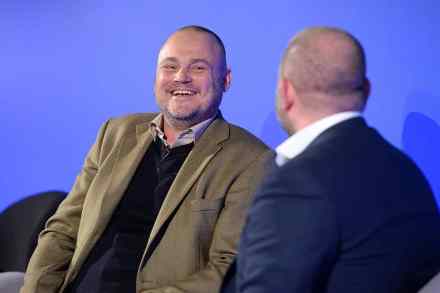
My guest on this week's podcast is best known as a stand-up comic, and co-host of the hit second world war podcast We Have Ways of Making You Talk. Now Al Murray has produced a book – Command: How The Allies Learned To Win the Second World War – in which he looks at the progress of the war through case studies of the men who, one way and another, made a difference to it. He tells me how we turned round a war we spent three years losing so badly, and along the way provides some sharp reassessments of (among other eminences) Orde Wingate, George Patton and the two-pound gun.

A baby boom won’t solve Britain’s labour shortage

From our UK edition

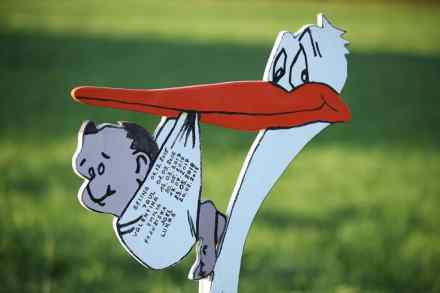
Quite the scoop in yesterday’s Sun. An anonymous cabinet minister has briefed the paper that to secure Britain’s economic future, we need a baby boom. The birth rate has fallen from 2.93 children per woman in 1964 to 1.58 today. We have an ageing population, and a shrinking workforce, and something must be done. 'We need to have more children,' says this minister. 'The rate keeps falling. Look at Hungary – they cut taxes for mothers who have more children.' And, indeed, they do. In Viktor Orban’s fiefdom you’re let off income tax for life if you manage to squeeze out four or more kids.

Liz Truss’s cliché-ridden speech was saved by Greenpeace

From our UK edition

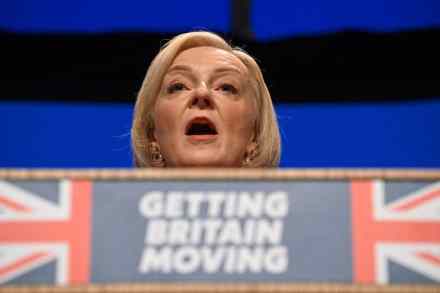
Liz Truss has, if nothing else, been working on her delivery. Her first speech to conference as Prime Minister was only about seventy per cent as stilted as usual. She occasionally, though just occasionally, sounded like she was speaking to the audience rather than reading something off an autocue. She remembered to smile. She even had a go at pointing matily into the crowd when she was saying nice things about her 'dynamic new chancellor' or her 'fantastic deputy prime minister'. And – which was the most she could have hoped for – she got through it without dropping any sort of clanger. The speech itself, perhaps deliberately, was a hopelessly dull effort: a compendium of exhausted buzz-phrases chunked into groups of three or strung together with laborious anaphora.

Peter Stothard: Crassus

From our UK edition

40 min listen

My guest on this week’s Book Club podcast is Peter Stothard, whose new book Crassus: The First Tycoon tells the story of the third man in Rome’s great triumvirate: landlord, power-broker, Spartacus’s nemesis and leader of a hubristic expedition to the east that was to see his glorious career end in bitter failure.

What’s so funny about Elon Musk?

From our UK edition

At the end of last week, at an AI event in California, Elon Musk unveiled his latest project: a humanoid robot called Optimus. Optimus wobbled onto the small stage like a contestant in Stars In Their Eyes: 'Tonight, Matthew, I’m going to be a 1970s idea of what a robot butler would look like if he’d been at the sherry.'  Musk told his bemused audience that this was the first time Optimus had walked anywhere without a tether, and admitted he was relieved it hadn’t fallen over – but assured them that the moment heralded 'a fundamental transformation of civilisation as we know it'. He promised that one day not too far into the future millions of these robots would roll off Tesla’s production lines at a consumer cost of around $20,000 (£18,000).

What does it mean when Giorgia Meloni quotes G.K. Chesterton?

From our UK edition

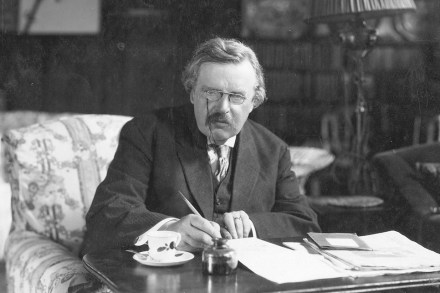
For a UK audience, the most striking moment in the new Italian PM Giorgia Meloni’s victory speech will have been that she anchored its peroration to a quote from G.K. Chesterton. ‘Chesterton wrote, more than a century ago,’ she said, ‘“Fires will be kindled to testify that two and two make four. Swords will be drawn to prove that leaves are green in summer.” That time has arrived. We are ready.’ G.K. Chesterton? The creator of the excellently herbivorous Father Brown mysteries, the Isaac Newton of what we now call ‘cosy crime’? That G.K. Chesterton? The author of a poem, memorised by many a previous generation of English schoolboys, about how ‘the rolling English drunkard made the rolling English road’? That one?

Lawrence Freedman: Command

From our UK edition

40 min listen

In this week's Book Club podcast my guest is the doyen of war studies, Lawrence Freedman. His new book Command: The Politics of Military Operations from Korea to Ukraine takes a fascinating look at the interplay between politics and conflict in the post-war era. He tells me why dictators make bad generals, how soldiers are always playing politics, how the nuclear age has changed the calculus of conflict and gives me his latest read on the progress of the war in Ukraine.

In praise of the speeding crackdown

From our UK edition

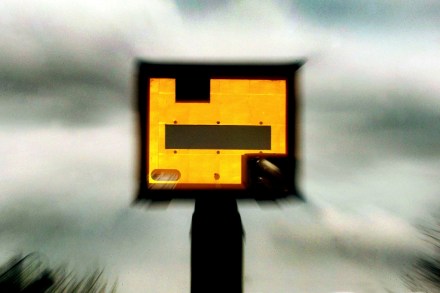
We all needed a laugh, what with the pound tanking and inflation running away, my old pal Kwasi delivering a Budget, probably for a bet, like Milton Friedman’s last cheese-dream, and the threat of nuclear annihilation starting to seem like a welcome turn up for the books. Said laugh has just been obligingly provided by the Metropolitan Police. They have just, without broadcasting the fact, decided to enforce the speed limit with the tiniest bit more rigour – and as a result, they’ve nicked more than two and a half times as many people for speeding in the first six months of this year than they did in the last six months of last year.

Rediscovering Josephine Tey

From our UK edition

38 min listen

On this week’s Book Club podcast we’re talking about the best crime writer you’ve (probably) never heard of. As Penguin reissues three of Josephine Tey’s classic Golden Age novels, I’m joined by Nicola Upson, whose own detective stories (most recently Dear Little Corpses) feature Tey as a central character. She tells me about the unique character of Tey’s writing, her discreet private life, and about how she made possible the psychological crime fiction that we read now.

The midlife crisis spread: why are the affluent so depressed?

From our UK edition

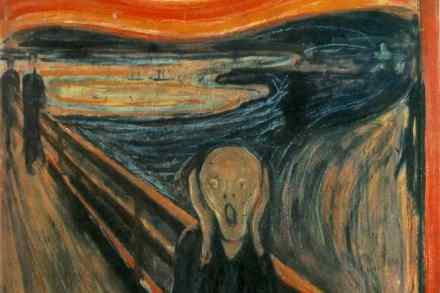
‘You are here’, as those signs in windswept carparks unhelpfully point out. Yup. No mistaking it, you will tend to think glumly as you look at them. I had the same feeling when I looked at a new report from no less an institution than America’s National Bureau of Economic Research. The report is called The Midlife Crisis. It tells us that in the western world, one’s forties and early fifties are associated with problems with sleep, clinical depression and suicidal thoughts, disabling headaches and dependence on alcohol, alongside a decline in basic measures of life satisfaction. Well, fancy. I don’t know about clinical depression and suicidal thoughts, I should say. Not so melodramatic, me.

Charles III will reign in an age where feeling trumps duty

From our UK edition

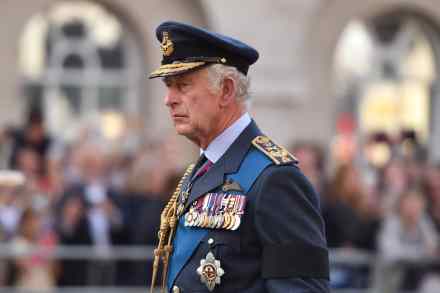
Charles III’s first address to the nation as King began by speaking of sorrow – and went on to speak of love. He used ‘love’ or its cognates eight times in that short speech. He spoke of his ‘darling Mama’ and ‘dear late Papa’, of love for Harry and Meghan, love for his people and for tradition, and the loving support of his ‘darling wife’. He spoke, too, of grief and consolation. In setting out his stall as King – if that’s not too vulgar an expression for what he has been doing over the past few days – Charles III has done so in terms of feeling. He has not spoken just about his devotion to duty, but about his heart.

A. M. Homes: The Unfolding

From our UK edition

30 min listen

My guest on this week’s Book Club podcast is A. M. Homes. She talks about her new novel The Unfolding, which imagines a conspiracy of angry Republicans forming after John McCain’s 2008 election defeat in the hopes of taking their America back. She talks about her history of prescience, about the deep weirdness of the Washington she grew up in, and why there’s more than one 'deep state'.

I’ve become a war addict

From our UK edition

It is an almost unquestioned orthodoxy that war is hell, and that every needless death in a needless war diminishes our common stock of humanity. It’s curious, though, how we're able to hold that conviction alongside a positively visceral excitement at watching the Ukrainian counter-offensive carve its way through the Kharkiv Oblast. Some 3,000 square kilometres have been recaptured: Ukrainian troops are moving through their own land at such a clip that they’ve made more progress in three days than the massed might of the Russian invaders have since April. I’ve been eating it up. Haven’t you? The images of abandoned armour, the fuel dumps, the sullen faces of Russian commanders rounded up as prisoners of war.

Ian McEwan: Lessons

From our UK edition

47 min listen

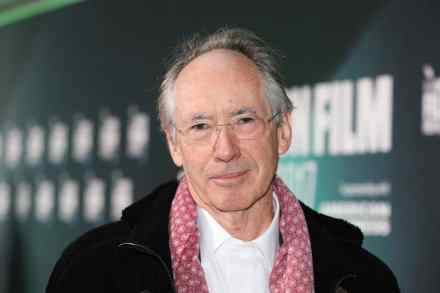
Sam Leith's guest in this week’s Book Club is Ian McEwan – whose latest novel Lessons draws on his own biography to imagine an 'alternative life' for himself. He tells Sam about what drew him, in his late career, to using autobiography; about why there’s no contradiction in combining realism with metafiction; about the importance of sex; the rise of cancel culture – and why literary fiction by 'comfortable white men of a certain age' may have had its day, but he’s not complaining.

Is Liz Truss a Tory Jeremy Corbyn?

From our UK edition

Many years ago, when the earth was young and leaving the European Union was a position espoused only by those trying to stay on the right side of Bill Cash at a drinks party, Ken Clarke stood for the Tory leadership against Iain Duncan Smith. He said one memorable thing while making his doomed bid for the captaincy – which was that the Tories needed to decide whether they were going to be a political party or a debating society. What I understand him to have meant by that was that ideological purity buttered no parsnips in politics. For most of its history, its friends and its enemies alike would agree that the Conservative party has been a magnificent machine for winning and retaining power.

From the archives: Francis Fukuyama

From our UK edition

37 min listen

This week we spotlight our most popular episode of the last year, Sam's conversation with Francis Fukuyama about his book Liberalism and its Discontents. He tells Sam how a system that has built peace and prosperity since the Enlightenment has come under attack from the neoliberal right and the identitarian left; and how Vladimir Putin may end up being the unwitting founding father of a new Ukraine.

We still love our failing NHS

From our UK edition

A new poll about the NHS, the Sunday Times tells us, has discovered ‘a decline in support’ for the National Health Service. The story spoke of ‘wide dissatisfaction about the state of the health service’, under the headline: ‘Britain falls out of love with the NHS’. The figures from the poll itself tell a slightly different story. The headline finding was that three people in five are now not confident that they would receive timely treatment were they to fall ill tomorrow. But these three people in five aren’t necessarily saying they’ve ceased to approve of the NHS. It seems to me that they are simply affirming what they’ve read in the papers and heard about on telly and experienced, piecemeal, themselves.