Sam Leith

Sam Leith

Sam Leith is literary editor of The Spectator.

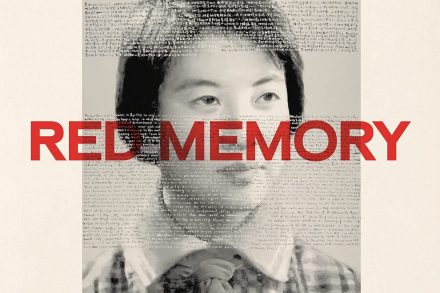
Tania Branigan: Red Memory

From our UK edition

57 min listen

My guest in this week's Book Club podcast is the reporter Tania Branigan, whose experience as a correspondent in China led her to believe that the trauma of the Cultural Revolution was the story behind the story that made sense of modern China. In her new book Red Memory: Remembering and Forgetting China's Cultural Revolution, she explores how the memory of that bloody decade, and the drive to forget or ignore it, shapes the high politics and daily lives of the Chinese nation. She tells me why official amnesia on the subject is a surprisingly recent development, how 1989's Tiananmen Square protests changed the course of the country, and why so many ordinary Chinese people still, extraordinarily, pine for the days of Mao.

Who thought the Prince Andrew sex bath picture was a good idea?

From our UK edition

How big does a bath need to be for 'sex frolicking' to be a possibility? That’s not, if you’d asked anyone six months ago, the question on which the reputational future of the monarchy might be in part held to depend – and yet here we are. A bizarre photograph has been released by the brother of Ghislaine Maxwell in an attempt to discredit Virgina Roberts Guiffre's claims of abuse. The photograph made the front page of the Daily Telegraph, no less. It showed two people, described in the accompanying story as 'acquaintances' of Ghislaine Maxwell, sitting facing each-other, fully clothed, in the bathtub of Maxwell’s old home.

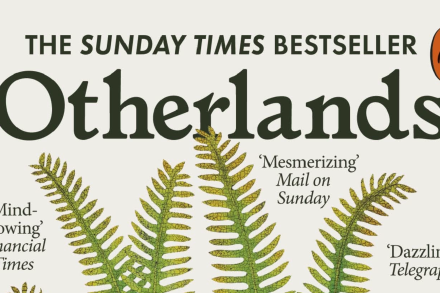
Thomas Halliday: Otherlands

From our UK edition

54 min listen

My guest on this week's Book Club podcast is the palaeobiologist Thomas Halliday, whose book Otherlands: A World In The Making takes us on an extraordinary journey through the whole history of life on earth. Thomas tells me why tyrannosaurus rex didn't eat diplodocus, why if you had to live in a swamp the carboniferous might be a good time to do it, and gives a jaw-dropping sense of what the night sky looked like when the earth was young.

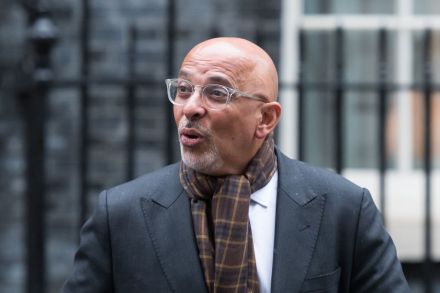
The curious carefulness of Nadhim Zahawi’s ‘carelessness’  

From our UK edition

The cliché is that it’s scandals about sex that tend to do for Tories, and scandals about money that do for their counterparts on the opposite benches. To give credit to the current generation of Tories, though, the last decade or so has seen, in this department, a feat of triangulation quite undreamed of by the likes of David Cameron or even Tony Blair. The Conservatives have retained a creditably strong showing in the extra-marital nookie and unwanted sexual advances stakes; but my goodness, they haven’t half upped their game in financial sleaze.  Using 'I was simply careless' as your explanation for why you accidentally seem to have not paid several million pounds in tax won’t really cut it All credit to Boris Johnson for captaining the team.

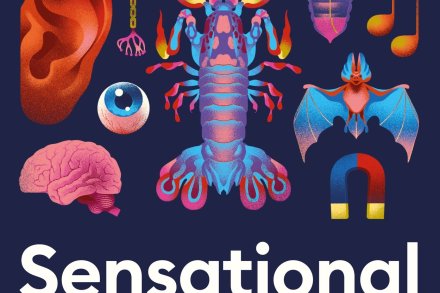
Ashley Ward: Sensational

From our UK edition

60 min listen

My guest on this week's Book Club podcast is Ashley Ward, author of Sensational: A New Story of our Senses, which takes us on a cultural, historical and neurobiological tour of the sensorium. Along the way he tells me why Aristotle's notion of five senses is a convenient but cockeyed idea, why men are best letting their wives pick out the curtains, why we call ginger-haired people "redheads" and, oddly, how a pooping dog might do in a pinch as an aid to navigation.

Goldman Sachs and the culling of the surplus elites

From our UK edition

Goldman Sachs laid off 3,200 employees with as little as half an hour’s notice. It will probably please the petty, pinched, Schadenfreude-prone sort of little people who have never worked for a predatory investment bank to imagine the scenes. I know it did me. All these huffy guys dressed like Christian Bale in American Psycho, ties wrenched from necks, belongings tumbled into cardboard boxes (lucky gonks, family photos, stress balls, wrinkled twists of cocainey paper and whatnot), stepping out on to Wall Street like goddamn civilians, faces black with fury. Masters of the Universe demoted at a stroke to citizens of the universe.  It’s quite the retrospective performance review What’s more unusual is what happened next.

A. E. Stallings: This Afterlife

From our UK edition

38 min listen

In this week's Book Club podcast, my guest is the distinguished poet A. E. Stallings, whose new selected poems This Afterlife marks her first UK publication in book form. She tells me why the idea that formal verse is stuffy is wrong, how she thinks Greek myth is a living tradition, and why women poets have to be both Orpheus and Eurydice.

Harry’s complete lack of self-doubt is a problem for the royal family

From our UK edition

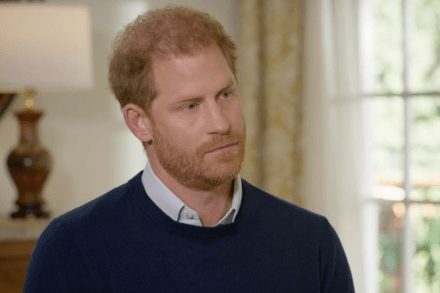
Watching Prince Harry being interviewed by Tom Bradby, one thing was clear: the man is in deadly earnest. He is a true believer. And that, I think, makes him very dangerous to the monarchy indeed. He came across well: modest, steely, scrupulously honest by his own lights, unshakably coherent in his view of the world and in his view of his place in it. He combined the moral authority of a victim of trauma with the unruffled calm of the fanatic. It was an extraordinarily, dangerously seductive performance. Moral clarity, a simple story, an injury nobly borne, a righteous crusade against a corrupt institution – these are the things that public opinion finds it very easy to get behind.

What adults don’t get about children’s books

From our UK edition

Children’s writing has been having a bit of a moment over the past couple of weeks, after a conversation on social media between children’s authors gathered into a sort of cri de coeur about the public neglect of their craft. Children’s books, they said, are barely covered in newspaper review pages or on the radio these days. Prizes for their creators have dwindled in number – the Smarties and Guardian prizes have long gone by the board, and the children’s category at the Costa book awards went down with that ship. We all know about the dwindling stock of public libraries. The writers complained, too, that publishers are using celebrity name recognition for the path of least resistance: diverting their marketing budgets into ghostwritten pap by TV stars.

Paul Pettitt: Homo Sapiens Rediscovered

From our UK edition

65 min listen

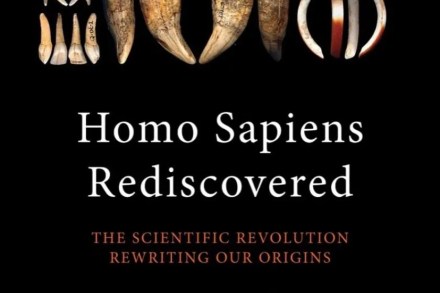
In this week's Book Club podcast my guest is the palaeoarchaeologist Paul Pettitt - whose new book Homo Sapiens Rediscovered explains how new scientific techniques have transformed the way we understand the deep past. He described to me the long and hazardous journey of H. Sap out of Africa - and along the way explains what's so good about mammoths, how cutting-edge cognitive science explains Paleolithic art, why cavemen didn't live in caves... and why you can draw a line from prehistoric Lascaux to Tony the Tiger.

ChatGPT: a world-class BS machine

From our UK edition

Two weeks ago, like most people, I hadn’t so much as heard of ChatGPT. By last week, I was hearing of practically nothing but. After OpenAI released its large-language model chatbot for the public to play with, it passed a million users in five days flat. Hype poured in. Columnists asked it to write the opening paragraphs of their columns about ChatGPT – with, of course, hilarious results. Educationalists worried that this new AI chatbot would render coursework redundant and require a return to timed exams, so swift and plausible are its responses to prompts like ‘write me an essay about the causes of the first world war’.

‘Loss is a thing that we become’: Nick Cave on grief, faith and why he’s a conservative

From our UK edition

Several hundred years ago, in the 2014 film 20,000 Days On Earth, Ray Winstone asked Nick Cave: ‘Do you want to reinvent yourself?’ Cave, looking out from his sunglasses, replied: ‘I can’t reinvent myself.’ ‘Do you wanna?’ ‘I don’t want to either. I think the rock star’s gotta be someone you can see from a distance. You can draw them in one line… They’ve got to be godlike. It’s all an invention. But it happened early on for me.’ On the handful of occasions over the years that I’ve seen Cave from a distance, he has been just that sort of figure – one a deft cartoonist would draw with one line: ski-jump nose, Sesame Street eyebrows and a swept-back bob of jet-black hair like Wednesday Addams after Uncle Fester chopped off her pigtails for a prank.

Matthew Hollis: The Waste Land

From our UK edition

52 min listen

My guest in this week’s Book Club podcast is Matthew Hollis, author of The Waste Land: A Biography of a Poem. In the tail end of this centenary year of the great monument of modernist poetry, Matthew tells me about the private agonies that went into the making of the poem. We discuss how not just Ezra Pound but Vivien Eliot had a hand in editing it, and why we misunderstand Eliot’s famous claim about the impersonality of poetry.

The shabby dishonesty of Matt Hancock’s ‘diaries’

From our UK edition

‘Standing in my kitchen in Suffolk after a quiet New Year's Eve, I scanned my newspaper for clues as to what might be lurking around the corner.’  So run the opening words of yesterday’s first extract of Matt Hancock’s Pandemic Diaries: The Inside Story of Britain’s Battle Against Covid. 1 January. New Year’s Day. And our hero – modest, unassuming, but eternally vigilant, eyes always scanning the horizon – is on duty, even when most of us are nursing a foggy head.   Of course, we know now what this man of destiny didn’t know then: that the ‘news-in-brief story about a mystery pneumonia outbreak in China’ that catches his eye is the harbinger of the vast global story that is to change all of our lives.

Rupert Shortt: The Hardest Problem

From our UK edition

52 min listen

My guest on this week's Book Club podcast is Rupert Shortt, whose stimulating new book The Hardest Problem addresses one of the oldest difficulties in theology: "the problem of evil". Is this something the religious and the secular can even talk meaningfully about? What's the great challenge Dostoevsky throws up? And what did Augustine get right that Richard Dawkins gets wrong?

Why ‘Uber for the countryside’ is a great idea

From our UK edition

The disappearance of rural bus routes is one of the small tragedies of our time. It isn’t, alas, a very glamorous tragedy. It affects older people, poorer people, people who live in unfashionable parts of the country. You seldom see Twitter storms about rural bus routes. You don’t see footballers campaigning on the issue with moist eye, bent knee and clenched fist. Those awkward one-deck buses, trundling from village to village, debouching the odd person here and there at an unloved bus stop on a drizzly rural B-road: they will never occasion so plangently romantic an elegy as Flanders and Swann's 'The Slow Train', which lamented in the 1960s the equivalent decline of the railways.  But small tragedy it is.

James Heale and Sebastian Payne: Out of the Blue and The Fall of Boris Johnson

From our UK edition

41 min listen

In this week’s Book Club podcast, I’m talking to two of the brave souls who turn recent political dramas into the sort of quickly written books we might call the second draft of history. I’m joined by the FT’s Sebastian Payne, author of The Fall of Boris Johnson, and our own James Heale, co-author of a Liz Truss biography, Out Of The Blue, which notoriously was so rapidly overtaken by events that she was out before it was. They tell me how they disentangle their duties in their day jobs as political reporters from what they owe their book readers, how differently sources will speak to authors than journalists, what the day to day press got wrong – and whether they think history will look more kindly on their subjects than the front pages.

Elon Musk, Donald Trump and the trouble with free speech

From our UK edition

The Cursed Ratio strikes again. Twitter users have voted 52-48 in favour of Elon Musk allowing the return of Donald Trump to the website, causing the gnashing of a great many progressive teeth in the airless no-space of the internet. The kicker to this is that – psych! – the former president almost immediately announced that he had no interest in returning to the site in any case. A pyrrhic victory, then, for Little Elon in his Struggle Against the Eunuchs, but still.   I’m no fan of Trump myself. I’d love to see him doing a sullen perp-walk in an orange jumpsuit, and I dearly hope one day to witness such a thing. But it strikes me that having him back on Twitter might not be the worst thing in the world should he deign to rejoin it.

Edward Mendelson: Complete Poems of W H Auden

From our UK edition

41 min listen

My guest in this week’s Book Club podcast is Edward Mendelson, who with the publication of the Complete Poems of W H Auden in two volumes now sets the crown on more than half a century of scholarship on the poet. There’s nobody on the planet who knows more about this towering figure in twentieth-century poetry. He tells me what he finds so inexhaustibly rewarding about Auden’s work, talks about the shape of the poet’s career, the personal encounters that set him on this path… and about sex, religion and semicolons.

Would the real Matt Hancock please sit down?

From our UK edition

'Politics,' as the old quip has it, 'is showbusiness for ugly people.' That quote was minted in the good old days when there was, at least implicitly, some clear blue water between the two things: it intended to draw an arch point of comparison between two quite different spheres of activity. Politics was momentous, solemn, and consequential; showbusiness was vain, silly and inconsequential. The quip points to a sneaking sense that, secretly, those in the former realm were actuated by less high-minded concerns.   These days, there is less and less sense, either among the general public or the practitioners of either art, that any such distinction exists. Both are now simply vehicles to attain the infinitely fungible currency of fame. That’s a slippage too far.