Sam Leith

Sam Leith

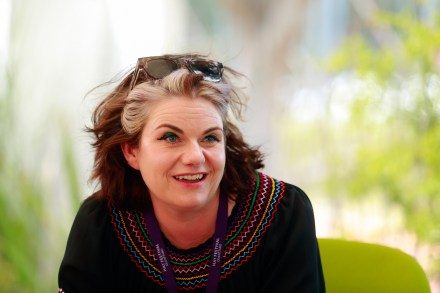
Sam Leith is literary editor of The Spectator.

Caspar Henderson: A Book of Noises

From our UK edition

47 min listen

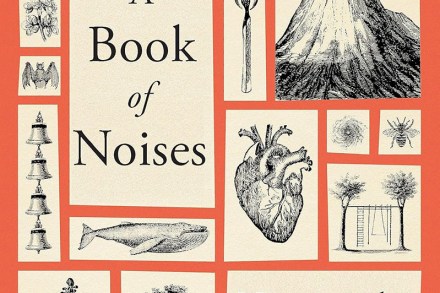
My guest in this week's Book Club podcast is Caspar Henderson, whose new book A Book of Noises: Notes on the Auraculous really is a journey into sound. He tells me why the music of the spheres – at least in this solar system – is a terrible racket, what we can learn from whale earwax, and why bat-squeaks are, in fact, very very loud indeed.
Mary Beard: Emperor of Rome

From our UK edition

48 min listen

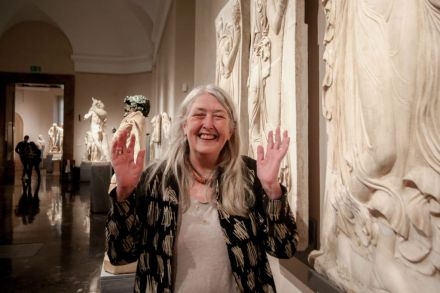
My guest in this week’s Book Club podcast is the writer, broadcaster and academic Mary Beard. In her new book, Emperor of Rome, she explores what we can and can’t know about the men who ruled the Roman Empire, and what the lurid stories about so many of them tell us about the anxieties and fantasies of Rome’s ordinary citizens and the remarkable resilience of the regime. We also discuss, among other things: decapitated ostriches, fatal rose petals, and Mary’s robust reappraisal of Marcus Aurelius’s 'sub-Stoic' maundering.

It is time to rethink the age of consent

From our UK edition

In 1983 Samantha Fox was sixteen years old when she first appeared topless on Page Three of the Sun. That paper and its kind used to delight in doing birthday countdowns: in just three days, they’d promise, alongside a picture of a provocatively pouting fifteen-year-old, it’ll be legal for us to show you her breasts. Wahey! In more recent memory (a 2003 change in the law having outlawed topless shots of under-18s) Emma Watson was 'upskirted' by photographers on her 18th birthday: they were handsomely compensated for images that, a few hours previously, would have landed them in jail. The Daily Mail’s so-called sidebar of shame likes to use the phrase 'all grown up' to signpost sexualised paparazzi images of young women.

Sarah Ogilvie: The Dictionary People

From our UK edition

45 min listen

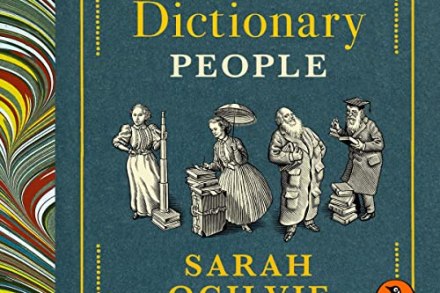
In this week's Book Club podcast I'm talking to Sarah Ogilvie about the extraordinary story of the making of the Oxford English Dictionary, as told in her new The Dictionary People: The Unsung Heroes Who Created the Oxford English Dictionary. She tells me why the OED was different in kind from any previous English dictionary, how crowdsourcing made it 'the Wikipedia of its day', and how – as she discovered – quite so many cranks, murderers, perverts and foreigners took such an interest in it.

The ‘naive cynicism’ of Russell Brand’s hasty defenders 

From our UK edition

I can’t imagine that Channel 4’s investigative slot Dispatches has had such an audience in living memory. On Saturday evening, many thousands of people who seldom if ever watch terrestrial television – I was one of them – will have tuned in at 9pm, just like the old days, to watch a conventional broadcast. Most of these people will already have known the substance of what was in the programme, because it was a joint investigation with a good-old-fashioned newspaper – whose version of the story was published a few hours earlier and was eagerly and widely read online. Quite a moment for the so-called 'legacy media'.

Francesca Peacock: Pure Wit

From our UK edition

45 min listen

In this week's Book Club podcast, I'm joined by Francesca Peacock to talk about the remarkable life and extraordinary work of Margaret Cavendish, the 17th-century Duchess of Newcastle. Famous in her own day for her bizarre public appearances and nicknamed 'Mad Madge', the author of The Blazing World has been marginalised by posterity as an eccentric dilettante. But in her new book Pure Wit, Francesca sets out to reclaim her as a serious feminist writer before feminism was generally thought of, and as a radical thinker in natural philosophy.

There’s not much we can do about China spying

From our UK edition

A parliamentary researcher has just been arrested on suspicion of espionage. A man in his late twenties, with reported links to the security minister and the chair of the Foreign Affairs Select Committee, is accused of spying for China and may have had access to sensitive secret documents. A second suspect has been collared in Oxfordshire. It’s said to be the worst Westminster security breach in years: 'We haven’t seen anything like this before.' I’m sure you were as surprised as I was to find out that the Chinese are spying on us. Gobsmacked. Flabbergasted. Probably nearly as surprised as the Prime Minister. And to hear his spokesman tell it, Rishi Sunak wasn’t just surprised but jolly cross about it too.

From The Archives: Masha Gessen

From our UK edition

24 min listen

The Book Club podcast returns next week. In the meantime, here's another from the archives, and one which looks more timely now even than it was when we recorded it in 2017. Here's perhaps Russia's most prominent dissident writer, Masha Gessen, talking about their book The Future Is History: How Totalitarianism Reclaimed Russia.

Silicon Valley’s curious obsession with building old-fashioned communities 

From our UK edition

It’s a peculiar thing about billionaires: they don’t half have a weak spot for building ideal communities from the ground up. You could call it pluto-utopianism. The latest manifestation of this is California Forever. A number of ultra-wealthy Silicon Valley tech entrepreneurs have been quietly buying up 55,000 acres of farmland in Solano county, California, and at the end of last week they launched a website revealing what they planned to do with it. Behold, the future of rural America: a new community rising from the empty earth, the vision for which is set out in a series of watercolour-style illustrations.

From The Archives: Tom Holland

From our UK edition

45 min listen

As Sam is still away, we've dug out one our favourite podcasts from the archives. Back in 2019 Sam spoke to the historian Tom Holland, about his book Dominion: The Making of the Western Mind. The book, though as Tom remarks, you might not know it from the cover, is essentially a history of Christianity and an account of the myriad ways – many of them invisible to us – that it has shaped and continues to shape Western culture. It’s a book and an argument that takes us from Ancient Babylon to Harvey Weinstein’s hotel room, draws in the Beatles and the Nazis, and orbits around two giant figures: St Paul and Nietzsche. Is there a single discernible, distinctive Christian way of thinking? Is secularism Christianity by other means?

Celia Brayfield: Writing Black Beauty

From our UK edition

45 min listen

My guest on this week's Book Club podcast is the journalist and author Celia Brayfield whose new book Writing Black Beauty: Anna Sewell and the story of animal rights, takes us back to the 19th century. Celia describes how Anna Sewell's writing of the Black Beauty book ultimately led to the kinder treatment of horses, and we both recall fondly the popular TV adaptation with its soaringly emotive theme tune.

Why not house refugees on barges?

From our UK edition

‘By the light of the torches, we saw the black Hulk lying out a little way from the mud of the shore, like a wicked Noah’s ark. Cribbed and barred and moored by massive rusty chains, the prison-ship seemed in my young eyes to be ironed like the prisoners. We saw the boat go alongside, and we saw him taken up the side and disappear. Then, the ends of the torches were flung hissing into the water, and went out, as if it were all over with him.’ It is with a pleasurable shudder that most of us will remember Charles Dickens’s description, in Great Expectations, of the wicked Noah’s ark of a prison hulk moored in the Thames.

Ayelet Gundar-Goshen: The Wolf Hunt

From our UK edition

37 min listen

My guest on this week's Book Club podcast is the novelist and psychologist Ayelet Gundar-Goshen, whose gripping new book The Wolf Hunt tells the story of an Israeli-American mother who finds herself wondering whether her teenage son Adam could have been responsible for the death of a classmate. She tells me about using the thriller form as a Trojan horse, about fear and what we do with it, and whether, as an Israeli writer, you can ever escape from politics.

The faked passports which saved countless lives in the second world war

From our UK edition

In the summer of 1942, the Polish poet Władysław Szlengel made a detour into light verse with ‘The Passports’: ‘I would like to have a Uruguayan passport/ Oh, what a beautiful land it is/ How nice it must feel to be the subject/ Of the land called Uruguay...’ Successive quatrains hymned the joys of Paraguayan, Costa Rican, Bolivian and Honduran citizenship before the final stanza declared that it was only with one of these citizenships that ‘one can live peacefully in Warsaw’.  The joke was serious. Szlengel was a Jewish man living in the Warsaw ghetto; and as Roger Moorhouse’s absorbing new book describes, Latin American passports were, or could be, a ticket to safety, or at least a hook on which the shreds of hope could be hung.

Ancient worms and the problem with climate politics

From our UK edition

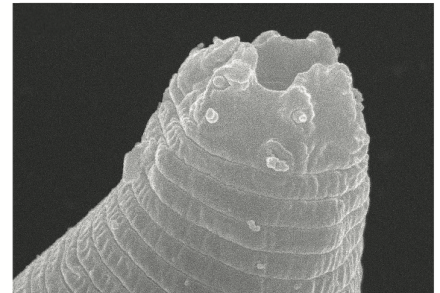
The poet Elizabeth Bishop, when she was feeling blue (which she often was), used to find comfort in thinking in geological rather than human time. If the vast aeons amid which we wink in and out of existence render our lives insignificant, so too do they render our suffering. As someone else said: nothing matters very much, and few things matter at all.  These little worms, I think, can give us a welcome sense of perspective. A worm’s-eye view, if you will I’m sure these thoughts, or something very like them, will have been the first to have gone through the small brains of the nematode worms which woke up the other day having been asleep for 46,000 years. Along with ‘what now?’ and ‘can you people for Chrissakes keep it down?

James Ball: The Other Pandemic

From our UK edition

56 min listen

My guest on this week's Book Club podcast is the investigative and tech writer James Ball, to talk about his new book The Other Pandemic: How QAnon Contaminated the World. In it, James traces the rise and disturbing metastasis of what he calls 'the conspiracy theory that ate all the other conspiracy theories', and argues that what looks from the outside as an extreme set of fringe beliefs about Satanic paedophile rings running the Deep State is something we need to take very seriously indeed.

Immigration and a government in a state of post-hypnotic suggestion

From our UK edition

Hurrah! The government, it was reported yesterday, is working on getting some more migrants. To plug a million-strong post-Brexit labour shortage in the hospitality sector, Suella Braverman and Robert Jenrick have been instructed by Downing Street to start talks to open the doors to young French, German, Spanish and Swiss nationals. If it goes well, the plan is to perhaps invite a few more to help out with farming, fish processing and all sorts of other sectors of the economy that are looking a bit peaky. 'European baristas and au pairs could return to Britain under government scheme', read the headline. Just like the good old days, eh?   What’s wrong with, say, Lithuanian au pairs and Polish hospitality workers?

Ferdinand Mount: Big Caesars and Little Caesars

From our UK edition

40 min listen

In this week's Book Club podcast I'm joined by Ferdinand Mount who in his long career has been literary and political editor of this very magazine, as well as editor of the TLS and head of Margaret Thatcher's Number Ten policy unit. We discuss his new book Big Caesars and Little Caesars: How They Rise and How they Fall, from Julius Caesar to Boris Johnson. He tells me why he thinks it's fair to compare our recent former prime minister with a cast of despots and autocrats from Indira Gandhi and Oliver Cromwell to Louis Napoleon and even Adolf Hitler, and why he sees the impulse to autocracy as an ineradicable thread in human history.

YouTube and the final state of total Kippleization 

From our UK edition

When I look back over my life, a decade or two from now, when I finally succumb to the strontium smog, I’ll at least be able to pinpoint the moment when I first knew human civilisation was doomed. Ah yes, I’ll think, as I hear scavengers scuttling towards my body across the trashscape, grunting and hooting for meat: that was the moment. That Friday evening, way back in the middle of 2023, when I was spooning out the usual overcooked pasta for the usual undercooked children and I asked them what they’d been up to.  'We found this hilarious thing on YouTube,' my oldest said. 'It was, like, this AI-generated video of Boris Johnson eating raw onions.' Was, like, what? 'Yes,' chipped in the second oldest. 'WHOLE raw onions. It’s hilarious!

Caitlin Moran: What about men?

From our UK edition

52 min listen

My guest in this week's Book Club podcast is Caitlin Moran. Having written one of the bestselling works of popular feminism of the last 20 years – How To Be A Woman – she has turned her attention to the other half of the population with her new book What About Men? I asked Caitlin why she felt she needed to write such a book, and what qualifies her to do so. She tells me why she thinks young men are turning against feminism, what she says to the people who accuse her of trading in stereotypes, and why she thinks Jordan Peterson is a poor excuse for a 'public intellectual'.