Sam Leith

Sam Leith

Sam Leith is literary editor of The Spectator.

Guy Kennaway: Good Scammer

From our UK edition

46 min listen

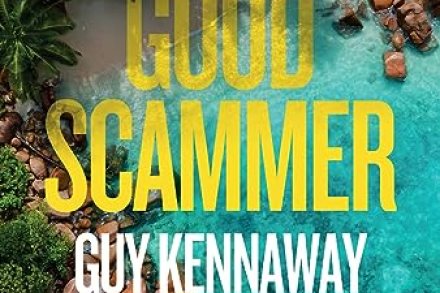
On this week's Book Club podcast, my guest is Guy Kennaway, whose new novel Good Scammer sprinkles a protective dusting of fiction over the true story of the real-life king of Jamaica's phone scammers. Guy tells me why telephone fraud might be considered ad-hoc reparations for slavery, why James Bond is a Jamaican, and why the island on which he has lived for 35 years is in no danger of turning into Switzerland-in-the-Caribbean.

The evolving phenomenon of ‘Brexit regret’

From our UK edition

It was reported this weekend that the great trans-Pacific trade deal (CPTPP), the one that Lord Cameron just boasted would 'put the UK at the heart of a group of some of the world’s most dynamic economies', will boost our economy by practically nothing at all. The OBR reckons CPTPP will put 0.04 per cent on our GDP over fifteen years. The bilateral deals with Australia and New Zealand, meanwhile, are predicted to give a 0.1 per cent uplift. This is better, but still, hardly the piratical free trade bonanza we were encouraged to expect. A gold-plated special-friends deal with the USA shows no signs of materialising. To what extent has pro-Brexit feeling shifted from being a political phenomenon to being a psychological one?

Jonathan Jones: Earthly Delights

From our UK edition

56 min listen

My guest in this week's Book Club podcast is the art critic Jonathan Jones. The term 'renaissance' is out of fashion among scholars these days, but in his new book Earthly Delights: A History of the Renaissance Jonathan argues that it points to something momentous in human history. On the podcast, Jonathan makes the case for what that something is – which is perhaps more heretical, and less Italian, than we might have remembered.

Can the government be trusted with free speech? 

From our UK edition

This summer, horrified by the rising numbers of students no-platforming and harassing visiting speakers whose views they don’t like, the government anointed the Cambridge philosopher Arif Ahmed ‘free speech tsar’. Prof Ahmed said at the time that his new role, at least as he saw it, wasn’t a culture wars stunt: he was interested in protecting free expression across the political spectrum.   There is a culture of systematic no-platforming and double-cucked snowflakery, it turns out, in the supposedly pro-free-speech government We have every reason to think he’s been beavering away since then to ensure our campuses continue to zing with the free and frank exchange of ideas, and good on him.

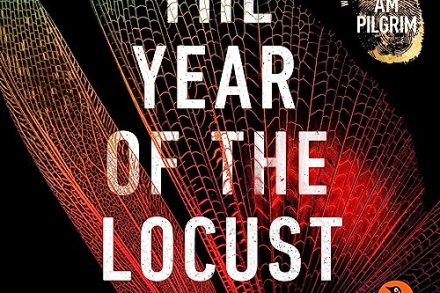
Terry Hayes: The Year of the Locust

From our UK edition

34 min listen

In this week's Book Club podcast my guest is Terry Hayes, author of the squillion-selling thriller I Am Pilgrim. He tells me about invisible submarines, taking advice on crucifixion from Mel Gibson, and why it took him ten years to follow up that first novel with his new book The Year of the Locust.

The dying days of Rishi Sunak’s black hole government

From our UK edition

In my admittedly sketchy understanding of it, black holes are formed when something becomes so massive that it collapses in on itself (am I getting this right, Carlo?) ... and then keeps collapsing, over and over again, until it becomes infinitely tiny and inside-out and even the rules of physics cease to apply. This applies to supermassive celestial bodies, but also to supermassive shambles, such as we are to observe through our telescopes when we point them in the direction of the Conservative Party. Every zeptosecond brings a further wrinkle in political spacetime, and every zeptosecond sees the governing party, like a black hole, sucking harder than Newtonian physics ever thought possible. Take this latest reshuffle.

Keeping the peace: the politics of policing protest

From our UK edition

41 min listen

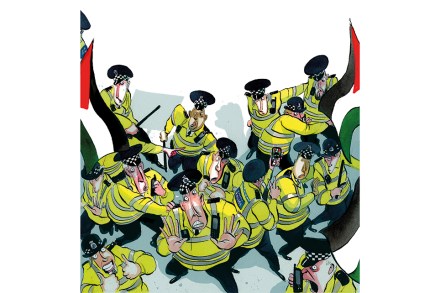
On the podcast: In his cover piece for The Spectator Ian Acheson discusses the potential disruption to Armistice Day proceedings in London this weekend. He says that Metropolitan Police Chief Mark Rowley is right to let the pro-Palestine protests go ahead, if his officers can assertively enforce the law. He joins the podcast alongside Baroness Claire Fox to discuss the problems of policing protest.  Next: are smartphones making us care less about humanity?  This is the question that Mary Wakefield grapples with in her column in The Spectator. She says it’s no wonder that Gen Z lack empathy when they spend most of their lives on social media. She is joined by Gaia Bernstein, author of Unwired: Gaining Control over Addictive Technologies.

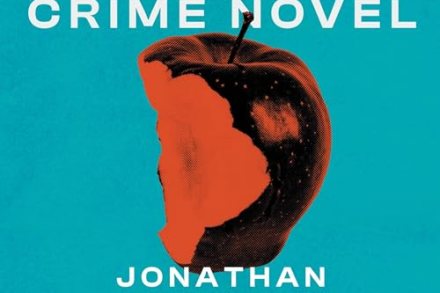
Jonathan Lethem: Brooklyn Crime Novel

From our UK edition

51 min listen

In this week's Book Club podcast, I'm joined by the novelist Jonathan Lethem. Two decades after his breakthrough book The Fortress of Solitude crowned Lethem the literary laureate of Brooklyn, he returns to the borough's never-quite-gentrified streets with the new Brooklyn Crime Novel. He tells me why he felt the need to go back, and talks about race, intimacy, realism, the 'non-fiction novel' – and why he regrets his beef with the critic James Wood.

What can be done about AI porn?

From our UK edition

The foul-mouthed puppet musical Avenue Q, way back in 2003, caught the spirit of the age to come. 'The internet is for porn!/ The internet is for porn!' runs one of its more memorable songs. 'Why do you think the net was born?/ Porn! Porn! Porn!' Never was a truer word sung by a copyright-skirting knockoff of The Muppet Show. What those puppets didn’t see coming, though, was the effect on this basic truth of the development of artificial intelligence.   A report this weekend in the Wall Street Journal came headlined: 'AI fake nudes are booming. It’s ruining real teenagers’ lives.' The story opened with a case study.

Nicholas Shakespeare: The Complete Man

From our UK edition

52 min listen

In this week's Book Club podcast, my guest is Nicholas Shakespeare, author of Ian Fleming: The Complete Man. He tells me about the astonishing secret life of a writer whose adventures in espionage were more than the equal of his creation's; and about the damaged childhood and serially broken heart of a man far kinder and more sympathetic than his biographer had ever suspected.

What the Babylon scandal tells us about the British government 

From our UK edition

One of the consistent themes of Dominic Cummings’s kamikaze mission to reform the machinery of the British state was that we urgently needed more politicians with backgrounds in science, maths and engineering, and fewer with 2:1s in PPE. As he argued, the latter sort (see also: historians like Dom, classicists like Boris Johnson and pompous English graduates like me) are very well equipped to get themselves into a position of power, what with their networks of university chums and ability to produce plausible bullshit to a deadline. But once they get there they are out of their depth amid problems that require systems thinking, numeracy, the ability to weigh probabilities, technological literacy and so forth.

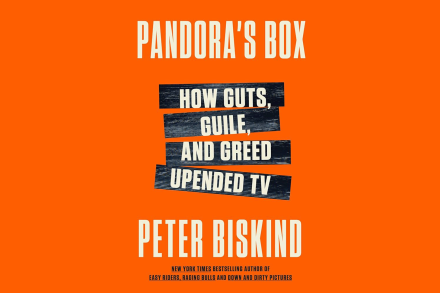
Peter Biskind: Pandora’s Box

From our UK edition

40 min listen

My guest on this week’s Book Club podcast is the film writer Peter Biskind. In his new book Pandora’s Box, he tells the story of what’s sometimes called “Peak TV” – and how a change in business model (from network to cable to streaming) unlocked an extraordinary era of artistic innovation, and uncovered an unexpected darkness in the public appetite to be entertained.

Are Amazon’s publishing gurus doing anything wrong?

From our UK edition

Alex Kaplo lives, apparently, the life of Riley. The 31-year-old's website shows him roaring around in a Mercedes, and he boasts of taking 'extravagant' holidays and living in a high-end apartment. He has made all his dosh, as it turns out, as a 'publishing chief executive'. He has caused hundreds of books to be released, none of which he has written. His story appears, alongside a few others, in a report in yesterday’s Sunday Times about the people who are really getting rich from publishing these days. And, spoiler alert: it isn’t traditional publishers, still less (ha ha) actual authors.

Katy Balls, Christina Lamb and Sam Leith

From our UK edition

20 min listen

This week:  Katy Balls discusses the SNP’s annual conference and asks what will it take to hold the party together if things get much tougher over the next twelve months (01:10), Christina Lamb goes to Ukraine, only to be told that she’s 'at the wrong war' as events unfold rapidly in the Middle East (06:55), and Sam Leith chats to the man who heads up the tiny publishing house that regularly churns out Nobel Prize winners (12:13).  Produced and presented by Linden Kemkaran.

New world disorder

From our UK edition

38 min listen

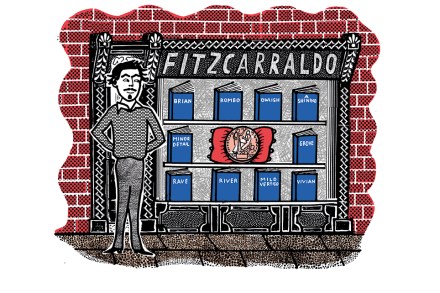
On the podcast: In The Spectator's cover piece Jonathan Spyer writes that as America's role in international security diminishes history is moving Iran’s way, with political Islam now commanding much of the Middle East. He is joined by Ravi Agrawal, editor in chief of Foreign Policy and host of the FP Live podcast, to discuss whether America is still the world's policeman.  Also this week: In the magazine this week, The Spectator’s literary editor Sam Leith speaks to Jacques Testard, publisher at Fitzcarraldo Editions, the indie publishing house which has just won its fourth nobel prize in under ten years.

How to win four Nobel Prizes in literature

From our UK edition

‘Hi Jacques,’ I say as the publisher of Fitzcarraldo Editions appears on my Zoom screen with his Franz Hals facial hair. ‘Thanks for making the time.’ I explain, apologetically but cheerily, that I’m going to be asking him to give his basic ‘how I keep winning Nobel Prizes’ spiel – at which, I say, he’s probably by now well practised. ‘Hm,’ he says, ‘I’m not sure about that. I’ll do my best.’ Though he’s grateful for what it’s done for his tiny publishing company, you sense that Jacques Testard probably finds it a bit irksome that it takes the ephemeral showbiz razzle of the Swedish academy to bring the experimental writing he publishes anything much in the way of public attention. But there again, the Nobel thing is hard to ignore.

Sandra Newman: Julia

From our UK edition

38 min listen

My guest in this week’s Book Club podcast is the novelist Sandra Newman, whose new book Julia retells George Orwell’s Nineteen Eighty-Four from Julia’s point of view. We discuss the spaces Orwell’s classic left for her own novelistic imagination, what we do and don’t know about the world of Big Brother, and whether the misogyny in Orwell’s original belongs to the author or the dystopia he depicts.

Can we be honest about Israel and Palestine?

From our UK edition

Qui tacet consentire videtur: who keeps silent is seen to consent. That Latin tag haunts the western response to the situation in Israel. We’re already seeing, amid the rage and grief, people being called out for what they don’t say as much as for what they do. But what are those of us – the ordinary schmoes, the many bystanders – who don’t have an encyclopaedic knowledge of the history of Israel/Palestine, a clever take on the geopolitical implications, or a shrewd understanding of the hidden hands at work, to say? Who see only horror clambering over horror, to which any amount of historical or geopolitical subtlety seems, viscerally, to miss the point. What is the appropriate response? What we’re seeing in Israel and Gaza now activates an instinctive response.

Celebrating Watership Down

From our UK edition

33 min listen

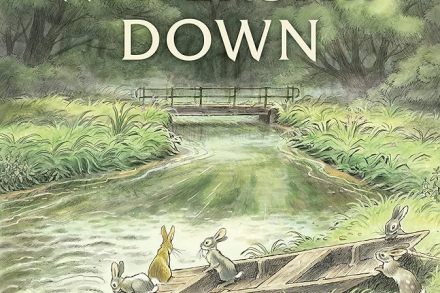
In this week's Book Club podcast, we're celebrating 50 years of a unique classic – Richard Adams's Watership Down – and its forthcoming adaptation in graphic novel form. I'm joined by Richard Adams's two daughters Juliet and Rosamund, who tell me how a story that their dad started telling them to beguile a long car journey became one of the best selling children's books of all time, how that changed their father's life, and how Fiver's prophesy, alas, is finally coming true.

How Elon Musk killed Twitter/ X

From our UK edition

Twitter was a newswire. That, at least at first, was the point of it. Something that came with all the glamour of digital innovation was, as it turned out, immediately recognisable as a version of something that has sat on every newspaper news desk for decades: a regularly refreshed 'feed' of short updates, ceaselessly scrolling, with the latest at the top. It was a newswire everybody got, and everybody could contribute to. There was value in that alone. It turned into much more. It became a raucous sort of community. It did, as everybody complained, make it easier for angry inadequates to shout at strangers, but that was just part of it. It was fun.