Sabuhi Gard

Why global leaders should keep their mouths shut

From our UK edition

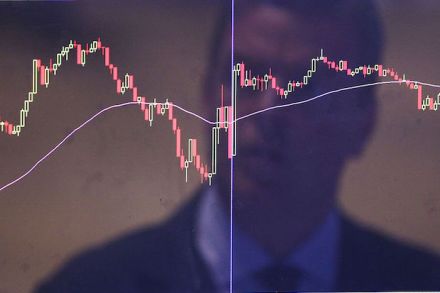
Sometimes as an investor, you wish your Prime Minister or President would keep their thoughts to themselves. Perhaps hold off on that keynote speech about Brexit? Brush over that State of the Union address? Why? You may ask. Because it plays havoc with your investment strategy, that's why. And I don’t think the likes of Theresa May and Donald Trump realise what they might be doing to someone’s investment portfolio. The research from spread-betting firm ETX Capital shows that large fluctuations in the value of the pound can be seen after Mrs May’s speeches. Source: ETX Capital Last year, the pound was weak against a basket of currencies, including the euro and dollar.

Is it possible to predict your financial future?

From our UK edition

Depending on how your personal finances are, the new financial year either fills you with dread or joy. Rising living costs mean British people have been using overdrafts and credit cards more – and according to data from moneysupermarket.com, four million people have borrowed from friends and family. Whatever your financial situation, would you consider using a clairvoyant to find out what was going to happen to your finances? Well I did. Eager for some clarity about the year ahead, I consulted clairvoyant Karen Bashford, who describes herself as a 'soulful business mentor'.

New year, new partner?

From our UK edition

There is no doubt about it, getting a divorce is an expensive business. The average cost, according to Aviva’s Family Finances report, is £14,500 – which includes legal fees, child custody costs and changing homes. The report highlights how the cost of divorce has spiralled a further 17% since 2014 when divorces in the UK cost, on average, £12,432. It doesn’t stop there. There are also relocation costs. Those wanting to buy a new property have to spend an extra £144,600, or £35,000 in order to rent somewhere.

Are young Londoners financially squeezed?

From our UK edition

London, along with other capital cities like Singapore, Hong Kong, Kyoto are thought to be one of the most expensive cities to live in the world. So is London Mayor Sadiq Khan, going too far by suggesting that every young Londoner should be entitled to a bank account? The simple logic should be: if you can’t afford to live and work in London, don’t move to London. But I suppose it is not as simple as that, and the good, great and the millennials have been lured to the Capital for studying, family or work reasons. This sort of simple logic might be a tad unreasonable.

What does 2018 have in store for investors?

From our UK edition

As 2017 fades into the distance with its ongoing Brexit negotiations, a falling pound and a rising Bitcoin, will there be more of the same for investors in 2018? I think so. Perhaps another financial crisis, as the crypto-currencies topple the existing global banking infrastructure? Another rise in UK interest and a continued move away from QE to quantitative tightening (QT) by the global central banks? So, what do the fund managers think? The 2017 fund manager poll by the Association of Investment Companies (AIC) found managers remaining positive on the outlook for equities in 2018, but Brexit and interest rates are causing them concern. Equities remain the asset class investment company managers think is most likely to perform best in the coming year.

Will there be a ‘Santa Rally’ in 2017?

From our UK edition

Thinking about what to write this week, I suggested to my editor: 'what about an article about a Santa Rally?'. I got an excited response of ‘How fun!’. The truth of the matter is that a Santa Rally can ‘be fun’ if you are an investor benefiting from a stock market rally at the end of December – or alternatively it can be rather underwhelming (if it doesn’t happen, that is). Every year, every investor hopes for a rally to lift their portfolio. Sadly, along with other stock market superstitions – ‘Sell in May and Go Away’ or ‘Beware of the Ides of March’ – this rarely happens... until now.

A year on from Trump’s election win – has it been all good news for investors?

From our UK edition

Before Donald Trump was elected the 45th President of the United States, his supporters claimed that he would be ‘good for US business’ and ‘good for the US economy’. He brought an impressive track record to the White House as a successful media personality and star of The Apprentice; a businessman and property investor worth anything from $3.9 to $10 billion (or so the estimates claimed), despite going bankrupt several times in the 1990s and around the global financial crisis in 2008. Well were Trump’s supporters right? Yes. In the past year, equities in particular have delivered some impressive returns, while ‘safe haven’ assets (like gold) have fallen behind, according to research from Fidelity International.

Can making home improvements really add value to your home?

From our UK edition

‘Adding value’ to your home has always been a staple manoeuvre for any astute homeowner – but it is proving more popular now than ever. This is due to a number of reasons: record numbers of homeowners staying put, the increasing costs of moving home and a general loss of confidence in the UK housing market (one in five British adults surveyed by the Halifax bank expect house prices will fall in the next year). According to a new study by Gocompare.com, 43% of homeowners have carried out major work on their properties in the last 5 years, from updating bathrooms and kitchens, investing in energy efficient measures such as new central heating systems, to building an extension.

Black Monday: 30 years on

From our UK edition

The ‘Great Hurricane’, Maggie Thatcher, Michael Jackson and shoulder pads – it must be the 30th anniversary of Black Monday. What was ‘Black Monday’? On 19 October 1987, global stock markets experience heavy falls. In the space of 24 hours, the Dow Jones Industrial Index (DJIA) fell 22.6%, destroying the previous record one-day fall of 12.8% set during the Wall Street Crash of 28 October, 1929. Asia and Europe all suffered huge falls of up to 23%. The UK’s leading benchmark index closed down 10.84% at 2052.3 on the 19 October 1987, only to fall further by 12.22% at 1801.6 the following day.

Life expectancy is on the rise. Is that something that can be invested in – and if so, how?

From our UK edition

‘We are all going to live longer, so why not invest in it?’­ seems to be the premise of Jim Mellon and Al Chalabi’s new book, Juvenescence – Investing in the Age of Longevity. Mellon and Chalabi forecast that within the next 20 years, the average life expectancy in the developed world will rise to between 110 and 120. As Mellon explains: ‘The increase in life expectancy is due to environmental factors, the rise of universal medical treatment, antibiotics, improved diet. The next step [in science] is going to change the fundamental biology of the human being, by genetic editing, stem cells, pharmaceutical intervention, as well as tissue regeneration.’ Hooray, you might say, but it raises the ethical question: Do we want to live longer?

When is the best time to exit the London property market?

From our UK edition

Owning a property in Central London is a dream for some, but a burden for others – if you are an accidental landlord, that is. An accidental landlord? But that I mean you were lucky enough to buy a property 20 years ago, then decided to move out of London – and were left wondering what to do with it. Rent it out? Sell it? Only a mad man would want to sell a property in London? Right. Wrong. Recent figures from property website Rightmove showed that this year, asking prices for homes in London have recorded their biggest annual fall so far this decade – having dropped on average by £18,000 in a month.

Is now the right time for the ‘older entrepreneur’?

From our UK edition

Over half of individuals over the age of 50 have described themselves as 'entrepreneurs', shaking up the popular perception of start-up founders being twenty something tech whizz-kids or trendy millennials from Silicon Valley. The survey carried out by the Institute of Directors (IOD) and published in a new report, the ‘Age of the Older Entrepreneur’ shows that the over 50s are increasingly using their pension pots to start up their own businesses, rather than spending their twilight years buying a Maserati or sunning themselves in the Algarve. 'It is a cause for celebration that an increasing number of experienced workers are going it alone as entrepreneurs.

Is there enough choice for stock market investors?

From our UK edition

Investing in the stock market can be a laborious task. Reading the latest research, calling up your broker, watching the latest trends on financial TV channels, subscribing to the Financial Times or reading Investment Week or Investors Chronicle. And once you have done all that, it turns out that the same old companies being touted. How tedious. What if you as an investor could have access to more than just the companies listed on the FTSE 100, FTSE 250 or FTSE 350? There is of course AIM (Alternative Investment Market) launched in 1995, which lists a diverse range of smaller companies; but there is also NEX (formerly known as ICAP) – which some might say is a direct competitor to AIM. NEX Exchange originated in the mid-1990s in the form of OFEX.

The financial crisis, ten years on

From our UK edition

It has been ten years since the start of the global financial crisis, and much has been written about whether the crisis of 2007 has changed the financial system... whether lessons have been learned, and so on. Frankly, lessons haven’t been learned and if the UK doesn't play its cards right, there could be another financial crisis looming thanks to Brexit. A ‘brain drain’ has already started in the City of London’s financial district, UK house prices are slowing down as many high net worth individuals (HNIW) head back to Europe, and you can’t even buy a cheap bar of chocolate because of Brexit. Pass me the ‘chocolate orange’? Perhaps not. Brexit aside, are investors in a ‘better place’ 10 years on?

Should we all be investing in bitcoin?

From our UK edition

Like the splitting of the atom – but perhaps not as significant to the whole of mankind, the bitcoin split into two on August 1. We now have bitcoin cash. For the less knowledgeable investor, the bitcoin is a digital currency which was launched in the wake of the financial crisis in 2009, borne out of a general mistrust of the existing financial institutions. Unlike a traditional currency, the bitcoin has no central monetary authority. Instead it has a peer-to-peer network made up of users’ computers. Without requiring physical presence, bitcoins do not have material form (except in a few cases where companies have fabricated ‘physical’ bitcoins.

How to plan for retirement if you are self-employed

From our UK edition

Much to the ire of many a financial institution, I am self-employed. Those two dirty words which mean it is near impossible to get a mortgage, earn a regular income, and save for retirement. On the upside, I have four private pensions accrued by working for various companies over the past 20 years. What is she complaining about? you cry. Not one but four private pensions, which will all pay out a hefty retirement income when I reach the new state retirement age of 68. Wrong. When I started my first proper job with Pearson and I got my first defined contribution (DC) pension at 26 (I sadly just missed final salary by a year, unlike the baby-boomers before me). This DC pension – along with the other three – is linked to the fortunes of the global stock markets.

Jane Austen finds a surprising fan in the Bank of England’s Mark Carney

From our UK edition

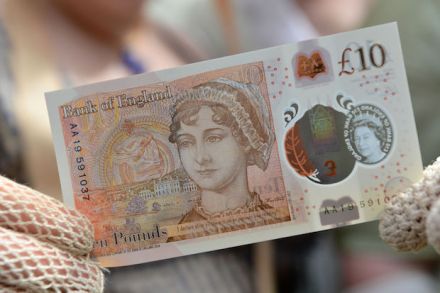
Winchester Cathedral, where Jane Austen was laid to rest 200 years ago this week, was the venue chosen for the unveiling of the new £10 bank note, which will feature a portrait of the English novelist. On a humid July day, tourists, pensioners, banknote geeks and a few noisy children packed the aisles. The atmosphere was expectant, as worshippers gathered to get a glimpse of 'Reverend' Carney at the pulpit. Smartphones were whipped out as soon as he started speaking. I travelled with my family as an off-duty journalist and was expecting the rather dry and technical explanations favoured by the Bank of England governor in the inflation report.