Ross Clark

Ross Clark

Ross Clark is a leader writer and columnist who has written for The Spectator for three decades. He writes on Substack, at Ross on Why?

Kemi is wrong about council tax

From our UK edition

From Lord Kinnock’s demand for a wealth tax and VAT on private health fees to Gordon Brown pressing for gambling taxes, it is plain that Labour has run out of ideas other than dreaming up new ways to part us from our money. Even so, Kemi Badenoch is ill-advised to go on an all-out attack on council tax reform, as she did in a Mail on Sunday column yesterday. You don’t have to be a socialist or even a Labour supporter to see that council tax is horribly regressive According to the Conservative leader, Rachel Reeves is plotting to do as Labour have done in Wales: to set up an IT system to analyse our homes – even down to the size of our garden shed – in order to use it as a valuation tool for new council tax bands.

Reeves is to blame for the next cost of living crisis

From our UK edition

Will yesterday’s cut in interest rates bring relief to the government in its economic problems, offering a breather to people who feel that their living standards are declining? That is unlikely for two reasons. Firstly, people buying homes with mortgages – the most obvious beneficiaries of a cut in interest rates – are more likely nowadays to be on fixed rates. Few will benefit from an immediate cut to the Bank of England base rate; in fact, there are still many homebuyers who are coming off five-year fixed rates they took out at the height of Covid, when interest rates were still at near-zero. They will experience a shock, regardless of the fact the Bank of England’s base rate has just come down.

Higher gambling taxes won’t solve child poverty

From our UK edition

As the man who first gave Britain a £150 billion deficit, I don’t think Gordon Brown is the best person to advise the current government on its fiscal policy. But even so the gaping hole in his call for higher gambling duties does raise the eyebrows. Brown seems to think that higher gambling taxes are capable of lifting half a million children out of poverty. Writing in the Guardian, he claims that raising online gaming taxes from 25 per cent to 50 per cent will raise an extra £1.6 billion, jacking up general betting duty from 15 per cent to 25 per cent will raise an extra £450 million and increasing the duty on physical slot machines from 25 per cent to 50 per cent will raise an extra £880 million.

It’s time to crack down on civil service sick days

From our UK edition

Are civil servants throwing sickies en masse in protest at being forced to go back into the office to work three days a week? The order to return to the office, made by the previous government, seems to have coincided with a sharp rise in the number of days which staff are taking off sick. At the Home Office, staff took an average of 7.4 days of sickness absence in 2024/25, up from 6.6 days in 2023/24. At the Ministry for Housing, Communities and Local Government (MCLG), the average absence rate for staff in its core department rose from 5.0 days in 2023 to 5.6 days in 2024. In the ministry’s executive agencies there was an even sharper rise, from 5.9 days to 8.8 days.

The OBR has seen sense on migration. Will Rachel Reeves?

From our UK edition

High levels of migration might not always be good for community relations if large numbers of new arrivals descend on one neighbourhood, but at least it helps boost GDP by providing Britain with a source of eager workers whom employers struggle to find in Britain. That sums up the view of some economists, but it has just been thoroughly rejected by one important voice. David Miles, who sits on the committee of the Office for Budgetary Responsibility (OBR), has written today that it is wrongheaded to think that Britain can solve its economic problems by opening its doors to overseas workers.

Picking on foreign students won’t solve the migration crisis

From our UK edition

We can’t stop the illegal migrants, so let’s crack down on legal ones instead. That pretty well sums up the government’s policy on migration. Last year foreign students earned Britain £12.1 billion in revenue. They are one of our strongest export industries (while the students might physically be entering Britain, they are an export because it is the direction the money is flowing in which matters). Some universities have become truly international institutions – Imperial College and UCL now draw more than half their students from abroad. Mickey mouse courses aside, UK higher education has become one of Britain’s success stories.

Trump hasn’t won the trade war

From our UK edition

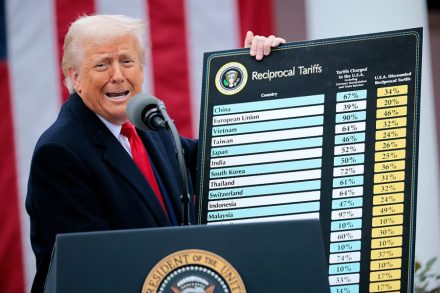
Maybe Trump doesn’t always chicken out after all. Rapid trade deals with the UK, Japan, the EU and others in recent weeks may have given the impression that the trade war was essentially over. Today, though, comes Trump's Ardennes offensive, with immediate tariffs of 35 per cent announced for Canada. Other countries have been given a week to prepare for steep increases: India will be subject to 25 per cent tariffs, Taiwan 20 per cent and Switzerland – far from neutral in this particular conflict – 39 per cent.

It’s no surprise that nurses want to strike

From our UK edition

Wes Streeting was recently revealed to have said in private that junior doctors (or resident doctors, as they now like to be called) must be made to ‘feel pain’ for going on strike – for fear of encouraging other public sector workers to copy their example. Today comes a reminder of why he said it: the Royal College of Nursing (RCN) has just voted to reject the 3.6 per cent pay deal offered by the government, with 91 per cent voting to dismiss it – although the turnout was only 56 per cent. Is it any surprise that nurses are not content with the offer? Two years ago, after a round of strikes, RCN members thought they were doing the responsible thing by voting to accept a pay deal worth between 4.5 and 6 per cent, depending on their grade.

The air traffic control failure looks like cock-up rather than conspiracy

From our UK edition

The most remarkable thing about today’s air traffic control failure, which has led to at least 45 flights being cancelled and many more disrupted, is how few people are bothering even to question whether this could be the work of hackers employed by a foreign power. In recent years almost every systems failure that afflicts UK infrastructure has caused speculation that the Russians or Chinese are to blame – followed by the gradual realisation that, no, we did this to ourselves through our own incompetence. What does it say about the priorities of the industry when perfume shops at Heathrow seem to be more adequately staffed than air traffic control?

Has the IMF changed its tune on Brexit?

From our UK edition

Given the perilous condition of Britain’s public finances, perhaps we ought to start taking the IMF and its World Economic Outlook a little more seriously. It is not impossible to foresee Rachel Reeves or her successor having to repeat what one of her Labour predecessors, Denis Healey, had to do in 1976: and beg the IMF for an emergency loan. What the IMF thinks of the prospects for the UK economy will be key to what sort of deal she might be able to secure. The IMF has, at least, ceased to make out that Britain is doomed to suffer a self-inflicted, Brexit-generated recession all of its own. On the contrary, it sees the UK economy expanding by 1.2 per cent in 2025 followed by 1.4 per cent in 2026 – compared with 1 per cent and 1.2 percent respectively for the Eurozone.

Trump is right about North Sea oil

From our UK edition

Maybe it is Donald Trump’s way of getting back at Keir Starmer for Labour sending activists to campaign for Kamala Harris in last year’s presidential election. Either way, the US president seems to have no intention of obeying the convention that leaders of democratic do not delve into the domestic politics of their counterparts in other nations – and especially not while they are on a foreign tour. Today, Trump has doubled down on his attack on the windfarms he says are spoiling the view from his golf courses in Ayrshire and Aberdeenshire. Posting on his Truth Social account he asserted that UK government ministers ‘have essentially told drillers and oil companies that “we don’t want you”. Incentivise the drillers FAST.

What Trump gets right about Britain’s windfarms

From our UK edition

Donald Trump is often treated in Britain as a know-nothing who speaks off the top of his head on subjects he does not understand. No one is keener to try to make this point than the BBC. Yet not for the first time, it turns out that he is bit more on the ball than some of his critics. After his game of golf at his Turnberry course in Ayrshire, western Scotland on Sunday, the president retorted: 'It’s probably the best course in the world. And I look over the horizon and I see nine windmills at the end of the 18th. I said: ‘Isn’t that a shame?’'. The wind farms which Trump feels are spoiling the view from his Scottish golf courses are not just unsightly It was enough to provoke the BBC into providing what it saw as an explainer.

Why couldn’t Britain have dealt with the EU like Trump?

From our UK edition

The more you look at the trade deal negotiated between the US and the EU, the more you want to ask: why couldn’t Britain have dealt with the EU like that? Why has every UK Prime Minister since Theresa May acted so feebly in the face of the EU’s tactics and ended up getting such a poor deal out of the EU? Why did UK Brexit negotiators never threaten punitive tariffs on German cars and French wine? Trump has get pretty much everything he wanted. Goods imported into the US from the EU will in future be subject to tariffs of 15 per cent – half the rate that Trump had threatened but far higher than existed prior to ‘Liberation Day’ on 2 April. What has Ursula von der Leyen got in return? Nothing at all, other than the punitive tariffs being dropped.

Did Trump win the US-EU trade negotiations?

Trump has got almost everything he wanted in the trade deal between the United States and the European Union. Goods imported into the US from the EU will now be subject to tariffs of 15 percent - half the rate that Trump had threatened but far higher than existed prior to "Liberation Day" on April 2.  What has Ursula von der Leyen got in return? Nothing at all, other than the punitive tariffs being dropped. She has agreed to lowering tariffs on imports from the EU, in some cases to zero. She has also agreed to the EU buying more products from the US, including liquefied natural gas (LNG), making a mockery of the EU's net zero policy.

The BMA should be careful what it wishes for

From our UK edition

Just a few weeks ago the trade union movement seemed to be on a high. It has got rid of its hated Tory government. Legislation which made it harder to call strikes had been hastily abolished by the incoming Starmer government. There were generous public sector pay rises all around. If you were a trade union leader, you had every right to feel pleased with yourself. How things can change. As a trade union leader, you really don’t want a Labour health secretary calling your actions ‘unconscionable’, and suggesting that your members must ‘feel pain’ in order to discourage other unions from striking too. A Conservative health secretary, sure, but a Labour government is supposed to be on your side.

Britain shouldn’t bow to the ICJ

From our UK edition

The official cost of the deal to surrender the Chagos Islands to Mauritius – a country which never owned the islands in the first place – has been put at £101 million a year over the 99-year term of the lease. But the real cost could end up being multiples of this. Not only did it involve putting the sovereignty of an import airbase into the hands of a nation which is close to China, but it has sent a powerful message to developing countries all around the world that Britain – or at least its current government – is a pushover which can be plundered for payments on all kinds of issues.

Trump’s Japan deal is a hollow victory

The reaction of markets to the US trade deal with Japan shows yet again that if you presage bad news with even worse news you can make people pathetically grateful at the outcome. Shares in Toyota surged by 14 percent at the news. Yet why, when the deal will see imports of Japanese cars to the US slapped with tariffs of 15 percent? Because back on "Liberation Day" in April,  Donald Trump announced that Japanese imports would be subject to 24 percent tariffs. Reactions to Trump’s reset in trade relations with the rest of the world have undergone wild swings in recent months. First, markets plunged.

Tariffs

Why don’t we let Thames Water go bust?

From our UK edition

Hurrah! We are going to get a new water regulator. Sir John Cunliffe’s independent water commission has recommended that Ofwat be abolished and replaced with a new body which also incorporates the drinking water inspectorate. It will be yet one more opportunity for a quangocrat to take a plumb job, while Ofwat’s bosses are pensioned off generously, no doubt. But what are the chances of getting rid of Thames Water, Southern Water or any other failing water company? Water companies which get into financial trouble should be allowed to go bust That doesn’t seem so likely. Rather, Cunliffe has pitched his report as an attempt to rebuild confidence in the existing water companies.

The youth mobility scheme is just the start of a Brexit reversal

From our UK edition

Will Britain continue to be dragged back closer and closer to the EU so that when we eventually rejoin, in say a decade’s time, our politicians can present it as a mere exercise in regularising an arrangement which effectively already exists? At some point it must have dawned on most frustrated remainers that they were never going to reverse Brexit in one fell swoop. That would reopen old wounds, motivate a strong reaction from Brexiteers and a sense of ennui. Such an attempted move would probably be doomed by the ‘Brenda from Bristol’ effect alone (the elderly lady who reacted to the declaration of the 2017 election campaign by exclaiming to a reporter, 'What, another one?'). But what if Britain were to be drawn back into the bloc by degrees?

The hypocrisy of Labour’s attacks on Reform’s net zero plans

From our UK edition

The net zero lobby just gets sillier and sillier. According to energy minister Michael Shanks, Reform’s policy of abandoning net zero targets is an ‘anti-growth ideology’ which would cost nearly a million jobs. Coming in a week when the Office of National Statistics (ONS) reported that the number of payrolled employees across the UK fell by 135,000 during Labour’s first year in power – with 25,000 lost in May alone (the month after the higher rates of employers’ national Insurance came into effect) – you might think that government ministers would want to avoid talking about job losses just at the moment, but no matter.