Ross Clark

Ross Clark

Ross Clark is a leader writer and columnist who has written for The Spectator for three decades. He writes on Substack, at Ross on Why?

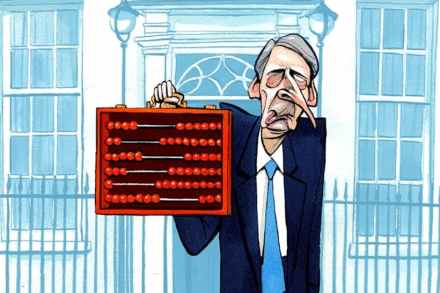
Brexit and the tragedy of Philip Hammond

From our UK edition

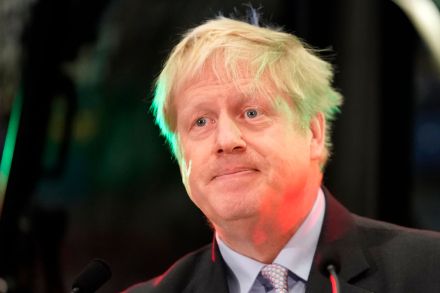
It is still a few hours before Philip Hammond makes his speech to the CBI this evening but so much of it has been trailed in advance that delegates might as well just read the newspapers – and then book some entertainment from a juggler or fire-eater instead. We know he is going to attack what he calls the “populist right”. We know, in a thinly-veiled attack on Boris, he will say:  “There is a real risk of a new prime minister abandoning the search for a deal, and shifting towards seeking a damaging no-deal exit as a matter of policy.

We’re already having a ‘people’s vote’ – the EU elections this week

From our UK edition

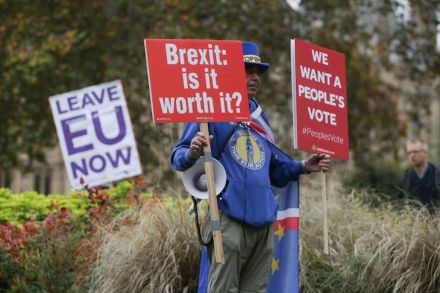
Frustrated Remainers wanted a second referendum – or what they ludicrously call a ‘people’s vote’, on the basis, presumably, they think the last referendum was decided by cloven-hoofed beasts and potted plants. Well, on Thursday, they are going to get one – by proxy. There is no point in the European Parliament elections, choosing candidates who may never even take their seats. Everyone knows this – even the Lib Dems aren't really bothering to plug their European manifesto, but trying to reel in the votes of frustrated Remainers who would like the Brexit vote overthrown. Instead, the election is being interpreted for one purpose alone: as a second referendum. And it is not looking good for the forces of Remain.

Trump has made America less racist

The election of Donald Trump has, of course, unleashed the latent racist which lurks within millions of Americans. We know this because enlightened opinion keeps telling us so. The New Yorker, for example, ran a piece in November 2016 declaring ‘Hate on rise since Trump’s election’, and quoting a list of incidents collected by the Southern Poverty Law Center – including the experience of a girl in Colorado who was allegedly told by a white man: ‘Now that Trump is president I am going to shoot you and all the blacks I can find’. TIME magazine, too, ran a story in the same month announcing ‘Racist incidents are up since Donald Trump’s election’.

donald trump racist incidents

Clearing the air

From our UK edition

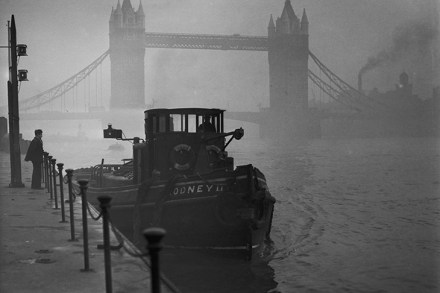
We are, of course, in the midst of an air pollution crisis which, like every other threat to our health these days, is ‘worse than smoking’. According to the Royal College of Physicians, everyone in Britain is effectively smoking at least one cigarette a day, rising to many more in the most polluted cities. What’s more, as Bloomberg once put it, London has a ‘Dirty Secret: Pollution Worse than Beijing’s’. And London’s air pollution has ‘been at illegal levels since 2010’, according to the New York Times.

Fact check: is Huawei really contributing £1.7bn to the UK economy?

From our UK edition

Huawei is nothing if not inventive in its efforts to land the contract to run Britain’s forthcoming 5G mobile phone network. This morning it has published a report by the Oxford Economics Group which claims that the company added £1.7 billion to Britain’s GDP and accounted for 26,200 UK jobs in 2018. It is an eye-catching figure, but should it really influence government ministers as they weigh up the advantages of giving Huawei the contract against the security risks of handing parts of our telecommunications infrastructure to a company connected with the Chinese government? You have to have a little imagination to get to the figure of £1.7 billion and 26,200 jobs. Of the £1.

How do the Project Fear prophets explain the good news about Britain’s economy?

From our UK edition

Of course, we shouldn’t read too much into a set of good economic figures when they are so obviously down to stockpiling ahead of Brexit. If GDP rose by 0.5 per cent in the first three months of 2019 it was only thanks to all that condensed milk we have all stacked in the understairs cupboard – that and the riot helmets we all went out and bought in case of a hard Brexit and the marauding masses trying to break into houses in order to pilfer our said emergency store.   Yet you might think that hardened Remainers could just admit to a tiny of nugget of good news in that the economy has continued to defy the recession they so confidently predicted would result from a vote for Brexit. But not a bit of it.

Only a vote for the Brexit Party can save the Tories

From our UK edition

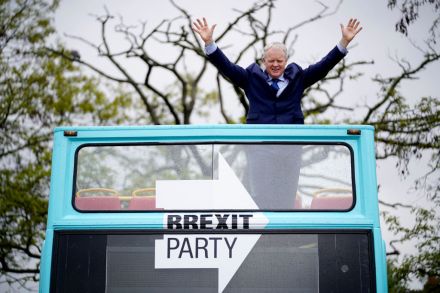
Of all the red warning signs for the Conservatives, the choice of the Brexit party’s candidate for the forthcoming Peterborough by-election is blinding as they come. Not only was Mike Greene a lifelong Conservative until a few weeks ago; he is a self-made man brought up in council house who has gone on to set up businesses and serve in several charitable roles such as trustee of Peterborough cathedral. If the Conservatives cannot attract and retain such a person as a member, then what is the point of them at all? They are either the party of self-reliance, of hard work, entrepreneurship and public service – or they might as well pack up and go home.

A booming economy makes Trump look wiser than his detractors

What delicious reading it makes going back over Paul Krugman’s missive in the New York Times on the morning after Donald Trump was elected in 2016. ‘Global recession with no end in sight...when are markets going to recover? A first pass answer is never...’ Those words should be carved into a façade somewhere in Wall Street and held up for ever after as an example of hubris of economic forecasters. In liberal circles nowadays there is always misery. The end of the world is always around the corner, where from economic calamity in the global capitalist system, climate change, rise of fascism, AI taking our jobs and creating mass unemployment, or whatever. But let’s get back to the real world for a moment.

donald trump booming economy

Theresa May’s promotion of Rory Stewart is a smart move

From our UK edition

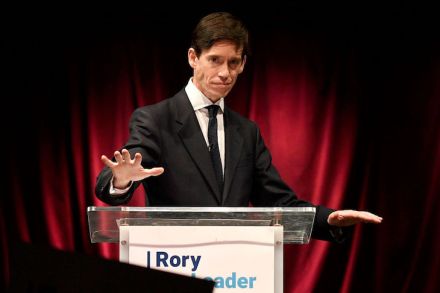
In sacking Gavin Williamson for an offence he strenuously denies Theresa May has created for herself a potential embarrassment. What if a criminal inquiry were to find the former defence secretary not guilty of any breach of the Official Secrets Act? Yet as no-one seems to have noticed, the mini-reshuffle she carried out in the wake of the sacking has avoided another fast-looming embarrassment. In promoting Rory Stewart to the Cabinet as International Development Secretary  she has averted the loss of a popular and up and coming minister. Last August, when prisons minister, Stewart made a rash promise. He said he would resign if he had not succeeded in reducing violence and drug-taking in 10 target jails within a year.

Why Geoff Norcott won’t last on the BBC’s ‘diversity’ panel

From our UK edition

I’ll give it 48 hours. No, on second thoughts make that 24. I’ll happily wager that by this time tomorrow Geoff Norcott – the self-styled only openly conservative comedian on the circuit – who has just been appointed to the BBC's new five-strong ‘diversity and inclusion panel’ will be an ex-member. And, that the BBC will be profusely apologising for its ‘misjudgement’ in appointing him in the first place. It is not that he will have said or done anything in his post between now and then, of course. But you simply cannot have a straight white man – still less one who backs Brexit – on a ‘diversity’ panel.

A dose of AI

From our UK edition

Perhaps in common with many people who don’t work in pharmaceuticals, I vaguely imagined that the industry found much of its inspiration from nature. Scientists might start with an old wives’ tale that, say, cowslips cure genital warts, and then work towards medicalising it — searching for an active ingredient which can then be synthesised, tested and ultimately marketed as a sterile pill in a little cardboard box, to be taken three times a day. That was, indeed, how some common drugs were developed — and how some still are, most notably with efforts to make medical use of the constituents of cannabis plants. Yet this ignores the fact that the great bulk of modern drugs are increasingly being identified via theoretical work.

Liam Fox falls foul of the climate change cult

From our UK edition

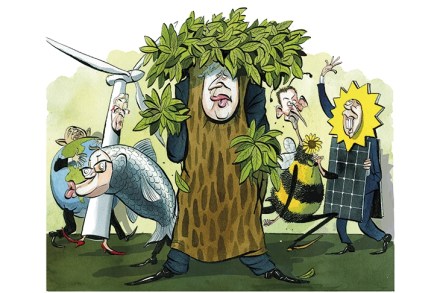
A question has come to me from a test paper in the A-level for 21st century ethics. Read the following statement and explain what is wrong with it: 'It's important that we take climate issues seriously. Whether or not individuals accept the current scientific consensus on the causes of climate change, it is sensible for everyone to use finite resources in a responsible way.' The correct answer, it turns out, is that the statement allows for the possibility that failing to accept the scientific consensus on climate change is somehow a legitimate position for an individual to hold, when of course it is not.

The trouble with Greta Thunberg

From our UK edition

In popular mythology Greta Thunberg is a one-girl revolution who has inspired millions of young people into action by being able to see what adults refuse to see. But her promotion as global statesman is really a well-crafted piece of PR. Those on the Left who seek to use climate alarmism to further their war on global capitalism know full well that the likes of Robin Boardman-Pattison – the Bristol University graduate with a private education and fondness for foreign holidays, who stormed out of the Sky News studio when Adam Boulton accused him of being middle class – is a liability to their cause. But allow Thunberg to speak for them by proxy and, well, who will dare criticise a 16-year-old girl with Asperger's?

What David Attenborough’s climate change show didn’t tell you

From our UK edition

Given the reception that awaited Richard Madeley when he ventured last week that David Attenborough is “not a saint, just a broadcaster” – something which is evidently true, though I haven’t formally checked with the Vatican – one delves into this subject with some intrepidness. Nevertheless, great documentary-maker though he may be, Attenborough cannot be allowed to get away with the propaganda element of his latest piece, his documentary Climate Change: the Facts which went out on Thursday evening.    Before I get going, don’t even bother thinking of calling me a climate change denier in the pockets of oil companies, or whatever.

Fretting over ‘land inequality’ is a waste of time

From our UK edition

As if the nation is not already mired in enough scandal, now comes the revelation that half the land in England is owned by just 25,000 individuals and organisations (1% of the population!). How wrong and elitist that sounds when placed beneath a Guardian headline which implies it is a yet another measure of horrible inequality and deprivation. According to Labour MP John Trickett “The dramatic concentration of land ownership is an inescapable reminder that ours is a country for the few and not the many”. But it means nothing at all. We are not an agrarian society. Fewer than one per cent of the population are employed in agriculture. In addition to farmworkers there are a few allotment-holders, like Jeremy Corbyn, who satisfy some of their own food needs.

Extinction Rebellion shouldn’t be given such an easy ride

From our UK edition

Why is Extinction Rebellion being given such an easy ride? It isn’t hard to imagine the outrage which would rightly follow if, say, Brexiteers were to smash windows, block roads and bridges in the cause of trying to force the government into a no-deal Brexit. We would never hear the last of the Guardian condemning them for ‘fascist’ methods and attempting to bypass democracy. Yet Extinction Rebellion has been allowed to get away with all this for the past three days with hardly a murmur of protest from government ministers, MPs, commentators or anyone else. The whole things seems to have been treated a great big joke.

Theresa May’s Brexit compromise won’t work

From our UK edition

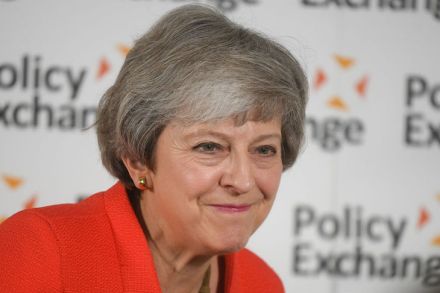
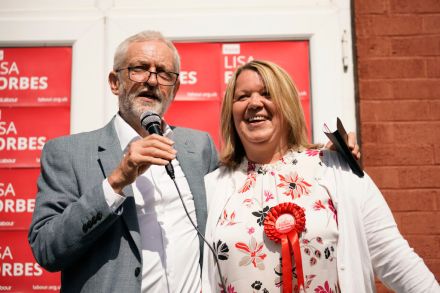
So, finally, we have a spirit of compromise. Jeremy Corbyn and Theresa May are going to sit down together and hammer out a deal on which both their respective parties can agree. Well, maybe not. There has been plenty of analysis over the past few hours predicting how it could all unwind – with further ministerial resignations and so on. But there is something more fundamentally wrong with what Theresa May has proposed. While searching for compromise might be a reasonable way to proceed on most political issues it simply doesn’t work in the case of Brexit.

Why Matt Hancock is likely to be the next prime minister

From our UK edition

As MP for the constituency which covers Newmarket, health secretary Matt Hancock will have met a few bookmakers in his time. He has even won a horse race himself, of amateur jockeys in a charity event. He will know the Conservative leadership is the sort of open race with appetising prices – not least the 10-1 which William Hill is today offering on him. I have never met Mr Hancock, and can’t say I even particularly like him, but I am sorely tempted to have a flutter. Why? Because Conservative leadership contests, for all their drama, are pretty easy to read. The winner is almost invariably the credible candidate who, at the time of the election, has succeeded in offending the fewest number of Conservatives.

The shame of Jacob Rees-Mogg

From our UK edition

Until this morning Jacob Rees-Mogg had had a remarkable Brexit. From being an obscure backbencher he had risen, without any formal position, to being just about the most powerful figure in the Conservative party after the Prime Minister. He controlled a party within a party, influencing the votes of seventy or so MPs. He became the most lucid of all MPs on Brexit, speaking with a logic and clarity which disarmed his opponents. He introduced a term to the debate – vassalage – which identified perfectly the weakness of Theresa May’s deal, and emphasised how the EU had successfully driven the Prime Minister into a corner. But this morning, all that has gone.

The shame of Jacob Rees-Mogg | 27 March 2019

From our UK edition

Until this morning Jacob Rees-Mogg had had a remarkable Brexit. From being an obscure backbencher he had risen, without any formal position, to being just about the most powerful figure in the Conservative party after the Prime Minister. He controlled a party within a party, influencing the votes of seventy or so MPs. He became the most lucid of all MPs on Brexit, speaking with a logic and clarity which disarmed his opponents. He introduced a term to the debate – vassalage – which identified perfectly the weakness of Theresa May’s deal, and emphasised how the EU had successfully driven the Prime Minister into a corner. But this morning, all that has gone.