Ross Clark

Ross Clark

Ross Clark is a leader writer and columnist who has written for The Spectator for three decades. He writes on Substack, at Ross on Why?

The myth of Britain’s air pollution pandemic

From our UK edition

It is a good thing that there is an air pollution bill in the Queen’s Speech today. We should not have to tolerate foul air. But the suggestion that this will be addressing some dramatic and growing crisis is misplaced. The idea that Britain is in the midst of a ‘silent pandemic’ of air pollution deaths – as claimed by a UN Special Rapporteur two years ago – is not even slightly aligned with the truth. In fact, air pollution in Britain has fallen dramatically over the past half century. A clean air act is about furthering huge progress that has already been made, not about challenging some growing problem.     London smogs were gone by 1970 – the reference date now used for air pollution in Britain.

Don’t blame oil and coal companies for climate change

From our UK edition

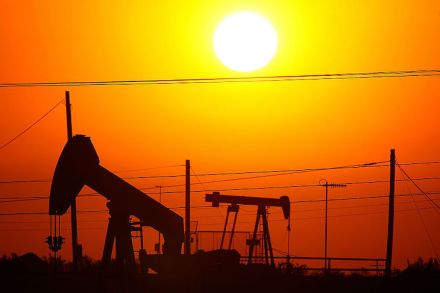
This year’s Nobel Prize for the silliest piece of scientific research must go to something called the Climate Accountability Institute, for revealing to the world that 35 per cent of all global carbon and methane emissions since 1965 can be traced to just 20 global companies. This week they were named and shamed in the Guardian and revealed to be, er, 17 oil companies and three coal mining companies. Scandalously, they have been pumping all this carbon into the air for their own self-enrichment while the rest of us suffer.

Will China meddle in the 2020 election?

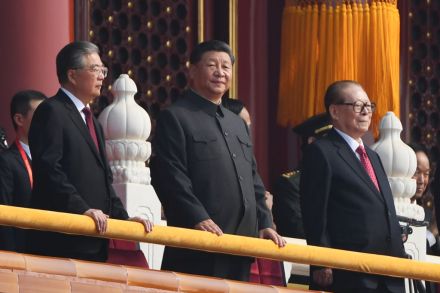
This article is in The Spectator’s inaugural US edition. Subscribe here to get yours. Vladimir Putin, as we all know, has become chief electoral strategist in the western world. When he wanted Donald Trump president, he merely set his army of trolls to action and the American public was fooled into backing a candidate who would never have got anywhere near the White House otherwise. That is what the media has been telling us since 2016, anyway. But the idea that Russia can swing a sophisticated electorate of 300 million people with the aid of a fake-news tweet factory in St Petersburg was always fantastical. Even the Mueller inquiry could not prove it — not for want of trying.

china 2020

An inheritance tax cut would backfire on the Tories

From our UK edition

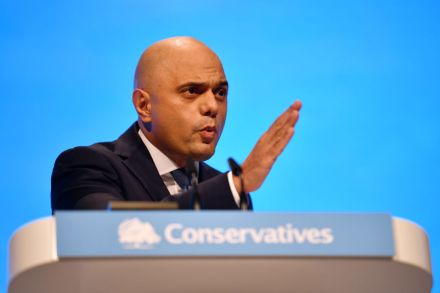
Just when you thought that the Tories were getting into a position where they might be capable of winning the formerly Labour-leaning seats in the Midlands and the North – which they will need to snatch in order to survive after next election – along comes a minister to chuck a spanner in the electoral works.  Housing minister Robert Jenrick has suggested that the government might be minded to cut or even abolish inheritance tax, complaining about its ‘fundamental unfairness’ and claiming that it amounted to ‘paying tax twice’. Disturbingly, Sajid Javid also made a hint about cutting inheritance tax at Tory conference, suggesting that it might be emerging party policy.

Boris Johnson is more like Bill Clinton than Donald Trump

From our UK edition

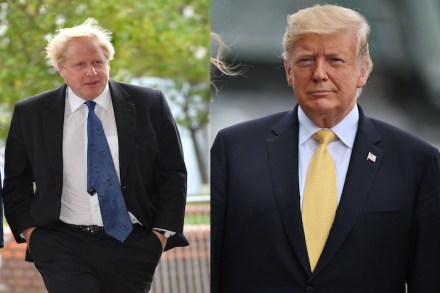
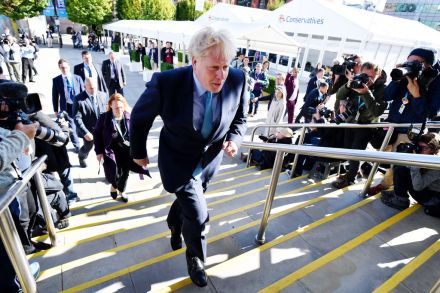
Why do so many people try to compare Boris Johnson with Donald Trump? There is a US president whose manner and approach our Prime Minister resembles, but it isn’t Trump – it is Bill Clinton. It is hard to think of anyone else who has honed to a fine art the ability to survive narrow scrapes with native charm. Just look at the reaction to the allegation that Boris groped a young female journalist, Charlotte Edwardes, beneath The Spectator’s dining table two decades ago    Yes, Donald Trump survived groping allegations too, but not without stirring up a hornets’ nest of outrage, culminating in a mass protest following his inauguration. Trump survives by escalating outrage against him, thus uniting his enemies’ enemies behind him.

Why Grant Shapps shouldn’t accelerate the ban on petrol and diesel cars

From our UK edition

How fortunate that electric vehicle technology has moved on to the extent that transport secretary Grant Shapps is able to announce he in looking at bringing forward to date on which petrol and diesel cars will be banned from 2040 to 2035. Or maybe not. On closer examination, it isn’t battery technology which has advanced – only the political pressure for being seen to act on climate change. It is possible, of course, that some as-yet unknown technology will arrive to make it feasible to ban all petrol and diesel vehicles from 2035. But we are no nearer discovering it yet. Without it, the government is heading for a very big policy failure. I wrote here about electric cars in August 2017, just after the then environment secretary Michael Gove had announced the 2040 date.

It’s unfair for Britain to take Tooba Gondal and other Isis brides back

From our UK edition

I am sure that Tooba Gondal, the latest Isis bride to beg for a return to Britain, would, as she says, rather face justice in a British court than in the detention camp where she is being held in a Kurdish-controlled part of Syria. Maybe she really is the “changed person” she claims to be and she really would, if given the chance, do her best to “help prevent vulnerable Muslims from being targeted and radicalised” – as she wrote in her letter to the Sunday Times yesterday.

Jeremy Corbyn would destroy the market for specialist medicines

From our UK edition

Amid Labour’s jubilation over the Supreme Court decision yesterday it would have been easy to miss Jeremy Corbyn’s latest attack on the market economy. But it shouldn’t go unremarked because what Corbyn proposed would seriously damage the pharmaceuticals industry – either meaning that taxpayers would have to bear the enormous costs of developing drugs, or would mean fewer drugs being developed at all. Corbyn cited the case of nine year old cystic fibrosis sufferer Luis Walker, who is being denied the medicine, Orkambi, because the drugs manufacturer is refusing to sell it to the NHS at an affordable cost.

Why the Court’s ruling may help Boris Johnson

From our UK edition

In one respect Gina Miller is right. Today’s Supreme Court decision is bigger than Brexit. We are now in a civil war without bullets – between two sides who both claim to be fighting for democracy but who have very different ideas of what it entails. In the one corner are those who believe that democracy is where the electorate vote for something in a plebiscite and then government carries out its instructions; in the other corner are those who believe that democracy is Parliament and the courts acting together in what they see as the best interests of the people. As I have written here before, the correct term for what the latter group advocate, and what was demonstrated in the show of power by the Supreme Court this morning is Kritarchy, rule by judges.

Bailing out Thomas Cook would have been a mistake

From our UK edition

The biggest victim of the failure of Thomas Cook is the worldly reputation of its eponymous creator – a sober cabinet-maker from Leicestershire whose pioneering and fantastically successful package tours used a network of temperance hotels.  His name is now synonymous with a company whose senior executives paid themselves millions while it crashed and burned. That there is something rotten with aspects of company law is obvious from the fact that taxpayers are going to be stung for up to £600 million to fly 150,000 stranded British holidaymakers home. Why is there no mechanism to claw back those millions paid in bonuses over the past decade while the business was developing the deep structural issues which led to today’s denouement?

The EU has failed again to strike a free trade deal

From our UK edition

So once again we learn just how committed the EU is to free trade. A trade deal with the South American bloc Mercosur – comprising Brazil, Argentina, Uruguay and Paraguay – has been under negotiation for 20 years. The icing appeared to be on the cake, the ribbon about to be cut – but at the end of last week it was skewered by Austria’s Parliament voting against it. Without the agreement of all 28 EU member states the deal cannot go ahead. It is reminiscent of what happened to Ceta, the EU’s trade deal with Canada which was about to clear its last hurdle when, in 2016, the regional parliament of Walloonia in Belgium threw a spanner in the works.

School climate strikers should answer these two questions

From our UK edition

“The Earth is dying”, “the world is on fire”, we’re undergoing an “environmental extinction”: just three of the sentiments which have been expressed by today’s climate “strikers” and which, unlike even moderate expressions of scepticism on matters of climate science, seem to escape without challenge. While it is tempting to think of today’s climate “strike” by schoolchildren around the world as a case of truants finding an ethical excuse to skip lessons, I think many are acting for genuine reasons: they are traumatised.

The hypocrisy of those outraged on behalf of Ben Stokes

From our UK edition

I can understand why Ben Stokes and his mother would rather not be reminded of the murder of the cricketer’s half-siblings by their father in New Zealand in 1988, three years before Stokes was born. His reaction, calling the Sun’s publication of the story as 'immoral and heartless' and 'contemptuous to the feelings and circumstances of my family' is way over the top. But it isn’t his reaction which bothers me, but that of those who have decided to be outraged on his behalf. Alongside the army of Tweeters expressing their hatred of the Sun, the campaign group Hacked Off swiftly released a statement saying: 'It is abundantly clear that nothing has changed.

The BBC’s latest attack on Netflix is galling

From our UK edition

Lord Hall of Birkenhead is feeling pretty bullish about the quality of the organisation he leads. “We’re not Netflix, we’re not Spotify. We’re not Apple News,” the BBC’s director general will apparently tell the Royal Television Society on Thursday. “We’re so much more than all of them put together.”     To which the obvious answer is: if you are so confident that the public loves your product, then why are you so frightened about exposing it to commercial competition? Surely, Lord Hall would be relishing the opportunity to get rid of the tax on TV-ownership which funds the BBC and fund itself in the way that all other TV and radio stations have to do – from subscriptions or advertising.

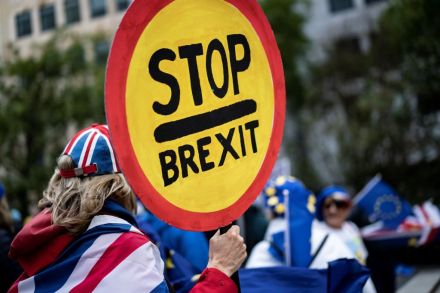
The legal war of attrition against Brexit

From our UK edition

Another week, another step along the road to Britain’s transformation into a kritarchy – rule by judges. Last week, the Court of Session in Edinburgh and the High Court in London both ruled that Boris Johnson’s decision to prorogue Parliament for five weeks had been lawful. But if you thought it was all over you haven’t read Bleak House. Just as Dickens’s fictional family, the Jarndyces, were torn apart by an endless legal dispute, Joanna Cherry and her lawyers are going to take this to the wire. It turns out that the Court of Session has an Inner House, to which you can appeal if you don’t like its first decision. This morning, three judges reversed last week’s decision and decided that it was, after all, illegal.

John Bercow and the abandoning of the Speaker’s impartiality

From our UK edition

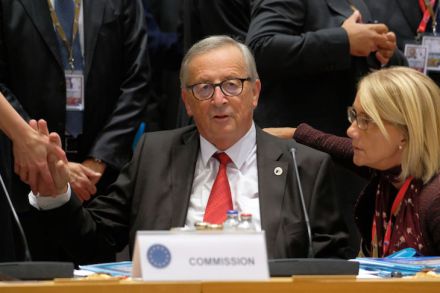
According to John Bercow he has chosen to step down on 31 October because it would be the 'least disruptive and most democratic course of action' if he stayed on for the votes on the Queen’s speech expected in the last week of October. But there is a somewhat glaring reason for choosing the last day of October – it is a none-too-subtle hint that he sees it as his duty to frustrate Britain’s departure from the EU, which was due on that date but which, thanks to the law passed by Parliament today, now seems likely to be delayed again. Going for that date is Bercow’s way of saying 'job done'. Two years ago, following the 2017 general election, Bercow went back on his previous intention to step down some time in 2018.

Do Remain MPs understand the mood of the country?

From our UK edition

That the obsessions of Westminster do not necessarily coincide with those of the country has been obvious for a long time, but even so, the dislocation between last week’s news and this weekend’s opinion polls looks bizarre. The government looks in a greater shambles than any in history. We have a Prime Minister who has been in office for two months and has yet to win a Commons vote, who has been cornered and attacked for anything he tries to do, whom BBC lawyers seem happy for one of the corporation’s comedians to brand a ‘liar and a racist’. The Conservative party is in open warfare, with 21 MPs ejected from the party by Downing Street and two ministers resigning not just their jobs but their membership of the Conservative party.

Remainers may regret not backing an October general election

From our UK edition

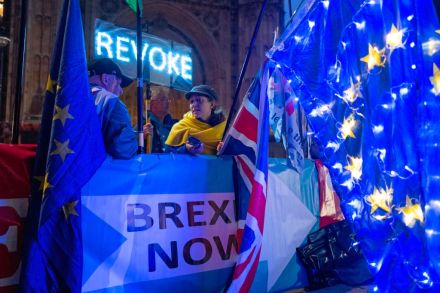
So there goes the reputation of Boris Johnson’s henchmen as cunning operators. It has been a bad week for Dominic Cummings and others in the Downing Street bunker who were widely assumed to have gamed every possibility and to have some genius strategy for delivering Brexit by 31 October, in spite of the assembled forces of Remain who are determined to stop them. Clearly, not everything has gone to plan. The Remainers have enjoyed their Battle of Marston Moor. It is Parliamentarians 1, Cavaliers 0. On Monday, a bill seeking to prevent a no-deal Brexit on 31 October will become law – and Boris has been denied his fallback: a general election. But not so fast.

The rebel MPs don’t know what they want

From our UK edition

Was there ever such a principled stand over a such a feeble cause? If today’s Tory rebels were intent on overturning the 2016 referendum result because, in all their conscience, they could support a policy of leaving the EU, I would not agree with what they were doing, but I would have some grudging respect for it. Instead, what is the great issue at stake in today’s vote? Another extension of Article 50 to 31 January. Yep, another three whole months in the EU. But to what purpose? The rebels can’t come up with a more specific demand because they do not know or cannot agree on what they want. Some want to remain, others think we should leave but do not know how.

The lazy assertion that Hurricane Dorian is caused by climate change

From our UK edition

Hurricane Dorian had hardly struck the shores of the Bahamas before Twitter began to fill up with comments willing it to carry on and flatten Donald Trump’s Mar a Lago estate in Florida 'to teach the climate change denier-in-chief' a lesson. Others eviscerated Florida senator and former governor Rick Scott for suggesting on Fox News that 'we don’t know what the cause is' of a run of strong hurricanes.  From Al Gore to David Attenborough, footage of hurricanes is used as a staple background for films about climate change, the inference being that the viewer is watching the effects of a dreadful, man-made disaster which would not have occurred had it not been for human-induced climate change.