Ross Clark

Ross Clark

Ross Clark is a leader writer and columnist who has written for The Spectator for three decades. He writes on Substack, at Ross on Why?

Britain is dangerously close to having an overtly anti-American prime minister

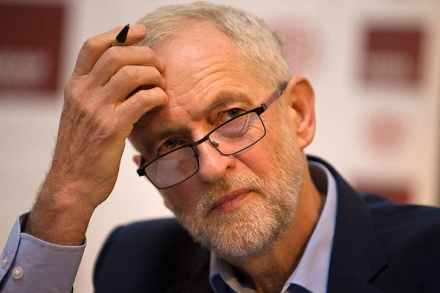
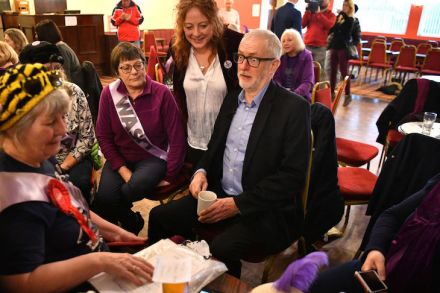
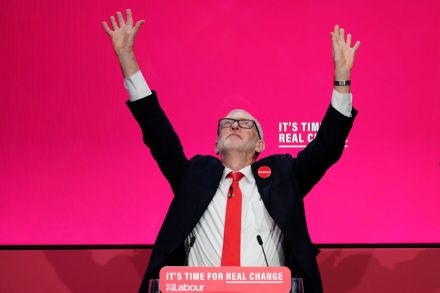
This article is in The Spectator’s December 2019 US edition. Subscribe here. What have Fidel Castro, Nicolás Maduro, Hamas and the Khomeinist regime in Iran got in common? That the US has not exactly seen eye to eye with them over past years and decades? Well, yes. But there is another thing too: Jeremy Corbyn, the Labour party leader who could soon be the British prime minister, has warmly praised them all. Castro, according to Corbyn on the occasion of the former Cuban leader’s death in 2016, was a ‘champion of social justice’. Corbyn rang in to a Venezuelan TV program in 2014 to praise Maduro, who introduced him as a ‘friend of Venezuela’.

jeremy corbyn

The ten worst ideas in Labour’s manifesto

From our UK edition

It is quite a challenge to boil down the Labour manifesto to its 10 silliest ideas, but here are my nominations: 1. 'Within a decade we will reduce average full-time weekly working hours to 32 across the economy, with no loss of pay, funded by productivity' – as well as introducing four new bank holidays on national saints’ days and establishing a Working Time Commission to advise on raising holiday entitlements. How we are going to find the time to build Corbyn’s new Jerusalem I haven’t a clue, but it is greatly going to add to the cost of the NHS and other public services 2. 'Introducing a legal right to collective consultation on the implementation of new technology in workplaces.

Whatever happened to the Lib Dems’ smart approach to tax?

From our UK edition

I have already decided how I am going to vote in the general election: for whichever party produces a manifesto with the fewest uses of the phrase ‘green jobs’. Was there ever such a numb-skulled phrase? It has become the fallback for any politician who hasn’t the faintest idea of how we are going to meet these self-imposed targets to eliminate all carbon emissions by 2050, 2030, 2025, next Tuesday or whatever. Are you worried that we might end up with no heavy industry, that you won’t be able to fly or drive anywhere, that the gas grid will be turned off and your house left freezing? Never mind, we’re going to have lots of ‘green jobs’ – which sounds like what Martians do when they crouch down for a crap in some dusty crater.

John McDonnell wasn’t joking when he vowed to overthrow capitalism

From our UK edition

John McDonnell this morning invited Phones4U entrepreneur John Caudwell around for a cup of tea. If I were Caudwell I would treat it a bit like an invitation to afternoon tea in Miss Marple’s village – and keep a keen nose out for the smell of bitter almonds. No good will come of the invitation, that is for sure. Day by day, it is becoming clear McDonnell really is engaged in what he has described in his Who’s Who entry as ‘fermenting the overthrow of capitalism’. Today’s offering is to impose a maximum 20:1 ratio of the highest-earning employee to the lowest-earning in any company which bids for government contracts – and to threaten to delist any company which fails to reach decarbonisation targets.

The unseemly race to increase the size of the state

From our UK edition

'Elect me once more and we will finish off socialism for good,' declared Mrs Thatcher before the 1987 general election, or words to that effect. Not so fast. Thirty two years on and we are engaged in an unseemly contest as to which party can increase public spending, and with it the size of the state, the most. The latest wheeze on Corbyn's part is to promise us all free broadband. Yes, you, I, the Duke of Westminster, Barclays Bank: we will all qualify for internet on the house. It won't really be free of course. Labour's compulsory purchase of BT Openreach will cost up to £25 billion, on top of which will come the cost of maintaining the broadband service. The income from subscriptions, such as my £46 a month, will no longer be available.

Trevor Rene’s battle to stay in Britain

From our UK edition

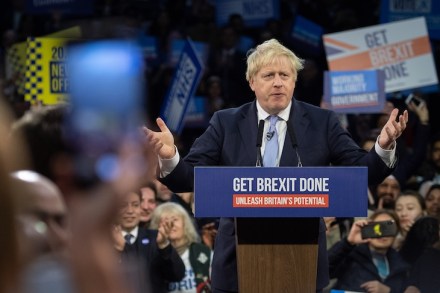
When Boris Johnson edited this magazine, it proposed an amnesty for illegal immigrants — a controversial notion, but an idea he has stuck to. As London Mayor he suggested an ‘earned amnesty’: if bureaucracy had failed over many years to catch up with the 400,000 undocumented migrants in the capital, he reasoned, why not regularise their status so that they could start paying taxes and contributing to the country in other ways? When this magazine reprised the issue last week, the usual objections were recycled: why reward criminality? But the actual cases are more complicated. Trevor Rene is one such case. He was born in Dominica in 1969 when it was still a British colony, so as a child he had a British passport.

The EU is the true successor of the British Empire

From our UK edition

Donald Tusk has been ridiculed for suggesting that Brexit marks the end of the British Empire. But he has a point. The 31 January 2020 – assuming the date doesn’t move again – should finally bring to a close Britain’s involvement in colonial delusion. And that is exactly why we are right to leave. Like the British Empire, the European Union is an exercise in patrician rule and one which is sustained by an unshakeable sense of moral and cultural superiority.

Labour and Tory NHS cash splurges are a mistake

From our UK edition

I’m sending someone down to the supermarket later to do a bit of shopping on my behalf. I have given them a rough idea of what I want but my main instruction is that they must spend the entire £150 that I am giving them.       If that was really how I did my shopping it isn’t hard to imagine the result. I would end up with bagfuls of stuff I didn’t really want and didn’t need. Some of the food might be good value but an awful lot of it wouldn’t be. Whoever did my shopping would simply pile up the trolley as quickly as they could, until they had spent my £150. It sounds stupid, so why, then, are the main parties promising to do a very similar exercise with the NHS?

Why the Tories should promise to scrap the licence fee

From our UK edition

One wonders what Tom Watson would have left in his vocabulary if the Conservatives announced a policy of kicking away the crutches of the elderly – given, that is, that this morning he described the ‘Tory’ policy of abolishing free TV licences for the over 75s as ‘utterly callous’. Ending universal free licences for the over 75s is not, of course, a Conservative policy – it was a decision made by the BBC itself in order to preserve the earnings of Gary Lineker, although to be fair to Watson the government did hand the BBC the power to make that decision.

Corbyn is right to condemn Boris’s cynical fracking u-turn

From our UK edition

For once, Jeremy Corbyn is right. The government’s announcement of a moratorium in fracking is an election stunt – and attempt to snatch a few leave-voting seats in the North at the expense of damaging Britain’s energy policy for the next couple of decades, as well as causing higher carbon emissions.  Announcing the block on fracking on Radio Four on Saturday morning, business secretary Andrea Leadsom said the government had reached its decision because the Oil and Gas Authority had concluded that it was impossible to predict when ‘earthquakes’ might be caused and what magnitude they might be. This followed a tremor measuring 2.9 on the Richter scale in August.

The lie that could dominate Britain’s election

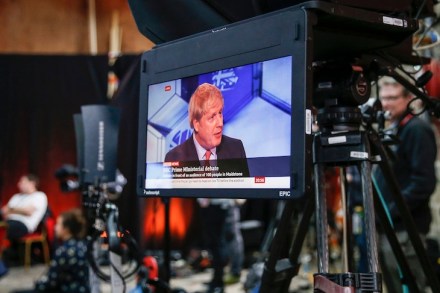
The former British chancellor of the exchequer – or finance minister – Nigel Lawson once described the National Health Service (NHS) as the closest thing the British have to a religion. For some, however, is a worse than that – less mainstream religion than messianic cult. Yesterday, Donald Trump reassured British radio listeners that in seeking to do a trade deal with Britain it is not attempting to interfere in the NHS.  Not that it made any difference. Activists for Jeremy Corbyn’s Labour party, which will face Boris Johnson’s Conservatives in a general election on December 12, continued to make the accusation that there is some secret plot to break up the NHS and sell it off to US healthcare corporations.

nhs

Nigel Farage has doomed his party to failure

From our UK edition

Until this morning, Nigel Farage’s creation of the Brexit Party stood as an object lesson in how to found a new political party in a two party system. Many have tried this of course, from David Owen to Chuka Umunna, and all have floundered – some quicker than others. The Brexit party, by contrast, went from nothing to winning the European elections in under five months. It did so because it had a very clear purpose and because its foundation was perfectly timed in order to exploit that issue. But as of 11 o'clock this morning, that is gone. The Brexit Party is doomed to follow the same sad trajectory of other failed parties – to become the Natural Law Party for Brexiteers.

Toxic regulations, not the fire brigade, are to blame for the Grenfell deaths

From our UK edition

It has been bizarre to hear the London Fire Brigade taking the brunt of the blame for the deaths of 72 people at Grenfell Tower. Its commissioner Dany Cotton certainly deserves condemnation for persisting in telling residents to stay put when it ought to have been clear early on that fire was engulfing the building and it needed to be evacuated. Her suggestion that she ‘wouldn’t change anything we did on the night’ — in spite of the role her advice played in boosting the death toll — compounds her errors. Yet by the time the fire service arrived, tragedy was already assured. To pin the blame on Ms Cotton, or anyone in the fire service, risks missing the moral of Grenfell.

Boris Johnson’s Brexit deal won’t cost Britain £70bn by 2029

From our UK edition

Yet again, listeners to the Today programme awoke this morning to hear a dire forecast for the economic consequences of leaving the EU – with no critical analysis nor even explanation of how the forecast was arrived at. This morning’s horror story came courtesy of the National Institute for Economic and Social Research (NIESR), a think tank which claims the economy will be 3.5 per cent – or £70bn – smaller in 10 years’ time than if we had never voted to leave the EU. The NIESR claims the economy is already 2.5 per cent smaller than it would have been had we voted to remain in 2016 and that this loss will last ‘in perpetuity’. Well, there it is.

The myth of the Brexit business exodus

From our UK edition

We are, of course, on the cusp of an exodus of UK businesses as they leave to set up home in other EU countries. We know this because Remainers keep telling us so. Banking jobs are going to disappear to Frankfurt, manufacturing jobs to France or the Czech Republic. Or maybe not. It is not quite how the World Bank sees it. Its latest survey of the world’s best countries in which to do business – which takes into account such things as tax and regulatory barriers as well as access to energy and other services – ranks Britain as eighth out of 190 countries, one place higher than last year and higher than any other EU country except Denmark. Most EU countries do not score highly. Germany is at 22, France 32, Belgium 46 and Italy 58.

Are inside-traders profiting from the US-China trade war?

Of all the 9/11 conspiracy stories, one of the most persistent is the suggestion that al-Qaeda funded its operations by short-selling the shares of airline companies in the days before the attack. Inevitably, airline shares plummeted that day, netting short-sellers vast profits. While there was an increase in short-selling before the attack, no-one has proved one way or the other whether that was history’s most audacious case of insider-dealing or just a reaction to an industry which was already in trouble for purely commercial reasons. But is someone now trying on the same trick with the US-China trade war?

inside-traders

Jean-Claude Juncker has helped Boris immeasurably

From our UK edition

As of this afternoon, we really are getting close to the endgame. Jean-Claude Juncker told reporters today: 'If we have a deal we have a deal and there is no need for prolongation. That is the British view and that is my view too.' According to the BBC's Laura Kuenssberg, when asked what would happen if Boris's deal didn't pass, Juncker replied: 'I hope it will. I am convinced it will. If it doesn’t there will be no prolongation.' How untypical of the European Commission President to do the UK government a favour, but he has helped Boris immeasurably by suggesting a Commons vote on the latest withdrawal bill is a binary option, without Remain on the order paper.

‘Remain or Leave?’ is no longer the key Brexit question

From our UK edition

In an astonishing interview on the Today programme this morning, Liberal Democrat leader Jo Swinson tried to explain why she was tabling an amendment which would force a referendum on any deal the government presents to the House of Commons on the grounds that we should 'let the people decide'. She then asserted that the country had changed its mind since the 2016 referendum and now wanted to remain. It had to be pointed out to her that her party has, in fact, just adopted a policy of reversing Article 50 without a referendum – so much for letting the people decide. The truth is that like so many Remain campaigners, Swinson will banter on about letting the people have a say when it suits her while knowing it would be fatal to her cause to have another referendum at the moment.

The myth of Britain’s air pollution pandemic

From our UK edition

It is a good thing that there is an air pollution bill in the Queen’s Speech today. We should not have to tolerate foul air. But the suggestion that this will be addressing some dramatic and growing crisis is misplaced. The idea that Britain is in the midst of a ‘silent pandemic’ of air pollution deaths – as claimed by a UN Special Rapporteur two years ago – is not even slightly aligned with the truth. In fact, air pollution in Britain has fallen dramatically over the past half century. A clean air act is about furthering huge progress that has already been made, not about challenging some growing problem.     London smogs were gone by 1970 – the reference date now used for air pollution in Britain.

Don’t blame oil and coal companies for climate change

From our UK edition

This year’s Nobel Prize for the silliest piece of scientific research must go to something called the Climate Accountability Institute, for revealing to the world that 35 per cent of all global carbon and methane emissions since 1965 can be traced to just 20 global companies. This week they were named and shamed in the Guardian and revealed to be, er, 17 oil companies and three coal mining companies. Scandalously, they have been pumping all this carbon into the air for their own self-enrichment while the rest of us suffer.