Ross Clark

Ross Clark

Ross Clark is a leader writer and columnist who has written for The Spectator for three decades. He writes on Substack, at Ross on Why?

Coronavirus could be ‘black swan event’ that costs Trump the presidency

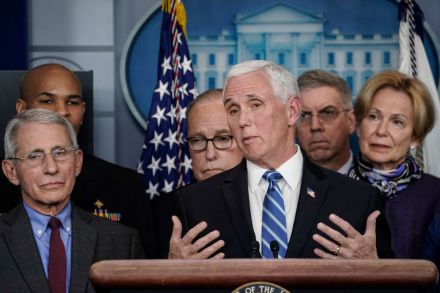
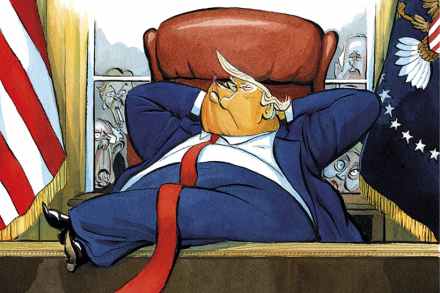
Donald Trump is, as we know, a noted germophobe. It would be richly ironic, then, if he missed out on a second term owing to the germ of the moment: coronavirus. Over the past 24 hours, something remarkable has been stirring in the normally wayward kingdom, Trump Tweet Land. The president has started lavishing praise on the Centers for Disease Control (CDC) — a government agency which he has previously treated in a rather less than admiring way. In 2017 he famously sent it a list of banned words like ‘transgender’ which he didn’t want to see in official documents. And he has since been attacked for cutting its budget. Suddenly, they are heroes who are doing a GREAT job of tackling coronavirus VERY VERY quickly.

In defence of the wood burner fuel ban

From our UK edition

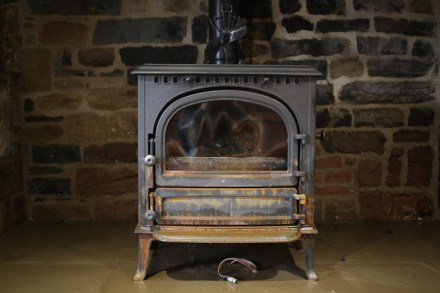
Open the papers this morning and you would think the government had just announced plans to slaughter the first-born. The cause of the outrage? The environment secretary has just said that the sale of coal and damp logs for burning in domestic properties is to be banned from next year. Apparently it is an attack on people who live in the countryside, and on the Tories’ new-found voters in the north of England – whom some Conservatives in the south still no doubt think keep coal in their baths. Maybe there are still a few coal-burners in the likes of Bolsover – although the business of that particular town was for many years producing Coalite, a smokeless fuel which it appears will not fall foul of the ban.

Leo Varadkar has been hung out to dry by the EU

From our UK edition

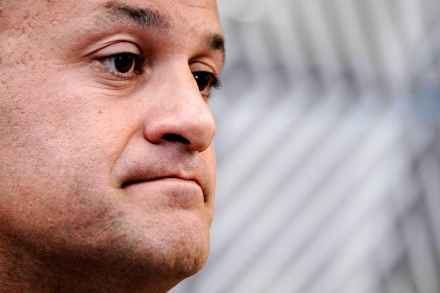
A year ago, did anyone look like they would come out of Brexit better than Leo Varadkar? Here was a leader of a small country on the fringe of the EU suddenly catapulted to its centre. He was the one pushed forward by Juncker, Barnier, Merkel and Macron, as they sought to leverage advantage from the tricky problem of the Irish border. Not only was Varadkar seen to be standing up for the Republic’s interest, but by driving a wedge between Northern Ireland and the rest of the United Kingdom, he seemed to be setting himself up as the instigator of possible Irish reunification – he was drawing the issue away from the nationalists. Last night, Varadkar resigned as Taoiseach after a humiliating general election defeat two weeks ago.

Has the Environment Agency given up in its fight against flooding?

From our UK edition

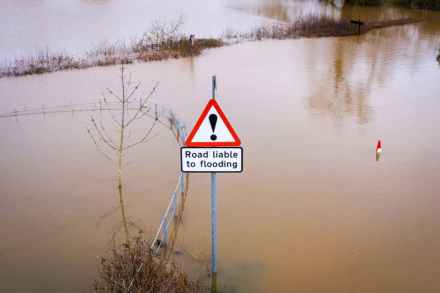
Where are the engineers? Whenever climate change comes up we hear from ecologists, activists and the odd scientist. But engineers? The very people we need to solve problems seem to be shut away in a box while school kids and dopey vegan campaigners are handed a megaphone with which to tell us the planet is going to die unless humans go back to pre-industrial poverty. This week’s floods are a prime example of our anti-engineering age. Hundreds of homes have been inundated with water, while several flood defences have failed, even though they were only recently installed. One might think the Environment Agency – the national body responsible for food defence in England – would be asking what is going wrong.

Priti Patel’s immigration crackdown might not be enough

From our UK edition

The argument for excluding the low-skilled from work visas under our new post-Brexit migration system is reasonable enough. As Home Secretary Priti Patel argued this morning, excluding low-skilled migrants should encourage businesses to invest in automation and in training higher-skilled staff who might be able to do the work of two of more unskilled staff. The weak spot for the UK economy over the past decade has been productivity, which once again has flat-lined over the past year. According to ONS figures released yesterday output per hour increased by just 0.3 per cent over the past year. Output per worker was static. When you have a seemingly endless supply of cheap labour on tap, why bother to invest in labour-saving technology?

The police are in thrall to Extinction Rebellion in Cambridge

From our UK edition

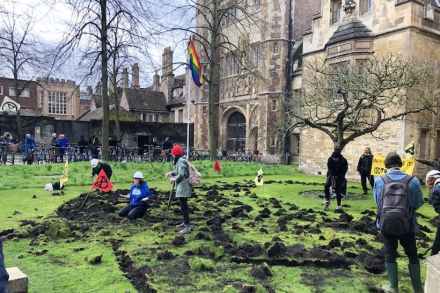
When I read that police were invoking emergency powers at an Extinction Rebellion protest in Cambridge I thought: about time, too. It meant, I presumed, that they were not going to make the same mistake as the Met Police last April, when they were too slow to stop this bunch of anarchists closing down public thoroughfares. But one should underestimate the plods at one’s peril. The ‘emergency powers’ being used by Cambridgeshire Police instead allow them to close the roads without giving any notice. Yes, they are actively facilitating the protest. They turned up in their yellow vests and closed a local road on the activists’ behalf. It will remain shut all week, affecting bus routes and requiring ambulances to make a detour.

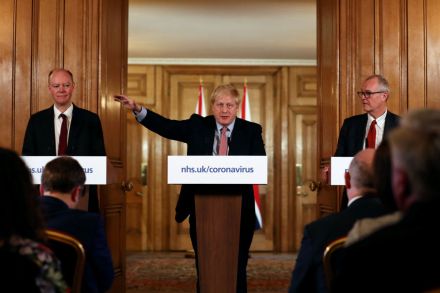
The government’s plans for a pandemic are both reassuring and alarming

From our UK edition

Like the Trumpton fire brigade, Britain’s disaster planners have had precious little opportunity to show off their skills over the past few decades. Plans for a nuclear war merely gathered dust. Global pandemics failed to arrive, as did a no-deal Brexit. Just about the only crisis requiring nationwide emergency planning concerned foot and mouth disease in 2001 when six million animals were slaughtered and Labour ministers announced ‘the countryside is closed’, killing off rural businesses, yet still failed to prevent the spread of the disease from Cornwall to Northumberland.

Mark Carney is finally realising the benefits of Brexit

From our UK edition

Given what he has previously said about Brexit it would be a bit much to expect departing Bank of England governor Mark Carney to say that leaving the EU is a good thing for Britain. Nevertheless, it is still a bit of pleasant surprise to hear him in what – in Carney-speak – is presumably the next best thing. In an interview with Reuters, he has just described Brexit as a 'conceptual positive' for the UK economy.

Boris should take back control from the House of Lords

From our UK edition

I imagine that in recommending Philip Hammond and Ken Clarke for peerages, Boris Johnson sees himself in engaging in a Tory healing process. 'I may have kicked them out of the parliamentary party,' he is saying, 'but let bygones be bygones – I’m big enough to honour my former enemies.' And of course, unlike David Gauke and Dominic Grieve, neither had the temerity to stand against the Conservative party in the general election, so it is some kind of reward for not complaining too bitterly when punished for disloyalty. But is that really the message that Boris needs to be handing out regarding the House of Lords – underlining its role as a place where Prime Minister’s can do politics through patronage?

Why is the BBC criminalising low income women?

From our UK edition

The BBC has a penchant for staging debates on the decriminalisation of drugs. I should know because I am often drafted in as the right-wing loon to provide a bit of balance to the enlightened drugs expert putting the more fashionable view. These debates always go the same way. I argue that if a substance is dangerous enough to be banned then you need to punish the users as well as the suppliers because it is they who are creating the market. Without these consumers, the drug-pushers would have nothing to sell. The enlightened expert is then invited to say how damaging it is to drug-users to be given a criminal record which will hurt their chances in life and prevent them from seeking help. But there is one subject on which the BBC seems rather less keen on decriminalisation.

Nissan’s post-Brexit plan exposes the limits of Project Fear

From our UK edition

Brexit voters are, of course, mostly fools who don’t know what is good for them – in contrast to all those Remain voters with their degrees and analytical skills. But none are so dim-witted as those in Sunderland who, like turkeys voting for Christmas, chose a course of action which will inevitably lead to them losing their jobs at the city’s Nissan plant. Or maybe not. It turns out that Sunderland’s Nissan workers might not be quite so stupid after all. It's been revealed that the company is looking at a scenario in which it would close its EU plants and transfer production to Sunderland instead, raising its UK output from 350,000 to 400,000 vehicles a year.

Lord Kerr’s ‘stupid’ Brexit jibe shows some Remainers have learned nothing

From our UK edition

I have always loved the story of Hiroo Onoda, a Japanese soldier who refused to believe the Second World War was over and stayed hiding in the Philippines until his former commanding officer was brought out of retirement and ordered him to surrender. That was in, 1974, 29 years after the end of hostilities. But I wouldn’t bet on the final Remainer holdouts giving up their struggle so quickly. If Lord Kerr of Kinlochard can be gently persuaded out from behind one of the red benches in the House of Lords before 2049 – when he’ll be 106 – I would consider it a triumph of negotiation. It would be an even greater wonder if Lords Adonis and Heseltine could be tempted out by the same date.

In defence of Northern Rail

From our UK edition

What a joy it is to travel on trains in Germany, where services are fast, efficient and always seem to arrive on time. Why can’t we have Deutsche Bahn running our own trains, rather than those imbeciles at Northern Rail, whose slovenly late-running services using rattling old rolling stock from the 1980s were so bad that its services are to be nationalised from 1 March? Oh, but hang a minute. Deutsche Bahn already is running those trains. Northern Rail’s parent company, Arriva, is a subsidiary of the German state railway company. In which case the question becomes: why can a company that seems to manage to run rail services in Germany make such a hash of running rail services in and around Leeds and Manchester?

brexit

After Brexit

This article is in The Spectator’s February 2020 US edition. Subscribe here. The US-China trade war is easing; a new trade deal with Canada and Mexico has been passed by a large cross-party majority in the House of Representatives — largely unnoticed, as it happened in the same week as Donald Trump’s impeachment. The idea that the president is taking the world down a blind alley toward an era of protectionism is beginning to fade. So what now of the prospects for that other trade deal that Trump has promised: between the US and Britain?

The stupidity of ‘smart’ motorways

From our UK edition

How nice to hear Sir Mike Penning, chairman of something called the all-party parliamentary group for Roadside Rescue and Recovery, condemn ‘smart’ motorways as the death traps they are. The motorways use a variety of 'smart' methods to vary traffic flow, including part-time hard shoulders managed from a central control room and enforced using electronic motorway signs. Some smart motorways have no hard shoulder at all. This relatively new innovation was described by Penning’s group as a 'public policy failure' that has been introduced with a 'shocking degree of carelessness'.

HS2 does nothing for the new Tory heartlands in the North

From our UK edition

If there is one thing that could yet save HS2 it is the 'letting down the North' argument. Didn’t Boris make a speech in the early hours of 13 December promising the party’s new-found voters in the north that he would never take their votes for granted and never forget them? How, then, would he escape the onslaught that would be launched against him if he decided to dump a high-speed rail line to the north? We’ve had endless open letters from council leaders, business people and so on in recent months begging the government to go ahead with the scheme.

It’s in America’s interests to extradite Anne Sacoolas – but it’s also in hers

From our UK edition

Hands up if you have ever heard of Brian Moles? No? Then what about Anne Sacoolas? Yep, I bet that is registering a bit more. Sacoolas, as pretty well the whole country now knows, was spirited out of the country by US authorities after allegedly causing the death of teenage motorcyclist Harry Dunn by driving on the wrong side of the road near an airbase in Northamptonshire last August. Yesterday, US Secretary of State Mike Pompeo announced that he was rejecting a British demand for the extradition of Mrs Sacoolas, arguing that she had diplomatic immunity. And Mr Moles? Last year, Moles pleaded guilty to causing death by dangerous driving at Southampton Crown Court after killing a motorcyclist while making an illegal turn.

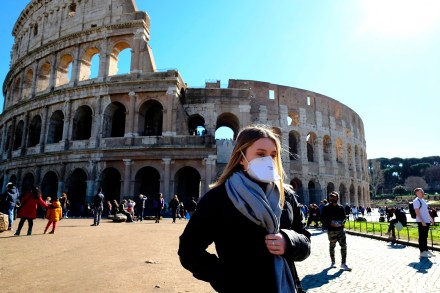
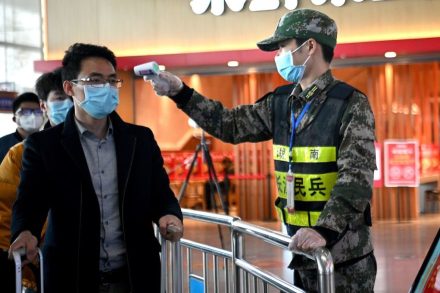
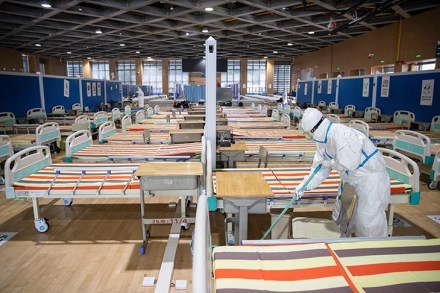
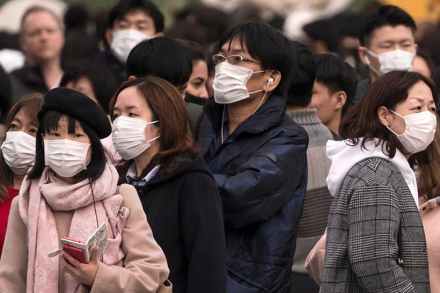
There’s no need to panic about coronavirus

From our UK edition

In contrast to prophets of doom, who get invited to Davos, asked to address the UN and are able to build entire careers around their scaremongering, there are few rewards for those who play down fears – even if they turn out to be correct. If there were, then perhaps I wouldn’t have to draw attention to this piece I wrote in the Spectator in September 2005 arguing that the H5N1 strain of bird flu had been hugely over-hyped and was unlikely to kill many of us. At the time, the World Health Organisation (WHO) was predicting there could be up to 50 million deaths worldwide, and former government adviser on infectious diseases Professor Hugh Pennington was claiming that it could be worse than the Spanish flu of 1918.

Will house prices rise after Brexit?

From our UK edition

A headline in the Times this week appeared to speak of a boom in house prices since the general election: “Housing Market Enjoys Boris Boost as Prices Rise at Record Rate”. Given Britain’s history of house price booms and busts that sounded dramatic indeed, so what did it really mean? The ‘record’ which turned out to have been broken turned out to be the change in asking prices – as measured by property website Rightmove – between December and January. This month, the average asking price for a property in Britain is £306,810, £6785 or 2.3 percent higher than it was in December. The previous highest uplift that Rightmove has measured was between December 2014 and January 2015.

Climate change isn’t responsible for Australia’s hailstorms

From our UK edition

It was pretty inevitable that once rain finally started to fall in South Eastern Australia, extinguishing some of the bushfires which have been raging for weeks, the wet weather, too, would be blamed on climate change. 'Climate apocalypse starts in Australia,' a human rights lawyer tweeted in response to golf ball sized hailstones falling in Canberra. 'You'd be hard-pressed to look at what is going on in Australia right now and not connect it to climate change.' said the website News & Guts, tweeting similar pictures of hailstones falling on the Australian capital. For the Weather Channel it was a case of 'record rains' – citing by way of example the 60mm of rain which fell in an hour in Newcastle, New South Wales. https://twitter.com/BBCWorld/status/1219180999097057281?