Ross Clark

Ross Clark

Ross Clark is a leader writer and columnist who has written for The Spectator for three decades. He writes on Substack, at Ross on Why?

Why is the coronavirus mortality rate so much lower in Germany?

From our UK edition

Is there something about being Germany which protects the body against coronavirus Covid-19? Probably not, I would guess. In which case why do the latest figures from the Robert Koch Institute show that the country has a case fatality rate (CFR) of 0.3 per cent, while the World Health Organisation (WHO) figures from Italy seem to show a CFR of 9 per cent? To say there is a vast gulf between those figures is an understatement. If nine per cent of people who catch Covid-19 are going to die from it we are facing a calamity beyond parallel in the modern world. If only 0.

Are people really panic buying?

From our UK edition

We have, of course, been transformed into a nation of hoarders and panic buyers. We know this because everyone keeps telling us. There are the queues around the block, waiting for Asda to open; the tearful nurse on Twitter who couldn’t get any food after a 48-hour shift; anecdotes galore about people loading loo rolls into their trolleys by the tree trunk-load, fighting over each consignment as it arrives. How much more civilised we all were – it has been claimed – during wartime. I’m sure there are people panic-buying and hoarding vast quantities of tinned foods, but is it all quite so bad as being made out?

Could measures we’ve taken to stop Covid-19 already be saving lives?

From our UK edition

Perspective is a bit in short supply at the moment but if you want a brief respite from the onslaught of bad news, take a look at these statistics. They are Office for National Statistics figures for the total numbers of deaths from respiratory diseases in England and Wales for February this year, compared with last year. 2019 2020 7 February 1,918 1,572 (-346) 14 February 1,931 1,586 (-345) 21 February 1,890 1,587 (-303) 28 February 1,786 1,517 (-269) There are many influences on the level of deaths from respiratory disease: temperature, pollution levels and so on. They were even higher in 2018 when the country was gripped by the Beast from the East; in contrast February 2019 saw very mild and benign weather.

Corbyn’s coronavirus strategy would have been a recipe for disaster

From our UK edition

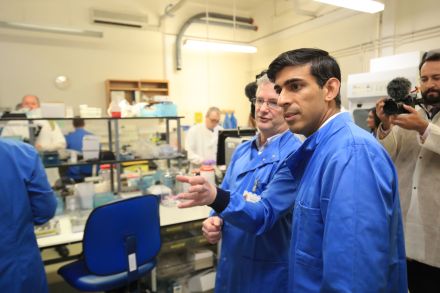
It has become a received wisdom that coronavirus has forced Boris Johnson to morph into Jeremy Corbyn. Vast handouts to business, surging borrowing, open-ended commitments to NHS spending: there’s certainly a whiff of Labour policy in there. Some Conservative ministers even appear to see it that way; 'We'll find ourselves implementing most of Jeremy Corbyn's programme,' one of them told Robert Peston yesterday. But no, we have not ended up, by accident, with the government that we would have had if we had voted for Jeremy Corbyn in December. There is a world of difference between the measures that Rishi Sunak’s emergency measures and what Corbyn would have unleashed on the country.  True, borrowing is going to rise to eye-watering levels.

Finding the right corona stimulus won’t be easy

From our UK edition

All governments are going to have to come up with vast stimulus packages over the next few weeks or face mass bankruptcies and job losses as the economy is paralysed by measures to combat the coronavirus. But was it really wise for President Macron to announce on Monday evening that no business will go bankrupt as a result of the coronavirus crisis? True, there are a great number of businesses all across the world that risk going to pot through no fault of their own. You might run the best pizza parlour in the world but still you face going under if your government orders you to close down for weeks and months, depriving you of income with which to pay your continuing overheads.

Could the weather affect coronavirus?

From our UK edition

What’s new in the world of coronavirus research this week? The most eye-catching study comes from the University of Maryland School of Medicine revealing a possible relationship between coronavirus outbreaks and meteorology.  While the paper is not yet peer-reviewed and its authors admit that it's ‘speculative’ and must be read with extreme caution, it notes that so far the worst outbreaks of the disease have occurred where the average temperature is between 5 and 11 Celsius and the relative humidity is between 50 and 80 per cent. Wuhan in January fell into this zone as did Northern Italy – and most of western Europe in February. South Korea and Japan were also in this climatic zone.

chinese

We’re all Chinese now

I didn’t know this was what they meant by ‘cancel culture’. Sports events, theatre shows, plane flights, weddings, funerals: everyone is in a mad rush to cancel everything. Governments are ordering citizens to remain indoors, with Spanish police even deploying drones to catch miscreants. I don’t know whether it is the best way of tackling coronavirus — the UK government, which has gone to greater lengths than others to explain the scientific modeling behind its decision-making, has come to the conclusion that banning things and forcing the entire population into lockdown will have minimal effect and may even be counter-productive, at least at this stage. But it is going to cause a global recession, if not depression.

How worried should we be about coronavirus?

From our UK edition

So are we all going to die or is it going to fizzle out? In Naples the police drive along streets with loudhailers, warning everyone to keep indoors; in Britain the government declines to close schools, call off sporting fixtures and persuade people out of the pub. Something feels not quite right: either there is huge overreaction or under-reaction to Covid-19. Health Secretary Matt Hancock has not helped calm fears by announcing that the government has been working on a worst-case scenario of 80 per cent of the population catching the virus and 500,000 dying from it. It isn’t easy for the scientists, either. In a fast-developing disease there is, inevitably, a shortage of up-to-date, peer-reviewed studies to give you an accurate picture.

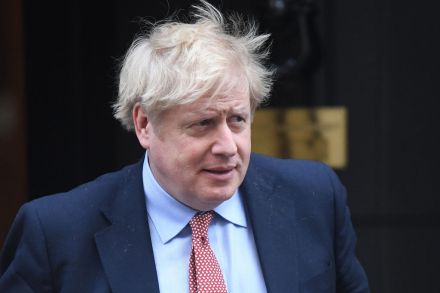
Boris Johnson is following science in his coronavirus response

From our UK edition

Boris Johnson, according to a large Twitter mob this morning, is a reckless libertarian – ignoring the drastic but effective measures being taken against coronavirus in other countries – in the same spirit he once praised the mayor in Jaws who kept the beaches open in spite of swimmers being eaten. A large body of opinion appears to be on the side of Jeremy Hunt, who questioned the government’s strategy on Channel 4 news last night. But there is a fundamental problem with this narrative – and not just that many of the same people now praising Hunt were lambasting him several years ago as a charlatan, ignoring the advice of experts in the NHS.

Can the EU really complain about Trump’s ‘unscientific’ travel ban?

From our UK edition

Yes, of course Donald Trump’s ban on travel between the US and the Schengen zone is an over-reaction to coronavirus, which will do far more harm to the economy than it will to protect the health of Americans. But it is pretty rich for the EU to be bleating about others banning things without scientific justification.  The EU has protested bitterly about the American ban, complaining it was introduced unilaterally without consultation. Guy Verhofstadt tweets: 'Instead of a travel ban for Europeans Trump should make a decent health care system that works for Americans.' The usual anti-Trumpites have weighed in with their ha’porth of wisdom, with Simon Schama calling the travel ban 'an idiotic and purely political stunt'.

Bank of England’s irrelevant coronavirus vaccine

From our UK edition

There may be no vaccine yet for Covid-19, but the Bank of England yesterday morning gave us a full dose of what it hopes will be the financial equivalent; slashing interest rates from 0.75 per cent to 0.25 per cent. It has also relaxed the capital buffer requirements for banks — the amount of capital banks are required to hold back to defend against a financial crisis like that of 2008/09. This ought to allow banks to advance more loans to business. Some have been wondering whether the bank is attempting the equivalent of fighting a viral infection with antibiotics.

Coronavirus’s biggest victim? Money

The first victim of war, they say, is truth. The first victim of coronavirus, by contrast, is fiscal discipline. Yesterday, President Trump started negotiating with the Senate over a proposal to suspend payroll taxes, possibly until the end of the year. Wall Street certainly liked it: markets shot up by five percent. Whether future Americans will enjoy paying the bill is another matter. The government’s proposal is not just targeted help for a few industries like travel and tourism, which stand to lose out heavily as people stay at home. It is not a modest tax cut to encourage Americans to go out and spend a little more. Even to call it a 'stimulus package' — as these things are pat to be called — seems pathetically inadequate.

coronavirus money

Why is coronavirus receding in China?

From our UK edition

In the panic over coronavirus in Britain, we seem to have forgotten about China. There is a logic to that, of course. The argument goes that British and European cases are far closer to home. But if we were just a little more aware of what has been going on in China over the past few weeks we might be a little less-minded to panic.  In China, the epidemic is not over, but it is in very sharp decline. In the worst week – the second week of February – more than 3,000 people a day were being infected in a seemingly exponential upwards curve. But then the number of infections peaked and started to fall just as quickly as they rose.

market

Market hysteria is not all down to coronavirus

Is this really about a virus? Oil has plunged 30 percent, the S&P Index seven percent. What is happening on the markets today has less the feel of a rational reaction to world events than one of the periodic panics which grips world markets — with coronavirus a mere excuse for a sell-off which was perhaps coming anyway. The deadliest words for world markets are not ‘coronavirus’ and ‘Covid-19’ but ‘decade-long bull market’. The latter idea has planted in many investors’ heads that the good times could not have gone on much longer — there had to be a correction or crash. It is true, as well, that the US, in common with many developed countries, has not suffered a recession for over 10 years. That, too, feels unnatural.

Donald Trump’s ‘hunch’ about coronavirus is likely correct

From our UK edition

Donald Trump is in the soup again, this time for appearing to reject the World Health Organisation’s estimate for the death rate from coronavirus (Covid-19): 3.4 per cent. 'I think the 3.4 per cent is really a false number,' he said on Thursday before adding that he had a ‘hunch’ that the real death rate is less than one per cent. Twitter, needless to say, immediately went into meltdown, the most polite response was to call him ‘irresponsible’. Trump is not quite the person I would call upon for insight into matters relating to virology. He does, of course, have a reputation for shooting from the hip, yet his reasoning on this is more sound than many of his critics would admit. Indeed, the WHO itself was at pains to stress that it’s 3.

Could coronavirus really trigger the next crash?

From our UK edition

It’s a bloodbath in the markets, but by how much could the real, global economy be affected by the coronavirus outbreak? A research note by Oxford Economics seeks to answer that question by comparing it with the experience of Japan following the 2011 earthquake and tsunami. On that occasion, Japan’s industrial production slumped by 15 per cent in a single month, before taking several months to recover. The car industry was affected still more, with a 60 per cent plunge in the month following the earthquake. Interestingly, notes the think tank, the part of Japan affected by the disaster accounted for only 3-4 per cent of national industrial output, but factories elsewhere were affected by an interruption in the supply chain.

Coronavirus and the cycle of panic

From our UK edition

If you have just cancelled your trip to Venice and ordered your £19.99 surgical face mask from Amazon, how about this for a terrifying vision: by the time we get to April, 50,000 Britons will have succumbed to a combination of infectious disease and adverse weather. Frightened? If you are, don’t worry: you survived. It was two years ago. In 2017-18 the Office for National Statistics recorded 50,100 ‘excess winter deaths’. The explanation, according to the ONS, was probably ‘the predominant strain of flu, the effectiveness of the influenza vaccine, and below average winter temperatures’. Coronavirus (Covid-19) is a pretty virulent virus all right, but not in the way you might imagine.

Heathrow’s third runway ruling should worry Boris Johnson

From our UK edition

It may well be, as Tom Goodenough argued here earlier, that Boris Johnson is secretly delighted at the Court of Appeal’s ruling that is was illegal for the government to give the go-ahead to a third runway at Heathrow without taking into account their own climate policy. The Prime Minister had, after all, promised his constituents that he would lie down in front of the bulldozers to stop a third runway. He now has the cover of a court decision to shield him from the Conservative party’s pro-runway elements if the project ends up being dropped. But the Prime Minister should be extremely concerned about the wider implications of this judgement. It is yet one more example of power draining away from elected government in Parliament, towards the courts.

Why stamp duty could and should be cut

From our UK edition

Given that the government is running a £40 billion deficit, is determined to increase spending on infrastructure and will not be facing an election for another five years, no-one should get their hopes up too much for tax cuts in the Budget. Indeed, most of the talk has been of possible rises. But if any tax is going to be cut it is likely to be Stamp Duty on property purchases, at least those made by owner-occupiers at the lower end of the market. No tax has been jacked up quite so much over the past two decades. When Gordon Brown started as Chancellor buyers paid a flat one per cent of the value of the property they were buying. Now there are progressive bands, as well as a three per cent surcharge for second or investment properties.

Coronavirus could be ‘black swan event’ that costs Trump the presidency

Donald Trump is, as we know, a noted germophobe. It would be richly ironic, then, if he missed out on a second term owing to the germ of the moment: coronavirus. Over the past 24 hours, something remarkable has been stirring in the normally wayward kingdom, Trump Tweet Land. The president has started lavishing praise on the Centers for Disease Control (CDC) — a government agency which he has previously treated in a rather less than admiring way. In 2017 he famously sent it a list of banned words like ‘transgender’ which he didn’t want to see in official documents. And he has since been attacked for cutting its budget. Suddenly, they are heroes who are doing a GREAT job of tackling coronavirus VERY VERY quickly.