Ross Clark

Ross Clark

Ross Clark is a leader writer and columnist who has written for The Spectator for three decades. He writes on Substack, at Ross on Why?

Britain can’t rely on a vaccine to ease lockdown restrictions

From our UK edition

Six weeks ago Britain stood as a bit of an outlier among western countries in that our government seemed set to manage, rather than suppress, coronavirus. It rejected the idea that it was pursuing ‘herd immunity,’ but seemed to do just that. Now we stand out for a different reason: we are the only country which appears to be committing itself to remain in lockdown, or close approximation thereof, until a vaccine arrives. In much of Europe, lockdown restrictions are tentatively being relaxed as infection rates and death rates fall. Here, ministers tell us it is far too early for that sort of thing – we will need restrictions on our lives, in one form or another, until we have a vaccine available. Is that a plausible strategy?

Could this antibody test offer a route out of lockdown?

From our UK edition

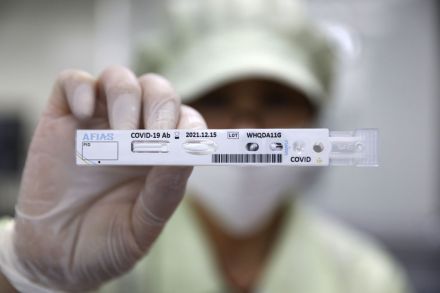
Finally, the government is to start antibody tests to see how prevalent infection with the SARS-CoV-2 virus – which causes Covid-19 – is among the general population. Over the next few days, testing kits are being sent to 20,000 randomly-selected households. The results will be crucial because it will inform us how effective lockdown has been – and whether there is any point in continuing with that policy. If, say, five per cent showed signs of having had the virus it would mean that the epidemic potentially had a long way yet to run. If 50 per cent have been infected with the virus it would mean that lockdown has failed and was pointless in any case – we would already be on the verge of herd immunity. So what will be the result?

What will happen to your savings after coronavirus?

From our UK edition

What joy it has been to have some cash over the past two months. For gamblers, to be sure, there have been opportunities to take advantage of a volatile stock market (and even more opportunities to get it wrong and lose a packet). But cash is cash – it just sits there holding its value, without having to watch the markets with dread every day. Well, certainly over the short term. But history teaches us a painful lesson in these circumstances: while investing in stock markets is full of sorrows, investing in cash offers few pleasures. It is ordinary savers ultimately who were made to pay for the economic crisis of 2008/09, and doubtless it will be they who are made to pay for this crisis, too. Cash hasn’t been all that steady over the past two months, in any case.

Is the lockdown costing lives?

From our UK edition

Over the next few weeks we are likely to start hearing more and more about a growing death toll – not the one from Covid-19 but the one from other conditions. Disturbingly, it appears to be rising, and we are going to have to start asking what role the lockdown has played in this. In its latest release on weekly deaths in England and Wales, released this morning, the Office for National Statistics reveals that there were 18,516 deaths in the week ending 10 April. That is 7,996 more than the five-year average for deaths in this particular week of the year. However, in only 6,213 cases was Covid-19 recorded as a cause. In other words, there were around 1,700 extra deaths from causes other than Covid-19. What were they caused by?

Is Covid-19 more widespread – and less deadly – than we thought?

From our UK edition

Last week I reported here a Stanford University study which found that infection with SARS-CoV-2 – the virus which causes Covid-19 – could be over 50 times as widespread in one Californian county than official figures suggested. Now comes yet another piece of evidence suggesting similarly huge under-reporting of cases. Researchers from Massachusetts General Hospital performed antibody tests on 200 random members of the public they found on the streets of Chelsea, near Boston. They discovered that 32 per cent of them had antibodies suggesting they had already been infected with the virus – official figures show that just 2 per cent of the local population had been confirmed to be suffering from the virus.

Will Sweden’s social distancing-lite work?

From our UK edition

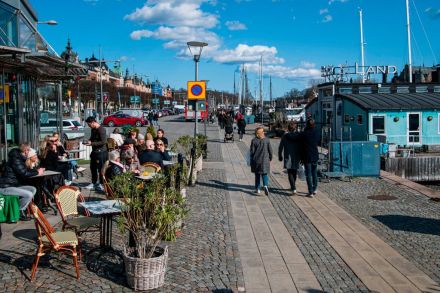
The science of epidemiology relies a lot on modelling because, for obvious reasons, controlled experimentation would be unethical. But in the case of Covid-19 we do have something approaching a real-life experiment – in that Sweden has declined to follow other European countries into lockdown. Instead, it has followed a policy which might be summed up as social distancing-lite. Gatherings of more than 50 people have been outlawed, closing theatres and putting an end to sports events. But children up to the age of 16 are still attending school, shops and restaurants are still open – albeit with rules preventing people standing up at the bar – and no police officer is to blow a whistle at you for sitting on a park bench.

Stanford study suggests Covid infections are 50 to 85 times more than confirmed cases

From our UK edition

Another day, and yet more evidence has appeared that could indicate the number of people who have been infected with SARS-CoV-2, the virus which causes Covid-19, might be vastly higher than official figures suggest. This time a Californian study suggests the figure in one county could be more than 50 times the number who knew they had had the virus. A team from Stanford university and other US universities recruited volunteers in Santa Clara County via Facebook adverts and produced a sample of 3000 representatives of the county as a whole. They were then invited for blood tests to detect the presence of antibodies to the virus. The result was positive in 1.5 per cent of cases. Adjusting for age, gender and ethnicity the results suggest that 2.

Leaked US document suggests Covid may be less lethal but more widespread

From our UK edition

Have we been vastly underestimating the number of people who have been infected with Covid-19 and correspondingly overestimating its mortality? No one knows because we don’t know just how widespread this infection is in the population at large. But a leaked document from the US Department of Homeland Security suggests that the US government, at least, is working on the assumption that the virus is a lot harder to contain – but a lot less deadly – than is widely assumed. The document compares the likely outcome of two scenarios: one in which the outbreak is ‘unmitigated’ – i.e. life carries on as normal – and one in which the government imposes a 30-day 'shelter in place' order followed by further mitigation measures.

The cashless lobby is cashing in on the COVID-19 crisis

Coronavirus, we have been warned many times, has brought scammers out in force. But lobbyists are not far behind. Their activities may not be illegal, but they are pretty disgraceful nonetheless. Hardly had the coronavirus outbreak begun in January than my email inbox began to fill up with press releases claiming that the contagion was being spread by banknotes and coins — coming, er, from businesses with a vested interest in cashless payments. In Britain, the payments industry seized the moment to lobby the government — successfully — for the limit on payments via contactless cards to be raised from £30 to £45. The new limit duly came into effect on April 1.

cash

Can HS2 make itself too big to cancel?

From our UK edition

I was never in favour of HS2, but if we are going to build it we might as well get on with it, so, yes, the government is right to order the bulldozers into action in spite of Covid-19 – as long as rules are enforced to ensure physical distancing between construction workers. But if it is safe to start building HS2, why then are so many other building sites closed? According to HS2 minister Andrew Stephenson: ‘We cannot delay work on our long-term plan to level up the country.’ But what about house-building – isn’t that part of levelling up, too? And what about all those plumbers, electricians, carpenters, kitchen-fitters and so on who have been forced to sit at home idling?

Austerity may be back – whether Boris Johnson likes it or not

From our UK edition

It just keeps on getting worse. Like the death toll from Covid-19 itself, forecasts for the economy in the wake of the crisis keep on creeping upwards. Today, the Office for Budget Responsibility (OBR) forecasts that UK GDP could contract by 35 per cent by June if the lockdown continues until then, before 'bouncing back quickly'. Unemployment could rise, it says, by two million, with the unemployment rate climbing to 10 per cent. That is quite a shock given that on the eve of this crisis we were celebrating the highest employment ever and the lowest unemployment in 45 years. The 35 per cent contraction is making all the headlines today – as well it might.

Covid antibody test in German town shows 15 per cent infection rate

From our UK edition

This morning we have some data giving a little more insight into the great unknown of the coronavirus pandemic: just how widely among the population has SARS-CoV-2 – the virus which causes Covid-19 – spread among the general population. A team at the University of Bonn has tested a randomised sample of 1,000 residents of the town of Gangelt in the north-west of the country, one of the epicentres of the outbreak in Germany. The study found that two per cent of the population currently had the virus and that 14 per cent were carrying antibodies suggesting that they had already been infected – whether or not they experienced any symptoms.

Coronavirus is straining an already fractured EU

From our UK edition

When EU finance ministers ended their crisis meeting this morning, they had spent 16 hours trying to establish what collective help, if any, they wish to offer to the countries most affected by the epidemic: Spain and Italy. They agreed on not a thing. Instead, the meeting broke up acrimoniously with Italy, Spain and France demanding that the European Central Bank issue ‘coronabonds’ to help finance economic recovery – while Germany, the Netherlands and others resisted. So we see the EU split along the same lines as did the 2008/09 crisis, and indeed along the same fault lines that have been growing ever wider over the past three decades.

Is Germany treating its coronavirus patients differently?

From our UK edition

Asked at Tuesday’s evening briefing why Germany appears to have a lower coronavirus death rate than Britain, the Chief Medical Officer Professor Chris Whitty said: 'We all know that Germany got ahead in terms of its ability to do testing for the virus, and there’s a lot to learn from that.' Germany has the capacity for 500,000 tests a day, while our own government is promising only 100,000 tests a day by the end of April. As has been explained here and elsewhere many times before, the more people you test, the lower your infection mortality rate will be – for the simple reason that you will be dividing your deaths by a larger dominator.

How many people have Covid-19 and don’t even know it?

From our UK edition

Just how many of us have Covid-19 and are not even aware of it? It's a question at the heart of this crisis. Epidemiologists are deeply divided, and no-one truly knows. Yesterday came news from China that 130 of the 166 people most recently found to be infected with SARS-CoV-2 there have proved to be asymptomatic. That is to say they had no symptoms whatsoever which would have led them to suspect that they were infected. This is consistent with research from the village of Vo’Euganeo in Northern Italy where all 3,000 inhabitants were tested for the virus early in the Italian outbreak. There, between 50 and 75 per cent of those infected had no symptoms either.

Spain and Italy have been abandoned by the EU

From our UK edition

If ever there was a time for the EU to show the benefit of belonging to an economic bloc with coherent cross-border cooperation you would think it would be now. But that is not quite how things are working out. On the contrary, the EU has erupted into open warfare between north and south. The rifts caused by the 2008/09 financial crisis have been torn open again, with Italy and Spain desperately pleading for help from a reluctant Germany and other northern countries. If anyone thought harmony would reign once troublesome Britain was out of the EU, there was not much evidence of it at a virtual summit held last week to discuss the coronavirus crisis.

British farms desperately need workers – yet we’re paying people to stay at home

From our UK edition

Is there anything more ridiculous, when we have hundreds of thousands of workers sat idly at home to avoid spreading coronavirus, to be flying in fruit and vegetable-pickers from Eastern Europe? Yet that is exactly what is about to happen. Concordia, which supplies seasonal labour to UK farms from overseas, says it is looking to charter planes to bring in 10,000 workers from Bulgaria. Without them, it says, fruit and vegetables will have to be left to rot in the fields. Sure, there is nothing wrong with using migrant labour on British farms in normal times. Until a few weeks ago we had pretty well full employment; there were few Britons prepared to work in the field.

What if half the population already has coronavirus?

From our UK edition

Britain is now locked down for at least three weeks, but could the government’s original policy of relying on herd immunity have been right all along? That is the inference of a team of epidemiologists from Oxford university, whose modelling produces remarkably different results from that of Professor Neil Ferguson and his team at Imperial College. It was the Imperial College model which, on Monday 16 March which led to the dramatic U-turn, and the government’s adoption of a complete suppression policy for Covid-19. Like everything being published about coronavirus at the moment, the Oxford study comes with a health warning.

Why is the coronavirus mortality rate so much lower in Germany?

From our UK edition

Is there something about being Germany which protects the body against coronavirus Covid-19? Probably not, I would guess. In which case why do the latest figures from the Robert Koch Institute show that the country has a case fatality rate (CFR) of 0.3 per cent, while the World Health Organisation (WHO) figures from Italy seem to show a CFR of 9 per cent? To say there is a vast gulf between those figures is an understatement. If nine per cent of people who catch Covid-19 are going to die from it we are facing a calamity beyond parallel in the modern world. If only 0.

Are people really panic buying?

From our UK edition

We have, of course, been transformed into a nation of hoarders and panic buyers. We know this because everyone keeps telling us. There are the queues around the block, waiting for Asda to open; the tearful nurse on Twitter who couldn’t get any food after a 48-hour shift; anecdotes galore about people loading loo rolls into their trolleys by the tree trunk-load, fighting over each consignment as it arrives. How much more civilised we all were – it has been claimed – during wartime. I’m sure there are people panic-buying and hoarding vast quantities of tinned foods, but is it all quite so bad as being made out?