Ross Clark

Ross Clark

Ross Clark is a leader writer and columnist who has written for The Spectator for three decades. He writes on Substack, at Ross on Why?

Four in five UK Covid cases are asymptomatic

From our UK edition

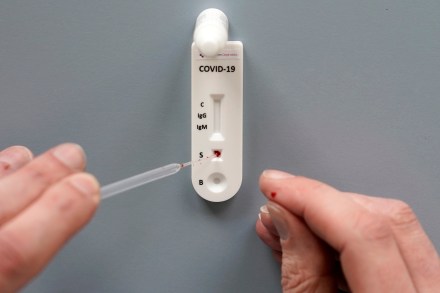
Finally we are getting a clue to the most vital statistic of the Covid-19 epidemic: how many people in Britain have had to disease – and who therefore might be expected to have some kind of immunity to it? Today, the ONS published the results of antibody tests on a randomised sample of nearly 19,000 people. On those, 885 – 6.78 per cent – were found to have antibodies to Covid-19, suggesting that they have had the disease. That so many people infected with SARS-CoV-2 have no symptoms explains why the disease has proved so difficult to control That is a little higher than the five per cent reported in Spain, but a lot lower than the 21 per cent reported for New York City.

Will track and trace really work?

From our UK edition

I wonder if Matt Hancock, or anyone else who has been developing the track and trace system for coronavirus, has set themselves this little test: get a blank sheet of paper and write down the names, addresses and telephone numbers of the people you sat next to on your last tube, train or bus journey, and the same for people on the surrounding tables on that last restaurant meal before lockdown. Er, where to start? As it happens I can name one fellow passenger on my last train journey: Lord Smith of Finsbury was sitting across the aisle – talking on his phone, interestingly enough, about a colleague who was suspected of having Covid. But I can’t even begin to picture the rest of the carriage. Was there a pair of girls a couple of seats down?

Could sewage solve the lockdown question?

From our UK edition

Test, track and trace is an integral – and very expensive – part of the government’s plans for lifting lockdown and getting the country back to normal. The government is trying to hire 25,000 contract-tracers to augment an app-based system which seems mysteriously to have all-but vanished from its plans. But could there be a cheaper way of gaining advanced warning of infection in an area, allowing localised lockdowns to be imposed? Whatever happened to RNA levels in sewage was followed very closely three days later in hospital admissions A study led by Jordan Peccia at Yale University raises the possibility of an intriguing early warning system for Covid outbreaks.

Immunity passports are an unlikely route out of lockdown

From our UK edition

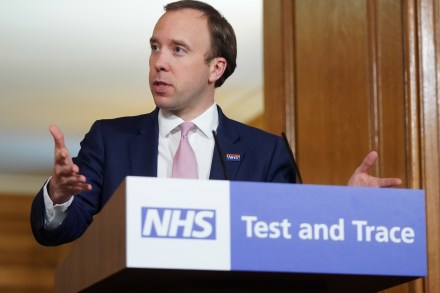
The route out of lockdown has become a groundhog day in which the same ideas keep on coming round again, with unnerving regularity: test, track and trace, vaccine, semi-permanent social distancing and so on. Today it is the turn of another hoary old chestnut: immunity passports. Announcing that 5 per cent of the country, and 17 per cent of Londoners, have already been infected with the virus, Matt Hancock suggested that following the distribution of the millions of antibody tests that have been ordered from Swiss pharma giant Roche, it will be possible to consider ‘systems of certification’ which allow some of the people who have already recovered from Covid-19 to resume more normal lives. He did not give further details.

Every part of England would pass Germany’s Covid test

From our UK edition

As much as the government has any kind of strategy for lifting Britain out of lockdown it appears to revolve around the ‘R’ – or Reproduction – number. So long as this stays below one, we are told, the epidemic cannot progress – while the moment it strays above one then the disease will start to grow exponentially. That is easy enough to understand in itself. What is less easy to work out is just how this R number is calculated. We are told that for Britain as a whole it currently lies somewhere between 0.7 and 1. But whether this really means an awful lot is open to question. According to the government’s explanatory notes the number is a ‘consensus estimate’ from SAGE, the Scientific Advisory Group for Emergencies.

Are young people more likely to catch Covid?

From our UK edition

It has been clear from the outset of the Covid-19 pandemic that there is a very steep age profile to its victims: with few children and teenagers experiencing serious symptoms while their grandparents suffer a high death toll. But what about the numbers of people infected? Two studies, in Britain and Sweden, appear to show that when it comes to infections, as opposed to deaths and hospitalisations, there is an inverse profile, with young people are contracting Covid-19 at a higher rate than the elderly. This week, Public Health England (PHE) announced initial results of the antibody tests which should help us solve the great unknown: just how many of us have had Covid-19, whether we experienced symptoms or not?

Should Britain relax the two-metre distance rule?

From our UK edition

Could the Government be about to relax the two-metre rule for social distancing? On Wednesday morning, professor Robert Dingwall, a sociologist who sits on the New and Emerging Respiratory Virus Threats Advisory Group, questioned the rule, saying he had tried to trace the scientific justification for it but couldn’t. The evidence, he said, was ‘fragile’. Some countries, such as the US and Spain, have also set a distance of two metres but others, such as Australia, Germany and the Netherlands are content with 1.5 metres and others, such as Norway and Finland are happy with a single metre. The two-metre rule is going to be a huge impediment to relaxing lockdown. As an example, a standard train carriage in Britain is 2.8 metres wide.

Stanford study suggests coronavirus might not be as deadly as flu

From our UK edition

One of the great unknowns of the Covid-19 crisis is just how deadly the disease is. Much of the panic dates from the moment, in early March, when the World Health Organisation (WHO) published a mortality rate of 3.2 per cent – which turned out to be a crude ‘case fatality rate’ dividing the number of deaths by the number of recorded cases, ignoring the large number of cases which are asymptomatic or otherwise go unrecorded.  The Imperial College modelling, which has been so influential on the government, assumed an infection fatality rate (IFR) of 0.9 per cent.

Moderna’s vaccine breakthrough reveals the folly of UK efforts

From our UK edition

The effect that a commercially-available vaccine would have on the global economy was amply demonstrated on Monday afternoon. The FTSE 100 jumped by more than 4 per cent after an announcement from US drug company Moderna that results of phase one vaccine trials had been successful. Development of a vaccine has become an international race with Moderna, the AstraZeneca-Oxford University project and Chinese work among those in the frame. The government would be advised to stop dangling the elusive possibility of a vaccine arriving by this September Of all of them, Moderna has a headstart. Its trial vaccine, mRNA-1273, was first sequenced on 13 January, just two days after China shared the sequence for Sars-CoV-2, the virus which causes Covid-19.

Will a vaccine really be ready by September?

From our UK edition

Aside from a handful of anti-vaxxers, virtually everyone would leap at the prospect of a vaccine earning us an early exit from the Covid-19 crisis. The only snag is that we do not have a vaccine that is proven to work, let alone safe to use, and that it is improbable that we will have one for some time. On 22 April, the Chief Medical Officer Professor Chris Whitty said the chances of a vaccine being ready within the next year are ‘incredibly small’. And he seems to be on the optimistic side. In the US, Anthony Fauci has suggested 12 to 18 months at the minimum and former federal vaccine scientist Rick Bright told the Senate last week that even 18 months is an ‘aggressive timetable’.

Covid’s knock-on effect on child deaths

From our UK edition

The daily death toll has been a constant backdrop to the Covid-19 crisis. Would we ever have entered lockdown, would so many people have been driven to panic, were it not for the publication, every afternoon, of the number of deaths in the past 24 hours? It has helped set in the minds of the public the idea that this is a lethal disease, on a scale completely removed from other common diseases. How much differently would we see Covid-19, though, if we were also fed with a slightly different statistic: the number of indirect deaths, caused not by the disease itself but by other factors associated with lockdowns: closure of medical facilities, fear of going to a hospital and so on.

Why are some people being repeatedly tested for coronavirus?

From our UK edition

Testing, the government keeps telling us, is the way out of the coronavirus lockdown. Soon, the Prime Minister assured us in his address to the nation last Sunday, we will be testing 'literally hundreds of thousands of people every day'. Given that Matt Hancock seems finally to have achieved his ambition of testing 100,000 people day – as he promised to achieve by the end of April – who could doubt that the PM will realise his promise? True, there was some controversy over the way that the health secretary reached his 100,000 tests on the very last day of April, by counting tests which had been put in the post. The numbers of tests performed then fell back in subsequent days.

Could having a cold protect against Covid?

From our UK edition

Could having a common cold protect you against Covid-19? The intriguing prospect has been raised by a team from the La Jolla Institute for Immunology in California. They were researching the response of human T cells – which play a vital role in the immune system – in patients who have recovered from Covid-19. The response they detected, however, also showed up in 40 to 60 per cent of a control group that had not been exposed to Covid-19. In a paper published in the journal Cell they write: 'This may be reflective of some degree of crossreactive, pre-existing immunity to Sars-CoV-2 in some, but not all, individuals'. Sars-CoV-2 is the virus which causes Covid-19.

This study from Iceland suggests reopening schools is safe

From our UK edition

Some countries are refusing to open their schools for fear of a prompting a second wave of coronavirus infections. But their policies would appear to be flatly contradicted by evidence from Iceland. There, a company called deCODE Genetics, in association with the country’s directorate of health and the national university hospital, has analysed the results of coronavirus tests on 36,500 people. The tests identified 1801 cases of people suffering from the disease – and ten deaths. Each case was carefully tracked. In not a single case could the researchers find evidence of a child passing on the disease to their parents. The company’s CEO, Kari Stefansson, revealed the findings in an interview carried on the Science Museum website.

Are we seeing 2000 excess deaths a week from non-coronavirus causes?

From our UK edition

Cambridge professor of the public understanding of risk David Spiegelhalter recently made the point that, given the uncertainties over exactly what constitutes a death from coronavirus, the number we should we watching is the ONS’s figure for deaths from all causes. That, he argued, will give us the surest indication as to the progress of the epidemic. For anyone minded to take his advice, the ONS’s figure for deaths from all causes fell again in the week ending 1 May for the second week running. In England and Wales, 17,953 deaths were registered, down from 21,997 in the week ending 24 April and 22,351 in the week ending 17 April.

How do we know which lockdown measures should be lifted first?

From our UK edition

Today, the cabinet has to decide where to go next with the lockdown – although the decision will not be announced until Sunday. Boris Johnson has talked of a ‘menu of options’ for relaxing some of the measures, but we have been warned not to expect too much. The government has also distanced itself from speculation that rules on outdoor exercise will be loosened, as well as garden centres and a few other businesses allowed to reopen. How does anyone know which lockdown measures have been effective and which haven’t? A team of epidemiologists led by Paul Hunter have attempted to do that, and their pre-published paper may well feed into the government’s decision-making today.

Israel’s antibody breakthrough

From our UK edition

The Israeli government is reporting this morning that the country’s Institute for Biological Research has made a breakthrough in the development of a potential treatment against SARS-CoV-2, the virus which causes Covid-19. Scientists there have isolated a ‘monoclonal neutralising antibody’ which could potentially neutralise the virus after infection. The antibody was obtained from the blood of an infected patient. It is called monoclonal because it is generated from a single cell – which could allow vast quantities of the antibody to be produced quickly. Is it the breakthrough that could make all the difference? Treatment of novel viruses with monoclonal neutralising antibodies has been under development for some time, notably for Ebola, SARS and MERS.

Herd immunity may only need 10-20 per cent of people to be infected

From our UK edition

Since mid-March there has been an assumption that herd immunity against Covid-19 would not be achieved until around 60 per cent of the population has been infected. It is a figure which gave rise to the now-famous paper by Professor Neil Ferguson of Imperial College, which claimed that a herd immunity policy (which the government denies ever following) would result in the deaths of 250,000 people in Britain. That figure has been challenged by scientists who have questioned some of the assumptions behind it – for example, it assumed a mortality rate of 0.9 per cent which Imperial College itself has since revised downwards to 0.66 per cent, and some believe is lower still. But today comes another challenge.

Have we been fighting a very different disease to China?

From our UK edition

One of the great mysteries of coronavirus is how the epidemic has become much more severe in Europe and North America than in the Far East. A disease which appeared to be on the wane in China, South Korea and elsewhere in mid-February suddenly erupted with a vengeance in Europe in March, with death tolls quickly surpassing those in Wuhan. Various explanations have been offered: from the Chinese lying about the extent of cases and deaths to the difficulties of enforcing lockdowns and launching intrusive tracking and tracing strategies in western democracies. But then have we really been fighting the same disease?

Coronavirus reinfection fears appear to be unfounded

From our UK edition

A week ago, the World Health Organisation (WHO) issued a warning which, if it were true, would constitute the most depressing-yet development in the story of Covid-19. It said that there was ‘no evidence’ that people who have already been infected with the disease, and who have developed antibodies as a result, have gained any immunity from further infection. The warning seemed to tally with news from South Korea that 263 people who had already had the disease appeared to have become re-infected. If antibodies to SARS-CoV-2 – the virus which causes Covid-19 – do not prevent you from further infection it would suggest that we could never develop herd immunity from the disease. Moreover, waiting for a vaccine is likely to prove a fruitless exercise.