Ross Clark

Ross Clark

Ross Clark is a leader writer and columnist who has written for The Spectator for three decades. His books include Not Zero, The Road to Southend Pier, and Far From EUtopia: Why Europe is failing and Britain could do better

Bergamo and the enigma of Covid-19

From our UK edition

There seems to be only one certainty with Covid-19: that every day we will be bombarded with fresh evidence and scientific opinion that is contradictory and leaves us a long, long way from understanding this disease. Just when it seemed that antibody tests were indicating infection rates of no more than 10 per cent in

Are we heading for a second peak?

From our UK edition

Are we going to see a dreaded second spike in coronavirus cases? The question has a new poignancy after a week of mass protests where all pretence at social distancing seems to have gone out of the window. Life is getting back to normal, employment is sharply on the rise again and markets are soaring.

One in ten Brits may have had coronavirus

From our UK edition

All through the Covid-19 pandemic we have been hampered by a lack of data on just how many people have had the disease. Given that several studies have indicated that as many as 80 per cent of people who are infected show no symptoms whatsoever, it is extremely difficult to estimate this crucial figure –

The risks of a failed Chinese vaccine

From our UK edition

Huge stock has been placed in the development of a vaccine for Covid-19, with the Prime Minister suggesting this week that the disease will not be properly defeated without one. The government has held out on the idea of a vaccine being available as early as September. The CanSino vaccine is only one of 120

Why are teachers’ unions so reluctant to reopen schools?

From our UK edition

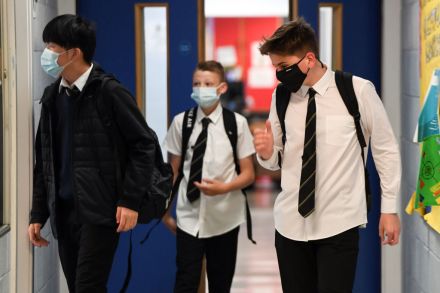
You might have thought that of all people, leaders of teaching unions would be concerned about the effect of lockdown on children’s education and, in particular, on the gap in attainment between children from the wealthiest and least-wealthy households. From the beginning of lockdown in March, it became clear that children were going to have

Why can’t Neil Ferguson’s Imperial model be replicated?

From our UK edition

Professor Neil Ferguson has been a little elusive of late – ever since he was forced to resign after he was revealed to have entertained his married lover at his home, thus breaking lockdown rules. But he did emerge from the woodwork this morning to give evidence to the House of Lords select committee on

The Covid chasm between East and West

From our UK edition

Sweden has received quite a kicking for its decision to avoid a lockdown: look at its death rate, critics say, which at 435 per million is several times that of neighbouring Denmark (99) and Norway (44). But there is another country that has taken the Swedish route which is rather harder to criticise.  In Japan,

Is this why Germany has escaped lightly from coronavirus?

From our UK edition

To the question why has Germany had so many fewer deaths from Covid-19 compared with Britain, the Observer usually has only one answer. As the title to an investigation in today’s paper puts it: ‘How a decade of privatisation and cuts exposed England to coronavirus’. Yet buried deep down in an interview in the very

Immunity to coronavirus may be far more widespread than thought

From our UK edition

Two weeks ago I wrote here about a study by the La Jolla Institute for Immunology in California, which found that between 40 and 60 per cent of people who had never been exposed to SARS-CoV-2 – the virus which causes Covid 19 – nevertheless seemed to develop an immune response to the disease in

Four in five UK Covid cases are asymptomatic

From our UK edition

Finally we are getting a clue to the most vital statistic of the Covid-19 epidemic: how many people in Britain have had to disease – and who therefore might be expected to have some kind of immunity to it? Today, the ONS published the results of antibody tests on a randomised sample of nearly 19,000

Will track and trace really work?

From our UK edition

I wonder if Matt Hancock, or anyone else who has been developing the track and trace system for coronavirus, has set themselves this little test: get a blank sheet of paper and write down the names, addresses and telephone numbers of the people you sat next to on your last tube, train or bus journey,

Could sewage solve the lockdown question?

From our UK edition

Test, track and trace is an integral – and very expensive – part of the government’s plans for lifting lockdown and getting the country back to normal. The government is trying to hire 25,000 contract-tracers to augment an app-based system which seems mysteriously to have all-but vanished from its plans. But could there be a

Immunity passports are an unlikely route out of lockdown

From our UK edition

The route out of lockdown has become a groundhog day in which the same ideas keep on coming round again, with unnerving regularity: test, track and trace, vaccine, semi-permanent social distancing and so on. Today it is the turn of another hoary old chestnut: immunity passports. Announcing that 5 per cent of the country, and

Every part of England would pass Germany’s Covid test

From our UK edition

As much as the government has any kind of strategy for lifting Britain out of lockdown it appears to revolve around the ‘R’ – or Reproduction – number. So long as this stays below one, we are told, the epidemic cannot progress – while the moment it strays above one then the disease will start

Are young people more likely to catch Covid?

From our UK edition

It has been clear from the outset of the Covid-19 pandemic that there is a very steep age profile to its victims: with few children and teenagers experiencing serious symptoms while their grandparents suffer a high death toll. But what about the numbers of people infected? Two studies, in Britain and Sweden, appear to show

Should Britain relax the two-metre distance rule?

From our UK edition

Could the Government be about to relax the two-metre rule for social distancing? On Wednesday morning, professor Robert Dingwall, a sociologist who sits on the New and Emerging Respiratory Virus Threats Advisory Group, questioned the rule, saying he had tried to trace the scientific justification for it but couldn’t. The evidence, he said, was ‘fragile’.

Stanford study suggests coronavirus might not be as deadly as flu

From our UK edition

One of the great unknowns of the Covid-19 crisis is just how deadly the disease is. Much of the panic dates from the moment, in early March, when the World Health Organisation (WHO) published a mortality rate of 3.2 per cent – which turned out to be a crude ‘case fatality rate’ dividing the number

Moderna’s vaccine breakthrough reveals the folly of UK efforts

From our UK edition

The effect that a commercially-available vaccine would have on the global economy was amply demonstrated on Monday afternoon. The FTSE 100 jumped by more than 4 per cent after an announcement from US drug company Moderna that results of phase one vaccine trials had been successful. Development of a vaccine has become an international race