Ross Clark

Ross Clark

Ross Clark is a leader writer and columnist who has written for The Spectator for three decades. He writes on Substack, at Ross on Why?

What we don’t yet know about the Oxford vaccine

From our UK edition

We have become used to Mondays bringing good news on the vaccine front. But the publication of interim results from the Astra Zeneca/Oxford University vaccine – AZD1222 – will certainly please the UK government. Not merely because this is the home-grown option and we have already ordered 100m shots, but because, shot for shot, it is considerably cheaper to buy and administer than the other vaccine candidates. The vaccine itself is less than a fifth of the price of the Pfizer vaccine. Moreover, it does not need storing and transporting at minus 70 Celsius – it can be kept at ordinary fridge temperatures (2 to 8 Celsius), greatly facilitating any roll-out.

Do some people have hidden immunity against Covid?

From our UK edition

Remember ‘immunity passports’? Back in April they were floated as a possible means by which we could all get back to a normal life. We could be tested for antibodies to SARS-CoV-2 – the virus which causes Covid-19 – and, if we tested positive, we could be allowed to go about our business. The presumption was that we would be immune from further infection, at least for a while. The idea quickly bit the dust. There was one good argument against it: it might encourage young people, who are very unlikely to come to harm from Covid-19, deliberately to set out to catch it in order to gain a positive antibody test and therefore an immunity passport.

What if the virus that causes COVID was man-made?

The idea that SARS-CoV-2 — the virus which causes COVID-19 — could have man-made origins has been rejected by many scientists, dismissed by some as nothing more than a conspiracy theory. A different view, however, has been put forward by Rossana Segreto of the University of Innsbruck in association with Yuri Deigin of Canadian genetics company Youthereum Genetics. In a paper published on Wiley Online, they have again raised the possibility that SARS-CoV-2 could indeed be a man-made virus, and that its passage into the human population could be the result of a laboratory accident. 'The artificial creation of SARS-CoV-2 is not a baseless conspiracy theory that is to be condemned,' they write.

man-made

The fatal flaw in Boris’s ten point carbon plan

From our UK edition

There is nothing wrong with the general direction of policy contained within the government’s ten point plan to cut carbon emissions, announced today. Who doesn’t want clean energy and more energy-efficient homes and vehicles? The problem is the perverse target which lies at its heart: the legally-binding demand, laid down in the Climate Change Act, to cut carbon emissions to net zero by 2050. This is so badly defined that the government’s ten point plan becomes really little more than a manifesto to export much of British industry, food production and power generation. The UK's definition of carbon emissions, as used in the Climate Change Act, covers only ‘territorial’ emissions – i.e. those spewed out physically within the confines of Britain.

The questionable ethics of Operation Moonshot

From our UK edition

Now that we seem to have two Covid-19 vaccines that work, do we really need Operation Moonshot, the government’s programme to test 10 million people a day by early next year? It’s a poignant question, not least because of the extraordinary sums which appear to have been committed to it: briefing documents leaked to the BMJ in September suggested that it could cost £100 billion, which is close to the annual NHS budget in England. What would be the point of testing the entire population of Britain once a week if the virus was being controlled by a vaccine? The cost aside, there is growing medical opinion against the idea.

Have Moderna outdone the Pfizer vaccine?

From our UK edition

Another week, another set of preliminary results from a Covid-19 vaccine trial. This time it is the Moderna vaccine candidate, mRNA-1273. And, to judge by the figures put out by the company this morning, it has outdone the Pfizer vaccine in its efficacy. Out of the 30,000 people involved in the phase three trial (half of whom were given the vaccine and half of whom were given a placebo), 95 went on to contract Covid-19. Of those who became infected, 90 were in the control group and only five had been given the vaccine. Eleven participants had a severe case of Covid, all of whom were in the control group. The findings have allowed Moderna to claim, provisionally, that the vaccine is 94.5 per cent effective.

Covid-19 is distracting us from another medical emergency

From our UK edition

If the first victim of war is truth, then the first victim of Covid-19 was a sense of proportion. The pandemic continues to dominate the news every waking hour, as well as continuing to restrict our lives in ways not seen since wartime – in some ways even more severely. Yet how many people even noticed this week when the Centers for Disease Control and Prevention announced that the estimated number of deaths globally from measles climbed to 207,500 in 2019, a 50 per cent increase on 2016? The news was hardly reported. Unless you happened to be visiting the CDCs, or the WHO’s website you were unlikely even to find out. On sheer death toll alone, Covid-19 has killed more people this year than measles – approximately five times as many.

Is lockdown II working?

From our UK edition

How much has this week’s ructions in Downing Street been influenced by the Prime Minister’s decision, two weeks ago, to call for a new 28 day lockdown – and the subsequent questions asked of the data to justify it? On the one side are the 50 or so Conservative MPs who have joined the Covid Recovery Group calling for an end to lockdowns, and the many others who sympathise with them. On the other was Dominic Cummings, believed to be a keen proponent of lockdown. Last week’s infection survey – the weekly Office of National Statistics study showing the prevalence of Covid-19 in the general population – suggested that the number of people with the disease had begun to level off even before the announcement of the new lockdown on 31 October.

Will the Pfizer vaccine live up to the hype?

From our UK edition

So is this the big turning point? Markets certainly seem to think so. No sooner had news broken that the vaccine being developed by Pfizer and German firm BioNTech is 90 per cent effective, the FTSE surged by 5 per cent. Given that the US Food and Drug Administration (FDA) has suggested that any vaccine that proves to be more than 50 per cent effective could be licensed, this suggests the vaccine will go on to be approved around the world. Any vaccine that proves partly effective will be welcomed with open arms by a world which largely remains in lockdown or semi-lockdown. But does the reality live up the surge of relief which has gone around the world this morning?

Did Wales’s ‘circuit-breaker’ work?

From our UK edition

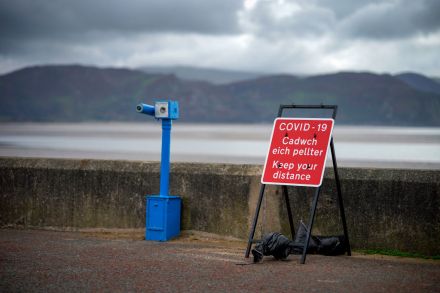
On Monday morning Wales emerges from its 17 day ‘circuit-breaker’. Did it work? Not according to the rate of new infections. During the first 12 days – when Wales was in lockdown but England wasn’t – the epidemic seems to have grown far more quickly in Wales than it did in England. When Wales went into lockdown on 23 October, the seven-day average for new infections leading up to that date was 893. By 5 November, the seven-day average had grown to 1,299, a 45 per cent increase. In England, by contrast, the seven day average leading up to 23 October was 17,085, growing to 19,497 by 5 November – a 14 per cent increase.

ONS study finds infections slowed before lockdown

From our UK edition

The weekly ONS infection survey suggests that the rise in prevalence of Covid-19 in England has levelled off. Not only that, it suggests that the rate of new infections has actually fallen. In the week to 31 October, the ONS estimates that 618,700 people had Covid-19 — about 1 in 90 of the population. That was up from 568,100 the week before — a 9 per cent increase. However, it amounts to a stark slowdown on previous weeks. At that rate, it would take eight weeks for the number of people with Covid-19 to double — a long way from the doubling rate of eight to ten days which was observed in September.

Calculating the human cost of lockdown

From our UK edition

The argument is now the wrong way around, Chris Whitty told MPs on Wednesday, among those critics of the first lockdown who argue that it resulted in fewer people accessing medical treatment, fewer diagnoses and more deaths from non-Covid causes. If hospitals are stuffed with Covid patients, the chief medical officer asserted, then they do not have the capacity to treat other patients. Control Covid using restrictions, on the other hand, and hospitals can retain their capacity to treat patients for other conditions. The gap in health between rich and poor is only likely to widen Whitty’s reasoning is perfectly logical, except that it doesn’t quite reflect what happened in the spring.

Gone with the wind: why electricity shortages are becoming the norm

From our UK edition

If it wasn’t miserable enough being told that I have to spend the next month at home, now I have ‘Pete’ from Octopus Energy emailing me and asking if I would mind terribly turning off a few appliances between 4.30pm and 6.30pm. If fact, he says, if I can halve my energy usage during those hours he’ll give me a half price deal on the rest.  Apparently it’s because the National Grid has issued an ‘electricity margin notice’ for those hours – basically a plea for Britain’s remaining coal and gas power stations to turn up the power and squeeze a little more energy out of their plants.

How likely are you to catch Covid from a close contact?

From our UK edition

The government’s £12 billion test and trace system has been described by its scientific advisory committee Sage as making a ‘marginal’ difference to the transmission of Covid-19. This is not least because test results are taking a long time to arrive — of tests conducted at testing centres in the week to 21 October, only 47 per cent of results were returned the next day. For home test kits, just 32 per cent of results came back within 48 hours. In the same week, test and trace only managed to make contact with 60 per cent of contacts reported to it.  But there is another factor that is central to understanding test and trace's effectiveness which remains obscure: just how likely are we to catch Covid-19 from a close contact anyway?

The problem with Downing Street’s Covid projections

From our UK edition

The graph presented by chief scientific officer Sir Patrick Vallance during Saturday’s press briefing suggested that, in the absence of a new lockdown, deaths from Covid-19 could reach 4,000 a day by Christmas. To put this scenario in context, deaths in the first wave back in April peaked at just over 1,000 a day. Back in spring, a pre-publication copy of Neil Ferguson’s paper — the Imperial College modelling of Covid-19 deaths which sent Britain into the first lockdown — was released, so we could all see the assumptions and reasoning behind it. Saturday’s graph did not even reveal the source of the 4,000 deaths a day claim — although it has subsequently been revealed to be a Cambridge/Public Health England (PHE) estimate.

Is Covid spiralling out of control? A review of the evidence

From our UK edition

From Wednesday, it seems, we will be back in national lockdown, the government having been convinced that the second wave of Covid-19 is spiralling out of control. Not for the first time, ministers appear to have taken their cue from an Imperial College study – this time the REACT 1 study which claimed on Thursday that 100,000 people a day are being infected, and that cases are doubling every nine days. The government is also reported to have been swung by the changing opinion of deputy chief medical officer, Jonathan Van-Tam, who believes that a regional strategy is not longer enough to save the NHS from being overwhelmed. But are new cases really running at 100,000 a day and doubling every nine days? Not according to a team from King’s College.

Did Eat Out to Help Out spark a second wave?

From our UK edition

Did the Eat Out to Help Out scheme help to spread Covid-19? That is the eye-catching claim of Thiemo Fetzer, an associate professor of economics at the University of Warwick. In a working paper entitled: Subsidising the Spread of Covid-19: evidence from the UK’s Eat Out to Help Out Scheme, he estimates that the scheme accounted for between eight and 17 per cent of Covid clusters during August, when it operated. Given that the scheme cost taxpayers £500 million, it is not a bad idea to attempt to work out what it achieved, if anything. Nevertheless, there is something a little unsatisfactory about this claim – not least because Fetzer admits in his paper that his claim is based on a ‘back of the envelope’ calculation.

Have parts of South Africa achieved herd immunity?

From our UK edition

In Britain this week we have had scientists at Imperial College warning that levels of antibodies in the population are dropping away fast, with only 4.4 per cent of the population showing them in September – far short of the 60 to 70 per cent government scientists believe is required for the epidemic to die away thanks to herd immunity. But it is a different story in South Africa, where two of the country’s leading virologists believe that parts of the country have achieved herd immunity. Speaking to Sky news, Marvin Hsiao of the University of Cape Town, said he couldn’t explain why infections in South Africa – which was one of the worst-affected countries in the world in the middle of the year – suddenly plummeted at the end of July.

What we still don’t know about the second wave

From our UK edition

The Scientific Advisory Group for Emergencies (Sage) has warned the government that the second wave of Covid-19 could be more deadly than the first, but may be spread over a greater period. Downing Street is now reportedly working on the assumption that deaths will peak at a lower level than in the spring (when they topped just over 1,000 a day) but will continue in the hundreds for far longer, possibly even for months throughout the winter. More than 25,000 are predicted to be in hospital by the end of November — higher than the spring peak.

Should we be worried by declining Covid antibodies?

From our UK edition

Imperial College’s latest React study — an attempt to measure the spread of Covid by testing the general population — suggesting that the number of people in Britain carrying antibodies for the SARS-CoV-2 virus has dropped sharply over the past three months. This led a few headline-writers to run somewhat ahead of the facts. 'Covid immunity only lasts a few months,' claimed one. The reality is a lot more complex — indeed, one of the possible interpretations of the Imperial study is that more people have some level of immunity than has previously been believed. The React study tested 365,000 adults between late June and September, using a self-administered finger prick test to detect for the presence of antibodies.