Ross Clark

Ross Clark

Ross Clark is a leader writer and columnist who has written for The Spectator for three decades. He writes on Substack, at Ross on Why?

Could leasehold reform cause a new Tory split?

From our UK edition

Now that the Conservative party no longer has the issue of the EU over which to tear itself apart, is there something else that could replace it? Although perhaps not on the same scale as Europe, there is an issue which splits two of the party’s client groups: leasehold reform. On the one hand are the aspirant homeowners, the voters who turned to Mrs Thatcher thanks in part to the right to buy and the wider promotion of home-ownership. On the other hand is the landed interest, an amalgam of new and old money which owns the freeholds to many of the country’s blocks of flats and leasehold houses. Today’s announcement of reforms, giving stronger rights to leaseholders would appear, on the face of it, to be a victory for the former group.

Britain’s vaccination programme is running out of time

From our UK edition

Was the latest release from the Office of National Statistics the shocking piece of evidence that led the Prime Minister to change his mind on children going back to school, and to introduce a full lockdown in England?  The ONS does not usually publish its infection survey on Tuesdays – it usually comes out on Fridays – yet today we seem to have a special release. It shows that the sharply rising numbers of new infections as picked up through the NHS Test and Trace system, and which have shown 60,000 new infections today, are not the result of distortions caused by Christmas. The ONS survey is based on testing a random sample of the population for prevalence of the disease and from that estimating a nationwide figure.

Can Boris hit his vaccine target?

From our UK edition

The government has failed to meet so many Covid-related targets so far that many will be extremely sceptical of the Prime Minister’s pledge on Monday evening to get the over-70s, front-line care workers and vulnerable people of all ages vaccinated by the middle of February. That is around 13 million first doses which will have to be delivered over the next six weeks – compared with just over a million which have been administered since the Pfizer vaccination programme began four weeks ago. We now have the AstraZeneca vaccine as well as the Pfizer one, but can the NHS really increase the rate of vaccination tenfold, as would be necessary to meet the PM’s target? There ought not to be a problem with the vaccination process itself.

Could the South African strain affect the vaccine?

From our UK edition

Today begins the second phase of the Covid-19 vaccine programme, with the first members of the public receiving doses of the easier to use Oxford-AstraZeneca vaccine. But will the effort be thwarted by the emergence of two new variants of the SARS-CoV-2 virus, the Kentish strain and the South African strain? Yesterday, Sir John Bell, regius professor of medicine at the University of Oxford, gave his opinion. The Kentish strain, he said, does not greatly worry him. Although it has mutations that appear to make it more transmissible, they should not, he says, interfere with the working of any of the vaccines.

Lewis Hamilton doesn’t need a knighthood

From our UK edition

Given that I know about as much about Lewis Hamilton’s tax affairs as I do about Formula One motor racing it would be unwise for me to be churlish about his knighthood, announced in the New Year Honours list. For all I know, he could be making generous voluntary donations to HMRC. A few weeks ago, it was reported that his tax status was being vetted by the Palace, and it doesn’t appear to have prevented his name appearing on the honours list. Then again, it is hard to escape a suspicion that the big attraction for his decision to live in Monaco might just possibly have been the modesty of its fiscal demands upon its residents – in which case it is not hard to wonder whether a more appropriate honour might have been the Ordre du Merite Culturel, bestowed by Albert II.

Do we finally have an answer on Covid immunity?

From our UK edition

How likely are you to be reinfected with the SARS-CoV-2 virus for a second time? It is a pertinent question because, at present, all government policy is predicated on the assumption that developing Covid-19 cannot be relied upon to offer you any immunity from reinfection whatsoever. Remember the Prime Minister telling us from his Number 10 flat, where he was incarcerated for 10 days after being ‘pinged’ by NHS Test and Trace, that it didn’t matter that he had already had the disease and must be ‘bursting with antibodies’ – he had to do his duty and self-isolate nonetheless?

Why the EU’s vaccine strategy is failing

From our UK edition

What a joy it would be still to be in the EU. We could, for example, be part of the bloc’s Covid vaccine-buying programme. Or maybe not, to judge by the German experience. There has been a lot of comment in Britain regarding the relative slowness of the European Medicines Agency (EMA) in approving the Pfizer vaccine – which led to the EU’s vaccine programme beginning two weeks after Britain’s. But that is a fairly minor issue. Far more concerning is the failure of the EU to buy enough vaccines to ensure that an effective inoculation programme can be completed before next winter. The reasons behind this failure are an object lesson in how the EU operates, and why we should be pleased to be organising our own vaccination strategy.

Would it be immoral to raise cash for the NHS by selling £100,000 vaccines?

From our UK edition

It is easy to be offended by the idea of the super-rich trying to buy their place in the queue for the Covid-19 vaccine ahead of your granny, and easy to feel a warm glow of satisfaction that they are being rebuffed – all supplies are being held on such a tight rein by the NHS that private clinics can’t get a look in. But would it really be such a bad idea if a handful of very wealthy individuals were allowed to have the vaccine ahead of schedule and raise some very useful cash for the NHS in the process? If we are going to vaccinate our way out of the Covid-19 crisis we are very shortly going to have to be administering millions of doses a week.

Is the new Covid strain more deadly?

From our UK edition

The new variant of Sars-CoV-2 is, according to government experts, 71 per cent more transmissible than the previous dominant form, increasing the reproductive rate by between 0.39 and 0.93. But is it any more or less deadly than the older version? All Nervtag has revealed is that there have been 4 deaths recorded among 1,000 cases of the new variant. A rough estimate of the infection fatality rate based on those figures would not be out of line with estimates for the virus as a whole — although the advisory group adds there is not yet enough data to draw any conclusions.

Could disruption in Dover lead to empty supermarket shelves?

From our UK edition

The Port of Dover has been closed, with freight as well as passengers unable to cross the Channel, due to the new strain of Covid concentrated in London and the South East. So how long before supermarket shelves are empty? A lot depends on the behaviour of British consumers.  As has been proved on a number of occasions, such as with lavatory paper at the beginning of the spring lockdown and with petrol during the fuel protests in 2000, you don’t need an actual shortage of goods to result in apparent shortages – panic-buying can lead to empty shelves within hours, if people are minded to stock up their freezers and larders to a level they would not normally do.  Yet Britain really is painfully dependent on imports of many kinds of food.

How sure can we be that the Tier 4 lockdown will work?

From our UK edition

How certain should we be of the government’s claim that the new variant of SARS-CoV-2 is 70 per cent more transmissible than the previous common strain falls apart? I ask not because I have any information that would contradict the Prime Minister, but because it has become a repetitive feature of this crisis: that the piece of science which leads the government into a sudden change in policy ends up looking a little flaky. It happened with Professor Ferguson’s famous prediction of 240,000 deaths unless the government introduced the first lockdown – Imperial published similar figures for Sweden which were later shown to vastly overstate deaths, throwing serious doubt upon its model.

Brits don’t appear to have been influenced by anti-vaxxers

From our UK edition

Has the influence of anti-vaxxers been hugely overstated? That is one interpretation of the Office for National Statistics’ latest survey on social attitudes towards Covid-19 and the government’s efforts to tackle it. While fears abound that people might refuse the vaccine, with their minds turned by lies disseminated on social media about Bill Gates wanting to impregnate them with microchips, there is scant sign that the British public is becoming anti-vax. Across all adult age groups, 78 per cent say they are ‘fairly likely’ or ‘very likely’ to take the vaccine if offered it (and it is government policy that all will be offered it in time).

Can any country dodge the Covid bullet?

From our UK edition

The government is yet again under fire for its handling of Covid-19, as cases rise across parts of the country. But what about the global context? Is it still possible to argue that Britain has done especially badly in handling the pandemic? Possibly, but it is becoming increasingly hard to do so, as many countries which appeared to handle the virus best the first time around are now suffering second waves much larger than what they experienced in the spring. Germany, which this week announced a hard lockdown over Christmas, is a prime example. In the spring it was held up as an example of how the rest of Europe might have handled Covid-19. New recorded cases never rose over 7,000 a day and daily deaths peaked at 333 on 8 April.

Will the first vaccinated Brits have some immunity by Christmas?

From our UK edition

So, Christmas, it seems, will not be cancelled after all. The government has decided instead to tackle fears of a January spike in cases with tougher messaging, telling people that just because they will have the legal right to mix for five days next week doesn’t necessarily mean they ought to avail themselves of that freedom. In other words, we’re not changing the rules, but we’d really rather you didn’t take advantage of them. But could the vaccinations which have already been performed save us from a post-Christmas spike? The Pfizer vaccine – the only one being given to the general public so far – is designed to be given in two doses, 21 days apart. The first people to be given the vaccine had their first jab last Tuesday, 8 December.

The looming Covid unemployment catastrophe

From our UK edition

Just how widely is the economic pain from Covid-19 being felt? Still surprisingly little, according to the latest employment figures from the Office of National Statistics (ONS). The absence of an explosion in unemployment goes some way to explaining why the lockdowns and restrictions have been accepted so meekly by the population at large. That said, unemployment is beginning to rise significantly now. There are now 819,000 fewer payroll employees compared with the start of the crisis in February. The employment rate stands at 75.2 per cent, 0.9 per cent down on a year ago, and the unemployment rate is 4.9 per cent, up 1.2 per cent.

Should we worry about the new variant of Covid-19?

From our UK edition

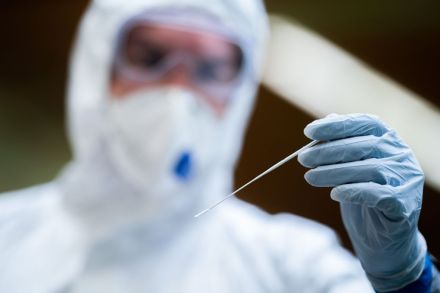
Should we worry about the emergence of a new variant of SARS-CoV-2, the virus which causes Covid-19? News of the new variant – which, it seems, might transmit more easily than previous versions – was the big surprise of Matt Hancock’s statement to the Commons this afternoon. The other big announcement – that London and parts of Essex and Hertfordshire will be going into Tier 3 – was a foregone conclusion. As I wrote here in May, the SARS-CoV-2 virus has already mutated once into a form that might be more transmissible. This could possibly explain why Europe and North America have found it harder to contain the virus than have Asian countries. Were we fighting a slightly different disease to the one which emerged in Wuhan in January?

Enforcing new fisheries policy isn’t ‘gunboat diplomacy’

From our UK edition

No, the Channel isn’t going to erupt into naval warfare, and neither is the Prime Minister engaging in ‘gunboat diplomacy’ by deploying Royal Naval vessels to keep French fishing boats out of UK waters in the event of Brexit transitional arrangements ending on 31 December with no trade deal. Yet that seems to be the view of Tobias Ellwood the Conservative chairman of the Defence Select Committee, who protested to the Today programme this morning: ‘This isn't Elizabethan times anymore, this is global Britain - we need to be raising the bar much higher than this.’ Actually – although it may be news to Mr Ellwood, even in his role holding the government to account over defence matters – it is not really a new deployment at all.

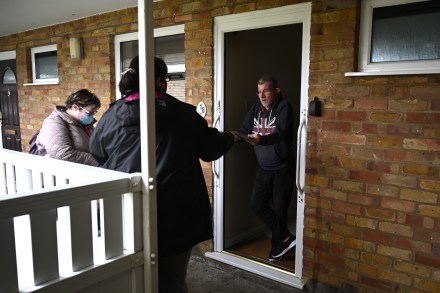
The damning verdict on NHS Test and Trace

From our UK edition

SAGE has already poured cold water on the NHS Test and Trace system in England, suggesting in September that it was making only a ‘marginal’ difference to Covid infection rates. Now the National Audit Office (NAO) has had its say, publishing its interim report into whether it has been value-for-money. It is not much more flattering.  It depicts a hugely-expensive system which leaves many of its staff sitting around with little to do and which is failing to make contact with nearly as many people as it needs to in order to work as SAGE says it needs to. The budget for Test and Trace over the whole of 2020/21, it says, is £22 billion – quite a lot more than the £12 billion that is commonly quoted as the cost of the scheme.

What the Lancet study tells us about the Oxford vaccine

From our UK edition

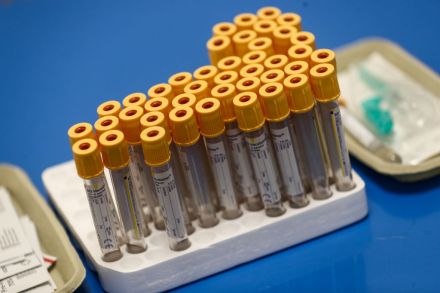
While the Pfizer vaccine became the first to be used in a public vaccination programme on Tuesday, the Oxford/AstraZeneca vaccine team became the first to publish their results in a peer-reviewed journal, the Lancet. As the press release announcing the results explained, the overall efficacy rate of the Oxford vaccine was measured at 70 per cent, but that concealed a large difference between different arms of the trial. When people were given two standard doses of the vaccine, its efficacy rate was only 62.1 per cent. Yet intriguingly, in one group which was given a half dose followed by a standard dose, the vaccine had an efficacy rate of 90 per cent.

How robust was the evidence for lockdown?

From our UK edition

Ever since it was first published in May, the Office of National Statistics’ weekly infection survey has been looked upon as the gold standard of Covid data. It is based on swab testing of a large, randomised sample of the population who are tested repeatedly to see if they are infected with the virus – the results from which are scaled up to arrive at an estimate of incidence of the disease in the population as a whole.  Being a randomised sample, it does not suffer from the drawback of the daily Public Health England figures for confirmed infections – which are heavily influenced by how many tests are being conducted. As the number of tests has expanded, so, too, the number of confirmed infections has risen.