Ross Clark

Ross Clark

Ross Clark is a leader writer and columnist who has written for The Spectator for three decades. He writes on Substack, at Ross on Why?

Lord Nelson wasn’t queer

From our UK edition

After extensive research I can reveal that Adolf Hitler was not, in fact, gay. Nor was he black, transexual, secretly a woman or neurodiverse. He was, it turns out, a straight, white, cisgendered male. As for history’s good guys – now that is a different matter. The latest to be claimed as belonging to some kind of fashionable minority is Horatio Nelson who, according to a Liverpool art gallery, was queer. If activists want to go around trying to claim historic figures as their own, then fine. But I’m not sure why taxpayers should be funding this guff It makes this claim based on the nothing but the old chestnut of Nelson’s supposedly last words ‘kiss me, Hardy’ uttered to Vice Admiral Sir Thomas Hardy.

Kemi is right about the Climate Change Act

From our UK edition

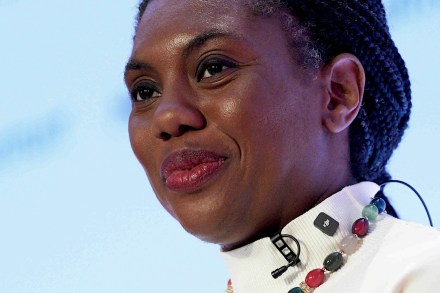
According to Theresa May, Kemi Badenoch’s promise to repeal the Climate Change Act is a ‘catastrophic mistake’. Writing for The Spectator today, Ed Shackle, who works for a market research firm called Public First, was adamant that the policy change won’t just degrade the planet or obliterate Lady May’s thin political legacy – it is a bad electoral error, too. Quoting one of his polls, he claims that 37 per cent of Conservative voters say they wouldn’t vote for a party which is not committed to reaching net zero. He also claimed: “The British public consistently backs energy infrastructure – even when it’s close to their homes.’ Not round my way, in Cambridgeshire.

Why has Starmer dropped Blair’s university target?

From our UK edition

Last week, Keir Starner swallowed Tony Blair’s argument for ID cards and announced that all we going to be forced to have them if we want a job, just as the former prime minister has been advocating for years. This week, however, the current PM has poured scorn on one of his predecessor’s cherished policies, and ditched Blair’s target for getting 50 per cent of young adults into higher education. Instead, Starmer yet again invoked his tool-making dad to argue that the target was wrong. It is to be replaced, he said, with a target of getting 75 per cent of young people into either university or on to a high quality apprenticeship.

Bessent’s private message reveals a Milei gamble

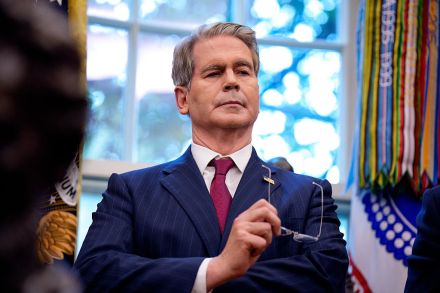
The first lesson for Treasury Secretary Scott Bessent is that digital photography has totally changed politics, as wiser practitioners have long since realized. You might have got away with reading private communications in public 30 years ago, but you can no longer do so. The second lesson is that if you build an administration on the promise that you will always serve the American interest, certain foreign policy decisions become difficult. Bessent has been caught reading a message on his phone from Agriculture Secretary Brooke Rollins expressing her anger at the Trump administration’s deal to establish a $20 billion loan facility with Argentina, or "the Argentine" as Rollins prefers still to call it.

Bessent

Trump’s new pharma tariffs will punish Americans

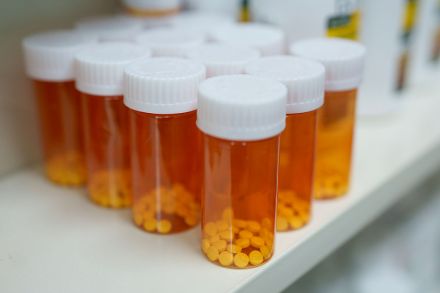
Donald Trump has punished European pharmaceutical companies by imposing 100 percent tariffs on their branded products unless they are prepared to set up a manufacturing plants in the US. That is one way of putting it, but why is the issue of tariffs so often seen from the point of view of the producers and so rarely seen from the position of the consumers? Besides punishing drugs companies, the President has also whacked the American public – or at least that section of the population which relies on patented medicines made outside the US. The cost of treatment for many of these patients will soar as a result. Does Trump think that people will somehow fail to realize this?

Digital IDs are a nightmare of Tony Blair’s making

From our UK edition

Is Tony Blair pulling the strings of Keir Starmer’s government from beyond the political grave? Only two days ago the Tony Blair Institute released a report calling for digital ID cards. Now Starmer is expected to announce that the UK public will indeed have digital IDs forced upon them. The juxtaposition of these two things cannot have been an accident unless you believe firstly that Blair had no prior knowledge of what Starmer was going to announce, and secondly that Starmer decided to go ahead regardless of Blair’s intervention, knowing full well what it would look like. Has Starmer really thought through the practical consequences of digital ID cards?

Let Jaguar crash

From our UK edition

‘Copy nothing,’ implored Jaguar’s weird advert featuring multicoloured changelings swivelling their heads on a car-free planet. That includes, it seems, copying other large multinationals in taking out insurance to cover themselves against cyber attacks. Jaguar Land Rover (JLR), it turns out, had none. Now, following such an attack, it finds itself in the soup. It has had to close its factories and send its workers home as it tries to repair the damage. The government is now reported to be thinking of stepping in with state aid to ensure that the company and its suppliers do not go bust. Why should our taxes be used to bail out a woke and aloof company? Please, no.

You won’t believe the latest ruse to make the case for digital ID

From our UK edition

'The British public is running out of patience with a state that does not work, where interactions with public services are beset by inconveniences and delays even as outcomes slip and costs rise.' The Tony Blair Institute for Global Change is not wrong there, but what is its solution? Not to sack the state’s clock-watchers who only want to work four days a week and only from home, or the beach. Not to break up underperforming state monopolies and introduce some more business-minded discipline into public services. No, as is so often the case with the former prime minister’s think tank, the solution lies in Digital ID. Give us a digital ID app on our phones and we will be able to report things like potholes and get them swiftly repaired.

Britain’s inflation woes aren’t going away

From our UK edition

The OECD expects the UK economy to outperform the eurozone and grow by 1.4 per cent over the year. But there is a downside to the Organisation for Economic Co-operation and Development's latest figures: the body expects the UK’s inflation problem to persist, ending this year at 3.5 per cent, down just a touch from the 3.8 per cent measured by the ONS (Office for National Statistics) in July and August. It predicts that inflation will be 2.7 per cent at the end of 2026 – still a long away from the Bank of England’s two per cent target. Inflation in Britain is due to be markedly higher than in the eurozone, where the OECD expects inflation to end 2025 on 2.1 per cent and 2026 on 1.9 per cent.

Is Donald Trump right to link autism with paracetamol?

From our UK edition

Donald Trump’s apparent suggestion that people could protect themselves against Covid by injecting themselves with bleach marked a low point in his first administration. It provided his critics with evidence that he was an erratic president trying to ride roughshod over scientific evidence as well as common sense. It is easy, therefore, to dismiss the American President’s announcement that government health warnings will henceforth be printed on packets of Tylenol – a brand name for paracetamol – telling pregnant women to avoid the painkiller for fear it will cause autism in their unborn children as yet another anti-scientific diatribe. The involvement of health secretary Robert F.

Gatwick expansion won’t happen any time soon

From our UK edition

How refreshing to hear transport secretary Heidi Alexander approve plans for a second working runway at Gatwick Airport, taking on the ‘eco warriors’ she has previously attacked for blocking airport expansion. Just the one thing, though. Does she really think she has heard the last from them? If she thinks she is going to drive this plan through so that planes will be taking off on the second runway by the time of the next election, as she seems to think, then she is going to be disappointed. Indeed, Sadiq Khan has already threatened legal action against the expansion. This is going to end up in the courts, and sadly the eco warriors are going to win. Why? Because no airport expansion is compatible with the legally binding target to achieve net zero by 2050.

Borrowing is spiralling out of control

From our UK edition

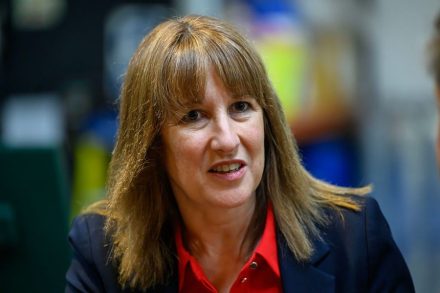
There really is no good news for Rachel Reeves as she prepares her second Budget. This morning’s borrowing figures are not just bad; they hint at a sense of hopelessness, that Britain is sliding inexorably towards a very deep fiscal crisis. This is yet another fiscal black hole for Reeves to fill, along with another about to be created by the OBR In August, the government had to borrow £18 billion, £3.5 billion more than in August 2024. This is in spite of £40 billion worth of tax rises (or rather tax rises which were hoped to raise an extra £40 billion) in last year’s Budget. Government receipts are indeed up over the past year, £4.8 billion higher than they were in August 2024. Trouble is that spending was £8.

Why didn’t TfL publish the truth about LTNs?

From our UK edition

Policymakers must, of course, stick to the evidence and base their decisions around proper, peer-reviewed research. Until, that is, the evidence starts to tell you what you don’t want to hear. The Mayor of London’s office appears to have been caught red-handed in refusing to publish a study it had itself commissioned into the behaviour of residents following the imposition of low traffic neighbourhoods (LTNs). The study, by the University of Westminster, found that the presence of an LTN resulted in more people cycling, but it did not decrease car use and had no discernible effect on walking. It reached this conclusion by quizzing more than 4,500 London residents, some of whom lived in LTNs and some who did not. Shouldn’t we be allowed to know this?

Rachel Reeves’s legacy is going to be dismal

From our UK edition

For some time, the Budget on 26 November has been looking as if it might be Rachel Reeves’ final fling before she is pulled away from the levers of the UK economy. But if so, it appears she may be preparing to go out in style. According to a report in the Financial Times, she is planning, yet again, to raise taxes while using as an excuse a supposed black hole left behind by the Tories. The Office for Budgetary Responsibility (OBR) has warned the Chancellor that the productivity estimates it has been using for its economic forecasts have been too optimistic. Rather than growing at 1.1 per cent in coming years, it seems this will be downgraded to growth of 1.0 per cent or 0.9 per cent.

Why Britain can’t build

From our UK edition

The government promised to build 1.5 million new homes over the course of this parliament. How close are they to reaching the annualised rate? We don’t yet have government statistics to cover the whole of Labour’s first year in office, yet in the year to March construction began on just 138,650 new homes across the UK. In other words, housebuilding is running at substantially less than half the rate needed for the government to meet its promise. In fact, construction is slowing compared with where it was under the Conservatives. A report by the House Builders’ Federation (HBF) on construction in London explains some of the reasons why. In London, the supply of new homes is running even further behind the government’s schedule than in other parts of the country.

Donald Trump

Trump returns to backwater Britain

President Trump returns to Britain this week for his second state visit, to a country which is much changed yet depressingly still the same. On his first, six years ago, Britain had yet to complete its departure from the EU, Elizabeth II was still on the throne and the Conservatives still in power – with three Prime Ministers to go before their eventual ejection from office. He will no doubt receive a warm and dignified welcome from King Charles, whatever is going through the monarch’s head – the impeccable neutrality of the British throne has survived the change of reign. Yet the President will find a country that is anything but transformed by Brexit or by its change of government.

The NHS is right to drive a hard bargain for new drugs

From our UK edition

It is not often that the NHS gets accused of being too good at negotiating down costs. But that seems to be gist of the case levelled against it regarding the cost of drugs. AstraZeneca has paused the expansion of a research facility in Cambridge and US pharmaceutical firm Merck has cancelled a plan to invest £1 billion in a research centre in London. In both cases the blame has been cast on the tight-fistedness of the NHS in not paying enough for drugs. If you don’t pay, goes the argument, then you won’t get investment in new drugs.     We have to accept that we are never going to get new drugs on the cheap That is fair enough – up to a point.

Britain’s growth figures are even worse than they look

From our UK edition

Keir Starmer should be thankful for Lord Mandelson. Were it not for scandal over the Mandelson’s connections with Jeffrey Epstein, more people might have noticed an even greater disgrace this morning. The Prime Minister’s promise of ‘growth, growth, growth’ has ploughed spectacularly into the ground. The Office of National Statistics (ONS) reports today that there was zero growth in the economy in July, and just 0.2 per cent of growth in the three months to July. Besides being lousy news in itself, it is likely to lead to a further downgrading of future growth forecasts, resulting in the Chancellor having an even bigger black hole in her Budget, necessitating even more growth-destroying tax rises. And on goes the vicious cycle.

Ed Miliband’s lonely war on the North Sea

From our UK edition

When even green energy tycoons are telling him to embrace the North Sea oil and gas industries, Ed Miliband really is beginning to look somewhat isolated. Dale Vince, founder of Ecotricity and a Labour donor (as well as a former donor to Just Stop Oil, no less), has made an extraordinary intervention today, suggesting that the North Sea be offered the same subsidies as are granted to the operators of wind and solar farms. ‘It’s time for Labour to put its arms around the North Sea,’ he says. ‘Our North Sea is in decline, let’s protect it during the transition and optimise our use of resources that are left.’ Remarkably, that puts him more in line with the Conservative leader, Kemi Badenoch, than it does with the government.

Autism isn’t a ‘superpower’

From our UK edition

A very warm welcome for Margaret Thatcher inside autism’s ever-growing tent – if she can find space to wield her handbag. I could even lead the welcoming party myself as I am in there – according to some of my friends – on account of my unusually good ability to recall dates and a liking for solitude. As for Thatcher, she has gained entry on the strength of her biographer Tina Gaudoin’s diagnosis, which is based around the former PM’s absence of a sense of humour (or at least an inability to share the jokes of her male, public school-educated colleagues), a lack of embarrassment, her ‘special or restricted interests’ and a tendency to see the world in black and white. Is there going to be anyone left outside the autism tent in future?