Ross Clark

Ross Clark

Ross Clark is a leader writer and columnist who has written for The Spectator for three decades. He writes on Substack, at Ross on Why?

Why do old people have fewer antibodies after the vaccine?

From our UK edition

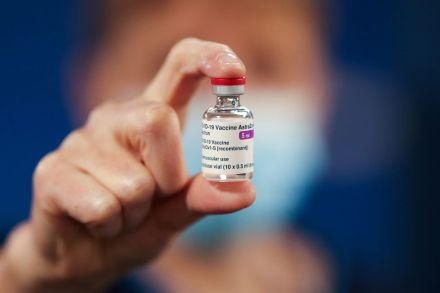
The UK policy of delaying second doses of the Pfizer vaccine has been criticised by some as risky, with Pfizer warning that there is no data on the effectiveness of its vaccine other than for the dosing regime used in phase 3 trials: two doses, 21 days apart. But evidence is steadily trickling through. Earlier in the week I wrote here about the Scottish population-wide study which found that a single dose of the Pfizer vaccine reduced hospital admissions by 85 per cent between 28 and 34 days after the jab. This morning comes Imperial College’s React-2 study, which paints a picture that is, on the face of it, rather less flattering. It tested 154,000 people for the presence of antibodies to SARS-CoV-2, the virus which causes Covid-19.

Blair’s back – and advising Tories on vaccine ID cards

From our UK edition

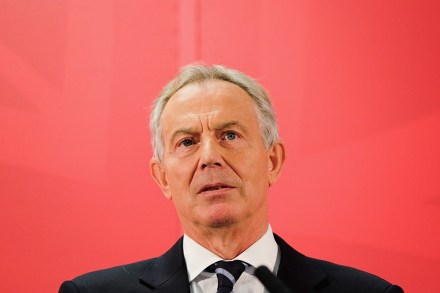
When the Prime Minister mentioned ‘Covid status certification’ as part of his route back to normal life, one man must have enjoyed the moment. For Tony Blair it was yet one more little victory in his UK comeback tour, made all the sweeter because Boris Johnson was once a principal opponent of the idea of any ID card system. Blair has been pushing vaccine passports like nobody’s business. A recent paper published by his Institute for Global Change advocated that we carry ‘digital health passports’ on our smartphones, which we could scan on entry to bars, theatres and other places. If you don’t have a smartphone, the paper suggested, the venue could take a photo of you instead, and check it against a database of people who have been vaccinated.

Face masks in schools: a note on the evidence

From our UK edition

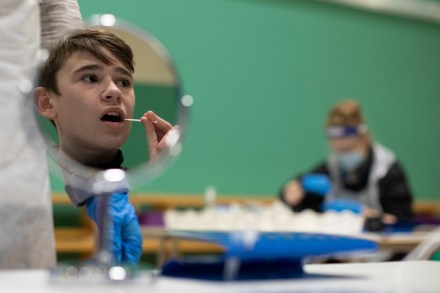
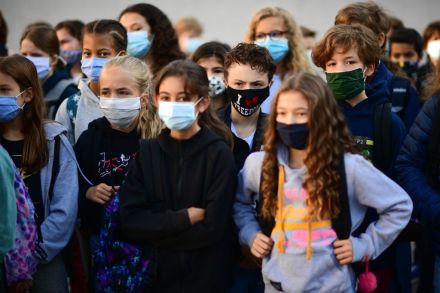
Secondary-school children returning to school from 8 March will be required to wear masks in classrooms, at least for several weeks. That is in contrast to the initial return of children to school last summer. It wasn’t until November that they were required to wear masks at school, and then only in corridors and other communal areas. But should we be forcing children to wear masks? A German study – in a preprint which has yet to be peer-reviewed – has reported negative symptoms of children who wear masks in that country.

What comes after furlough?

From our UK edition

What an enriching business it is, having a global pandemic. That is the conclusion, at any rate, one might reach from reading, in isolation, the government’s figures on employment and earnings. According to the Office of National Statistics (ONS) the average earnings for employees have risen by 4.7 per cent over the past 12 months – finally lifting the nation from a lost decade of near-static wages. Never mind that the economy tanked by nearly 10 per cent last year, nor that whole sections of the economy are in the deep freeze, we’re in the middle of a pay bonanza the likes of which haven’t been seen in Britain for a decade and a half. No, it doesn’t make much sense to me, either.

Latest vaccine data is even better than we had hoped

From our UK edition

The two vaccines approved and in use in Britain showed high efficacy rates in trials, but it takes time for data to creep through on efficacy in the real-world. We are, however, getting the first figures trickling through. This morning comes a paper evaluating the effectiveness of the Pfizer-BioNTech and AstraZeneca-Oxford vaccines in preventing hospitalisation rates in the Scottish population, using a dataset that covers 5.4 million people, 99 per cent of the population. The Eave II study, led by the University of Edinburgh, followed the 650,000 people who received the Pfizer vaccine between 8 December and 15 February and the 490,000 people who received the AstraZeneca vaccine between 4 January and 15 February.

Does this Israeli study support Britain’s one-dose strategy?

From our UK edition

Is the British approach of prioritising first doses of Covid vaccines and not promising a second dose until 12 weeks later compromising our ability to fight the disease? It is not a moot point, with several EU figures asserting that it is a risky route to take. As I wrote here a couple of weeks ago, as far as the AstraZeneca/Oxford vaccine is concerned, what evidence we have supports the practice of delaying a second dose until 12 weeks after the first one; the vaccine is more effective that way. However, a question mark has continued to hang over the Pfizer/BioNTech vaccine. There is limited data on the most effective dosing regime in this case because the phase 3 trials did not experiment with delayed doses – everyone involved was given a second dose 21 days after the first.

Covid cases have collapsed

From our UK edition

Last month, Imperial College’s React study claimed that new cases of Covid were static or even rising slightly. This contradicted the figures for confirmed new cases, obtained through the Test and Trace system, which had shown a sharp fall in new cases from the second week of January onwards. Given that React tests a randomised sample of the population to arrive at an estimate for prevalence of the disease — and is therefore not capable of being skewed by the number of tests being performed — some were more inclined to believe that this, and not the number of confirmed cases, showed the genuine picture. However, February’s React study, published this morning, shows a very different picture.

Test and Trace was an expensive failure

From our UK edition

Before we had vaccines, NHS Test and Trace was supposed to be the breakthrough that would return us to a normal life. After all, testing, tracing and isolating contacts of infected people was credited with keeping Covid infections down in South Korea, Taiwan and elsewhere, so why wouldn’t it work here?  Instead, we had a second wave and the return to normality was reversed. In September, Sage, the government’s scientific advisory committee on emergencies, was dismissive, saying Test and Trace was having only a 'marginal effect’. A report by the National Audit Office in December, by which point the system had already cost taxpayers £22 billion, was equally scathing.

Will the economy really rebound after lockdown?

From our UK edition

Bank of England chief economist Andy Haldane last week described the UK economy as a ‘coiled spring’ waiting to rebound just as soon as lockdown restrictions are eased. But is it a spring like the one on which Zebedee from the Magic Roundabout used to bounce around, or is it like a Slinky – the toy you place at the top of the stairs and watch, fixated, as it furls and unfurls itself right down to the bottom? Haldane, it is fair to say, sees it much like the former. He describes the economy as full of 'pent-up financial energy'. While the bank sees lockdown number three causing output to fall by 4.2 per cent in the first quarter of 2021, thereafter it sees a steady recovery.

Do school closures slow infections?

From our UK edition

Will schools in England reopen on 8 March, and if so will it be partially or fully? It is likely to be the first firm measure to be announced when the Prime Minister presents his roadmap back to freedom next Monday. He has, after all, promised to give schools two weeks’ notice of when they will be expected to reopen, so he will be forced into a decision on 22 February. It was only six weeks ago that Boris Johnson was resisting calls to close schools and was reportedly the last cabinet minister left arguing that they should remain open. The rationale of those arguing for closure was that they had not been closed during the November lockdown, and that that lockdown had not been sufficient to bring cases of new infections under control.

Why are so many health workers turning down the vaccine?

From our UK edition

On Saturday the government hit its target of administering a first vaccine dose to 15 million of the highest-risk groups for Covid 19. By now, everyone over the age of 70, all healthcare workers and vulnerable groups should have been offered a vaccine. It is an impressive achievement which stands in contrast to many of the other things that have gone wrong over the past year. But there is a rather large fly sitting in the ointment. While 90 per cent of eligible members of the general public have turned up for their appointments (97 per cent in the over-80s), the same is true of only 80 per cent of healthcare workers. In some places, the take-up among healthcare workers is even lower.

Why aren’t we in a recession?

From our UK edition

Well, that’s alright, then — we’re not going to have another recession. True, the Bank of England’s monetary policy committee expects the economy to shrink by 4 per cent in the first quarter of this year — following a fall of 9.9 per cent fall last year, itself the deepest plunge in economic growth in modern times. By the spring, we may have several million unemployed as the furlough scheme comes to an end. Many thousands of businesses could go bust as they run out of money and government help is withdrawn. But at least we won’t be in recession: because that ended last June and now we’re back in an era of economic growth. No, it doesn’t make a lot of sense to me, either.

Critics of the 10-year Covid jail sentence are right, but out of touch

From our UK edition

Not for the first time, metropolitan-based commentators and MPs have proved themselves to be out of kilter with the wider population. But there is an especially interesting disparity over the government’s proposals for ten-year jail sentences for travellers who try to conceal they have travelled from one of 33 ‘red list’ countries in order to avoid hotel quarantine. The proposal caused outrage among Conservative MPs as well as legal commentators such as Jonathan Sumption. Sir Charles Walker, vice-chairman of the 1922 Committee, accused the government of going ‘full North Korea’.

Covid is hastening the creep towards a cashless society

From our UK edition

If your local pub ever reopens, don’t be surprised if one thing is missing: the till. The anti-cash lobby is seeking to take advantage of the pandemic to rid us of our banknotes once and for all. When UK Finance — the trade body for the banking and payments industry — pushed the government two weeks ago to increase the limit on contactless card payments to £100 (it was raised from £30 to £45 at the beginning of the pandemic), it was a new offensive in a campaign for a cashless society which has been going on for years.

The cashless lobby is cashing in on Covid-19

From our UK edition

Coronavirus, we have been warned many times, has brought scammers out in force. But lobbyists are not far behind. Their activities may not be illegal, but they are pretty disgraceful nonetheless. Hardly had the coronavirus outbreak begun in January than my email inbox began to fill up with press releases claiming that the contagion was being spread by banknotes and coins – coming, er, from businesses with a vested interest in cashless payments. In Britain, the payments industry seized the moment to lobby the government – successfully – for the limit on payments via contactless cards to be raised from £30 to £45. The new limit duly came into effect on 1 April.

How effective are the Covid vaccines?

From our UK edition

Reports have filtered through this morning about Public Health England’s assessment of the efficacy of the two vaccines so far administered to the public. The results have not yet been published, but the efficacy rates quoted in the Sun suggest that the Pfizer vaccine has proved to be between 79 and 84 per cent effective at stopping symptomatic infection after two doses. After one dose – which is all that most people have had so far – efficacy is reported as 65 per cent. Among the over 80s it is very similar, at 64 per cent. No figures are given for the AstraZeneca vaccine but it is suggested that the efficacy is 'similar'.

Green energy is a Dot-com bust waiting to happen

From our UK edition

Scottish Widows is committed to net zero alright. For years, the endowment policy I had with it was worth pretty well just what I had paid into it. Although, on second thoughts, maybe Maria Nazarova-Doyle, head of pension investments at Scottish Widows, wasn’t referring to the returns on its policies when she said this week: 'Moving to net zero will protect savings against climate-related risks and uncertainty and offer longer-term sustainable growth by accessing low-carbon transition opportunities.' The firm says that as an interim target it wants to halve the emissions from its share portfolio by 2030. What exactly it means by this isn’t clear.

Brace yourselves for ‘Bidenomics’

Is there anyone left who still believes in sound government finances? After the 2008/09 financial crisis there was a lively debate between fiscal doves, who wanted government spend its way out of recession, and hawks, who thought it a good idea that governments at least attempt to live within their means, because nasty things would happen in the longer term if they did not. Such arguments seem almost quaint now. Where is the resistance now that Joe Biden is about to spray the US economy with a $1.9 trillion stimulus package, including helicopter money of $1,400 per household? In 2008/09, there was some justification in that economic activity was extremely weak and many households were in debt — you could argue that the economy needed a lift, at whatever price.

bidenomics

The class of Covid will pay the price for years to come

From our UK edition

Schools in England, it seems, will reopen fully on 8 March at the earliest – a full two months after they closed. The Prime Minister has declined to bring this forward, in spite of new Covid cases falling at a rate of 25 per cent per week. The Scottish and Welsh governments have both said they will partially reopen schools in February. What was looking like being half-a-term's lost schooling is now looking to be closer to a full term's worth. That comes on top of over two months of school closures last year – and some interrupted education in the autumn terms as teachers and pupils were forced to self-isolate on many occasions. What will be the long-term cost of the lost months of education? The OECD has had a go at estimating it.

Can we boost immunity with the vaccines we have now?

From our UK edition

What to make of the news this morning that Oxford University is to ask for volunteers to take part in a trial to ‘mix and match’ the Pfizer and AstraZeneca vaccines? Researchers will ask for 820 volunteers, all over 50 years old, who will be given two shots of a vaccine, two weeks apart. Some will receive AstraZeneca followed by Pfizer, some the other way around and some — the control group — will be given two doses of the same vaccine. Britain has set itself apart from the EU, not just in the speed and extent of its vaccine procurement programme but also for its willingness to experiment.