Ross Clark

Ross Clark

Ross Clark is a leader writer and columnist who has written for The Spectator for three decades. He writes on Substack, at Ross on Why?

Boris should heed Blair’s advice on the Covid vaccine data

From our UK edition

We’ve known from the data from phase three trials that the Pfizer and AstraZeneca vaccines have good efficacy against symptomatic cases of Covid-19. The data also hinted at near 100 per cent efficacy against serious illness, although the limited numbers of participants made it hard to be sure.  This morning, however, comes real world data showing the vaccines have all but eliminated hospitalisations. According to figures obtained by the Daily Telegraph, 74,405 people were admitted to hospitals across the UK between September 2020 and March 2021. Of these, just 32 were people who had received a vaccine at least three weeks earlier. The figures don't reveal whether or not there were any deaths.

How worried should we be about the Indian variant?

From our UK edition

The Prime Minister has cancelled his trip to India, due to happen next week, though travellers coming from the country are yet to be told to quarantine for two weeks. But the fact India is yet to be put on the red list has caused some surprise given the surge in cases of Covid-19 — up from 12,000 a day in early February to 270,000 on Sunday, many of which will be the new Indian variant. The whole reason for the red list was to guard against new variants gaining a foothold here. Is India heading for the red list shortly — possibly even later today — or on what grounds might it escape?

How much of a threat is the South African variant?

From our UK edition

For residents of six London boroughs, as well as those in Smethwick in the West Midlands, the partial relaxation of lockdown rules this week hasn’t quite gone according to plan. They’ve had a day out in the sun, alright, but not necessarily sitting enjoying food and drinks in a pub garden – more likely they have been standing in a long queue to get ‘surge tested’ for the South African variant of SARS-CoV-2, the virus which causes Covid-19. So how much of a threat is the South African variant? In spite of anecdotal claims from South Africa that the new variant was affecting younger people, there is no evidence that it causes more severe illness.

Britain is closing its trade gap with the EU

From our UK edition

So it was just a blip after all. Remember those huge headlines last month revealing that exports to the EU had plunged by 41 per cent in January, leading frustrated remainers to bleat: we told you so? 'Brexit – the unfolding disaster' tweeted Lord Adonis for one, along with a graph showing the sharp fall in January. Now we have the figures for February, which has been reported rather less loudly, but which show just as strong a rebound. Exports in goods to the EU in February, records Her Majesty’s Revenue and Customs, were 56 per cent up on those in January. They are still down 11.

James Dyson isn’t a Brexit hypocrite

From our UK edition

He backed Brexit for a wheeze – and then, when he realised that it was actually going to happen and the implications for his business sank in, he fled to Singapore. That, very simply, is the Remainer case against Sir James Dyson. But how does it stand up against reality now that Brexit has happened? In an interview with the BBC, Dyson revealed a little more about his decision, in 2019, to relocate his HQ in Singapore, and why he backed Brexit. Dyson has burned his fingers, but not in the ways which Remainers asserted No, Sir James has not left Britain. His company still employs around 4,000 people here, and moreover, its Wiltshire operation is expanding. Moving the HQ to Singapore, he says, was not a relocation but an expansion into growing markets.

The impact of lockdown on education

From our UK edition

Just how damaging has lockdown been to children’s education? An Oxford University study has tried to quantify it by analysing data from Dutch schoolchildren — who, unlike in Britain where exams were cancelled, took tests shortly before and shortly after the first lockdown last spring. The level of parental education was a big predictor of falling performance If any country’s children had managed to get through lockdown with their education unscathed, suggest the authors, it ought to be those in the Netherlands. There, schools were closed for a relatively short period — eight weeks — and the penetration of broadband in homes is higher than in any other country.

Show us the money

No one likes to waste a good crisis, and the digital-payments industry is certainly trying its hardest to spin the narrative that COVID-19 is about to deliver the coup de grâce to cash. Various lobbying efforts culminated in a recent CNBC report claiming we have all switched to payment apps to avoid catching the disease from dollar bills. A ‘cashless customer’, Heima Sritharan, supposedly speaks for the entire millennial generation: ‘Not that I was using cash that much before, but I find that during Covid especially, I just don’t want to use cash as much because of the germs aspect.’ The report quotes a figure from the Pew Research Center suggesting that 34 percent of consumers under the age of 50 went the previous week without making a single purchase with cash.

money cash cashless

Did Covid cases plateau in March?

From our UK edition

Should we be concerned about the latest React study, which claims that the fall-off in new infections began to plateau from the middle of March? The latest instalment of the monthly study, led by Imperial College, tested a randomised sample of 140,000 volunteers between 11 and 30 March, each of whom was given a PCR test. While the results showed that incidence of infections had fallen by 60 per cent compared with tests conducted between 4 and 23 February, the researchers say that their data shows a flattening-off from mid March. That is interesting because data from the Public health England test and trace system shows a similar pattern: steep falls in new infections during February, followed by a flattening-off in March.

The future of the Euro is uncertain

From our UK edition

A decade ago, Europe clambered out of the 2008/09 financial crisis only to fall into the sovereign debt crisis of 2010. As the global economy rebounded, Greece, Italy and Spain all had to be bailed out by the ECB as investors lost faith in their ability to carry on servicing their loans. Deep economic cuts imposed in Greece as a condition of the bailout threatened political stability. Could it be about to happen again? Will Europe climb out of the very deep economic hole created by the Covid pandemic only to slide into a hole of sovereign debt? For the moment, that seems a distant question because the Covid hole is still getting deeper. A third wave of the disease has forced France, Germany and others into lockdowns which they had hoped to avoid.

Is the writing on the wall for the AstraZeneca vaccine?

From our UK edition

It was the great British scientific triumph: an example of how big pharma can work altruistically for the good of the world, by making a vaccine available at cost price. But is the writing now on the wall for the AstraZeneca vaccine? This afternoon the European Medicines Agency (EMA) ruled that blood clots can be a 'very rare side effect' of the Oxford-AstraZeneca vaccine. It has encouraged health professionals to communicate that 'people receiving the vaccine to remain aware of the possibility of very rare cases of blood clots combined with low levels of blood platelets occurring within two weeks of vaccination.' There may be an age factor as well: 'So far' it reports, 'most of the cases reported have occurred in women under 60 years of age within two weeks of vaccination.

Stop the global tax!

Multilateralism was supposed to be the great theme of the Biden presidency. No longer would the US plow its lonely furrow. Instead it would engage with the rest of the world on matters of mutual interest. Where, though, does that fit with the attempt by treasury secretary Janet Yellen today to try to set a minimum level of corporate income tax for the whole world to whole world to observe? The US is no longer withdrawing from international agreements, as it did in Trump’s day — it is doing something far more objectionable, by trying to lay down American rules for the rest of the world to follow.

global tax

Are we at risk of another Covid wave?

From our UK edition

Could we really see another peak in Covid-19 hospitalisations as bad as January once society reopens in June? That was the story widely reported this morning, based on the latest modelling from SPI-M, the government’s advisory committee on modelling for scientific emergencies. The study caught attention not least because back in January very few people had received a vaccine: now, 56 per cent of the adult population has been vaccinated. By July, on current forecasts, every adult in Britain will have been offered at least a first vaccine dose. How, if vaccines actually work — and there is a lot of evidence to suggest they do — could we end up in as bad a situation as we did before we had population-wide vaccination?

Go with the flow: how helpful is mass testing?

From our UK edition

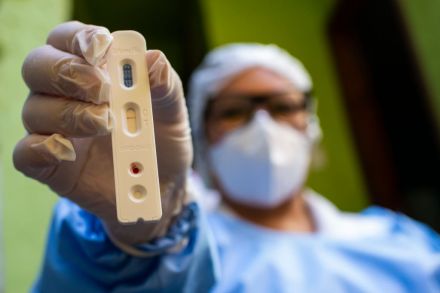
Over half the adult population has been vaccinated, new infections and deaths have plummeted to their lowest level since last September — and the government chooses this point to launch a programme to test every adult for Covid twice a week. The Prime Minister is due to announce this afternoon that lateral flow testing kits will be distributed by the million, free of charge to anyone who wants them. We will all be encouraged to test ourselves — and be placed under an obligation to self-isolate if they are positive. Why? We have spent the past three months on a massive vaccination programme, using vaccines that have proved pretty well 100 per cent effective at preventing deaths and serious illness.

Do critics of the race report have any actual arguments?

From our UK edition

I guess the authors of the Commission on Racial and Ethnic Disparities didn’t agree to the job for a quiet life. Even so, the sheer bitterness of the volley directed at them by the grievance industry must have taken them aback. The reaction from the left has been straight out of the Marxist playbook: don’t bother to engage with your opponents’ arguments, just try to delegitimise them by attacking those opponents’ credentials and questioning their right to speak at all. We’ve learned from Twitter and the pages of the Guardian that the panel of ten commissioners – who have all achieved success in their varied fields – are all stooges of the government.

The growing debate over vaccinating children

From our UK edition

Should we vaccinate children against Covid-19? The question is going to be increasingly asked following positive results from a US trial of the Pfizer vaccine in 12 to 15-year-olds. The trial found the vaccine to have a 100 per cent efficacy in preventing symptomatic illness — higher than on older age groups. It was, however, based on a relatively small number of participants. The trial included 2,260 children, half of whom were given the vaccine and half of whom were given a placebo. Among the control group, 18 went on to develop Covid, compared with none in the group given the vaccine. The company announced yesterday that the vaccine had been ‘well tolerated’ among the group.

What should we make of the WHO Covid report?

From our UK edition

Should we believe the conclusions of the World Health Organization (WHO) report into the origins of the SARS-CoV-2 virus which, as expected, dismissed the possibility of a laboratory accident while giving credence to the theory that the virus was imported via frozen foods? The first thing to note is that the report does not even claim to be independent — it is billed as a 'joint WHO-China study'. It deserves to be read as such: as the product of an undemocratic government that has every incentive to deflect any responsibility for a pandemic that has, to date, been blamed for 2.7 million deaths globally.

Why is vaccinated Chile locking down again?

From our UK edition

Get ahead with vaccination and you can open up your country sooner. It seems logical, but it is not quite how things are working in Britain, where in spite of this week’s relaxation our lockdown restrictions remain among the toughest in the world. This applies even less in Chile. On 29 March, 6.53 million of the country’s 19 million population had received a first dose of vaccine (either Pfizer or the Chinese Sinovac) and 3.37 million had received a second dose. In combined doses per million people, Chile is a little ahead of Britain. Yet large parts of the country have been placed back into a lockdown even more severe than Britain’s over the past three months.

Are cryptocurrency transactions the future?

From our UK edition

To most of us, cryptocurrencies remain an esoteric world, beloved by nerds and incomprehensible to the rest of us. Does Visa’s announcement this week that it will now process payments directly in a cryptocurrency called USDCoin change that, and hasten us to a day when we will all have cryptocurrency accounts which we use to do our day-to-day shopping? You don’t need to understand the mathematics of cryptocurrencies and blockchain to work out that the prospect of shopping with crypto is rather concerning for two reasons. Firstly, cryptocurrencies are an unregulated Wild West.

The practical problems with vaccine passports

From our UK edition

The story of Covid has been one of government repeatedly ruling things out – and then coming back several weeks later and introducing them nonetheless. It happened with lockdown, compulsory wearing of masks, and now it looks as if it might be happening with vaccine passports. Remember vaccines minister Nadhim Zahawi telling us of vaccine passports in February: ‘That’s not how we do things in Britain. We do them by consent.’ This week the Prime Minister seems to have changed the government’s tune, by suggesting that we might, after all, have to show some kind of proof of vaccination before being allowed into pubs or other such premises.

Is AstraZeneca’s Covid jab effective against the South African variant?

From our UK edition

The AstraZeneca vaccine has been under attack ever since the results of its phase three trials were announced in December. When the results of US trials were released this week showing 79 per cent efficacy against symptomatic disease and 100 per cent protection from serious cases of Covid 19 – and failing to show up any serious side-effects – it seemed to help bolster its reputation.  Yet some of that was undone by subsequent accusations by the US Data and Safety Monitoring Board that AstraZeneca may have included out of date data in its trial results. The company has been asked to come back and present new calculations, using data gathered from its study up until March, rather than data up until February.