Ross Clark

Ross Clark

Ross Clark is a leader writer and columnist who has written for The Spectator for three decades. He writes on Substack, at Ross on Why?

Europe gripped by a fifth wave

From our UK edition

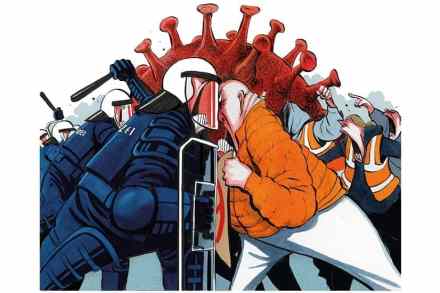
How quickly things change. Just a month ago many EU countries were being praised for keeping some Covid restrictions in place, in many cases operating vaccine passport systems. By contrast, Britain was being attacked for removing most Covid restrictions in July. The UK suffering elevated infection rates ever since, leading to predictions that we could be back in lockdown by Christmas. Now, many EU governments are panicking as infection rates soar — and protesters have taken to the streets to oppose new lockdowns and, in the case of Austria, compulsory vaccinations from next February. What is the situation in the worst-affected countries?

Austria will regret mandatory vaccinations

From our UK edition

So, Austria’s experiment to persuade more people to get vaccinated by placing the unvaccinated in lockdown didn’t last long. A week, to be precise. From Monday, the entire country will be placed under stay at home orders and other restrictions — this, after it seemed that the era of lockdowns was over. But perhaps more significantly is Austria’s announcement this morning that from 1 February next year Covid vaccination will be compulsory, with large fines for those who refuse to be jabbed.

Do masks really slash the risk of catching Covid?

From our UK edition

Which public health interventions help to cut the spread of Covid-19 — and which do not? Except for vaccinations, where we have extensive trial data, this is a question on which the government has had little information to help it. But this morning’s headlines appear to offer an answer: wearing masks may help slash Covid infections by 53 per cent. Unfortunately, what the headlines don’t tell us is what kind of mask-wearing, where and in which circumstances. Do we need surgical grade masks or will cloth do? Should we wear them in the street or just indoors? Can we take them off if travelling in a near-empty train carriage?

Insulate Britain are not martyrs

From our UK edition

Throughout the Insulate Britain protests there was a suspicion that the group was deliberately trying to get its members behind bars during the COP26 conference — a suspicion that was enhanced when a spokesperson for the group told the Guardian on 24 October:  It’s fair to say that there is absolute disbelief and surprise that the campaign has lasted this long. We assumed that we would not be allowed to carry on disrupting the motorway network to the extent we have been. We thought that people would basically be in prison… if our actions are as dangerous and as disruptive as is being claimed, then I think the question has to be: why are we being allowed to continue day after day?

Why wasn’t the furlough scheme wound up sooner?

From our UK edition

October’s employment figures, according to the Chancellor Rishi Sunak are ‘testament to the success of the furlough scheme’. The other way of looking at the figures, released this morning, is that they show why the furlough scheme should have been wound up months ago, rather than at the end of September. The number of people on payroll in October rose by 160,000 to 29.3 million in spite of furlough ending. The unemployment rate fell by 0.5 per cent. The employment rate, at 75.4 per cent, is now just 1.1 percentage points lower than it was in the three months leading up to the pandemic. It is astonishing because at the moment the furlough scheme ended, it was still paying the wages of 1.14 million people.

Should Covid booster jabs be rolled out to the over-40s?

From our UK edition

The Joint Committee on Vaccination and Immunisation has recommended that Covid booster jabs be offered to people in their forties, after they became available to the over-fifties earlier this year. But, as recently as August, the World Health Organisation opposed booster jabs. It said in a statement:  ‘In the context of ongoing global vaccine supply constraints, administration of booster doses will exacerbate inequities by driving up demand and consuming scarce supply.

Why the UK can’t rely on renewables…yet

From our UK edition

Like a football tournament with an official beer, COP26 had an official energy provider: the Griffin wind farm in Perthshire, operated by SSE. Trouble is that for much of the conference it was not paid to generate electricity. Instead, it received £500,000 in ‘constraint payments’, which are given to owners of wind farms when they are generating too much electricity for the grid to absorb. The payments expose a huge hole in Britain’s renewables-heavy energy policy: we have little means of storing energy when the wind is blowing and the sun is shining so that we can use it on dull, windless days.

Does Joe Biden understand inflation?

From our UK edition

I have a horrible feeling that the Biden presidency may come to be defined by a single quote which will echo down the ages, featuring not just in economics textbooks but becoming a byword for hubris of all kinds. Speaking of his $1.75 trillion ‘Build Back Better’ plan, the President declared last week: 'Seventeen Nobel prizewinners in economics have said that my plan will ease inflationary pressures'. Not so fast, Mr Biden. Today, the Bureau of Labor Statistics announced that the Consumer Prices Index (CPI) for October rose to 6.2 percent, higher than expected and the highest rate since 1990, the very beginning of the low inflationary era.

The trouble with Austria’s vaccine passport plan

From our UK edition

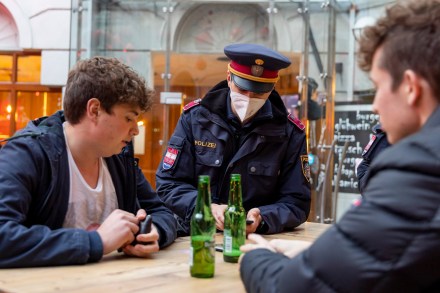
Are vaccine passports being used in other countries in an attempt to cut Covid infections – or to try and boost vaccine take up by curtailing the social lives of those who refuse? The latest change in policy in Austria would appear to confirm that for them, it’s the latter. From today, access to restaurants, bars and any event with more than 25 guests will be limited to people who can prove they have been fully vaccinated, that they have previously recovered from Covid or that they have had one jab and a negative PCR test. In four weeks’ time, only the double-jabbed and those who can show they have recovered from Covid will be allowed in. Austria, like many EU countries, has had a vaccine passport scheme for several months.

Could EVs destroy the value of terraced homes?

From our UK edition

With their private jets and gas-guzzling mansions, delegates at Cop26 have been widely criticised for an elitist attitude towards the environment. Nothing better demonstrates the gulf between policymakers and ordinary people than over the charging points for electric cars. It is one thing to install a home charging point for your car if you own a large house up a crunchy gravel driveway – indeed, according to the property website Rightmove, owners of such properties have been fitting charging points with great enthusiasm, with a 541 per cent increase in the number of homes being advertised with such a facility over the past year. But what do you do if you live in one of the 43 per cent of homes which do not have off-street parking?

‘Climategate’ still matters – but not how the BBC thinks it does

From our UK edition

It is 12 years now since a tranche of emails were scraped from the server of the University of East Anglia in what became know as Climategate. An East Anglia climate server was hacked, and the documents were pored over. The story won’t go away, not least because the BBC has just put out two programmes on the subject: a TV drama called the Trick, and a Radio 4 documentary called ‘The Hack That Changed the World’.

Did Covid first emerge at the Wuhan Institute of Virology?

From our UK edition

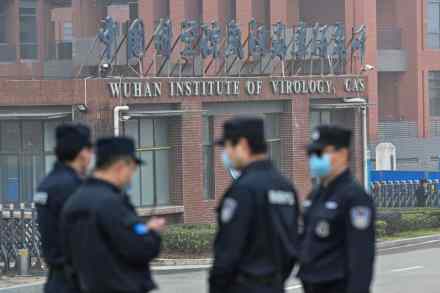
The net around the Wuhan Institute of Virology continues to tighten. A letter from Lawrence Tabak, principal deputy director of the National Institutes of Health (NIH) in the United States, has shed more light on the grant which the institute made to the EcoHealth Alliance for work at the Wuhan Institute.  One of the experiments, it reveals, involved testing to see whether the spike protein of a naturally-occurring coronavirus found in the bat population was capable of attaching itself to a human receptor, via experiments with mice engineered with a human gene. The experiment amounted to ‘gain of function’ research (something the NIH has denied) – modifying viruses so that they have qualities which don’t exist in nature.

The wishful thinking of COP26

From our UK edition

History records that George II was the last British king to lead his troops on the battlefield, at the Battle of Dettingen in 1743. But maybe it is only a matter of time… Addressing the COP26 summit in Glasgow Prince Charles called for a 'vast military-style campaign' against climate change. We must put ourselves on a 'war-like footing', marshalling the resources of the private sector as we did during wartime. I look forward to the sight of Charles, on horseback, leading a battalion against Xi Jinping’s People’s Army to try to take the site of China’s latest coal-fired power station. There is a very big problem with this kind of rhetoric.

Why are Covid cases going down?

From our UK edition

Imagine if the government had taken notice of the assorted scientists who, a couple of weeks ago, were imploring them to immediately enact ‘Plan B’ and reintroduce measures such as compulsory mask-wearing, working from home and limits on gatherings. The current dip in new Covid cases would be heralded as a sign of the success of the policy, and there would be calls for new lockdowns, or semi-lockdowns to control Covid infection numbers in the winter. Something similar happened back in July when some scientific opinion was in favour of delaying the full reopening of the economy and society. At the time, professor Neil Ferguson warned that infection numbers would certainly hit 100,000 a day and could even reach 200,000.

What’s really behind the net-zero zealotry of big businesses?

From our UK edition

Boris Johnson’s biggest challenge at COP26 doesn’t lie in avoiding a finger-wagging from Greta Thunberg, who won’t be going. Neither will it be in preventing the party being spoiled by Insulate Britain holding up the limousines of the great and good. Nor will Johnson have to struggle too hard to persuade his fellow world leaders to sign some kind of declaration strong enough to be spun as a triumph but anodyne enough to allow China, Russia and others to ignore it. No, the PM’s biggest challenge lies in fending off the demands of big businesses, who have latched themselves to the cause of net zero with great gusto, aware of its value to their brands.

Who should pay for nuclear?

From our UK edition

How much longer is the government going to suppress the cost to households of achieving net zero carbon emissions, or try to imply, as business secretary Kwasi Kwarteng recently seemed to imply on the Today programme, that it won’t cost us at all?  Even as he spoke Kwarteng was working on a new model for the funding of nuclear power stations that was unveiled yesterday in the form of the Nuclear Energy Finance Bill. The proposed legislation will impose levies on energy bills in order to subsidise the construction of new nuclear power stations.

Is inflation slowing?

From our UK edition

Whatever happened to the inflation surge? Last month, when the Consumer Prices Index (CPI) surged to 3.2 per cent, the country started fretting about a return to the 1970s. This month’s CPI figure, though, has fallen to a not-very-1970s like 3.1 per cent. Forty five years ago inflation, on a slightly different measure, peaked at over 20 per cent. So are we really heading for an inflationary surge? It turns out that the biggest contribution to this month’s slight fall in CPI is in restaurant prices.

How concerning is the new Covid variant?

From our UK edition

Should we worry about AY.4.2, the new Covid variant that has been in the news this week? The descendent of the Delta variant — what we once called the Indian variant — was first identified in July. It has since grown so much that in the week beginning 27 September, it accounted for 6 per cent of all new cases in Britain — and is on an ‘upwards trajectory’, according to the UK Health Security Agency. It has been reported as being as much as 10 to 15 per cent more transmissible than the original Delta variant, which was estimated to be seven times as transmissible as the first variant detected in Wuhan.

This heat pump scheme is a bung to the rich

From our UK edition

Who does the government think will be the 90,000 lucky people who succeed in pocketing £5,000 grants to replace their gas boilers with heat pumps? Just-about-managing homeowners in ‘Red Wall’ seats who strained every sinew to buy a draughty two up, two down – or well-off homeowners with nice period houses, lots of capital and three cars on the drive? Here’s a little clue: even taking into account the £5,000 grant it will still cost upwards of £5,000 to install the heat pump itself, plus another £10,000 for insulation and to install larger radiators – so it is really not an option for the first group. As for the second, they are bound to lap up those grants, just as they have every other environmental handout on offer.

Rishi’s online sales tax won’t save the high street

From our UK edition

Imagine you run an independent store on the high street. Your business has already been ravaged by repeated lockdowns, which boosted the likes of Amazon at your expense. You are already at a huge disadvantage to online retailers because of your fixed costs. At great risk, you have invested in setting up your own online operation – which obviously costs you a lot more per unit of sales than it costs the online giants. In your shift online you have effectively become shunted up a side street, while Amazon, eBay and the like occupy the prime spots on the high street. How, then, are you going to react to the news that the Chancellor is looking to hit the new side of your business with a two percent online sales tax?