Ross Clark

Ross Clark

Ross Clark is a leader writer and columnist who has written for The Spectator for three decades. He writes on Substack, at Ross on Why?

Bill Gates vs Elon Musk? I know who my money is on

From our UK edition

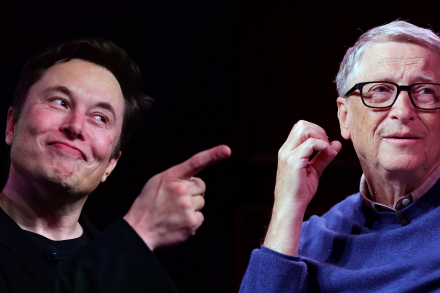
Is Bill Gates shorting Tesla? He certainly didn’t deny it in an interview with the Today programme. The suggestion is that he has upset Elon Musk, who has complained that he couldn’t take Gates’s philanthropy on climate change issues seriously if he was betting against the share price of the world’s biggest electric car-maker. But Musk’s outburst rather evades the issue: is Tesla’s share price destined to fall? You could be the most ardent climate change campaigner, the biggest enthusiast for electric cars in the world – and still think that Tesla is overpriced.

What we get wrong about local elections

From our UK edition

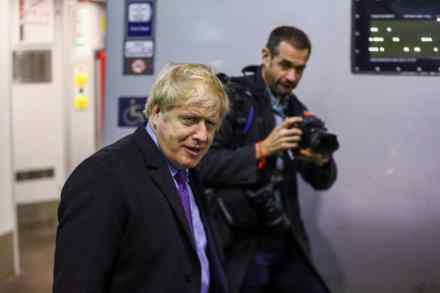
Friday morning’s headlines can pretty much already be written: Conservatives suffer heavy losses in local elections; a humbled Boris Johnson addresses the nation saying that lessons have been learned; backbench MPs resume plotting, trying to decide whether to move now or in a few months’ time. Former Tory voters will be feeling pleased with themselves that they have left the government with a bloody nose, and who knows? Maybe it will be the jolt that succeeds in getting the government to concentrate on what really matters at the moment – the cost of living crisis – and to stop faffing around with other things.

Why Meghan Markle’s Netflix show was cancelled

From our UK edition

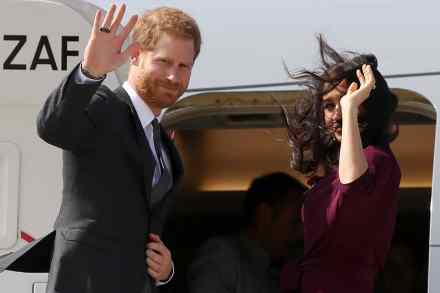
In their post-royal careers, Harry and Meghan have learned two lessons in quick succession: firstly, that membership of the royal family opens the door to media deals less well-connected celebrities could only dream about. Secondly, they have learned that even royal fame will not, ultimately, help one of the biggest media organisations in the world sell a product that the public finds unappealing. No doubt Meghan thinks mightily of the concept of Pearl, her proposed animated Netflix series in which a 12-year-old girl is inspired by great women in history. But it seems potential viewers are rather less enamoured. Netflix has cancelled the series before it was even made.

Right-to-buy won’t fix Britain’s housing crisis

From our UK edition

The biggest long-term threat to the Conservatives is neither partygate nor even the cost of living crisis – but declining rates of home ownership. As Mrs Thatcher understood, when people are able to afford their own home, they become more conservative in outlook. They put down roots in their local area and they gain a vested interest in capitalism – just look how Mrs Thatcher won and held on to aspirational areas such as the new towns. That the rate of home ownership plunged from 70.9 per cent to 62.6 per cent between 2003 and 2017 (it has since recovered slightly) goes quite a long way to explaining why Jeremy Corbyn became such an attraction for young people in the general election of that year.

The electric scooter ban doesn’t make sense

From our UK edition

Is there anything we use in everyday life which was not, at some point on its journey to acceptance, denounced as a menace? Certainly not cars, bicycles, trains and aeroplanes, all of which were accused of various hazards and temptations. To take trains, for example, some confidently predicted that their passengers would suffocate at high speeds – or that they would encourage prostitution or criminality by providing greater opportunities to travel. It should come as no surprise, then, that e-scooters have been treated in much the same way. It is possible to be bowled over by an e-scooter while crossing the road – but that seems somewhat preferable to being hit by a car, bus or lorry The government does, however, seem poised to act.

Why Brussels fears Elon Musk

From our UK edition

Thierry Breton, the European Commission for the internal market, lost no time in rattling his sabre at Twitter as soon as it was announced that the company had accepted Elon Musk’s offer to buy it. Even though Musk had made no announcement on how he intends to run the company, beyond stating his belief in free speech, Breton felt it necessary to warn Twitter that if it ‘does not comply with our law, there are sanctions – 6 per cent of the revenue and, if they continue, banned from operating in Europe.

Can Elon Musk make Twitter profitable?

From our UK edition

Why does Elon Musk really want to buy Twitter? Is it vanity, political activism, or a shrewd financial move? Musk’s reputation lies in building companies from scratch, yet Twitter is a mature business. It is hard to see why that should excite him anything like transforming the car industry or creating a market for space tourism. Twitter is currently a business without any obvious prospects for substantial growth. The company, which was formed in 2006 and floated in 2013, has never set the world alight like other businesses in the tech sector. Even after Musk’s $44 billion (£34 billion) offer, the share price is only modestly higher than it was at the company’s flotation nearly nine years ago.

Labour are right – let’s do away with ‘non-dom’ status

From our UK edition

Any Conservative who doubts that Labour’s promise to abolish non-dom status could seriously damage the government needs to look at the fate of Rishi Sunak. So recently the heir apparent to the Tory leadership, Sunak has this week plunged to bottom in a poll of the most popular cabinet members. It comes, of course, just a couple of weeks after the revelation that Sunak’s wife was living in Britain as a non-dom – a status which according to one estimate could have saved her up to £20 million in tax over the years. And this was a poll of Conservative party members, so goodness knows how much the revelation has done to damage the Chancellor in the eyes of the floating voters whose support the Conservatives will need to stay in government.

Boris is choosing to make you poorer

From our UK edition

If Boris Johnson is forced from office by his own MPs, partygate will only be part of the story. Another huge part of it will be his failure to appreciate the full scale of the cost of living crisis now washing over millions of households – especially his reluctance to address the issue of energy bills. Asked on his Indian trip whether he would consider removing the levies which make up around 25 per cent of electricity bills and around 4 per cent of gas bills he replied:  I want to do everything we can to alleviate the cost of living, but there is a lot of prejudice against the green agenda.

Do we really need a GCSE focused on saving the planet?

From our UK edition

We have yet to see the first sample papers for the new GCSE in natural history to be announced by education secretary Nadhim Zahawi this week, but the fact that it has come about after lobbying by Caroline Lucas, Chris Packham and other green activists is a pretty good guide as to what might be in store: yet another fashionable, soft subject which is designed to indoctrinate rather than educate. It is a fair guess where it will lead: to children, especially from state comprehensives, being diverted from the more academically-rigorous subjects which would gain them access to the best universities.

The problem with onshore wind farms

From our UK edition

Remember how David Cameron’s government was going to end Nimbyism by having local communities vote for new housing developments on their doorsteps? That didn’t end so well. Last October, following a shock defeat in the Amersham by-election, the Prime Minister gave up on building more new homes in the shires in favour of reverting to the line of least political resistance: the old favourite of trying to solve the housing shortage by building more new homes on brownfield land in the North. Why, then, does the government think it will be any more successful trying to persuade us to accept wind farms on our doorsteps?

Boris’s real failure wasn’t breaking lockdown

From our UK edition

Boris Johnson made a big error, alright. But it wasn’t walking into a room where his wife had prepared him a surprise birthday cake. It was in overriding his liberal instincts and imposing highly prescriptive lockdown rules in the first place. If, in March 2020, he had stood up to advisers and said that no, it was not the business of the state to micromanage people’s lives – had he banned large gatherings, closed crowded pubs but left private meetings to our sense of personal responsibility – then he would not be in the position he is today.  Moreover, many Britons would not have died alone or succumbed to crippling loneliness. As he has admitted, rather too late, many lockdown rules were simply inhumane.

What Rishi should do next

From our UK edition

How tempting it must be for Rishi Sunak to chuck in his job as Chancellor. ‘My chances of ever becoming PM have plummeted to next to nothing,’ he must be thinking, ‘so why not go off and earn some serious money instead, away from the spotlight?’  I have no insight into the state of the Sunak marriage but I wouldn't be surprised if he was also tempted to resign for his wife's sake. ‘Let's get out of the public eye,’ he might well be tempted to say, ‘and enjoy being rich again.’ But if Rishi had hired me for some advice on reputation management I would give him a better idea. You have obviously wanted to be PM for a long time, so why give up now? Your political reputation is not beyond repair.

Could we be heading for a second Covid recession?

From our UK edition

The political story for the moment is the cost of living crisis. But by the end of the year could we be talking about a recession instead? We shouldn’t read too much into one year’s economic growth figures, especially given how often they are revised upwards or downwards. But February’s figures, published this morning, have caught many people unawares. They show that the economy just about ratcheted upwards in February, growing by 0.1 per cent. That’s compared with healthy growth of 0.8 per cent in January, as the country emerged from the Omicron scare. Notably, in two areas the economy contracted: construction fell by 0.1 per cent and production by 0.6 per cent. It was only the services sector, where growth was 0.

Will Britain’s new energy strategy keep the lights on?

From our UK edition

Today’s Energy Security Strategy puts energy security at the heart of the debate over energy and environmental policy, where it always should have been. There is little question that the Russian invasion of Ukraine has brought about a big change to the tone of energy policy, but will today’s announcements really wean us off Russian oil and gas, and when? Moreover, will they ensure that we can keep the lights on as the government continues to commit itself to a policy of net zero carbon emissions by 2050?

Ed Sheeran is right about British courts

From our UK edition

As they say in the music business, where there’s a hit, there’s a writ. It is something that no one knows better than Ed Sheeran, who yesterday won a legal battle over claims that his song Shape of You plagiarised an earlier song, Oh Why by Sami Chokri and Ross O’Donoghue. The judge ruled that Sheeran had neither copied the song deliberately nor subconsciously. After his victory, Sheeran said: Claims like this are way too common now and have become a culture where a claim is made with the idea that a settlement will be cheaper than taking it to court, even if there is no basis for the claim, and it’s really damaging to the songwriting industry.

Will the NHS ever give up the national insurance levy?

From our UK edition

This week’s rise in National Insurance has caused the government enough trouble, but it faces potentially an even bigger problem next year – when it tries to prise the extra £12 billion raised in NI away from the NHS and use it to fund social care instead. The extra revenue from NI has been earmarked for the next 12 months for the NHS, to help it catch up with a backlog in routine treatments following the Covid-19 pandemic. But from April 2023 the intention is to rebrand the NI rise as the ‘Health and Social Care Levy’ – and to spend it instead on funding social care. Just how does a government take money away from the voracious financial beast that is the NHS?

The war on workers

From our UK edition

It is been a familiar story in recent years: a Budget that sounded reasonably good when delivered, but that unravels in subsequent days. Rishi Sunak’s spring statement was no exception. When he delivered it a fortnight ago, he said he was going to compensate low-earners by raising the primary threshold for National Insurance, bringing it into line with income tax and relieving people who earn less than £12,500 from having to pay NI at all. But as the 1.25 percentage point rise in National Insurance kicks in today, it turns out that the rise in the threshold for NI will not take effect for another three months, on 6 July. In the meantime, any employee who earns more than £9,880 a year will be paying 13.25 per cent of their earnings on NI.

Are sanctions working?

From our UK edition

When allied military operations go well or badly, we very quickly hear about them. But what about sanctions? It is about time that we started to ask: are they hitting their target, or are some of them slewing off, out of control, straight into civilian targets? Notionally, sanctions have been a success – or at least they seemed to be initially. The rouble and Russian stock market collapsed. But then the rouble recovered strongly, and the stock market, too, has staged some sort of recovery since it reopened. What seemed like a pretty comprehensive boycott by western companies turns out to be rather less complete than many might imagine.

Did P&O use an EU loophole?

From our UK edition

Brexit, as Boris reminded us many times during the referendum campaign, would give Britain the power to make its own laws, unencumbered by constant directives from the European Commission. But it will take a long while to disentangle UK laws from the influence of the EU, as the government may be about to discover in its attempt to punish P&O ferries for sacking 800 workers and replacing them with agency staff. It will take a long while to disentangle UK laws from the influence of the EU At last week’s Prime Minister’s Questions, Johnson declared that P&O had contravened section 194 of the Trade Union and Labour Relations Act 1992, which required employers to give the government 45 days’ notice of any intention to make more than 100 workers redundant.