Ross Clark

Ross Clark

Ross Clark is a leader writer and columnist who has written for The Spectator for three decades. He writes on Substack, at Ross on Why?

Ordering farmers to grow tomatoes won’t make us any richer

From our UK edition

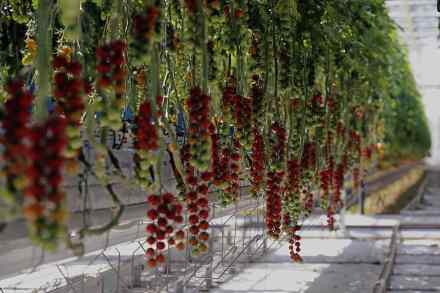
Should we cover Britain with greenhouses so that we can be self-sufficient in tomatoes? That seems to be the latest thrust of the government’s see-sawing farming, environment and food policy. Government advisers appear to have been looking longingly across the North Sea to the Netherlands, which has become one of Europe’s leading salad producers thanks to vast heated glasshouses. In Britain, by contrast, a lot of market gardening has gone to the wall, to the point where we grow only 23 per cent of our cucumbers and 15 per cent of our tomatoes. We would be better off if the government didn’t try to determine from Whitehall how our agriculturalists spend their time.

Did Rishi Sunak really make an £11 billion blunder?

From our UK edition

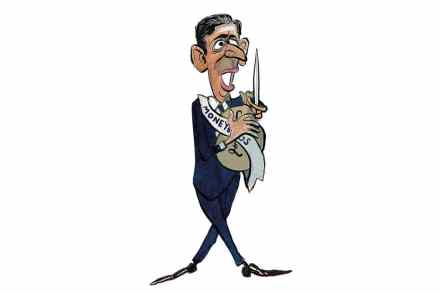
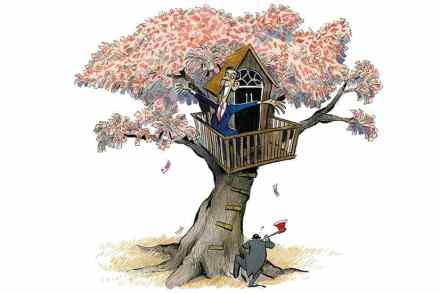
Could Rishi Sunak really have saved the taxpayer £11 billion by insuring against higher interest rates last year? That was the extraordinary claim made by the National Institute of Economic and Social Research (NIESR) and in the Financial Times on Friday. The NIESR claims that the government could have saved the money had the Chancellor taken up the institute’s own suggestion last year and forcibly converted £600 billion worth of reserves held by commercial banks at the Bank of England into two year fixed-rate bonds. By failing to foresee rising inflation and interest rates, the FT asserts, the Chancellor has blown even more money than Gordon Brown did by selling half Britain’s gold reserves at the bottom of the market in 1999.

Boris’s rewilding obsession could backfire

From our UK edition

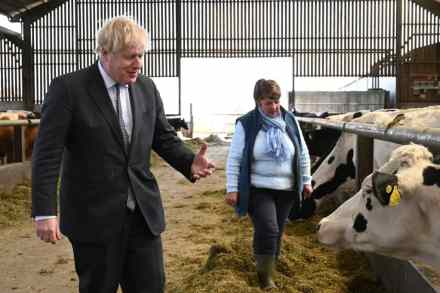
Does Boris Johnson have the faintest idea what he and his government are trying to achieve anymore? I ask because of the Prime Minister’s ‘grow for Britain’ strategy which has been leaked to the Daily Telegraph. The strategy, due to be launched on Monday, apparently demands that farmers grow more fruit and vegetables to make us less reliant on imported food, especially in the face of the Ukraine crisis – which has created the headache of how to continue production and exports from one of Europe’s most agricultural nations. To this end, the grow for Britain strategy will, it is said, commit to ‘changes to planning rules to make it easier to convert land into farms’.

Soaring fuel prices could be lethal for Boris Johnson

From our UK edition

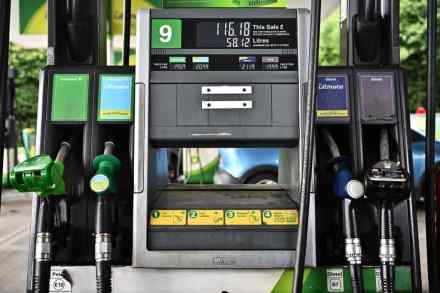
As if Boris Johnson was not in enough political trouble already, the latest surge in oil prices is threatening to overwhelm the government. This week, petrol prices in some filling stations have crossed the symbolic threshold of £2 per litre. This would be a problem for any government, but, for a Conservative administration which owes its last election victory to the votes of relatively low-paid manual workers, it is an existential threat.  People who rely on their cars to get to work face being priced out of the workplace. Decades of sky-high property prices – and high moving costs thanks especially to stamp duty – have changed the pattern of living and working. There are large numbers of voters who must drive long distances to reach their place of work.

What Boris’s right-to-buy gets wrong

From our UK edition

It isn’t hard to understand why the government should want to revive the spirit of Margaret Thatcher’s right-to-buy, which was credited for creating a whole new class of homeowners – and in the process Conservative voters. While the right to buy has never gone away – and survived the Blair and Brown years – it is a shadow of its former self. In 2020/21, 6,994 social homes were sold, compared with 167,123 in the peak year of the scheme, 1982/83. Last year’s figure was markedly lower even than the 17,756 homes sold in 2006/07 – the heyday of the Blair housing boom. What does today’s announcement do to widen the right-to-buy?

The utter shamelessness of Britain’s rail unions

From our UK edition

In what other industry could demand collapse by a tenth and yet the staff still think that they have a right to an above inflation pay rise and no job losses? Rail privatisation was supposed to put an end to union militancy and to relieve taxpayers of the financial risk of running the railways. Patently, it has achieved neither objective. Three national rail strikes have been declared for later in the month, to compound strikes on the London underground. Meanwhile, taxpayers will contribute £16 billion this year to propping up an industry in which demand for its services have collapsed. In the week to 22 May (before the effect of last week’s bank holidays) usage of national rail services averaged 89 per cent of what it did before the pandemic.

The EU’s phone charger rule will stifle innovation

From our UK edition

Who could argue with the words of the EU’s internal market commissioner Thierry Breton when he says: ‘a common charger is common sense for the many electronic devices in our daily lives’? No longer, it seems, will we have to fiddle around with several different cables, and curse when we have brought the along the wrong one on holiday. M. Breton has just succeeded in introducing a directive which, from 2024, will oblige the manufacturers of all electronic devices on sale in the EU to use the same model of charger.

This vote marks the beginning of the end for Boris Johnson

From our UK edition

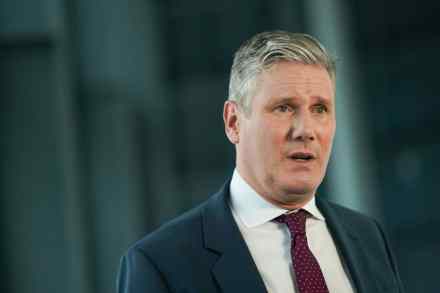
There is a school of thought, expressed by Fraser Nelson here this morning, that the Prime Minister’s Tory opponents have shot their bolt too soon, that they should have waited for a couple of by-election defeats and for the emergence of a clear front-runner to replace Boris Johnson, before sending in their letters of no confidence. This analysis is right in that Johnson will very likely gain more votes that MPs vote against him this evening. Whether that really amounts to ‘winning’ is another matter. Historic precedence suggests that Keir Starmer is correct when he asserts that today’s confidence vote marks the beginning of the end for the Prime Minister.

Are republicans becoming an endangered species?

From our UK edition

How disappointing. Come Jubilee time and the Guardian can usually be relied upon to lead the way in publishing sour pieces moaning about ‘jingoism’, attacking the extravagance of a royal procession and trying to claim that the people who turn up to watch and join in with the celebrations are somehow outnumbered by people who would rather get rid of the royal family and live under a republic. At the time of the Queen’s Golden jubilee in 2002, Mary Riddell wrote of a ‘family that knows how to command a deference out of kilter with its popularity’, adding that ‘a third of the population wants a republic, a third couldn’t care what befalls the monarchy, but damp-palmed curtseyers abound.

The EU’s oil ban is a damp squib

From our UK edition

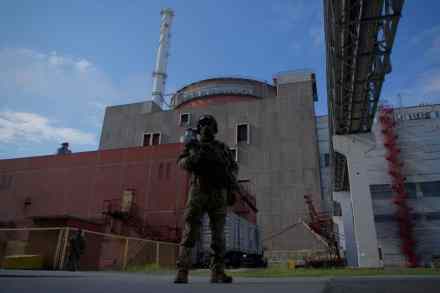
When Putin’s tanks rolled into Ukraine on 24 February there was a conceit that this might be the first war which the West could fight – and win – by sanctions alone. The EU’s latest efforts to stop importing Russian oil show just what a folly this was. Donations of military equipment to Ukraine are certainly helping to keep Russian forces at bay, but economic sanctions? That is another story. Europe’s dependence on Russian oil and gas is the product of years of ill-conceived energy policy Sanctions may be helping to lower living standards among Russian citizens, but they are still a long, long way from cutting off the lifeblood of the Russian economy – its oil and gas exports.

The World Health Organisation has lost all credibility

From our UK edition

Let’s be honest: is there anyone out there who has faith in the ability of the World Health Organisation (WHO) to tackle a future pandemic? Any lingering hope that the WHO might be an organisation fit to be trusted with global heath concerns has pretty well evaporated with the election, by acclamation, of China as one of the 12 members of its executive board on Friday.  It is true, of course, that an international body must have representation from all over the world if it is going to win the near-universal cooperation it needs in order to operate. It can’t be led entirely by western democracies and wealthy South Asian countries even if they might have the best skills available; you need members able to tap into every culture and religion on Earth.

It’s time for Boris to take on the rail unions

From our UK edition

Imagine if we gave the rail unions what they really wanted, and renationalised the railways. Would they then leave us alone and get on quietly with the job of driving trains, clipping tickets and so on? Like hell they would. Thankfully, Nicola Sturgeon has just tried this very human experiment, so that the Westminster government does not have to. On 1 April, railway services north of the border were taken back into public ownership so that, as the unions would put it, passengers could once again be put first and profits no longer drained away by nasty private companies rewarding their evil shareholders. And the result? Er, a national rail strike – just the same as the unions are threatening in England.

Russia and the death of the Golden Arches theory

From our UK edition

Ah, well, it was a lovely idea, born of the age of liberal-democratic triumphalism that was the 1990s: the ‘Golden Arches theory’, which held that no two countries that had McDonald’s franchises had ever been – or would ever go – to war. Remarkably, it wasn’t the product of McDonald’s PR department but the work of New York Times columnist Thomas Friedman. He argued that the arrival of McDonald’s signified a society that had become so consumerist that enough people had enough invested in economic stability to ever risk a war. Armed conflict ain’t good for the hamburger trade The final nail in the coffin of the Golden Arches theory has come with the news that McDonald’s is to abandon Russia permanently.

Jacob Rees-Mogg’s attack on fixed penalty notices is too little, too late

From our UK edition

What an heroic stand for freedom and justice Jacob Rees-Mogg has just made by criticising the system of Fixed Penalty Notices (FPNs). According to the Brexit Opportunities minister, the reason this form of summary justice “goes against British tradition” is that an FPN “assumes you are guilty until proven innocent because you have to go to court to get it set aside”. It is not that I disagree with him – it’s just that I would have been rather more impressed had he made this point before police began to shower the Prime Minister and Downing Street staff with FPNs. The problems with FPNs and their civil cousins Penalty Charge Notices (PCNs) have been very clear for many years.

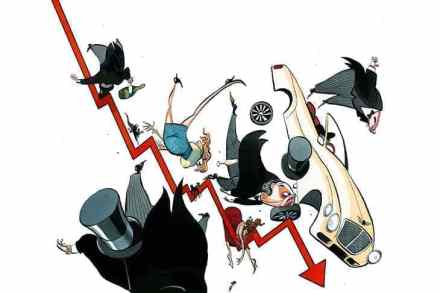
Is the bond bubble about to burst?

From our UK edition

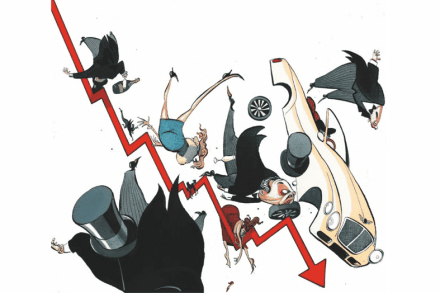
First, the good news: US inflation is down. Now the bad news: US inflation isn’t down by as much as a lot of people were expecting. Cue quite a lot of confusion on the markets. First, the S&P 500 plunged by 0.5 per cent, then it rose by 1 per cent, then it was more or less back to where it started the day. The FTSE100 has performed a similar gyration: first erasing its daily gain and then regaining it, to finish nearly 1.5 per cent up on the day. So, is it positive or negative news that US consumer inflation has fallen from 8.5 per cent in March to 8.3 per cent in April? Today’s news can be used to support fears that the spike in global inflation is not merely transitory.

BlackRock is right to abandon eco-activism

From our UK edition

Is this the end of climate activism from pension providers and other institutional investors? BlackRock, which manages $10 trillion in assets, has toned down its enthusiasm for blocking company boards that are not sufficiently committed to a carbon-free future. In January 2020, BlackRock’s CEO Larry Fink shook up the world of investment by writing an annual letter to the CEOs of companies in which he invests, warning them that in future BlackRock would take a more critical view of their climate change policies.

Why I’m not falling for Prince Harry’s latest eco-venture

From our UK edition

Just when you thought Prince Harry’s post-royal career couldn’t get any more absurd, he manages to make it so. His latest venture is a service which supposedly tells you how many carbon emissions will be emitted as a result of an airline passenger’s journey by various airlines and routes – helping travellers choose the most ‘sustainable’ option. He launched it this week on a Maori television channel in which he appears with a couple of ‘ratings agents’ which pretend to assess his environmental impact as a tourist in New Zealand.  Why use Maoris to push it? Harry is presumably hoping that the viewer will draw some kind of association between a traditional Maori lifestyle, with low environmental impact, and his airline ratings service.

Crypto is dead

From our UK edition

When Britain voted for Brexit, Macron boasted that Paris would eat the City of London’s lunch. It didn’t quite work out that way, with most league tables continuing to put London as the number one or two financial centre, with not a single EU city in the top ten. Emmanuel Macron's government has now announced that it has invited Binance, a crypto exchange site, to set up a European HQ in Paris. You have to ask: has Macron leapt on a bandwagon which has already started to lose its wheels?  The warning sign for cryptocurrencies is not so much that they have crashed – Bitcoin is down 50 per cent from its peak last November – but that they have become boring.

‘Please don’t do a hit job’: An interview with Devi Sridhar

From our UK edition

Of all the scientists who became household names during the pandemic, few divide opinion as much as Devi Sridhar. The Professor of Global Public Health at the University of Edinburgh turned adviser to the Scottish government and Guardian columnist is, according to your point of view, either a voice of reason who could have prevented the bungling at Westminster and steered Britain through the pandemic with a death toll as low as that of New Zealand, or a hectoring advocate of an impossible ‘Zero Covid’ strategy. She complains of having received hate mail – a baleful occupation hazard for many in public life, but perhaps all the more shocking if you were previously little known outside academia.

Bristol proves it: England doesn’t want elected mayors

From our UK edition

Among the many council election results coming in today, the decision of the voters in Bristol to ditch the post of elected mayor, by a margin of 59 to 41 per cent, could easily get missed. Why does it matter? Because the government’s ‘levelling up’ agenda proposes to establish elected mayoralties all over England – on the assumption that it is something we will all welcome as a way to bolster local democracy. Yet Bristol is just the latest in a long series of results which prove the opposite: we keep telling the government that we don’t want elected mayors and yet it keeps trying to force them on us anyway. Since 2001, there have been 54 referendums on whether or not to introduce an elected mayor. In only 17 cases have people voted yes.