Ross Clark

Ross Clark

Ross Clark is a leader writer and columnist who has written for The Spectator for three decades. He writes on Substack, at Ross on Why?

Rishi Sunak faces an impossible job

From our UK edition

Well, good luck, Rishi. You’ll need it – and not just because, as backbench Tory MP Sir Christopher Chope put it this morning, the Conservative party has become ‘ungovernable’. The whole job of prime minister has become impossible. There are too many demands on the person who holds that position, and too much blame placed on them when people’s lives fail to live up to expectation. Liz Truss made a huge error in announcing a huge £100 billion welfare programme (the energy price guarantee) in conjunction with £45 billion of tax cuts, all uncosted. But would her premiership have proved much more successful had she been a bit more careful with her fiscal policy? Hardly.

Is Britain heading for a painful recession?

From our UK edition

Given how inflation has taken off and sent real incomes into steep decline it is remarkable that Britain is not already in recession. It seemed that we were heading that way – until the Office for National Statistics revised upwards economic growth in the second quarter of this year from minus 0.1 per cent to plus 0.2 per cent. The economy then shrank by 0.3 per cent in August. But the definition of a recession is two quarters of negative growth – so Britain cannot be classed as being in one until growth figures for the fourth quarter are published in January. But the S&P Global Purchasing Managers’ Index (PMI) published today suggests that when it does finally arrive, the recession will be deep and painful.

Is Penny Mordaunt the Stop Boris candidate?

From our UK edition

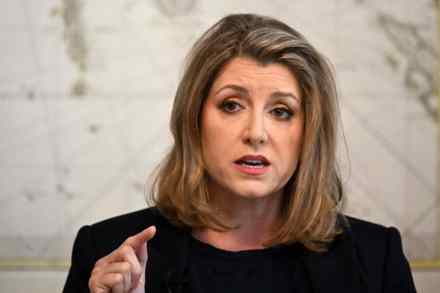
Here’s a little mystery: whatever happened to that nice, sensible foursome whom all week we were led to believe were ready to seize the reins of power from Liz Truss: Rishi Sunak, Jeremy Hunt, Penny Mordaunt and Ben Wallace? If Truss resigned, we were told, the Tory party would behave in the same grown-up fashion that it did when it elected Michael Howard as leader unopposed in 2003. Yet come Truss’s resignation the fab four was nowhere to be seen. Instead, Penny Mordaunt quickly made it plain that she didn’t want to play second fiddle to Sunak and believed that she could run in her own right. There are two possible explanations for this. Firstly, that Mordaunt’s personal ambition is stronger than her desire to establish Conservative party unity.

How Truss’s resignation moved the markets

From our UK edition

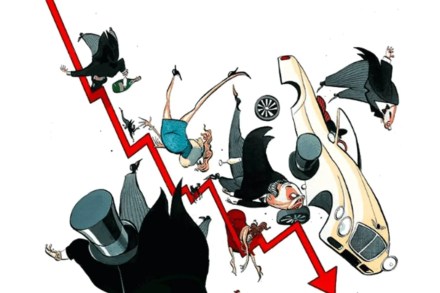
If anyone was expecting markets to be in jubilant mood after Liz Truss’s resignation, they will be feeling a little disappointed. True, the pound has risen and gilt yields have fallen this afternoon – but not by much. They moved far further on Monday when most of Truss and Kwasi Kwarteng’s mini-Budget was ditched, which is perhaps only to be expected. We could be heading for a general election – and markets may not like it At 3.30 p.m. yields on the UK government’s ten-year gilt stood at 3.85 per cent, down from just below 4 per cent early this morning. This time last week, when Kwarteng was still chancellor, they topped 4.4 per cent. They began Truss’s brief premiership at 3.3 per cent. Rising gilt yields, though, long pre-date Truss.

Kill the Bill!

From our UK edition

The more you study what is going on with the Just Stop Oil protests and the Public Order Bill, the more weird and inconsistent our national attitude to protesters seems. Britain, according to those opposed to the Bill, is a police state. If you look at their response to the Just Stop Oil protests, however, we look like pushovers. It would be easy to come to the conclusion, watching protesters block roads and the police often just stand and watch, that Britain is in desperate need of more laws to deal with this kind of thing: to make it clear that yes, everyone has the right to protest but no, they do not have the right to prevent others from going about their lawful business.

Britain needs more honesty about unemployment

From our UK edition

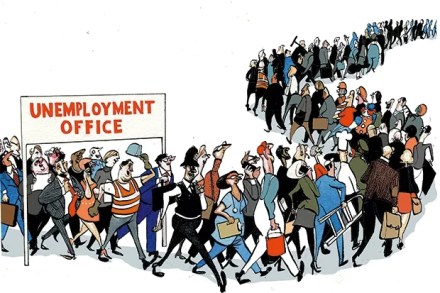
Is low unemployment causing us more problems than we realise? The suggestion might seem absurd, offensive even. It’s reminiscent of the days of Mrs Thatcher’s supposedly ‘cruel’ monetarism, when we had three million unemployed. Some on the fringes liked to argue that unemployment was good for the economy because it made people work harder, being fearful for their jobs. Mass redundancies would not, of course, help the economy now or at any other time. If a million people were to lose their jobs, as happened in the early 1980s, that would be a million households suffering a collapse in the spending power. As well as a human tragedy, it would be an economic one, too. Many graduates are not doing graduate-level jobs But then who mentioned anyone losing their jobs?

The markets have rebounded – but how long for?

From our UK edition

So, no Black Friday. The pound is steady, the FTSE100 up 1.5 per cent, the FTSE250 up more than 3 per cent. Just as fears grew that the end of the Bank of England’s gilt-buying programme could send pension funds to the brink and precipitate a fresh market crisis, the opposite happens: markets embark on a rebound. It won’t necessarily last, of course. The long, miserable decline of stock markets and gilt markets this year has been punctuated, as ever, by periods of optimism, only for a fresh slide to begin. But for the moment it seems as if the big story that is driving markets is the expectation that Kwasi Kwarteng’s mini-Budget will see more U-turns – possibly as early as today – or even be dumped altogether.

Five things market-watchers should look out for tomorrow

From our UK edition

All financial crises have their peak days, the moment of drama when everything comes to a head. Think of Black Monday – 19 October 1987 – when the bottom fell out of global stock markets, or Black Wednesday – 16 September 1992 – when the pound crashed out of the Exchange Rate Mechanism. With the Bank of England saying that it will cease emergency purchases of gilts tomorrow (although it is reported to have told pension fund managers a different thing in private) could we be facing a Black Friday? Some things to look out for tomorrow morning…. Gilts crash (ie yields rise sharply)?  This afternoon, things have been going in the other direction.

Is it time to sack Andrew Bailey?

From our UK edition

Kwasi Kwarteng’s mini-Budget was botched and the government has lost control of public spending. But this morning Jacob Rees-Mogg was not wrong to deflect at least some of the blame for current market turmoil on the Bank of England. The bank has been hopelessly behind the curve on inflation – in May last year it was still confidently predicting that the Consumer Prices Index would rise no higher than 2 per cent this year. Shortly before Kwarteng’s budget it showed that it was still lagging behind by raising interest rates by 0.5 per cent rather than the 0.75 per cent which markets had been expecting.

What’s wrong with Shell sponsoring British Cycling?

From our UK edition

If I were boss of Shell I would be tempted to take the company overseas and live a quiet life. Do a Thungela Resources, in other words – the South African-based coal miner spun out of Anglo American in June 2021, dumped by British funds on its first day of trading. But, as coal power stations are fired up around the world in reaction to the energy crisis, it has quietly gone on to become one of the best investments anyone could make over the past year. Its shares have risen tenfold in the 16 months since – while attracting barely a whimper of protest from environmental activists in Britain. Why go out of your way to attract the opprobrium which has been heaped on Shell as a result of its decision to sponsor British Cycling for the next eight years?

Why the economy can’t get real

From our UK edition

Markets, we are told, are rebelling against the government’s irresponsible fiscal policy, not least the now-abandoned plan to abolish the 45p tax rate. If that is what they are doing, it marks a sharp change in their behaviour. For most of the past decade they have whooped with delight whenever a fantastically expensive stimulus package has been announced and gone into a sulk whenever there have been rumours that the punch bowl is about to be withdrawn. In this Alice in Wonderland world, good news became bad and bad news became good. Why? Because bad news means greater likelihood of a stimulus package; good news means stimulus is likely to be withdrawn.

Truss is foolish to block Rees Mogg’s energy saving campaign

From our UK edition

When you have defined yourself against the nanny state and scorned the idea of limiting supermarket ‘two for one’ offers, it is only natural that you will go on to reject the case for a £15 million public information campaign to try to persuade people to take fewer baths and turn their thermostats down. The Prime Minister has rejected such a campaign in spite of it being backed by her business secretary, Jacob Rees Mogg – putting Rees Mogg in the unlikely position of the nation’s nanny-in-chief. These kind of campaigns have a bit of a poor history, as anyone who remembers the 1976 drought will recall.

Oil giants aren’t government cash cows

From our UK edition

According to Labour, solving the energy crisis is really very simple. Rather than funding an energy price cap through borrowing, as Liz Truss wants to do, it should be funded by a windfall tax on oil giants instead. In other words, let’s grab some of more of the gargantuan profits being made by these polluting companies and use it for the social good. But hang on a minute. Is there really such a bottomless well of money to be exploited? This morning’s profit warning from Shell suggests otherwise. We have been conditioned into thinking that companies such as Shell have been coining it in all year – not least thanks to the foolish remarks by BP chief executive Bernard Looney in February comparing his company to ‘a cash machine’.

Scrapping inheritance tax is a terrible idea

From our UK edition

There is no hole deep enough that a Conservative minister cannot muster the spadework to excavate it to even greater depths. No sooner had Kwasi Kwarteng announced that he was dropping his proposed reduction in the upper rate of income tax, than Andrew Griffith, one of his ministers at the Treasury, declared that he would like to see inheritance tax abolished. ‘I have lots of my fantastic local association [members] with me here and they will know because they asked me at my selection meeting 27 months ago which tax, if I had the choice, I would most like to see eliminated. History will record it was inheritance tax, ’he told Conservative party conference.

How to stop a blackout

From our UK edition

Will the lights go out this winter? A letter from the energy regulator Ofgem reveals just how seriously it is taking the prospect, and lays out what would happen if the UK can't get sufficient gas to meet demand. Ofgem declared that ‘here is a possibility that GB entering into a gas supply emergency’ this winter and lays out what would happen in the event of this happening i.e. when insufficient gas is available to supply the gas network at any wholesale price. It turns out that Ofgem would seek to reduce demand by telling the largest gas users to switch off their plant. These, it adds, ‘will likely be large gas-fired power stations’.

The problem with nationalising energy

From our UK edition

Is nationalisation the vote-winner which Keir Starmer believes it to be? We will find out in due course, but my hunch is that the British public as a whole care a lot less about who owns the train carriages they ride in and the power stations which generate their electricity than Labour MPs do.  No one who remembers British Rail will be under any illusions that public ownership is a panacea What they care about rather more, surely, is whether their trains arrive on time and whether their lights stay on. No one who remembers British Rail will be under any illusions that public ownership is a panacea for a functioning railway, and neither will anyone who remembers the three-day week be fooled into thinking a public-owned power industry guarantees keeping the lights on.

Slashing stamp duty would be a wise move

From our UK edition

The ‘rabbit out of the hat’ in Kwasi Kwarteng’s mini budget this Friday is likely to be a cut in stamp duty on property purchases. If so, it will be a popular and wise decision. Not only might it help generate extra activity in a housing market which looks like flagging as interest rates bite – or maybe mitigate a decline in activity – it should help to promote labour mobility by making it easier for job-seekers to move around the country to look for work or further their careers. Moreover, depending on at what level it is set, a stamp duty cut might well generate extra revenue, too.  Never was there a better demonstration of the Laffer Curve in action than with stamp duty in the UK property market.

Is a weak pound bad for Britain?

From our UK edition

Should we despair that the pound has slumped again today, falling below $1.14 for the first time since 1985? Or should we rejoice? It was, after all, a collapse in the pound following Black Wednesday in 1992 – along with dramatically lowered interest rates -- which precipitated a lasting economic recovery. It is all too easy to see the value of the pound as a national virility symbol, and think that the stronger it is, the better. In reality, a weak pound – or let’s say a pound set at a realistic level, which properly reflects the costs of wages, goods and services in Britain – can help stimulate the economy by making our exports relatively cheap.

Can we trust the official employment figures?

From our UK edition

In this week of mourning, much of the news which would normally get covered has sunk without trace. Even so, this morning’s news of a drop in unemployment has managed to catch the eye. The unemployment rate has fallen by 0.2 to 3.6 per cent – below where it was at the beginning of the pandemic and at its lowest level for 48 years. This, at a time when economic growth is more of less static and the bank of England is warning us to expect a severe recession next year, is extraordinary. I only wish that the official unemployment figure could be trusted.

Tory ministers shouldn’t fall for these purity tests

From our UK edition

Liz Truss’s ministers had not even got their feet beneath the cabinet table before they were treated to a barrage of objections to their appointments. Talk about playing the man rather than the ball. No sooner had Jacob Rees-Mogg been appointed business secretary than Caroline Lucas was declaring him unfit for the position because he has previously expressed sceptical views on climate change. She didn’t even wait to learn that Rees-Mogg will not, in contrast to his predecessor Kwasi Kwarteng, also hold the climate brief, which has gone to Graham Stuart.