Ross Clark

Ross Clark

Ross Clark is a leader writer and columnist who has written for The Spectator for three decades. He writes on Substack, at Ross on Why?

It’s time we stopped subsidising the railways

From our UK edition

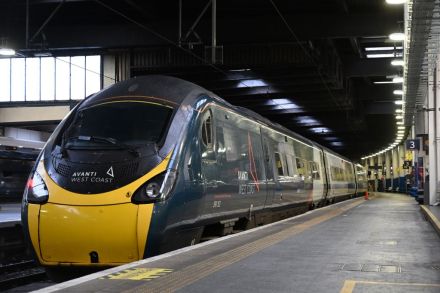
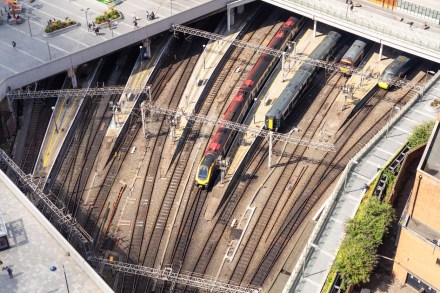
Rail travel has never been cheap, but should we really each be paying £500 a year even if we never set foot on a train? That, according to figures released by the Office of Rail and Road today, is astonishing sum that each household had to contribute to government subsidies for running the railways in the year to March 2022: a total of £13.3 billion. That is just the subsidy for running existing services; it doesn’t include the billions being spent on HS2. Not that this largesse has, of course, prevented rail workers from demanding above-inflation pay rises, and striking when they are denied them. If they were working in any other hopelessly unprofitable industry they would long since have been put out of a job.

The black hole in Jeremy Hunt’s energy windfall tax

From our UK edition

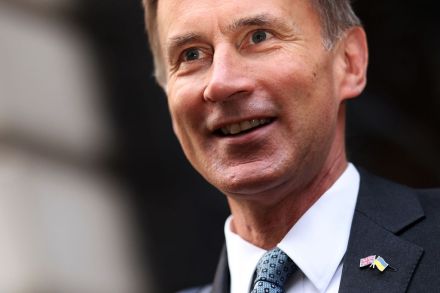
Jeremy Hunt has supposedly just closed a black hole in the government’s finances. But is another black hole opening up before his eyes?   One of the more popular announcements in the autumn statement on 17 November was a rise in the windfall tax applied to oil and gas companies from 25 per cent to 35 per cent. It was popular because it didn’t affect ordinary people directly and because it feeds into the narrative of greedy oil companies making fat profits while households struggle with their energy bill.      By 2028, how much, if any, profits are being made by oil companies is anyone’s guess The 35 per cent windfall tax comes on top of corporation tax, which oil and gas companies already pay at a higher rate than other businesses.

Britain isn’t ready for onshore wind

From our UK edition

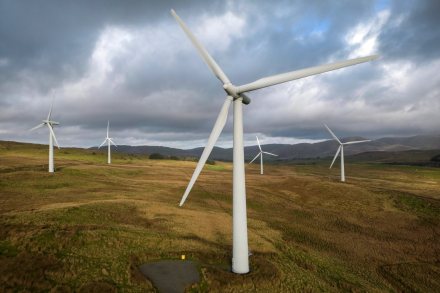
Staging rebellions against their own government has become a way of life for many Tory MPs – but why choose onshore wind farms as the hill on which to die? If Rishi Sunak concedes to the demands of a group of (reportedly) around 50 MPs and lifts the moratorium on onshore wind which has been in place for seven years, it won’t take long before we find out why it was imposed in the first place. There are few places in England where you can build a wind farm of any size without either causing serious annoyance to locals or compromising valued landscapes. Most of our lowlands are so densely packed with housing that it is hard to find sites which are not within half a mile of residential properties, while many of our upland areas are national parks or some other designation.

Why is Britain still sending foreign aid to China?

From our UK edition

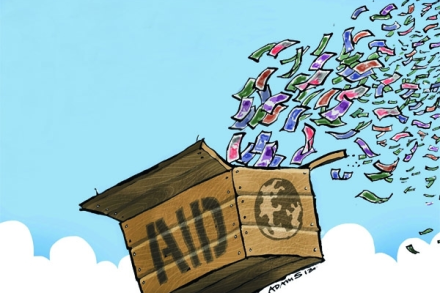
Just why is Britain still spending over £50 million a year in development aid to China? Despite it being the world’s second largest economy and investing in UK infrastructure projects, the latest statistical release by the Foreign, Commonwealth and Development Office shows that in 2021 more than £50 million of bilateral aid money was spend there, putting it just outside the top 20 of countries which received the most UK aid. And this is after the UK government promised to phase out foreign aid making its way to Beijing. Is China still a developing country, and if so then at what stage do we declare it finally to be developed?

Sadiq Khan’s Ulez expansion punishes the poorest

From our UK edition

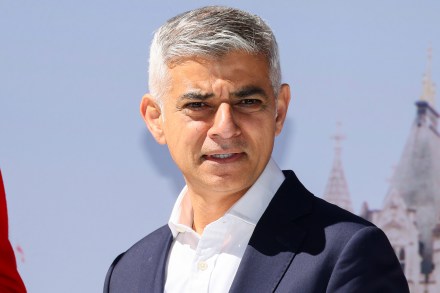
Imagine if Jeremy Hunt announced a new 60p income tax band that was payable only by people who earn less than £20,000 a year. Or if he reversed council tax so that Band A homes paid three times as much tax as Band G homes, rather than the other way round. There would be more than outrage, perhaps riots. Why, then, do things work so differently with green taxes?  Today, Sadiq Khan has announced that London’s ultra-low emissions zone (Ulez) will be extended to cover the entire city, rather than just the area inside the north and south circular roads as at present. It will mean drivers of non-compliant vehicles having to pay a daily charge of £12.50 to use the roads. Yet where is the opposition?

The unions are losing their power

From our UK edition

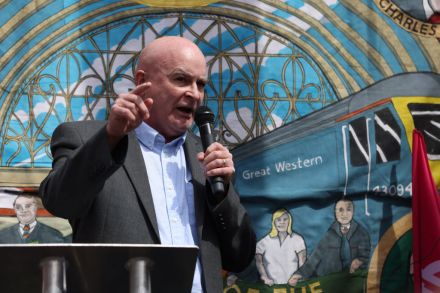
The rail unions have announced further strikes for December and January. Nurses have already voted to strike for the first time in over a century. Now university lecturers, postal workers and Scottish teachers have joined in. So are we headed for a second Winter of Discontent – emulating the last months of the Callaghan government in 1979, when the rubbish piled up in Leicester Square and the dead went unburied? Things would have to get a whole lot worse before we get anywhere close to matching that grim season. In 1979, the number of days lost to strikes reached a post-war peak, at 29.5 million. Last time the unions threatened a national strike, in response to the coalition cuts in 2011 the figure was 1.4 million. But even 1979 looks mild compared with what went before.

Will the UK’s economy shrink next year?

From our UK edition

The OECD has marked Britain down as the only G7 country (and the only major country bar Russia) expected to suffer a shrinking economy next year. But how accurate are its predictions? A year ago, it predicted that inflation in the UK would peak at 4.9 per cent in the first half of this year before falling back to 2 per cent by the end of next year. The economy was going to grow by 4.7 per cent this year followed by a further 2.1 per cent in 2023. The government would bite off any hand that offered that now. It can be excused for failing to predict the Russian invasion of Ukraine. But this is hardly the first time economic forecasting by the OECD and everyone else has proved somewhat wide of the mark.

Why does Rishi Sunak sound so desperate?

From our UK edition

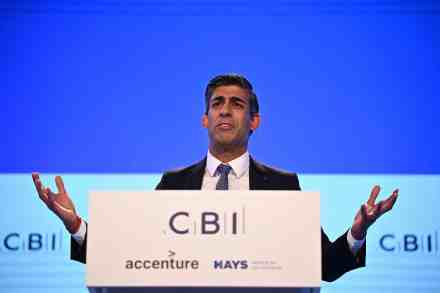
A year ago Boris Johnson lost his place in his speech to the CBI annual conference. He started blathering on about Peppa Pig World, after having treated young Wilfred to a day out there the day before. It was excruciating, but at least it was fun. It is hard to say the same about Rishi Sunak’s address to the CBI this morning.  The CBI ought to be a natural habitat for Sunak, yet he didn’t seem entirely comfortable. His voice seemed a tone higher than normal, so his usual enthusiasm sounded something more like a desperate appeal. He wanted us to know that innovation is a good thing which improves productivity and creates wealth. But doesn’t everyone think that (except perhaps the Green party)?

Ignore the climate doomsters: we should celebrate our 8 billion population

From our UK edition

It almost certainly wasn’t Vinice Mabansag, the baby born in the Philippines last Tuesday and picked out by the UN to personalise the occasion, but somewhere in around about now someone will be born who really does take the world’s population to eight billion. It is a landmark which has attracted the usual Malthusian handwringing about over-population. The fact that the UN decided that the threshold was going to be passed during the COP27 climate conference is surely not coincidence. But far from fearing the eight billionth person on Earth we should instead openly celebrate the occasion. Indeed, there may well come a time when human civilisation looks back fondly at when the population was still growing.

Hunt’s ‘Tesla tax’ doesn’t go far enough

From our UK edition

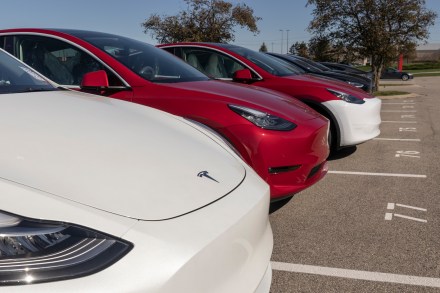
There were some very chunky tax rises in the Autumn Statement, most of them using the device of ‘fiscal drag’, whereby tax thresholds are not raised with inflation. But there is one tax where Jeremy Hunt could have gone further. Fans of electric cars may be displeased to learn that they will have to pay vehicle excise duty from 2025 – the ‘Tesla tax’, as it has been dubbed. But given the dire state of the public finances you have to wonder why the Chancellor is waiting three years to extract more money from this source.

The bogus companies exploiting Britain’s registration rules

From our UK edition

Britain appears to be enjoying a surge of entrepreneurialism, with more than 200,000 start-ups registered at Companies House between April and June this year alone. However, while many of these are genuine cases of people taking the plunge and embarking on their dream of opening a tea shop, launching a webinar app or whatever, an awful lot are not going to be contributing any cherries to our national pie – and some might well be pilfering a few. Among those unlikely to be contributing are the 36 companies registered last year to a single address in Bristol – not a business park but a small semi-detached house. Or the 95 registered, apparently by Romanian nationals, at 65 different houses in the same Herefordshire street since January last year.

The case for letting council tax rise

From our UK edition

We have now been primed for so many tax rises that Thursday’s autumn statement will inevitably come as some form of relief. Whatever Jeremy Hunt announces is sure to be milder than the possibilities fed to us over the past few weeks. But there is one suggested tax rise which is far too mild, and far too reasonable. Local authorities, it has been floated, may be allowed to put up their council tax bills by up to 5 per cent without having to put it to the public in a referendum (a referendum which, needless to say, would swallow up a good slice of any extra revenue gained). If the government wants to continue to fund social care from council tax it should look at introducing extra council tax bands Five per cent would amount to a sharp rise in council tax compared with recent years.

Crypto is being hoisted by its own petard

From our UK edition

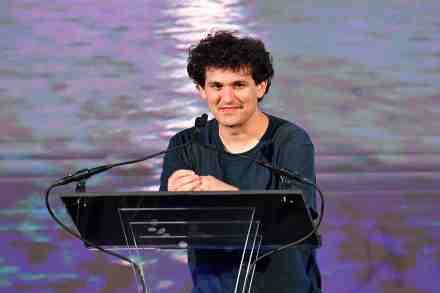
Like Liz Truss, Sam Bankman-Fried will be the stuff of pub quizzes: who lost his entire $16 billion fortune in days? A quick trawl of the internet suggest his only real challenger in losing so much money so quickly was Masayoshi Son, the founder of Softbank, who was estimated to have made a paper loss of $70 billion in the dotcom crash. But he wasn’t completely wiped out, and retained considerable wealth as Softbank rose again. Bankman-Fried, on the other hand, is believed now to be worth pretty much zero following last week’s collapse of the crypto exchange he founded, FTX. At its peak, Bankman-Fried’s stake is estimated to have been worth $26 billion, and it was still worth many billions in the days before its sudden collapse. All this by the age of 30.

Are there signs inflation has peaked?

From our UK edition

Is the inflationary spike past its peak? That is the obvious reaction to the news that US inflation fell to 7.7 per cent in October, down from 8.2 per cent in September and significantly lower than the 8.0 per cent that markets had been expecting. Clearly, inflation remains high, but US inflation is now lower than at any stage since January. A further couple of months of falls would seem to indicate that, for now, inflation has been tamed. It ought to come as no surprise. The US Federal Reserve has been fighting inflation aggressively all year with interest rates. It is some way ahead of the curve being followed by the Bank of England and the European Central Bank. Moreover, a slowing economy ought to bring down prices as consumers draw in their horns.

The true cost of renewable energy

From our UK edition

Having delivered his platitudes on climate change at Cop27, Rishi Sunak returns to a more pressing problem: how to keep Britain’s lights on this winter. Last week it was revealed that the government has been wargaming a ‘reasonable worst-case scenario’ in which blackouts last up to a week. Whether those fears prove unfounded or not, there is a huge and growing hole in the future of Britain’s electricity supply, with little to explain how it will be filled. The lights might not go out this winter, but there is a reckoning coming as Britain attempts to steer towards net zero. Over the past decade the National Grid has succeeded in virtually ending coal power in Britain. The proportion of our electricity generated by coal fell from 29.5 per cent in 2011 to just 2.

Britain would be wrong to pay climate change reparations

From our UK edition

Is it right that Britain should pay £1.5 billion for developing countries to adapt to floods, cyclones and rising sea levels as Rishi Sunak has announced at Cop27? Absolutely. That is what aid money is for: to help countries cope with natural disasters. If you can spend some of this money in advance of those disasters so that these countries might better be able to cope with them when they do occur, then so much the better. Would Britain be right, on the other hand, to pay reparations to developing countries on the basis that the industrial revolution started in Britain and we, therefore, have high historic carbon emissions? Absolutely not, and for several reasons.

Would a lower foreign aid target be so bad?

From our UK edition

Whatever happened to David Cameron’s promise to spend 0.7 per cent of GDP on foreign aid?    Amid much criticism, it survived Cameron and Osborne’s (failed) efforts to bring the public finances back into balance. Then, following Covid, the then-Chancellor Rishi Sunak cut the target to 0.5 per cent, saying that it would be restored to 0.7 per cent once the government was no longer having to borrow money to fund day-to-day spending. But could it be reduced further still in the Autumn Statement? That is what some fear. Indeed, it has been argued that Britain’s overseas aid budget has already dropped to far lower than 0.5 per cent of our national output.

Brexit isn’t to blame for the economic collapse

From our UK edition

We can be grateful for small mercies. 4 November 2022 will go down as the day when a presenter on the Today programme finally challenged a dodgy statistic trying to blame economic collapse on Brexit. The statistic in question was put forward by former Bank of England governor Mark Carney in an interview with the Financial Times last month in which he said: 'Put it this way, in 2016 the British economy was 90 per cent the size of Germany’s. Now it is less than 70 per cent.'     Was Carney’s ultra-loose monetary policy not part of the cause of today's inflationary environment? Mishal Husain, to her credit, put this to Carney this morning, pointing out that economists had challenged this figure.

Nicola Sturgeon’s oil paradox

From our UK edition

Is oil extraction a form of environmental vandalism which threatens life on the planet, or a source of revenue which could propel Scotland and its people to new levels of wealth? It is little use asking Nicola Sturgeon: she appears to believe it is both. Three years ago, when striking schoolchildren and Extinction Rebellion were telling us that the world must become carbon-neutral by 2025 or face massive loss of life, she told the SNP spring conference: ‘I met some of the young climate change campaigners who’ve gone on strike from school to raise awareness of their cause. They want governments around the world to declare a climate emergency. They say that’s what the science tells us. And they are right.

Why is Rishi Sunak going to COP?

From our UK edition

Whoever Rishi Sunak is taking his advice from, evidently it isn’t me. Last Friday I wrote here supporting his decision to skip COP27 in Egypt, arguing that it is futile trying to persuade the big carbon emitters like China and the US to follow our example and make a legal commitment to eliminating net carbon emissions by 2050 or by any other date – unlike us they simply aren’t going to take a blind leap into a green future without first knowing how they are going to achieve it without ruining their economies.