Ross Clark

Ross Clark

Ross Clark is a leader writer and columnist who has written for The Spectator for three decades. He writes on Substack, at Ross on Why?

The dangerous myth of degrowth

From our UK edition

Britain is beset by low productivity and stagnant growth, and things are not getting better. In the public sector, productivity stands at 7.4 per cent lower than it did before the pandemic. Until we can generate more growth in the economy, we cannot grow richer and real wages cannot grow. An uncontroversial statement, you might think – even if opinions vary on what to do about it. But no. There are people who genuinely don’t want economic growth, who think it an evil that must be ended. Take a comment piece published late last year in the normally sober pages of the scientific journal Nature.

Three years on, is Brexit worth celebrating?

From our UK edition

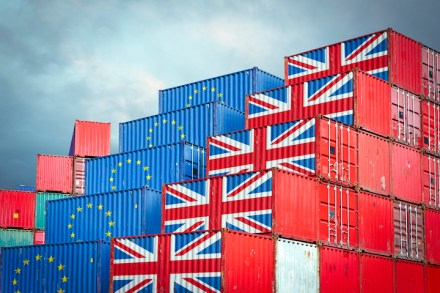
Today, if you feel so inclined to celebrate it, is Brexit Day: the date on which, three years ago, Britain formally left the EU – although the transitional arrangements kept us effectively within the bloc for a further 11 months. But does anyone feel like celebrating? Only really in the Lincolnshire Wash, going by an opinion poll commissioned by the website unHerd. That is the only part of the country, it seems, where most residents still think that Britain was right to bid adieu to its European neighbours. Nationally, 45 per cent of people think Brexit is going worse than expected, according to polling by Ipsos Mori. This figure is a rise from 28 per cent in June 2021. As expected, 66 per cent of Remain voters think it’s been a flop.

What does the IMF want from the UK economy?

From our UK edition

Just what is a UK government supposed to do to keep the IMF happy? This morning it has issued a bulletin predicting that the UK will be the only major economy to shrink in 2023 – by 0.6 per cent – and blaming it on ‘tighter fiscal and monetary policies’. This represents an even-bleaker outlook than the IMF foresaw in October, when it pencilled in growth of just 0.3 per cent. Yet this is the same IMF which last September condemned Kwasi Kwarteng’s mini-Budget for slashing taxes, saying 'given elevated inflation pressure in many countries, including the UK, we do not recommend large and untargeted fiscal packages at this juncture, as it is important that fiscal policy does not work at cross purposes to monetary policy'.

Could Britain cope without Taiwanese microchips?

From our UK edition

So now we know what Britain’s great green economy looks like. First, the good news: construction of electric cars in Britain increased by 4.5 per cent in 2022 to 234,066 vehicles. Now the bad news: overall car production slumped to its lowest level since 1956, with just 775,014 units rolling off the production line. Britain may be leading the world when it comes to setting targets for decarbonisation, but it isn’t helping us to even maintain our manufacturing industry, let alone to turn us into a hotbed of ‘green growth’. The next government target to hit the industry is the Zero Emission Mandate, which will oblige UK producers to make a certain percentage of their vehicles as pure electric models (we don’t yet know what percentage).

It’s no surprise Britain’s manufacturers are struggling

From our UK edition

Every month, we are bombarded with the Consumer Prices Index (CPI), the main inflation measure. It is currently running at 10.5 per cent, and although this is slightly down over the past two months, it is still far, far above the Bank of England’s target of two per cent. But what about inflation for people who are running businesses? The Office for National Statistics (ONS) also publishes a Producer Price Index (PPI) covering inflation for commercial organisations. If you think living costs for consumers are high, count yourself lucky you are not running a factory: the PPI of input prices (i.e. prices of raw materials and other goods) for December has come in at 16.5 per cent. That is down from November (18.0 per cent) and October (20.

The retirement age should be 70

From our UK edition

Remember the Waspi women, who used to leap up and down outside Tory conferences for the right to continue to retire at 60? They claimed that their carefully laid retirement plans had been thrown into disarray by the government’s decision to equalise women’s retirement age with that of men – even though they had been given two decades’ notice and their careful plans for retirement hadn’t, it seemed, quite extended to bothering to find out at what age they would retire. The ideal should be to water down the concept of retirement altogether The government eventually saw them off, but it is once again risking the wrath of 50 and 60 somethings – of both sexes – by threatening to bring forward the date at which the retirement age will be raised to 68.

Is the National Grid’s energy payment offer too good to be true?

From our UK edition

Still resisting installing a smart meter in your home? If so, the National Grid might make you think again – by offering you free electricity. With low temperatures boosting demand for power, and output from wind and solar farms looking a little flaky, the grid needs to cut demand to avoid blackouts. This has prompted it to exercise, for the first time, something called the ‘demand flexibility service’, which offers incentives worth up to £10 or so to customers who are prepared to switch off their appliances for a couple of hours this evening. To take advantage of this offer, you need to have a smart meter and buy your electricity from one of the companies who are signed up to the scheme.

The unhinged environmentalism of Al Gore

From our UK edition

Lucky old Americans. They only had to put up with one fruitcake as president, in Donald Trump. It could have been worse. But for a few hanging chads in Florida in the 2000 Presidential election, they could have ended up with Al Gore.  It isn’t just the hanging chads, though, that have become unhinged, but Gore himself. In an extraordinary speech to the World Economic Forum in Davos, an increasingly crimson Gore angrily berated the rest of the world – Greta Thunberg and other youthful activists excepted – for failing to realise just how close we are to climate apocalypse. 'People are familiar with the thin blue line which astronauts bring back in their pictures from space,' he began. 'That’s the part of the atmosphere which has the oxygen and it’s only 5 to 7 km thick.

The strikes have lost their power

From our UK edition

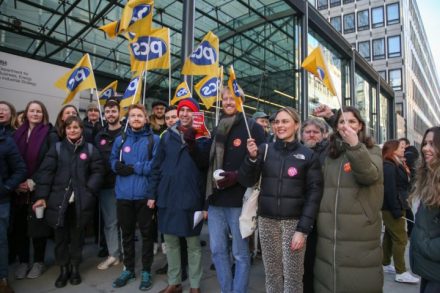
The dead went unburied and the rubbish piled high in Leicester Square. Then a suntanned Jim Callaghan arrived back at Heathrow from a summit in Guadeloupe to tell reporters, in words fairly paraphrased in the Sun headline: ‘Crisis. What crisis?’ The Prime Minister said that he didn’t think the rest of the world, looking at Britain, would see a country going down the tube. The folklore of the Winter of Discontent in 1978-79 is ingrained in the nation’s collective memory. It was the final act of a miserable decade of three-day working weeks and power cuts. Some are suggesting that we are facing a second Winter of Discontent. Certainly, look at the strike calendar for January and there is something going on – or not going on – every day.

Food price inflation hits 16.8 per cent

From our UK edition

Oil prices are down, wholesale gas prices are down, so why isn’t inflation falling a lot faster than it is? The Consumer Prices Index (CPI) for December, announced this morning, stood at 10.5 per cent, down from 10.7 per cent in November and 11.1 per cent in October – a welcome boost but still way, way above the Bank of England’s target of 2 per cent. Petrol and also clothing were down in price, but they were nearly cancelled out by rising food prices. Food prices in the year to December rose by 16.8 per cent, which was up on December’s 16.4 per cent. The good news is that fuel, like other raw materials, is a leading indicator and should point to further falls in the inflation index in the months ahead. The pound is stronger which should temper inflation in imports.

Do we truly know the cost of net zero?

From our UK edition

Just why is Chris Skidmore’s review into the government’s target to achieve net zero carbon emissions by 2050 called an ‘independent’ review? It somewhat stretches the definition of the word ‘independent’. Skidmore was the very minister – the Energy and Clean Growth Minister – who pushed the net zero commitment through the House of Commons in the first place in 2019. He remains a Conservative MP. Putting him in charge of an ‘independent’ review on net zero is analogous to Rishi Sunak putting Boris Johnson in charge of a ‘independent’ review into Brexit. That, of course, would be laughed out of the House of Commons. But things seem to work very differently in the world of net zero.

Could Britain avoid recession altogether?

From our UK edition

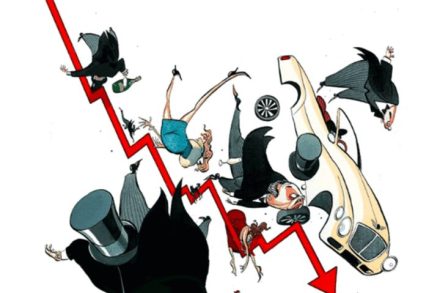
The idea that we face a certain recession has been drummed into our heads for months. The Bank of England recently produced a graph showing recession lasting into 2024. Just yesterday, the International Monetary Fund repeated its assertion that Britain faces an especially gloomy 2023, with recession inevitable – while simultaneously upsetting the House of Commons Treasury select committee by refusing to testify before it.  But could the unthinkable happen? Could Britain now avoid recession altogether? The Office of National Statistics’ (ONS) first estimate for economic growth for November shows that GDP grew by 0.1 per cent – unexciting, but still remarkable given that many economists were expecting negative growth by now.

Is Starmer foolish to attack the Tories’ strike laws?

From our UK edition

Labour feels strongly on the NHS – you can tell that by the number of times Keir Starmer brings up the NHS during Prime Minister’s questions, which he did again today. Historically, the NHS has always been a weak point for the Conservatives. In spite of granting the health service ever more resources, come election time Labour automatically trots out the charge that the Tories are out to privatise or otherwise dismantle the NHS. But has Starmer made a miscalculation in attacking the government’s proposed strike laws, which would oblige the unions to ensure that minimum service levels are maintained in the ambulance service, as well as several other public services, on strike days?

Why Rishi Sunak doesn’t need to fear the unions

From our UK edition

The calendar for January is already pock-marked with strike dates for railway workers, ambulance staff, postal workers and others. But does the current situation really deserve to be compared with the Winter of Discontent in 1979, when the rubbish piled high in Leicester Square and dead went unburied (as the gravediggers went on strike)? The answer is surely no – or at least not yet. So long as the government holds firm against wage demands, Rishi Sunak should have no fear of being humiliated as Jim Callaghan was then. As was the case 44 years ago, the unions are engaged in a raw exercise of power. Yet they are struggling a lot more now to bring the government to the table.

Are the rail strikes nearing an endgame?

From our UK edition

With five continuous days of rail strikes this week, it’s beginning to look like we’re reaching an endgame. Someone, or something, has got to give. And it must be becoming gradually clear to the RMT’s Mick Lynch – and the other unions involved – that they won’t necessarily be the ones left standing at the end. They might like to think they have the power to bring the country to its knees, but the past few months has shown the folly of believing that. Even before the current strikes, rail passenger numbers were only three-quarters of what they were before the pandemic. All sorts of organisations have learned to work remotely when they need to. Nor, in contrast to the 1970s, do we rely on coal trains to keep power stations working.

How likely is a global recession this year?

From our UK edition

The best thing that can be said about global economic growth prospects for 2023 is that no-one is expecting very much. On that basis, hopefully, things can only get better. Over the weekend, International Monetary Fund (IMF) managing director Kristalina Georgieva said that she expects a third of the globe to be in recession, including half of the EU. That doesn’t sound too bad on the face of it. If the IMF’s predictions proved to be accurate – and the record of economic forecasting is pretty dire – it would still mean that the economy was still growing in two thirds of world. We might, yet, avert global recession. But then how often does the world as a whole sink into recession?

Putin has failed to bring Europe to its knees

From our UK edition

Unforeseen events which provoke global crises – such as Covid -- have come to be known as ‘black swans’. By the same token, the end of 2022 has just been visited by a great big fluffy white swan.     Over the past 24 hours the main benchmark for European gas futures – the Dutch Title Transfer Facility (TTF), for gas to be delivered in February – has crashed below 80 Euros per MWh, taking it below the level it was on 23 February, the day before Russia invaded Ukraine. This, in the dead of a winter which we have been warned many times could see Europe’s shivering masses rioting in response to blackouts.

Is global warming behind America’s snowstorms?

From our UK edition

Is there any weather condition which cannot be blamed on anthropogenic global warming (AGW)? No, it seems, judging by the reaction in the US liberal press to the snowstorm which has engulfed much of the US over the past few days. According to Bloomberg it is all down to a loopier-than-normal jet stream, “the kind of event that could become more common as climate change accelerates”. A similar claim was made by Eric Mack, a correspondent on Forbes, who wrote this week that the poles are warming disproportionately and that, “studies [he didn’t say which ones] have shown that all this unusual and rapid warming in the north affects the jet stream in new and sometimes weird ways”.

How Britain’s economy might bounce back in 2023

From our UK edition

Whatever happened to the economic boom that was supposed to follow the Covid pandemic? The 2020s, some argued, would be like the 1920s, with an economy roaring its way out of recession, to be remembered as a time of unprecedented wealth and opportunity. That is not how things have turned out so far.  While economic growth in the UK during 2022 is still likely to come out positive, the growth was concentrated in the first half of the year – in the third quarter GDP fell by 0.3 per cent. The economy, according to the Office of National Statistics, is now 0.8 per cent smaller than it was on the eve of the pandemic at the end of 2019.

Most-read 2022: Crypto is dead

From our UK edition

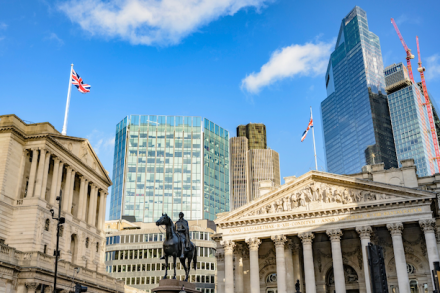
We’re finishing the year by republishing our ten most popular articles from 2022. Here’s number eight: Ross Clark’s piece from May on the crypto crash. When Britain voted for Brexit, Macron boasted that Paris would eat the City of London’s lunch. It didn’t quite work out that way, with most league tables continuing to put London as the number one or two financial centre, with not a single EU city in the top ten. Emmanuel Macron's government has now announced that it has invited Binance, a crypto exchange site, to set up a European HQ in Paris. You have to ask: has Macron leapt on a bandwagon which has already started to lose its wheels?