Ross Clark

Ross Clark

Ross Clark is a leader writer and columnist who has written for The Spectator for three decades. He writes on Substack, at Ross on Why?

The UN’s global net zero target isn’t realistic

From our UK edition

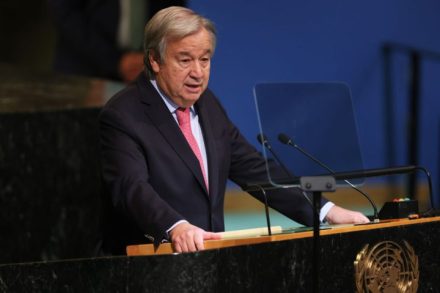
Does UN Secretary General Antonio Guterres really have any hope of persuading rich countries to commit to achieving net zero by 2040? This was a target he declared was vital as he launched the Intergovernmental Panel on Climate Change’s (IPCC’s) Sixth Assessment Report yesterday. He will have his work cut out. The trouble is that while a handful of mostly European countries have enthusiastically set legally-binding targets to eliminate carbon emissions, mostly by 2050, the list is not really growing very fast at all. According to the ‘net zero tracker’ published by the Energy and Climate Intelligence Unit, there are currently 17 countries which have bound themselves by legal net zero commitments.

Credit Suisse’s takeover delivers a shock to bond investors

From our UK edition

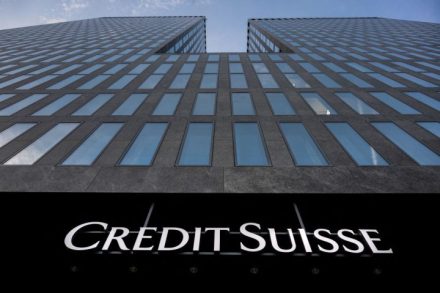
If the emergency takeover of Credit Suisse by UBS was supposed to calm markets, it is not looking that way this morning. Markets are sharply down in Asia, and the FTSE fell by 1.5 per cent on opening this morning. Banks were the biggest fallers, losing up to 7 per cent of their value. There is a nasty realisation that the contagion from the banking crisis of the past week could have a lot further to spread. This is a nasty shock to investors who thought that bond funds offered much greater security The centre of this morning’s panic are things known as Additional Tier – or AT1 – bonds, about which we are going to hear a lot more in coming days and weeks.

Credit Suisse has been bought out – but at what cost?

From our UK edition

Another Sunday, another banking takeover swiftly arranged before markets open on Monday morning. This time Credit Suisse has agreed to be bought by fellow Swiss bank UBS for 0.5 Swiss Francs a share – less than a third of its closing price on Friday and less than a tenth of what the bank was worth a year ago. A banking collapse which was beginning to look inevitable in spite of a 50 billion Swiss Franc bailout by the Swiss central bank on Friday has been averted, market turmoil has been avoided, or postponed, jobs have been saved (although many are expected to be lost in London as Credit Suisse’s investment banking operations are shrunk). Shareholders have not been left empty-handed. But at what cost?

A morally simplistic kids’ film: Extrapolations reviewed

From our UK edition

We are all, of course, pretty well doomed. We know that because Al Gore told us so in his documentary An Inconvenient Truth. But just in case we didn’t get the message, the producer of that film, Scott Z Burns, has come up with a series of dystopian mini-dramas, Extrapolations, which are supposed to give us a window into the future. The series, the first three episodes of which have just dropped on Apple TV, is the latest in a genre which has given us The Day After Tomorrow and Don’t Look Up. The good news is that we have at least 47 years left, because 2070 is the date of the last of the dramas reaches (we will have to wait until 21 April for that one). Given that that episode is entitled Ecocide, however, that may be just about our lot.

Can the UK economy outperform Russia?

From our UK edition

First the good news. Unlike the IMF, which predicted in January that the UK economy would have a worse 2023 than even Russia, the OECD’s latest forecast has Britain outperforming Russia. Now the bad news: the OECD still predicts the UK to perform worse than any European country other than Russia.  Forecasts aside, the actual data for the UK economy is a slightly improving story Its latest bulletin, published this morning, sees Britain shrinking by 0.2 per cent in 2023, compared with growth of 0.3 per cent for Germany, 0.7 per cent for France and 0.8 per cent for the Euro area as a whole. The Russian economy, by the way, is expected to shrink by 2.5 per cent.  Why the negative outlook for the UK?

Will Credit Suisse trigger a global banking crisis?

From our UK edition

When your largest single shareholder decides that enough is enough, that it is no longer prepared to throw good money after bad to prop up your finances, you really do have a problem. And that is exactly what has happened to Credit Suisse this morning. The Saudi National Bank, which owns a 10 per cent share in the Swiss bank, announced that it is no longer prepared to put up any more capital to prop the bank up. Credit Suisse shares promptly fell by 20 per cent before trading was suspended. Yes, Saudi National Bank has trashed the value of its own holding – but evidently reckoned that that is a better course of action than continuing to throw money at the problem. For a bank, that is the smell of death.

Is Silicon Valley Bank’s collapse a turning point for the markets?

From our UK edition

What is it about March? October, the month of the 1929 Wall Street crash and the crash of 1987, is often cited as the most dangerous for investors. Yet in the past three crashes or bear markets it has been March which saw the worst. The FTSE bottomed out in March 2003, shortly before the Iraq invasion, then again in March 2009, just as the Bank of England began its quantitative-easing programme. Then it happened again in 2020 when markets sank due to Covid – they staged a miraculous recovery on the very day that the first lockdown began in Britain. Many investors will be asking whether SVB's collapse has brought forward the expected peak in interest rates Is history about to repeat itself?

Is the collapse of Silicon Valley Bank the tip of the iceberg?

From our UK edition

On the face of it, the takeover of the UK arm of Silicon Valley Bank by HSBC is a triumph for the government. Today, we could have been seeing the collapse of dozens of UK tech start-ups. We could have seen staff going unpaid and shares in tech companies plunging to greater depths than they have yet explored during the correction of the past year.  Instead, things are fairly calm in the tech sector. Well before markets opened this morning, the government had brokered a deal which will allow the Silicon Valley Bank’s facilities to continue without a hitch, thanks to a wholesale takeover by one of the largest banking institutions in the world, with all the security that would seem to offer. Even better, not a penny of public money seems to be involved.

Could Silicon Valley Bank’s collapse lead to a financial crash?

From our UK edition

Tech start-ups tend to involve taking big risks on ideas which are untested both in terms of technology and the market place. Yet it isn’t blind faith in new ideas that is threatening to bring down scores of British tech start-ups over the next few days: it is boring old bonds. Many start-ups have relied for financing on Silicon Valley Bank UK, an offshoot of its larger US parent. Over the last few years, the institution has in turn relied on taking bets on government bonds whose value had been inflated by near-zero interest rates. As interest rates have risen, those bets have gone sour. On Friday, the Bank of England announced that the bank is to enter insolvency.

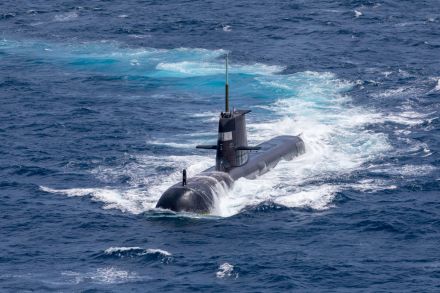
Aukus is looking like a Nato for the Pacific

From our UK edition

How big a deal is it that Australia has chosen a British design for its nuclear submarines rather than the US one that it could have chosen? Does it really justify Rishi Sunak ‘bouncing on the balls of his feet’, as described by one minister? True, the machines aren’t actually going to be built in Britain, but in Adelaide. But it isn’t going to do the UK defence industry any harm to be supplying the know-how. For once, the government can celebrate selling arms to a country which can be trusted not to abuse its military kit, and which is not stringing up dissidents by the dozen.

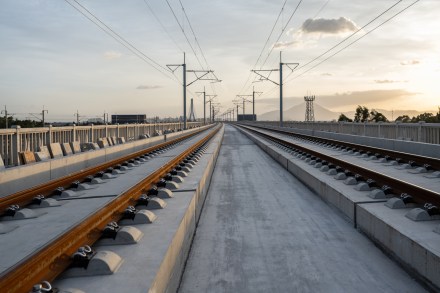
Ministers can’t blame Putin for the disaster that is HS2

From our UK edition

And I thought the SNP were destined to win the award for this year’s most pathetic excuse – after Scottish transport minister Jenny Gilruth blamed the party’s failure to dual the A9 on Putin’s war in Ukraine. Then UK transport secretary Mark Harper turns up and tries to use the very same excuse for HS2’s soaring costs. The Birmingham to Manchester section of the high-speed line will be delayed for two years, he said yesterday, because ‘Putin’s war in Ukraine has hiked up inflation, sending supply chain costs rocketing.’ HS2 has turned out to be an extremely expensive turkey because it was misconceived from the start Much as I despise Vladimir Putin, I’m sorry this just won’t wash.

Why is Whitehall intent on burying the Covid lab leak theory?

From our UK edition

Why does our government have so much trouble criticising China? It doesn’t seem to have had a problem calling out Vladimir Putin. But Downing Street – along with the rest of Whitehall – seems determined to do Xi Jinping’s regime’s dirty work. Over the past ten days we have become used to seeing Matt Hancock as a mad, authoritarian figure determined to lock Britain down during Covid, even when scientific advice did not call for it. Yet it does seem that he was able to consider the prospect that Covid originated in a laboratory in Wuhan. The evidence is not conclusive or overwhelming, not least because the Chinese have used every tactic to prevent scientists finding the truth.

Independent thinking: private schools need reinvention, not abolition

From our UK edition

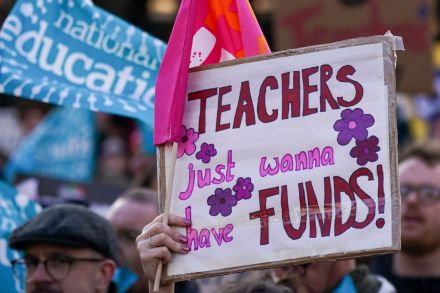
It is one of those ancient mysteries: why has no Labour government been able to abolish private schools? Harold Wilson didn’t spare grammar schools (and nor did Edward Heath’s government, which followed). New Labour, too, for all its reforming zeal, never dared disembowel the independent sector. When the party did promise to do so – in 1983 and 2019 – it lost heavily. But are private schools about to run out of luck? For once we have a Labour opposition which is threatening to end their charitable status – and which also looks as if it will cruise to victory at the next general election. Labour’s pre-manifesto has promised to end tax breaks in order to ‘fund our vision for the education system’. It has suggested that it hopes to raise £1.

Will Tony Blair ever give up on ID cards?

From our UK edition

Is Tony Blair ever going to give up hope of foisting ID cards on us? As prime minister, he was defeated over the issue – his plans were eventually dropped by the incoming coalition in 2010. He tried again during the pandemic, trying to sell us the idea of vaccination passports. And now he is at it again, this time with his old sparring partner William Hague. Together they have written a paper for Blair’s Institute for Global Change, called A New National Purpose: Innovation Can Power the Future of Britain, making the not-altogether-novel observation that computers can be jolly useful.

The £5.4 billion government surplus masks a larger economic issue

From our UK edition

There have been celebrations this morning about a government surplus of £5.4 billion last month, and people are even talking about a ‘windfall’ for Chancellor Jeremy Hunt in next month’s Budget. But all this shows is how conditioned we have become to appalling economic news – and that we will grab at anything which seems to indicate a shaft of light. Nevertheless, any talk of a government ‘surplus’ masks the very real problem the government still has While any surplus is to be welcomed – and last month’s borrowing figures are far better than the Office for Budget Responsibility predicted – we would be in serious trouble if the government had not succeeded in running a surplus last month.

Sadiq Khan’s free school meals plan is fatally flawed

From our UK edition

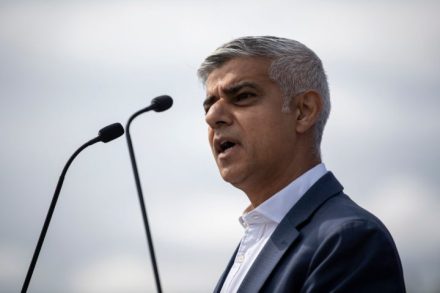
Sadiq Khan said told Radio 4 listeners this morning that, while he was grateful for the free school meals he received as a child at his primary school in Tooting, he felt stigmatised by having to queue up and eat separately from children whose parents were paying for their meals. If that is what his school was really doing then it is a pretty horrible way to treat children – and create class divisions where they don’t need to exist. Sorting out payments for school lunches can, of course be handled away from children’s noses, so none of them know who is eating for free. But does Khan’s childhood embarrassment really justify what he wants to do now: offer free school meals to every primary school pupil in London?

Does the NHS need any diversity officers at all?

From our UK edition

The HSJ, as the Health Service Journal likes to be known these days, has managed to produce one of the most intriguing headlines of the week: ‘NHS is “pandering to ministers” by cutting its equality, diversity and inclusion teams to 35 whole-time posts.’ A mere 35? That, by the way, is merely the central administration of the NHS in England. It doesn’t include NHS trusts. Overall, according to a set of Freedom of Information requests submitted by the Taxpayers’ Alliance last October, NHS England employs 800 diversity and inclusion officers, at a cost of £40 million a year. What do they all do? Accuse each other of discrimination, for one thing. NHS England is currently embroiled in a tribunal claim from its own joint director of equality, diversity and inclusion.

Another windfall tax isn’t the answer to Centrica’s profits

From our UK edition

British Gas has behaved disgracefully towards energy customers who have fallen into arrears, sending agents to break into their homes and install prepayment meters – activities for which the company deserves to be ordered to pay millions of pounds in compensation. Meanwhile, Centrica, the owner of British Gas, has just reported full-year profits of £3.3 billion, more than three times that it made in the previous year.   Both are true, yet that doesn’t mean they are connected. When you drill down into Centrica’s profits you find that the vast majority are being made in the upstream part of the business – producing oil and gas – and in trading in the wholesale market.

Why no one wants a Ford Fiesta anymore

From our UK edition

The world of business has long been creative with feeble excuses. Even so, the explanation given by Tim Slatter, chairman of Ford in Britain, for slashing 1,300 jobs in the UK, 1,000 of them in product development, does take the biscuit. The company is moving towards a wholly electric fleet of cars by the end of the decade, he says, and as they are simpler cars they will need less product development. Really? Electric cars may have fewer moving parts than their petrol equivalents and in that sense are less complicated. But they are also relatively novel, especially from a mass-market perspective. There are a great number of technological problems which have to be overcome before they can fulfil the same function as petrol and diesel cars.

Is Brexit really costing households £1,000 each?

From our UK edition

They never give up, those Remainers. Like the Japanese soldier found on a Pacific island still fighting the second world war – in 1974, every other day there is another loose shot from the undergrowth. After last week’s Ditchley Park gathering involving Lord Mandelson, David Lammy and others, comes an interview in the Overshoot with Monetary Policy Committee (MPC) member Jonathan Haskel. In it, Haskel makes the claim that Brexit is costing each British household £1,000 a year through lost trade and investment. The beauty of modelling is that you can get it to tell you pretty much anything you want it to Let’s start with the assertion that this is a loss per household.