Ross Clark

Ross Clark

Ross Clark is a leader writer and columnist who has written for The Spectator for three decades. He writes on Substack, at Ross on Why?

Don’t get too excited about deglobalisation

From our UK edition

One difference between the rivalry with China and the cold war is that the Soviet Union was completely economically segregated from the western world. That is not the case with China nowadays: cheap goods have flooded western markets for decades. But are we heading back to the multipolar world of the 20th century? China and the West are out of step in terms of monetary policy. China’s central bank actually moved to reduce interest rates this morning, after stronger-than-expected data on wages. A short-term lending rate was cut from 2 per cent to 1.9 percent. How come? Because inflation in China is beginning to go into reverse as its economy sags.   China’s Consumer Price Index (CPI) is running at just 0.2 per cent.

Is Justin Trudeau right to blame Canadian wildfires on climate change?

From our UK edition

Planes grounded in New York, people told to stay indoors – and an actress forced to leave the stage on Broadway because of the smoke. Canada is ‘on fire’ and New York is choking from the drifting smoke – and it is all the result of man-made climate change. We know this because Justin Trudeau and other have told us so.  'We’re seeing more and more of these fires because of climate change,' tweeted Trudeau this week, 'We’ll keep working – here at home and with partners around the world – to tackle climate change and address its impacts.'  US vice president Kamala Harris added her ha’porth of wisdom of wisdom by tweeting: 'Millions of people are experiencing dangerous air quality due to wildfires across Canada, which are intensifying because of the climate crisis.

Is AI all it’s cracked up to be?

From our UK edition

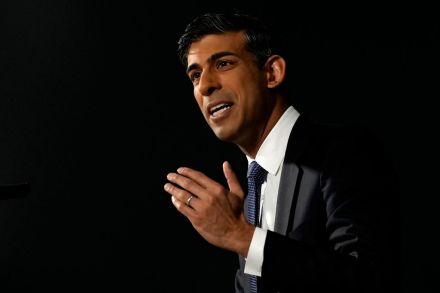
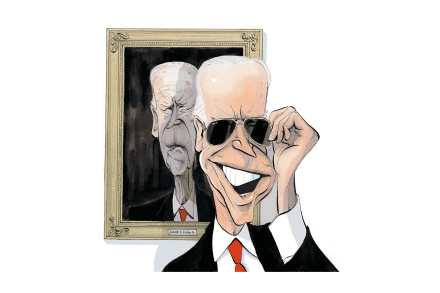
So is Artificial intelligence (AI) to be a new engine of growth for the UK economy? That is Rishi Sunak’s hope. Ideally, he might have been using his trip to Washington to announce a trade deal between the UK and the US. Of course, that's not going to happen: Joe Biden has made it clear that he doesn’t regard trade deals – with anyone – as a priority, not least because the crowning achievement of his administration so far, the Inflation Reduction Act, is a huge protectionist device dressed up as a fiscal and environmental measure. The Prime Minister then seems to have decided that securing something on AI is the next best thing.

Labour’s tax raid on private schools isn’t the money spinner it thinks

From our UK edition

Would Labour’s plan to impose VAT on private school fees really raise £1.6 billion, as the party claims? Not according to a research paper by the education think tank EDSK. The £1.6 billion figure is often attributed to the Resolution Foundation, yet the original source, says EDSK, is a paper by the Fabian Society in 2011 – a paper which it says got its figures wrong in several different respects. It started with the assumption that there were, in that year, 628,000 pupils enrolled in independent schools. Yet this government figure did not just include pupils at fee-paying schools, but also children enrolled at academies and city technology schools. These were described as ‘independent’ because they were outside the control of local authorities.

A universal basic income wouldn’t help unemployed Brits into work

From our UK edition

If you think nothing works in Britain now, just wait. Wait, that is, until a future government (I’ll guess a Labour one, but can never tell with the Conservatives any more) introduces a universal basic income – that is a guaranteed, unconditional income for everyone, regardless of means, and regardless of whether they are working, looking for work or completely hostile to the concept that they should ever be expected to earn their keep. Some on the left have been plugging away at the idea of a basic income for years, but the left-wing think tank Autonomy has now announced a pilot scheme by which 30 volunteers will be randomly selected to receive £1,600 a month for two years. It says it is seeking funding from councils, philanthropists and local authorities.

The problem with calculating climate-related excess deaths

From our UK edition

Another week, another extravagant claim for climatic doom goes unchallenged. Speaking on the Today programme on Wednesday morning, Dale Vince – the founder of Electrocity and donor to both Don’t Stop Oil and the Labour party – asserted: '40,000 people across Europe died from excess heat last summer. That’s part of the climate crisis. People are dying, people are being made homeless, whole countries are flooding.'  Whole countries flooding? It is unclear which countries Vince claims have flooded in their entirety, but a claim by a Pakistan government minster that a third of that country was under water in floods last summer has been thoroughly debunked by UN satellite data, which shows that the area affected by floods at some point last August was around 8 per cent.

Abolishing inheritance tax would be a mistake for the Tories

From our UK edition

Liz Truss’ fallen star has been rising again of late (at least a few degrees above the horizon) as gilt yields return to the heights they reached during her brief premiership. Together with sluggish GDP figures this has led many to wonder whether she was not right, after all, to make growth the absolute priority of her economic policy. Whether she can maintain her momentum following her latest intervention, adding her name to the 50 Conservative MPs calling for the abolition of inheritance tax, is another matter. There would be nothing more fatal to the Tories than to go into the next election offering one tax cut – for millionaires – after having raised taxes for ordinary working people.

Could falling house prices be here to stay?

From our UK edition

Not for the first time, a gulf has opened up between house price indices. This morning, Nationwide reports that average prices fell by 0.1 per cent in May (following a surprise rise of 0.4 per cent in April), taking annual house price inflation down to minus 3.4 per cent. That will surprise no-one, given the rise in interest rates over the past year. Except, that is, for the fact that the Office for National Statistics (ONS) reported last week that average prices are up by 4.1 per cent over the year. On the one hand we appear to be entering a slide, which could easily turn into a crash. On the other, the market ploughs on ahead, shrugging off the negative influence of rising interest rates and making people wonder whether the UK housing market will ever fall.

When will striking rail workers admit defeat?

From our UK edition

It is nearly a year now since the latest round of rail strikes began. They have cost union members thousands of pounds in lost income. But according to Mick Whelan, general secretary of Aslef, on the Today programme this morning the union has made ‘zero progress’ in its negotiations with the Rail Delivery Group, which represents train companies. This was the point, eleven months in, at which Arthur Scargill finally gave up and sent his members back to work ‘with their heads held high’. But not Whelan, apparently. He indicated that he is digging in for the even longer haul, contemplating another year's worth of strikes.

Brexit could fix inflation

From our UK edition

Has food price inflation finally peaked? Figures released by the British Retail Consortium (BRC) this morning reveal that food prices were up 15.4 per cent in the past 12 months, down from 15.7 per cent in the year to April. Last week’s figures from the Office of National Statistics also showed a small fall, from 19.2 per cent in March to 19.1 per cent to April. The BRC’s methodology is different from the ONS’s, not only in that it tends to produce slightly lower figures but that it also runs slightly ahead. The inflation story has subtly changed, from being one led by energy prices to being dominated by food prices Over the past few months, the inflation story has subtly changed, from being one led by energy prices to being dominated by food prices.

Keir Starmer has become the Just Stop Oil candidate

From our UK edition

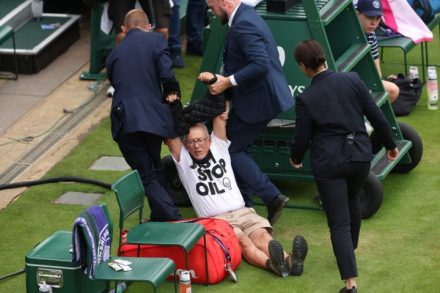
So, Just Stop Oil is now His Majesty’s Official Opposition. Keir Starmer has adopted the group’s main demand – no development of new oil and gas reserves – as his own. Presumably he hopes to attract green votes, especially in Scotland where the SNP has a similar policy. But it means going into the next election with a policy which is both economically and environmentally illiterate. Even with a drive towards clean energy – and even if tricky targets to outlaw new gas boilers and petrol and diesel cars could be met – Britain is going to remain dependent on oil and gas for decades to come. In spite of a boom in the construction of wind and solar farms, solar and wind currently accounts for little over 4 per cent of our total energy needs.

The madness of Sunak capping food prices

From our UK edition

It wasn't long ago that supermarkets stood accused of selling food too cheaply. Their price wars and two-for-the-price-of-one deals were destroying farmers, undermining local shops and making us fat. How long ago that now seems, with the government now considering 1970s-style price controls. While the measures would apparently be voluntary, they would fix the prices of a number of basic foodstuffs – the sort which Jack Monroe keeps her eyes on. The price of price-fixing is likely to be more pictures of empty shelves, which of course will be blamed on Brexit You don’t need to have studied economics in any depth to understand the problem with price controls. In a free market, prices settle at the intersection of the supply and demand curves, ensuring that both are kept in balance.

Online shopping has not killed off the high street, yet

From our UK edition

It wasn’t supposed to turn out this way, not at the beginning of the year when the wise and good were confidently predicting that Brexit-bound Britain would turn out to have the worst economy in the developed world in 2023. The UK economy would be contracting, they said, while almost everyone else's expanded. We have had enough of trying to buy clothes online, though we are happy to buy other stuff in this way Now, as Germany descended officially into recession this week, more evidence emerges that Britain, so far, has avoided the same fate. The Office for National Statistics' retail figures for April show that sales volumes were up 0.5 per cent on the month. This needs to be read in conjunction with March’s figures, which were revised downwards to a fall of 1.

Electricity is to blame for stubbornly high energy prices

From our UK edition

So much for price-fixing. The energy price cap is finally set to fall, with the result that the average household should have to pay no more than £2,074 a year for its energy from 1 July. The price cap itself has fallen from £3,280, but bills were in practice limited by the government’s other great intervention in the energy market: the energy price guarantee. This was, in effect, a cap on the price cap which limited prices at a level where the average household paid no more than £2,500 a year. As a result, household bills will fall from an average of £2,500 to £2,074 – a drop of £426.

What will it take to crash the housing market?

From our UK edition

Is there anything that might cause the much-predicted crash in UK house prices? Not – evidently – a pandemic (which perversely caused prices to surge). A sharp, upwards jerk in the Bank of England’s base rate to 4.5 per cent didn't do it either.    The latest edition of the Office for National Statistics's UK House Price Index – the most comprehensive of house prices indices, but which tends to trail Halifax and Nationwide – shows that prices rose by an average of 4.1 per cent in the 12 months to March. That is down from 5.8 per cent in February and is lower than inflation, indicating a real-terms fall in house prices. But it hardly represents a crash.

Is Germany turning against the EU’s Green Deal?

From our UK edition

Last week it was President Macron who was rowing back on green measures. In a speech he asserted that Europe has, for now, gone far enough – if it introduces any more regulations without the rest of the world following suit then it will put investment at risk and harm the economy. This week, the European People’s Party – a centre right grouping which includes the German Christian Democrats, the party of Commission President Ursula von der Leyen – seems to be joining in. Germany now seems to be taking over from France as the seedbed of opposition towards zero carbon policies The party is reported to be considering withdrawing its support for the European Commission’s Green Deal.

Britain’s rivers are filthy

From our UK edition

The name Chris Whitty will forever be associated in people’s minds with Covid-19. But in a recent cri de coeur he reminded us not only that he continues to exist following the end of his daily appearances on our TV screens, but that there are many other ways in which pathogens are out to get us. In a newspaper piece written with the chairs of Ofwat and the Environment Agency, the Chief Medical Officer raised the subject of Britain’s filthy rivers. While Britain’s environment has improved in many ways, with cleaner air, more trees and some species returning after centuries’ absence, our rivers have defied the trend, being more afflicted with sewage than ever before.

BT replacing jobs with AI is nothing to be scared of

From our UK edition

BT has announced that it will cut up to 55,000 jobs by the end of the decade. The company currently employs 130,000 staff, and it could cut up to 42 per cent of its workforce. BT has struggled in recent years as the one-time nationalised giant has had to keep up with a rapidly-evolving communications business. The fact remains that no technology yet invented has prevented employment reaching new highs But the greatest comment will be caused by the 10,000 jobs that BT says it will replace with artificial intelligence. AI can indeed help perform some functions that were previously performed by humans, making staff redundant. In BT’s case, the company says it will employ AI to detect and fix software problems in the network.

Starmer’s savvy Brexit position

From our UK edition

Keir Starmer has made the anodyne demand that Britain seek a ‘closer trading agreement’ with the EU. But why doesn’t he go the whole hog and make it Labour policy to rejoin the single market?  The Labour leader could hardly be accused of seeking to reverse Brexit. Some Leavers, prior to the 2016 referendum, wanted Britain to stay in the single market after Brexit – including Daniel Hannan and, on many occasions, Boris Johnson. So surely rejoining the single market, but staying out of the EU, could be the compromise which would please the greatest number of the public, propelling Starmer into Downing Street as a unifying force?

Europe is turning against net zero

From our UK edition

The contrast couldn’t be greater. In Britain a wealthy cabinet minister goes on television to boast of how he is installing a heat pump in his home – something his government is proposing to force on millions of British homeowners over the next few years in spite of them costing many thousands of pounds more than a gas or oil boiler. Meanwhile, in France, the President makes a speech calling for a ‘regulatory pause’ on green issues in order to push for the ‘re-industrialisation’ of his country. So far, Britain and the EU have moved more or less in tandem on climate change – which is not all that surprising given that until three years ago Britain was a member of the EU and therefore within its regulatory orbit.