Ross Clark

Ross Clark

Ross Clark is a leader writer and columnist who has written for The Spectator for three decades. He writes on Substack, at Ross on Why?

Net zero zealots will probably find a way to stop Rosebank

From our UK edition

So, Rosebank is to go ahead, or so we think. The North Sea Transition Authority has granted a licence for the extraction of oil and gas from the field, which lies to the west of the Shetlands. For its part, Labour has said that while it opposes the project, it will not withdraw the licences should it win power next year. Despite the best efforts of Mark Carney and others, someone evidently thinks it is worth investing £3.1 billion in new oil and gas production. That is the sum that the developers, Equinor and Ithaca Energy, say they will invest in the first phase of the scheme. Eventually, more than £8 billion is expected to be invested. But this isn’t, one suspects, the last word on the subject.

Will Ulez spell the end for Sadiq Khan?

From our UK edition

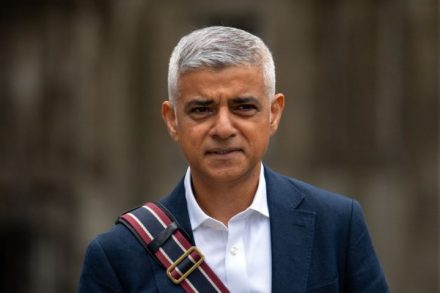
Sadiq Khan showed little sign of being discomfited by the result of the Uxbridge by-election in July. In spite of Keir Starmer imploring him to reflect on his Ulez expansion he went ahead anyway, with a token offer in the form of slightly enhanced grants for motorists replacing elderly vehicles. But perhaps Khan should have taken more notice of Starmer. A poll by JL Partners for the Sun this morning reveals that Khan’s lead over Conservative candidate Susan Hall has fallen to 3 per cent, with Khan now on 35 per cent of the vote and Hall 32 per cent.

Is it foolish to think the world can achieve net zero by 2050?

From our UK edition

Most discussion of net zero in Britain seems strangely parochial. We only really talk about UK emissions, even though they account for only one percent of the global total. But how is the rest of the world getting on at reducing carbon emissions? This morning the International Energy Agency (IEA) published the latest edition of its ‘Net Zero Roadmap’ showing where the world is on reducing carbon emissions and what more it needs to do to eliminate them entirely.   First the good news. The world is on course to invest a record $1.8 trillion (£1.5 trillion) in clean energy over the course of 2023.

Equal pay claims are a disaster for local councils

From our UK edition

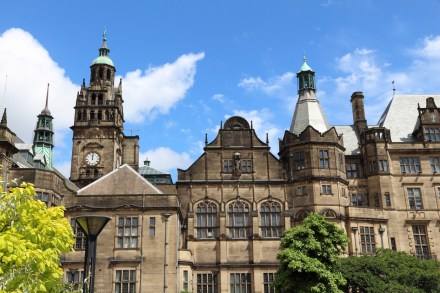
Bankrupt councils have gotten into trouble through profligate spending on loony projects like month-long Pride events and training staff in critical race theory. That might be true, but it is only partially true. Another big factor, it is becoming painfully clear, is equal pay claims – which have cost Birmingham City Council up to £760 million alone. Next in the firing line is Sheffield, where the GMB union claims to have opened the lid on a simmering pot of injustice which it plans to follow up with multi-million pound claims against the council.

As Lego has found out, the world isn’t ready to give up plastic

From our UK edition

Predictions of the demise of the fossil fuel industry are based almost wholly on energy. In future, goes the argument, we are going to use clean energy and so we will be able to leave fossil fuels in the ground as ‘stranded assets’, as Mark Carney would call them.  It is proving hard enough to decarbonise the energy sector, but it tends to be forgotten that at present we rely on coal, gas and oil for many other things, too, such as fertilisers, a reducing agent in the steelmaking process and the manufacture of plastics. While there may be substitutes in theory for some of these uses, the experience of Lego demonstrates how difficult it is to replace oil.

Why is Sunak cutting a tax only paid by the rich?

From our UK edition

Last week, Rishi Sunak struck a blow for ordinary people against the elitist project that is net zero, assuring them that a government led by him will not be loading them with tens of thousands of pounds in costs for fitting heat pumps, forcing them to buy an impractical electric car or stinging them in taxes for flying off on holiday. The opposition, at least in the shape of Ed Miliband, fell right into his trap. As polls have shown over and over again, public support for net zero tends to melt away very fast when it comes to asking them about issues which threaten to affect them personally.

Cutting back HS2 would make the best of a bad job

From our UK edition

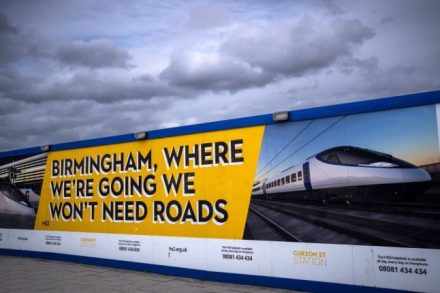
HS2 has become like the Black Knight in Monty Python and the Holy Grail: the one who carries on fighting, reassuring himself ‘tis but a scratch’ as, one by one, he is relieved of his limbs. First it was the Birmingham to Leeds limb, then the link between Manchester and the North West Coast mainline. The bit between Old Oak Common and Euston has been hanging by a ligament for a while.  Now it seems that Rishi Sunak is about to swipe his sword through the Birmingham to Manchester arm. That would leave just a truncated line which will speed you from Birmingham to the outskirts of London at 200 mph before dumping you behind Wormwood Scrubs jail.

Falling wages aren’t stopping shoppers from hitting the high street

From our UK edition

It looks like a case of recession postponed – again. Figures from the Office for National Statistics this morning show that retail sales volumes were up 0.4 per cent in August. These figures followed a shock fall of 1.2 per cent in July reported last month (and even this has been revised downwards to a fall of 1.1 per cent). Over the past three months – perhaps a better guide than month on month figures – sales volumes are up 0.3 per cent. Somehow, in spite of wages, which until last month had been falling in real terms, consumers are finding the means, and the will, to carry on spending. Today’s figures are in many ways the mirror image of July’s. Food sales volumes were up 1.2 per cent, compared to a drop of 2.6 per cent in July. Non-food sales were up 0.

The flaw in Rishi Sunak’s plan to water down net zero

From our UK edition

Rishi Sunak will reportedly make a speech later this week watering down some of the targets the government has set itself on achieving net zero carbon emissions by 2050, although that target itself will not be touched). The proposed ban on new petrol and diesel cars will be put back by five years to 2035, which would bring Britain in line with the EU. The ban on new oil-fired boilers will be put back from 2026 to 2035, thus relieving the Conservatives of the prospect of mass grumbling in one of their natural constituencies, rural areas. Even in 2035, it seems, the target will be to reduce installations only by 80 per cent, in recognition than many homes are difficult to bring up to the insulation standards required for heat pumps to work effectively.

Why drivers are losing interest in electric cars

From our UK edition

In his promised review of net zero policies, Rishi Sunak has already ruled out postponing the proposed ban on the sale of new petrol and diesel cars from 2030. Indeed, from the end of the year manufacturers are going to be under a mandate to make sure that a certain proportion of their sales are electric – although the details have not yet been published. But what chances of the car industry actually getting there? While sales of electric cars might seem to be healthy – the Society of Motor Manufacturers and Traders (SMMT) records that 193,221 pure electric cars were sold in the first eight months of 2023, up 40 per cent on the same period in 2022, the details tell a different story. Sales to corporate buyers are buoyant, encouraged by a favourable company car tax regime.

Will Germany be the first to ditch its net zero commitments?

From our UK edition

Things are not going well in Germany’s bid to reach net zero by 2045, five years earlier even than Britain’s own unrealistic target. For months, the German government has been trying to devise a way to save its heavy industry from high energy prices which are sending production fleeing to Asia. Just last year, chemicals giant BASF announced that it would invest in a new £10 billion plant in China rather than Europe, thanks to the cost of energy. Now, the government seems to have found a way. It is going to raid its £200 billion climate transition fund, which was supposed to invest in green technology. The fund was also meant to compensate householders who have been groaning under the expense of policies such as next year’s proposed ban on new gas boilers.

The dangerous dog crackdown shouldn’t stop with banning Bully XLs

From our UK edition

There isn’t much you can do in modern Britain without encountering some licensing scheme, but one area of life which really does need regulating remains free of any kind of bureaucratic control. You can, for now, go out and buy an American Bully XL puppy with no need for any kind of training – for you or the dog – before letting it loose on the High Street where it might take a fancy to shins of a passer-by and, quite possibly go onto kill them. Should that happen, you may well find yourself in the magistrates’ court, but why not some kind of pre-emptive system to keep violent dogs off the streets – and out of homes – before they kill?

Brexit Britain can benefit from Apple’s spat with Europe

From our UK edition

Are the EU and the US heading for a trade war by dirty means? I ask because for the second time in a week Apple finds itself on the sharp end of European regulations. First, the company was obliged to provide a standard USB socket and charger for its iPhone 15, as opposed to the specific charger previously used by Apple. Now, French regulators have declared that the iPhone 12 doesn’t reach Europe’s radiological protection standards. According to the Agence Nationale des Frequences, the device emits 5.74 watts of electromagnetic radiation per kilogramme – above the 4.0 watts allowed by European product standards. Apple insists that the device is fully-compliant.

Bernard Looney and the sinister policing of office romances

From our UK edition

I doubt whether many people will feel a pang of sympathy for Bernard Looney, former chief executive of BP who has just resigned over his failure to fully disclosure historic relationships with fellow employees. Perhaps he should have resigned last year when he declared proudly that high oil prices had turned BP into a ‘cash machine’ – a remark which hastened the imposition of a windfall tax which the industry may come bitterly to regret the next time oil prices crash. Yet the remark didn’t do Looney much personal harm – his pay was doubled last year to over £4 million. He will have a pretty decent pension, too, to go off and spend more time on his love life.

Is one badly filed flight plan really to blame for the airport chaos?

From our UK edition

A faulty flight plan filed by a French airline is unofficially being blamed for the meltdown in our national air traffic control system on Monday. While Nats (National Air Traffic Services) has declined to comment, it should come as no comfort if it turns out to have been a cock-up rather than – as many initially feared – a cyber attack. If one badly-filed flight plan can cause delays for days on end – as the airlines are warning us – it is an alarming reminder of how vulnerable our transport infrastructure has become. It wouldn’t take much input from a hostile state to bring the country to a halt. You can see the vulnerability everywhere – it is the price we pay for running transport so close to the bone.

Net Zero is condemning more Brits to energy poverty

From our UK edition

Here’s another great idea from the net zero establishment: only heat your home when it is warm and sunny outdoors. In its Sixth Carbon Budget paper, the government’s Climate Change Committee advises homeowners to turn their heating on in the afternoon, so that they can turn it off again during the evening when demand for electricity is higher. ‘Where homes are sufficiently well-insulated,’ it says, ‘it is possible to pre-heat ahead of peak times, enabling access to cheaper tariffs which reflect the reduced costs associated with running networks and producing power during off-peak times.’ In other words, boil yourself when the outdoor temperature is relatively warm, and with any luck you might still be tolerably warm when it is freezing outdoors at eight in the evening.

Energy prices are coming down, but they should be cheaper

From our UK edition

It is hard to remember that this time last year soon-to-be prime minister Liz Truss was on the verge of compromising her free market principles by dreaming up a scheme for the state to make an open-ended commitment to subsidise the energy bills of every household in Britain. At the time, there were dire predictions that households would be swamped by energy costs, forecasts for which were rising by the day. This morning, Ofgem has announced that the Energy Price Cap is to fall again, to a level at which the average household will see energy bills of £1,923 a year, down from £2,074 a year at present. The move won’t take prices below the level they were before the invasion of Ukraine in February 2022, but it will take them just below the level they were later that spring.

Scotland shouldn’t pay climate reparations

From our UK edition

Lucky old Scottish homeowners. Not only are they being told that they could be forbidden from selling their homes if they fail to achieve a ‘C’ rating on an Energy Performance Certificate (EPC); they now have the pleasure of knowing that £24 million worth of their taxes will be going to pay climate reparations. The Scottish government has just made such a handout to charities working on climate issues in the developing world. While First Minister Humza Yousaf didn’t quite use the term ‘reparations’ he did say ‘the countries which are the worst affected by the climate crisis are often those which have done little or nothing to cause it.

House prices are falling. But it’s still terrible for first-time buyers

From our UK edition

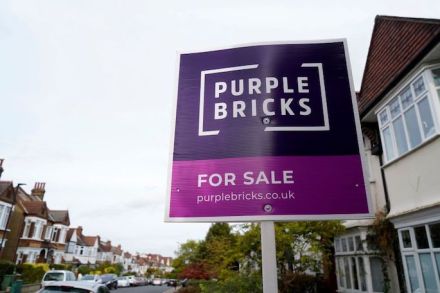
Hurrah. Housing is now more ‘affordable’ for first-time buyers than it was a year ago. Or so says Halifax, which has produced figures this morning showing that the average home now costs 6.7 times the earnings of the average worker, down from 7.3 times a year ago. This is thanks to two opposing trends. The value of the average home has come down from £293,586 to £286,276. Meanwhile, average earnings have increased by around 7 per cent. Spot the missing factor from this analysis. Yes, that’s right: it’s interest rates Spot the missing factor from this analysis. Yes, that’s right: it’s interest rates.

We are facing an epidemic of online fraud

From our UK edition

At what point are we going to drop the fiction that acquisitive crime is on the wane and admit that we are in an epidemic of fraud? Today, Barclays Bank has appealed to social media firms – rather than banks like itself – to refund victims of online scams. I am sure that social media companies could do more to close down scams, but isn’t the real problem that the law is tolerating online crime in a way that it doesn’t tolerate other crime?  If your house is burgled, you know to contact the police. That doesn’t necessarily mean that they will investigate, or even pay you a visit to take fingerprints, but at least it will be recognised as a crime and you will be treated as a victim – even if you left your doors unlocked.