Ross Clark

Ross Clark

Ross Clark is a leader writer and columnist who has written for The Spectator for three decades. He writes on Substack, at Ross on Why?

The Covid Inquiry is finally hearing some enlightening evidence

From our UK edition

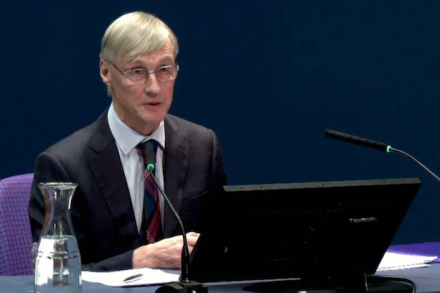
The Scottish leg of the Covid-19 inquiry has, like the hearings in London, become bogged down in matters such as the deletion of WhatsApp messages on ministerial phones. But, with a slightly less attention-seeking counsel for the inquiry, it also seems to be getting to some of the nuts and bolts which should have been discussed in London. A few of the most revealing pieces of evidence so far have been presented by Mark Woolhouse, Professor of Infectious Disease Epidemiology at the University of Edinburgh and adviser to the Scottish government during the pandemic. Here are some of the highlights of his oral and written evidence. Woolhouse was deeply critical of Holyrood’s declaration 'there is no such thing as a level of acceptable' loss.
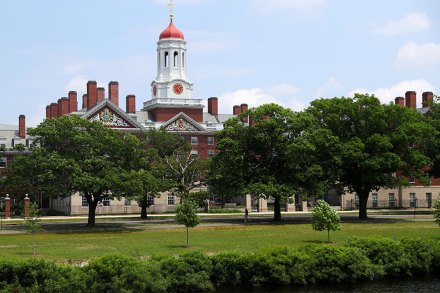
How to pass Harvard’s unconscious bias exam

From our UK edition

Like Prince Harry, I never knew I had unconscious bias until it was pointed out to me, but now it has been I know I will have to do something about it. Except that in my case that ‘something’ is not to moan to Oprah Winfrey about members of my family speculating on the colour of my baby’s skin. It is to dig a little deeper and ask: do I really have an inner Ku Klux Klan that is controlling all I do and preventing me from becoming a good person? I had heard of unconscious bias training on many occasions – not least when the then Cabinet Office minister Julia Lopez told the Commons that a government review of evidence had suggested it was ineffective and would therefore be phased out in the civil service.

Hinkley C and the rising cost of net zero

From our UK edition

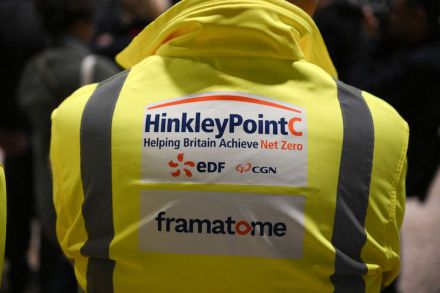
Should we be bothered that Hinckley C nuclear power station has run even further over budget (the latest estimate is £35 billion, nearly twice that quoted when the project was given the go-ahead in 2016) and that its completion date has been put back yet further, to 2031? After all, the whole point of offering French energy giant EDF a guaranteed ‘strike price’ at the then juicy rate of £92.50 per megawatt-hour (at 2013 prices, rising with inflation) was supposed to be to transfer financial risk to EDF and its financial backers. 'It is important to say that British consumers won’t pay a penny, with the increased costs met entirely by shareholders,' EDF’s managing director of the Hinkley project state this morning.  What if EDF threatened to cut its losses and withdraw?

The madness of the Port Talbot closures

From our UK edition

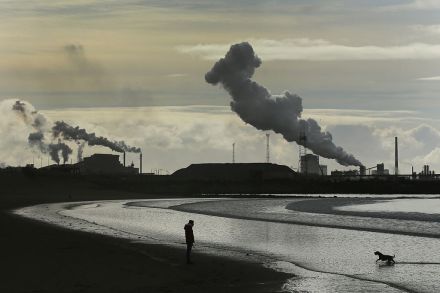
Hurrah! The UK is just about to reduce its carbon emissions by a further 1.5 per cent. As for Wales, it is going to get even close to the holy grail of reaching net zero, with 15 per cent of its carbon emissions wiped off its slate in one go. True, there will be 2,800 job losses, and it won’t actually reduce global emissions – in fact, it will probably increase them. But who cares about such trifles when you have a legally-binding target of net zero to reach by 2050? That pretty well sums up today’s announcement that Tata Steel is to close its two blast furnaces in Port Talbot, in preparation of building a new ‘green’ electric arc furnace that will open in a few years’ time. An electric arc furnace won’t really decarbonise steelmaking because it only does half the job.

Will the high street slump spell trouble for the economy?

From our UK edition

Consumers seem finally to have thrown in the towel: they are no longer propping up the economy. After a year in which the predicted recession kept failing to arrive, the high street finally ran out of steam in December with a hefty 3.2 per cent fall in sales volumes compared with November. Non-food was down 3.9 per cent. Year on year, according to the retail sales figures published by the Office for National Statistics (ONS) this morning, sales were down 2.8 per cent in December. This would appear to mark a headlong descent into recession – except that GDP figures published last week appeared to show the opposite: the economy rebounded by 0.3 per cent in December. So are we really sliding into the abyss or is the economy just fine?

Are kids starting to see through the climate cult?

From our UK edition

Should it really be any surprise that not all teenagers are on the same page as Greta Thunberg? According to a poll by Survation, 31 per cent of Britons between the ages of 13 and 17 agree with the statement ‘climate change and its effects are being purposefully overexaggerated.’ It does rather restore faith in the current generation of teenagers to realise that a third of them can see through this guff I am not entirely sure what is meant by the now commonplace concept of ‘overexaggeration’ – which presumably means something beyond the optimum level of exaggeration – but never mind.

Is Germany the sick man of Europe?

From our UK edition

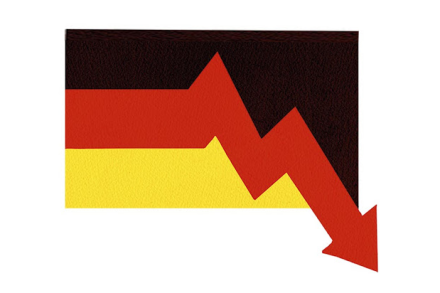
There must be a slight flaw in the IMF’s crystal ball, causing the future prospects for the German economy to be refracted onto Britain. Remember a year ago when the IMF confidently predicted that the UK economy would suffer the worst performance of any major industrial nation and contract by 0.6 per cent in 2023, worse even than Russia? The Remain lobby had a field day, presenting it as ‘evidence’ that our departure from the EU had put us in the international slow lane. It wouldn’t have been such a bad forecast, it turns out, had it been for Germany. The German economy, it has been announced today, shrank by 0.3 per cent last year – worse, it looks like, than any other large country.

Harry, Meghan and the absurdity of the awards industry

From our UK edition

Can I have a Legend of Aviation award please? I deserve it for the time I flew Aeroflot and lived to tell the tale. Then there was the time I flew from Denmark to Amsterdam, taking off from a snowbound runway in a twin-propped plane which looked like something out of Biggles; that was pretty hairy, too. But alas, I guess there wasn’t enough room on the list of this year’s honours, to be presented in a Beverley Hills ceremony compered by John Travolta. Prince Harry made the cut, along with Buzz Aldrin, but it seems I’ll have to wait until next year. Harry and Meghan have achieved something useful: they have exposed once and for all the sheer vacuity of the awards industry Yes, Prince Harry really is on the list – much to my puzzlement.

Boris Johnson can’t lecture Sadiq Khan on rail strikes

From our UK edition

London mayor Sadiq Khan has just given us a foretaste of a Labour government by capitulating to the RMT and averting a tube strike at the last moment by, to borrow Nye Bevan’s phrase, stuffing the rail workers’ mouths with gold. That, at least, is Boris Johnson's assessment of the 11th-hour agreement to avert the walkouts. Johnson is right, except is it really much different from what has been going on for years under his and other Conservative governments? It wasn’t Labour which gave us train drivers on £65,000 a year – far more, in some cases, when you add on overtime. That puts some train drivers in the top five per cent of highest earners in population. Is there any other group of workers in Britain who do so little for so much money?

eBay side-hustlers deserve to get taxed

From our UK edition

There will be people outraged by the latest initiative of HMRC: to demand that the likes of Airbnb, eBay, and Vinted furnish it with details of everything bought and sold on their online platforms. The taxman should keep his nose out of the sharing economy, many will say. People who sell their secondhand clothes, books, or who earn a little holiday money by letting their property to tourists while they are themselves away from home are doing the environment a favour, they will argue. HMRC should keep its nose out and go for the ‘real’ tax-dodgers in large corporations, who are taking advantage of our tax system by shunting profits to more favorable jurisdictions. I am all for pursuing big tax-dodgers but sorry, HMRC should not be turning a blind eye to the sharing economy.

House prices aren’t falling any time soon

From our UK edition

Economic forecasts rarely survive far into the New Year. Just look at last year’s prophecy by the IMF that the UK economy would shrink by 0.6 per cent in 2023, which was already being revised by March. But we are only three days into 2024 and already the forecasts of falling house prices are beginning to look somewhat questionable. In November, the Office for Budgetary Responsibility (OBR) forecast that prices would slip by 4.7 per cent over the year. The Halifax followed that up by forecasting a 2 to 4 per cent slide. Yesterday, however, the Halifax became one of those banks which has started slashing fixed rates. A two year fix is suddenly down from 5.64 per cent to 4.

Fact check: the truth about the asylum backlog

From our UK edition

When is a backlog in asylum applications not a backlog? When it is made up of ‘complex cases’ and of new applications which hadn’t been made at the time ministers promised to clear the backlog. Today, the Home Office has been chirping about its success in tackling illegal migration by announcing ‘the legacy asylum backlog target has been met with more than 112,000 asylum cases cleared in 2023 and small boat crossing arrivals down by 36 per cent’. The government’s efforts in 2023, in other words, did ‘not just clear the original 92,000 legacy asylum backlog, but exceed it.’ It has achieved this, it says, by hiring extra staff. On the face of it, that looks a great feather in Rishi Sunak’s cap, given that he promised to clear the backlog in December 2022.

Why is it so hard to leave the country?

From our UK edition

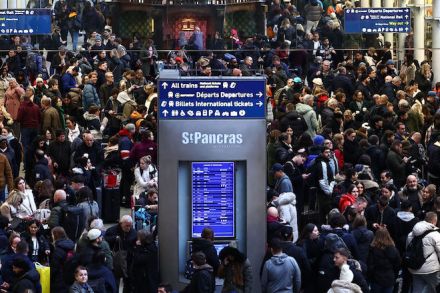
This should have been the year when we could finally put Covid behind us and return to normal. But as far as public transport is concerned it has instead turned out to herald the realisation that paralysis has become the normal condition, not a product of the pandemic. Any Eurostar passengers who thought they had escaped the wildcat strike that brought pre-Christmas services to a premature halt on Saturday 23rd December by travelling a week later have found themselves at the receiving end of one of the cross-Channel service’s worst days in its near 30-year history.

What James Daly’s parenting jibe says about the Tories

From our UK edition

I am guessing that Tory MP James Daly has given up trying to defend his majority of 105 in Bury North, has accepted that he will need to find a new job in the next 12 months and has decided to go out in style. I can’t think why else he would say, in an interview with the i newspaper, 'When you think about the family, it’s about stability. Most of the kids who struggle in Bury are the products of crap parents and so what do we do to try to address that issue?

The Conservatives are indulging in fantasy economics

From our UK edition

Finally it seems to be dawning on many Conservative MPs that abolishing – or seriously cutting – inheritance tax at the same time as jacking up income tax for millions of low earners is not a great way to tackle a strong Labour lead in the polls. Several backbenchers have written to the Prime Minister in response to reports that he is considering taking the axe to inheritance tax in the Budget on 6 March. They have suggested that the government should be cutting income tax instead, or at least raising the thresholds which have been frozen until 2028. At a time of elevated inflation, that is dragging millions more into income tax, and into the upper rates of income tax, by the year.

The foul truth about wood-burners

From our UK edition

My first instinct is to rush to the attack against any think tank which calls for stuff to be banned. But in the case of a proposal by Bright Blue that wood-burners should come with a health warning, and that their use should be prohibited on certain days when pollution is high, I will make an exception. For far too long, wood-burners have been pushed at us as if they were an environmentally-friendly alternative to burning gas and oil. A whole generation of dinner parties has been thrown by smug hosts showing off their eco-credentials in front of a roaring wood-burner. Yet the sad truth is that they are just about the filthiest way you could choose to heat your home, and the biggest single contribution to foul air in our towns, cities and countryside.

Is Britain heading for a recession after all?

From our UK edition

Are we going to end 2023 with a recession after all? The great non-arriving recession of 2023 has so far confounded the forecasts of the Bank of England (which forecast a shrinking economy throughout 2023), the IMF (which forecast growth of -0.6 per cent over the course of the year) and others, too. But could the statisticians now be riding to the rescue of the forecasters’ reputations? This morning the Office for National Statistics has revised its estimate that the economy flatlined in the third quarter of the year and now says it shrank by 0.1 per cent. It also revised downwards its estimate for the second quarter, from growth of 0.2 per cent to zero growth.

The Tories should be wary of an election tax giveaway

From our UK edition

Anyone for more tax cuts in the spring budget? You might as well hand out free beer. For many Conservatives, tax cuts provide the last tiny chink of light before the door closes on their electoral prospects for good. This month’s government borrowing figures might just provide some encouragement, too. Net borrowing in November was £0.9 billion lower than it was in November 2022. The great bulge in the deficit which came with Covid seems finally to be subsiding. With inflation falling sharply, too, the outlook for the public finances begins to look a little brighter. The UK government has an unusually large slice of its debt in index-linked debt, meaning that a drop in inflation will instantly relieve some of the burden. But here lies the danger.

Scotland pioneers the 84.5 per cent tax rate

From our UK edition

You can say one thing about Jim Callaghan’s Labour government of the 1970s. It certainly kept migration under control. Over the course of his government, Britain saw net migration of around minus 65,000. That had quite a lot to do with a top tax rate of 83 per cent. Whether Scotland’s new tax rates will actually raise any revenue is another matter But if Keir Starmer says he won’t return to punitive tax rates, the SNP is certainly giving Callaghan’s Chancellor Denis Healey a run for his money. The Scottish government has just announced a new rate of 45 per cent for earnings between £75,000 and £125,140. But in some circumstances, the marginal rate can rise to Healey-esque levels.

Are Red Sea ship attacks the start of a crisis for the global economy?

From our UK edition

Covid provided a revelation of the vulnerabilities of the global supply chain, but now war in Yemen has provided another. Attacks on shipping by Iranian-backed Houthis has reminded the world of how much trade is reliant on free passage through the Bab-al-Mandeb Strait, an 18-mile wide waterway at the southern entrance to the Red Sea. If shipping cannot get through that then it struggles to get through the Suez Canal. In the past month, 15 ships have been attacked in the strait with missiles and drones, and now shipping lines have had enough. They are instead routing their container vessels an extra 3,000 miles around the Cape of Good Hope. That is an extra ten days’ sailing time. According to the International Chamber of Shipping, $3 billion (£2.