Ross Clark

Ross Clark

Ross Clark is a leader writer and columnist who has written for The Spectator for three decades. He writes on Substack, at Ross on Why?

Labour’s Gorton defeat shows that Keir Starmer is finished

From our UK edition

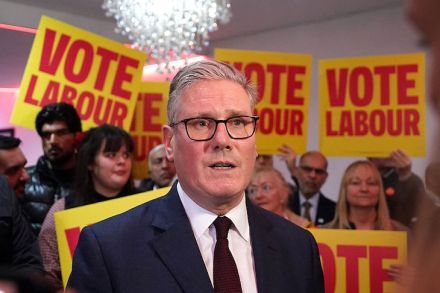
In the end it wasn’t even close. The Greens won the Manchester Gorton and Denton by-election with some to spare, winning 40.7 per cent of the vote. Reform UK, who looked the main challengers at the beginning of the campaign came second on 28.7 per cent, and Labour, as had looked likely, were pushed into third on 25.4 per cent. The defeat reflects very badly on Starmer Even taking into account the long history of by-elections producing a protest vote which does not get repeated at a general election, Keir Starmer is pretty well finished as Prime Minister. The defeat reflects very badly on him personally because he intervened to stop a candidate who might well have won the seat: Andy Burnham.

What does the ONS mean by living in ‘good health’?

From our UK edition

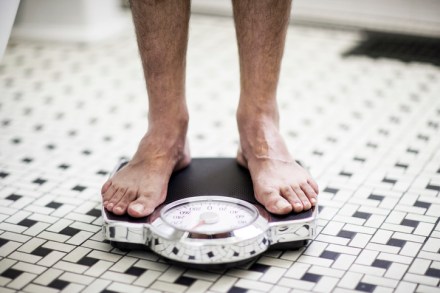
Living longer but spending more of our lives in ill health. That is the rather shocking picture presented by the figures for 'healthy life expectancy’ published by the Office for National Statistics (ONS) yesterday. They show that while life expectancy continues to rise modestly, the proportion of our lives lived in ‘good’ health is falling sharply. Between 2022 and 2024 men enjoyed 60.7 years of good health and women 60.9 years. This was, respectively, 1.8 years and 2.5 years down on the previous period for which data was collected, 2019 to 2020. We now appear to spend less of our lives in good health than we did at any time since the data began to be collected in this form between 2011 and 2013.

Europe is addicted to American energy

There is no member of the Trump administration with greater clarity of thought than Energy Secretary Chris Wright. While opponents rage at Trump’s climate policy, Wright gave a speech to the International Energy Agency this week in which he explained the rationale behind America’s sharp deviation from Europe. In the minds of many people, the world is in the midst of a vast, unstoppable green energy revolution. The age of fossil fuels is over, they assert, leaving behind vast subterranean vats of “stranded assets.” In its place, the world is adopting wind and solar power at breakneck speed. They cite huge investments by China, whose own ventures into renewable energy dwarf those by Europe.

A homegrown Visa card won’t save Britain in a crisis

From our UK edition

It is finally dawning on the government and the banking industry that it is not such a good idea to put the entire economy at the mercy of a couple of large overseas corporations. Today, a consortium of banks are meeting to hammer out a plan to create a homegrown alternative to Visa and Mastercard, which at present have a virtual duopoly on the handling of card payments in Britain and much of the developed world. Their fear, in particular, is that Donald Trump could simply order Visa and Mastercard to switch off their services to any country which displeased him. This is what happened in Russia after the Ukraine invasion, under the Biden administration, when Russian businesses suddenly found themselves unable to handle their customers’ payments.

Just how bad are Nato’s armies?

From our UK edition

Given the relative sizes of their economies, one might conclude that Russia would quake before the military might of Europe’s Nato members. Russia, the ninth-largest economy in the world, is up against the third, sixth, seventh and eighth in the shape of Germany, Britain, France and Italy. Yet the reality is that, militarily, it is the other way around. Russia has the world’s second-strongest military, while France comes sixth, UK eighth, Italy tenth and Germany 12th. To put a few figures on it, Russia has 1.32 million active service personnel, 560 fighter aircraft and 3,941 tanks ready for deployment. For Britain, the corresponding figures are 141,000, 67 and 187; for France 264,000, 178 and 342; and Italy 165,000, 62 and 142.

Morocco should be allowed to cull its stray dogs

From our UK edition

Imagine if spectators at the London Olympics had to gingerly make their way past loose pit bull terriers and XL bullies, some of them rabid. No civilised country would tolerate several million stray dogs on the streets, and indeed we don’t. If a stray dog is found on the streets of London it will be captured and taken to Battersea dogs home, or the equivalent. If it is not claimed or adopted it will likely be euthanised. Logically, a western campaign against culling of stray dogs in Morocco ought to attract the attention of the ‘decolonialisation’ brigade. ‘Enlightened’ western animal lovers seem to expect something rather different from Morocco, however.

Ed Miliband’s delusional energy deal with California

From our UK edition

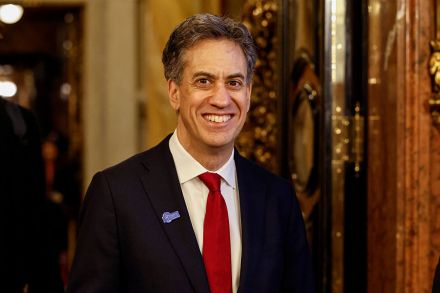
What a pair Ed Miliband and California governor Gavin Newsom make. Both seem to suffer from the delusion that they are national leaders, meeting up in London on Monday to sign a deal in which they aim to share green technology and finance. Both are committed to what they like to call a 'global race for clean power'. And both are presiding over electricity grids which are heading for disaster. In this, California is a little ahead even of Britain. It provides a frightening picture of what is to come as Miliband tries to decarbonise the grid, mostly with intermittent renewables, by 2030. On Christmas Day, 130,000 homes and businesses in and around San Francisco found themselves without power.

Don’t blame AI for this jobs bloodbath

From our UK edition

No wonder government ministers in recent weeks have started nodding along with fears that AI will take our jobs, with investment minister Lord Stockwood even suggesting that the government has discussed the idea of a universal basic income to provide for people thrown out of work by the technology. God forbid that voters should start to appreciate the real reasons why an expanding jobs market has been thrown into reverse under the Labour government. Labour has destroyed one of the big advantages that the UK had over many of its immediate European neighbours: a flexible jobs market No, it isn’t AI that is to blame for the loss of 171,000 payrolled jobs in the year to November.

Trump’s America isn’t the outlier on greenhouse gases

Irresponsible Trump, responsible China; that is the message BBC climate editor Justin Rowlatt seemed to be sending us by juxtaposing the news that the US president had repealed Barack Obama’s ‘endangerment finding’ and that China’s carbon emissions fell slightly last year. Trump’s critics like to portray him as a rogue figure in a world which is otherwise committed to reaching net zero greenhouse gas emissions. But is there any truth in that? The endangerment finding does not appear to have had any obvious impact on US emissions The endangerment finding was a piece of legalese issued in a 2009 ruling by the US Environmental Protection Agency (EPA).

Jim Ratcliffe has a point about Britain

From our UK edition

Jim Ratcliffe is not a polished media performer, and neither does he have an accurate set of UK demographic statistics in his head. But how typical that the Prime Minister and his Labour colleagues, as well as the Guardian and many others, have chosen to latch onto a loose remark the billionaire Manchester United co-owner made about migration rather than address the very genuine concerns he has for the UK economy. Read between the heavily edited clips from Sky News’s interview with the chemicals entrepreneur and the point he was trying to make when he said that Britain is “being colonised by immigrants” is clear. You cannot grow an economy healthily when you have an ever-expanding number of people on out-of-work benefits.

Ed Miliband’s green promises are coming back to haunt him

From our UK edition

It looks as if £300 will end up being to Ed Miliband what 45 minutes was to Tony Blair: the number which will forever hang around his neck, dragging him down whatever else he tries to do in politics. Of late, Miliband seems to have stopped repeating his promise to cut £300 from our electricity bills by 2030 as he decarbonizes the electricity grid. And no wonder when Centrica boss Chris O’Shea revealed yesterday his own company’s projections for electricity prices in 2030. They show that far from falling, we will be paying more for power then than we were in the wake of the Ukraine invasion in 2022.

Don’t bother visiting Rome

As a general rule, once a city erects turnstiles to tourist attractions which were once free to visit, it is time to go elsewhere. Never more so than in the case of Rome. Last week the Italian capital introduced a €2 charge to visit the Trevi Fountain. Tight-fisted tourists like me will still be able to see the Trevi from a distance – it happens to stand in a public street. The charge will be only for sad Instagrammers who want to get close enough to chuck their coins in the water. The city’s tourism department has suggested the fee is needed to manage the throngs of vacationers. Even then, God forbid, they won’t be able to take off their sandals and take a dip – that will earn them a €500 fine. Which raises the question: why bother visiting the fountain at all?

rome

Will the Mandelson affair make loyalty a crime?

Nothing excuses the manner of Peter Mandelson’s communications with Jeffrey Epstein both before and after the latter’s conviction for sex offences. Nor are the lies which Andrew Mountbatten-Windsor told about breaking off relations with Epstein defensible. Nevertheless, there is something disturbing about what looks like being the inevitable fallout of the Epstein scandal: that no one in public life will ever again risk remaining friends with anyone who has been jailed or disgraced in any other way. It may well extend to people outside public life, too. The principle seems to have been established: that if one of your friends commits a serious offence and you do not instantly cut off all relations with them, then you are guilty of moral turpitude yourself.

Alton Towers is right to crack down on ADHD queue-jumpers

From our UK edition

That will teach people who seek a diagnosis of ADHD in the hope that it will bring them various advantages in life. Merlin Entertainments, which runs Alton Towers, has announced that in future it will no longer allow the condition to be used as an excuse to jump its queues. If you want a shortcut, a card saying that you suffer ‘difficulty with crowds’ will no longer cut the mustard with the theme park’s security people. You will have to show that you have a physical condition such as ‘difficulty standing’ and ‘urgent toilet needs’ instead. Cue the usual outrage whenever someone with disability, or claiming to have one, feels aggrieved. 'Why shouldn’t my autistic son jump the queue at Alton Towers,' cries a mother in the Independent.

The glaring flaw in Keir Starmer’s AI plan

From our UK edition

Like Harold Wilson and his ill-defined ‘white heat of technology’, Keir Starmer has latched on to artificial intelligence as the saviour which is finally going to jolt Britain’s sluggish economy into growth. He once even suggested it would help fill potholes. A year ago he launched his AI Opportunities Action Plan, which is supposed to give the industry a huge boost through the designation of ‘AI Growth Zones’. But there is a big hole in Starmer’s plans. How are we going to power an industry that has become as voracious in its energy needs as the steel, shipbuilding and other heavy industries which it might one day replace? The high energy consumption of AI might not seem obvious to anyone playing around with ChatGPT. It all seems so clean and modern.

Ed Miliband is killing Aberdeen

From our UK edition

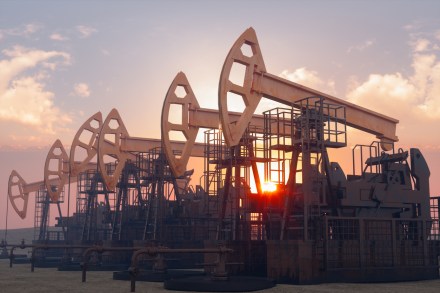
‘It’s Scotland’s oil,’ cried the slogan of the SNP in the 1970s when the party first began a serious drive for Scottish independence. Not according to the current Labour government at Westminster, it isn’t. The oil doesn’t belong to Britain, either, but to the Earth – and that is where it will stay if Ed Miliband has his way.

Trump is right: denying ourselves North Sea oil makes no sense

From our UK edition

Donald Trump’s tendency to exaggerate and make up figures as he goes along is for some people a symptom of the ‘post-truth society’. But for the president himself it is a useful rhetorical tool which helps draws attention to things which might otherwise get less of an airing. Yes, it is a gross exaggeration to say, as Trump did in his speech at Davos yesterday, that Britain has ‘500 years’ worth of oil in the North Sea. The trouble for his critics, though, is that the essential point he was making – which is that Britain is denying itself valuable energy resources in the shorter term, to the detriment of the economy and national resilience – is rather harder to deny.

Ed Miliband’s warm homes scheme is good news for cowboy builders

From our UK edition

The cowboys must be licking their lips. Ed Miliband has come up with yet another green homes scheme to chuck public money at subsidised energy improvements. The Warm Homes Plan will allocate £15 billion to grants and low-cost loans for homeowners who want to upgrade their insulation, and fit heat pumps and solar panels. According to the Department for Energy Security and Net Zero, not only will it make our homes warmer, it will save homeowners £1,000 a year off their bills. Ed Miliband has come up with yet another green homes scheme to chuck public money at subsidised energy improvements Do our leaders never learn?

Trump is right: Starmer’s Chagos deal is an act of ‘great stupidity’

From our UK edition

The excruciating thing about Donald Trump is that the madder and more unreasonable he seems to become, the more he catches everyone out when he says something that is utterly true. The US president's manoeuvres on Greenland are the act of a bully and autocrat; for him to suggest that he wants Greenland as compensation for failing to be awarded the Nobel Peace Prize is babyish. Why does he care about the Nobel Peace Prize when it is awarded by the kind of non-governmental busybodies he has scorned during his five years in office?

The great rail ticket swindle

From our UK edition

Normally rail ticket prices are raised in line with the Retail Prices Index (RPI) plus 3 per cent. This January, unusually, they didn’t increase. But that is not how it will feel if you fancy a short break in Edinburgh. In that case, you may well find yourself paying double what you used to pay. Say, on the spur of the moment, you fancy a short trip to the Scottish capital from London this weekend, but you are not quite sure which train you can leave on and when you want to come back. In the past, you could have bought a Supersaver Return, which allowed you to take any off-peak train there and back.