Ross Clark

Ross Clark

Ross Clark is a leader writer and columnist who has written for The Spectator for three decades. He writes on Substack, at Ross on Why?

The problem with Rachel Reeves’s non-dom tax plan

From our UK edition

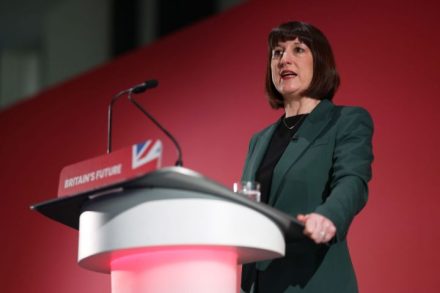
By abolishing non-dom status, Jeremy Hunt was supposed to have clipped the wings of the shadow chancellor Rachel Reeves. Given that she had already earmarked the extra revenue – or what she hoped would be extra revenue – for free school breakfasts and a few other things, Hunt had suddenly punched a hole in her spending plans. But Reeves now claims to have filled that hole. She claims that she will raise an extra £2.6 billion – on top of what the Chancellor is expecting to raise – by closing a few loopholes. Non-doms will no longer be allowed to escape inheritance tax by placing wealth held overseas into trusts. Reeves will also remove the 50 per cent discount that Hunt offered non-doms on overseas earnings and capital gains during their first year living in Britain.

Scrapping Ofsted would suit teachers – but be terrible for children

From our UK edition

There is one thing that seems to have gone missing from the campaign by the National Education Union (NEU) to abolish Ofsted: children. They hardly get a mention. What we do learn, from the press release announcing the NEU’s latest motion to get rid of the government’s schools’ inspection regime, is that the teaching profession 'can be trusted to do their jobs effectively without a punitive, high-stakes system to keep them in line'. Further, Ofsted’s regime causes 'teachers and other school staff sleepless nights, anxiety, and an urge to leave the profession'. The teaching profession, we're told, 'can be trusted to do their jobs effectively' In other words, NEU members don’t like being inspected.

Don’t trust Labour to build houses

From our UK edition

Could a promise of more housebuilding win an election, or does the Nimby vote still rule the shires? Labour, it seems, has decided the former. The Times reports this morning that it has settled on a strategy of unashamedly promising more house-building, including on the green belt, after research by an outside organisation revealed that people on the party’s list of most winnable seats are strongly in favour of greater housebuilding. It is a long way from the Labour party of Tony Blair and John Prescott, which seemed to vie with William Hague’s Conservatives as to who could build the fewest homes.

House prices aren’t falling any time soon

From our UK edition

The thing about having three prominent house prices indices, all of which publish monthly figures, is that they are forever telling conflicting stories. Indeed, today’s Nationwide index, itself, nods in two different directions: prices were down 0.2 per cent in March, but the annual gain in prices was up from 1.2 per cent in February to 1.6 per cent in March. So is the housing market up or down? The first thing to note is that the Nationwide index is seasonally-adjusted – a process which is always at risk of giving a perverse outcome because it assumes that the same pattern of housing market activity will be repeated every year. Prices could well go up, but if that rise is less than in previous years, then in a seasonally-adjusted index it could register as a fall.

Why the council tax rise on second homes helps no one

From our UK edition

What a surprise. Given the choice of whether or not to double council tax for second home owners from next April, 153 English councils have already reportedly decided that yes, indeed they will. Even officials in that well-known holiday hotspot, Gravesham, have decided to introduce the levy, in spite of there being a mere 21 second homes in the district. Councils seem to be smacking their lips at the prospect. Cornwall council is reckoning on pulling in an extra £24 million, Westmorland and Furness an extra £10 million. I wouldn’t spend the money quite yet, if I were they. There is always the chance, of course, that they might end up with less revenue.

Martin Lewis is wrong about the ‘energy poll tax’

From our UK edition

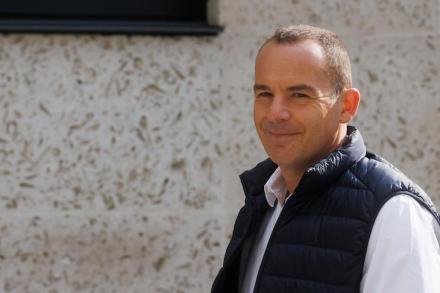
Given that a fair proportion of the UK public seem to want Martin Lewis to be prime minister, the government might well hesitate to dismiss the Money Saving Expert’s latest grumble: that Ofgem’s cap on standing charges is to be jacked up from today – from 53 pence to 60 pence per day in the case of electricity and from 29 pence to 31 pence in the case of gas. This rise comes in spite of the sharp fall in Ofgem’s energy price cap, which should see average annual dual fuel bills fall from £1928 to £1690. Lewis is not the least bit pleased, tweeting that standing charges are 'an unfair energy poll tax and a moral hazard that disincentivises people from cutting bills'. Ofgem’s cap on standing charges is to be jacked up from today But is that really true?

Thames Water proves privatisation has failed

From our UK edition

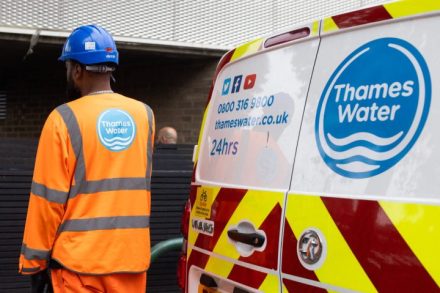
Why do the Conservatives find it so difficult to admit that the privatisation of public utilities has in many cases been a disaster? It was supposed to bring heaps of finance into public services, protect taxpayers from financial risk and bring prices down through competition. Yet we have ended up with energy prices fixed by Ofcom, a rail industry which is swallowing vastly more subsidy in real terms than British Rail ever did – with unions bidding up pay to astronomical levels and taxpayers forced to cough up to fund those rises. Royal Mail has flogged off valuable city centre development sites while it jacks up the price of stamps and tries to wriggle out of its obligation to deliver post six days a week.

You’re not being paranoid: smart meters are out to get you

From our UK edition

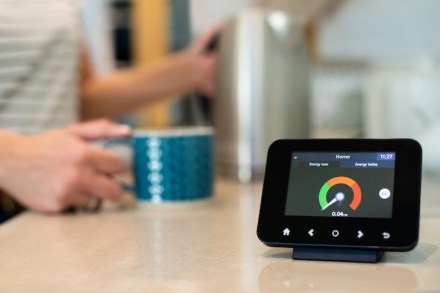
If anyone was still in doubt as to why the government is keen to press ‘smart’ meters onto us, those doubts will surely now be dispelled by the latest intervention of Ofgem, which has proposed abolishing the current electricity price cap and replacing it with a cap which varies throughout the day in response to the wholesale price of electricity. No, the smart meter sitting in your home is not there just to help you manage your electricity use – it is there to facilitate a future ‘dynamic’ pricing structure for electricity consumers. It is there so that we can be offered cheap electricity when wind and solar power is plentiful – and be hammered with Uber-style surge pricing when it is scarce.

The pension triple lock is a drain on the taxpayer

From our UK edition

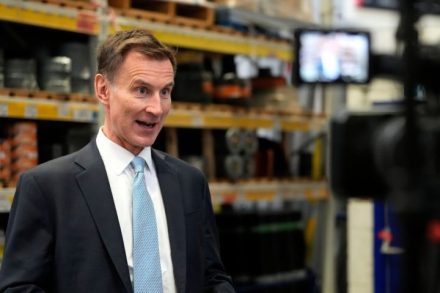
Jeremy Hunt’s promise that the Conservative manifesto will protect the ‘triple lock’ on the state pension is a desperate measure to appeal to the one group of the population whom the Conservatives feel they can rely on. But taxpayers will not be thanking him in a few years’ time. On the contrary, by keeping the triple lock – which increases state pensions by either the Consumer Prices Index (CPI), average earnings or 2.5 per cent, whichever is greatest – Hunt has abdicated any remaining fiscal responsibility and condemned the public finances to further ruin. The triple lock is already costing taxpayers £10 billion a year. Since 2011/12 when the triple lock was introduced, the state pension has been uprated with inflation six times, average earnings three times and 2.

Britain’s high street is still stuck in recession

From our UK edition

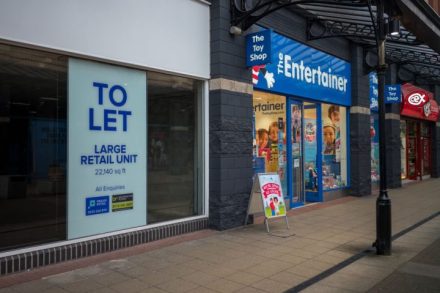
So, is the recession over? The Office for National Statistics’ (ONS) retail sales figures show that sales volumes were flat in February, when many expected them to fall. Moreover, the increase in sales volumes for January was revised upwards from 3.4 per cent to 3.6 per cent, coming on the back of a sharp fall in December (on seasonally-adjusted figures). Clothing stores did better than most with sales volumes up 1.7 per cent in February. Household goods volumes were down 1 per cent – something which retailers apparently blamed on the poor weather – although it doesn’t make a lot of sense why we would feel happy going out in the rain to buy a new outfit but not a sofa or a bucket.

Gove’s ‘war on landlords’ is not going to plan

From our UK edition

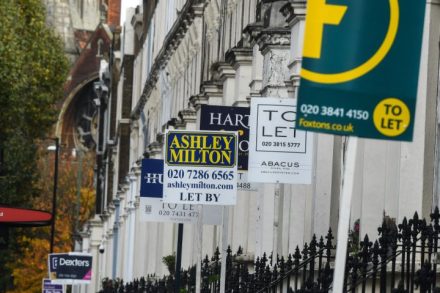
Levelling up the housing market, it is fair to say, is not quite going according to plan. Rents in the year to February, the Office for National Statistics (ONS), reveals today increased by 9 per cent – the largest rise since the ONS started its rental price index. In some cases, tenants have been complaining of far steeper increases as landlords seek to recover rising mortgage costs. They have been able to get away with jacking up rents because the withdrawal of many landlords from the market has led to a fall in properties available to rent. Over the past year, according to the National Residential Landlords Association (NRLA), 21 per cent of landlords have sold a property and only eight per cent have bought one.

Jeremy Hunt should listen to James Dyson

From our UK edition

All Sir James Dyson wanted was to do what hundreds of business people and lobbyists have done before him: spend a little time with the Chancellor of the Exchequer and have a good old moan – initially about research and development tax relief but then extending to other subjects such as corporation tax, high levels of public spending and – according to reports – the number of diversity managers in the NHS.  But Jeremy Hunt’s reaction seems to have taken him aback. Apparently exasperated by Dyson’s list of complains at a Downing Street meeting last week, the Chancellor told Dyson that if he didn’t like the government he should seek to become an MP himself.

Ed Miliband’s dangerous net zero fantasy

From our UK edition

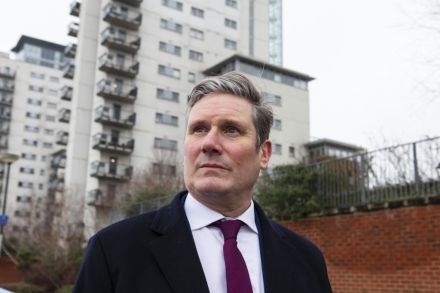
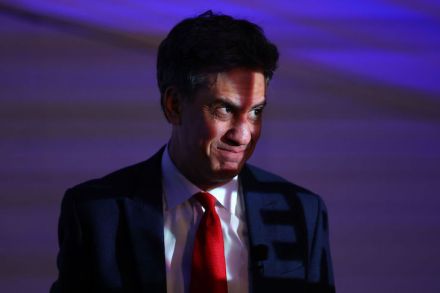
Ed Miliband set Labour back a decade when he not only failed to win the 2015 general election but went backwards, losing a net 26 seats and helping to usher in the disastrous era of Jeremy Corbyn. But could he now be about to undermine a Keir Starmer government too? Miliband has a little fantasy that he is trying to sell the public: that net zero targets won’t just save the planet, they will cut our energy bills, too. ‘Families across the country are united in their desire for lower bills, cleaner water, and a green and pleasant home that we can leave our children,’ he is to tell the Green Alliance in a speech today. Rishi Sunak, he claims, is condemning us all to higher bills by watering down net zero targets.

The middle classes let Banksy get away with vandalism

From our UK edition

This is a tale of two murals: one painted on the side of a building in Greenwich by an artist commissioned by the owner, the other scrawled on a building in Finsbury Park by a fly-by-night graffiti artist. You can probably guess which one the local authority has ordered to be removed under threat of enforcement action and a large fine, and which one has been welcomed by the local MP Jeremy Corbyn, who said he was ‘delighted’. Once again, the law has been shown to be blatantly on the side of middle class taste. Chris Kanizi, who owns the Golden Chippy in Greenwich, just wanted to brighten the area up a bit with a painting of a bag of chips, a Union Jack and the words ‘a great British meal’.

Vaughan Gething’s Covid failures

From our UK edition

A man who has the honour of being his country’s first leader from an ethnic background but who comes to office with the baggage of a questionable performance running the health service during the pandemic. It could be Humza Yousaf, but equally it could now be Vaughan Gething, who was elected as Labour leader in Wales this morning and will become First Minister when Mark Drakeford steps down this week.    It is fair to say that his elevation will not be welcomed by everyone, not least by the relatives of those who died in Welsh care homes after patients were discharged there in March 2020 without being tested for Covid. The Welsh government, on Gething’s watch, was even slower to introduce the tests than Matt Hancock was – two weeks later, indeed.

How WFH engineers caused an air traffic control meltdown

From our UK edition

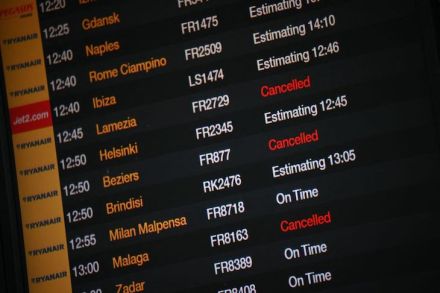
How lovely that engineers working for National Air Traffic Services (Nats) can work from home rather than having to slog it in to the company’s headquarters at Swanwick, Hampshire. Lovely, that is, for the engineers rather than for air passengers. A report by the Civil Aviation Authority (CAA) has revealed the reason behind the meltdown in air traffic control which led to the cancellation of hundreds of flights last August Bank Holiday, inconveniencing millions of passengers. The system need to be reset by a ‘level 2’ engineer, but none were actually working in the office that day, so one had to be called in – which took 90 minutes.

Who is going to pay for Rishi’s gas power stations?

From our UK edition

The problem with intermittency of wind and solar energy is so obvious that you wonder why is has taken the Prime Minister this long to work out that we are going to carry on needing gas-fired power stations to fill in the gaps. In the case of solar energy this is, of course, every evening. Rishi Sunak is quite right that Labour’s plan to decarbonise the electricity grid by 2030 (and apparently save us oodles of money off our bills in the process) is a ‘fantasy approach’. The trouble is, the government’s own approach isn’t a whole lot better.  If we are going to have a grid based on wind and solar, gas is pretty much essential In spite of today’s announcement about new gas-fired power stations, the target of decarbonising the grid by 2035 (i.e.

‘Levelling up’ is finished

From our UK edition

Just what has the government done to try to retain the Red Wall vote? It seemed when they won a majority of 80 in 2019, thanks largely to a big switch of working class votes in peripheral areas of the Midlands and North, away from the main cities – that Boris Johnson and his ministers got it. There was a very large constituency of former Labour voters which was is fed up of that party's fixation of the sorts of issues which appeal to metropolitan liberals and they were looking for a new political home. It was a constituency which likes state intervention, but was socially conservative.  Johnson's government at first seemed to oblige: the furlough scheme heralded a move towards bigger government. There was also a big step up in funding for the NHS.

Why are UK shares doing so badly?

From our UK edition

What is wrong with UK shares? While the US, European and Japanese stock markets reach new highs, UK markets are stuck in a deep rut. The FTSE 1000 is just 10 per cent higher than it was on the last day of last century. As for the FTSE 250, small cap and AIM markets – which seemed to be doing okay until 2021 – they are still deep in bear market territory. The AIM 100 – the largest hundred shares on the Alternative Investment Market, which peaked at over 6000 in August 2021 is currently down below 3600. That is the sort of crash that happened to the wider stock market after the dotcom boom and the 2008/09 financial crisis, but has gone unnoticed because it is not reflected in global markets.

Is Amnesty right that Britain has a black mould epidemic?

From our UK edition

Are large numbers of children in Britain being killed by black mould in their homes? That seems to be the assertion made by Amnesty International in a short film featuring Olivia Colman. Colman plays a lapsed lawyer whose career is reignited by the injustice suffered by a neighbour whose baby dies. The local council housing department fails to move the child and their family from a property where the wall is scabbed with damp and mould. At the end of the trailer, Colman turns to the camera and tells us ‘this is real life’. We are told ‘there are so many kids like this,’ before words are flashed up on the screen telling us: ‘In the UK access to safe housing, healthcare and an adequate standard of living is deteriorating. Human rights in the UK are under threat.