Ross Clark

Ross Clark

Ross Clark is a leader writer and columnist who has written for The Spectator for three decades. He writes on Substack, at Ross on Why?

What happened to the Tory promise to balance the budget?

From our UK edition

There is one big reason why a summer general election is unlikely, however tempted the Prime Minister might be to try to take advantage of the first migrant flight to Rwanda. Read between the lines and it is clear that Rishi Sunak and Jeremy Hunt want to hold another ‘fiscal event’ before going to the polls. Nibbling away at a few more taxes, they appear to believe, will give them the best chance of clinging to power, or at least limiting the electoral damage to the Conservatives. They must be hoping that few people will notice the public borrowing figures. This morning it was revealed that last month the government was forced to borrow £11.9 billion, substantially ahead of forecasts and taking the public borrowing for the full year 2023-24 to £120.
Desperate manufacturers are struggling to shift electric cars

From our UK edition

By 2024, UBS confidently predicted in a October 2020 report, the cost of manufacturing an electric car would have fallen so sharply that it would be on a parity with the cost of a petrol or diesel car. If you have looked on Auto Trader recently you may well have been fooled into thinking that this has come true. A quick search offered me a brand new Peugeot e-2008, its price slashed from £38,495 to £26,495. Or I could have a Vauxhall Mokka-e, down from £41,895 to £29,793. According to the car trading platform, 77 per cent of new electric cars on its website are being advertised at a discount – in some cases, as the above figures show, bringing them down close to the sort of price you would pay for a petrol or diesel equivalent.

Welsh Labour’s speeding U-turn shows devolution is beginning to grate

From our UK edition

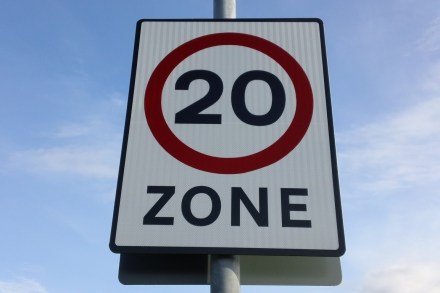
The tragedy of Wales' 20 mph speed limit, which is now to be relaxed, was that it took a good idea and ruined it by taking it to extremes. There are plenty of roads which do deserve a 20mph speed limit, but the Welsh government didn't want to stop there: it had to impose the same limit on main roads with wide carriageways on which it feels absurd to be driving at 20mph.      When highways authorities impose an artificially low speed limit on through roads not only do they unnecessarily delay commercial traffic, they create a perverse incentive for traffic to divert onto minor roads, creating rat runs.

Labour should think twice before taxing pensioners

From our UK edition

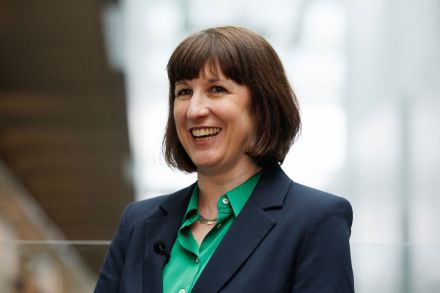
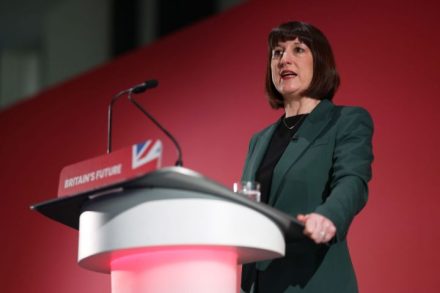
Labour, according to Rachel Reeves, is now the party of low taxes. She has said she won’t raise income tax, National Insurance, capital gains tax and corporation tax, as well as ruling out a wealth tax. But that still leaves a few options for jacking up taxes, as one of Reeves’ advisers, Sir Edward Troup has hinted. Last week, Troup, a former head of HMRC, was appointed by Reeves to look at efforts to reduce tax avoidance. This is a slightly ill-timed initiative given that Labour is simultaneously trying to play down the case of a particular taxpayer who stands accused of failing to pay capital gains tax on a former council house she bought and then sold on at a profit (she denies any wrongdoing).

Inflation is down again – but don’t expect interest rates to follow suit

From our UK edition

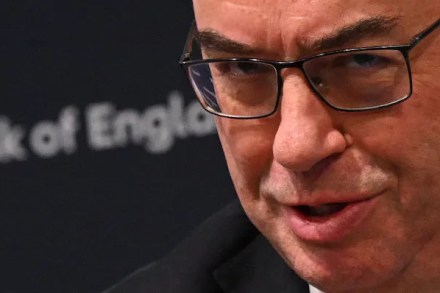
Interest rate cuts are beginning to look like a mirage: the closer we seem to get to them the more they seem to recede into the distance. Bank of England governor Andrew Bailey may have hinted this week that UK rates could soon be cut regardless of what happens in the United States, where strong jobs data is putting off the Federal Reserve from cutting rates, but this morning’s inflation data will not encourage an early cut. While the Consumer Prices Index (CPI) did fall in March, from 3.4 per cent to 3.2 per cent, this was less than the fall which was expected. The rise in road fuel prices largely cancelled out a drop in food prices.

Smart meters could soon cost you a whole lot more

From our UK edition

What remarkable power climate change has to turn the usual rules of fairness on their head. The poor pay the taxes and the wealthy get subsidised. It has happened with electric cars, where well-off early adopters were handed grants of £4,000 to buy a new vehicle – as well as being excused fuel duty and road tax, essentially freeing them from having to make any contribution to the upkeep of roads. It has happened with heat pumps – whose owners have enjoyed years of subsidies, the latest manifestation of which is £7,500 in upfront grants. Surge pricing is a desperate solution to manage demand rather than maintain supply The next phase will be even more painful for the poor and even more rewarding for the wealthy.

Why one-man plays are all the rage

From our UK edition

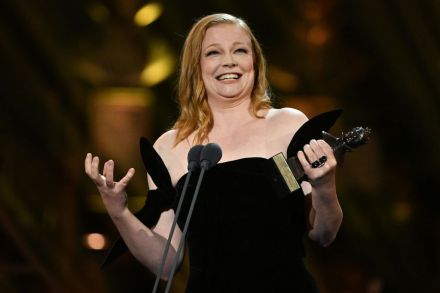
Well, it’s nice to feel on trend. The Today programme this morning carried an item on the popularity of one-man and one-woman theatre shows, following on from the success of two such shows in the Olivier Awards: Sarah Snook in The Picture of Dorian Gray and Andrew Scott in Vanya. Only in passing did they mention a rather important factor in all this: money. If you’re trying not to haemorrhage cash in a post-Covid world, it helps if you can cut your wage bill. I should know. Straightened times call for inventiveness – which is one of the reasons why my latest venture into musical theatre, A Lark, about the Ralph Vaughan-Williams’ affair with a woman 40 years his junior (while he was still married to his first wife) takes the form of a one-woman show.

Are we really reaching ‘farmaggedon’?

From our UK edition

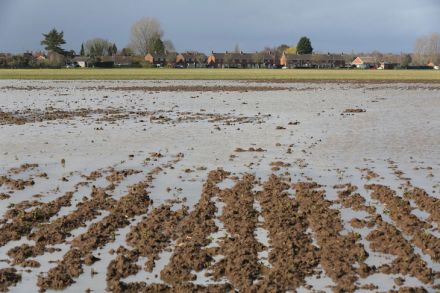
I happened to be walking in the Cambridgeshire fens this morning while listening to the latest instalment of ‘farmageddon’ – the narrative that Britain is facing food shortages due to biblical levels of rain over the winter. There was something of a conflict between the sight before my eyes with what Rachel Hallos, vice president of the National Farmers Union, was telling the Today programme as she begged the government for emergency money. These are some of the lowest-lying fields in England, with large parts lying four or five feet below sea level. They are formed largely of peat, which easily becomes waterlogged. Yet it was a pretty normal spring sight. A tractor was purring as it prepared ground for more crops.

The irresponsibility of ‘two years to save the planet’

From our UK edition

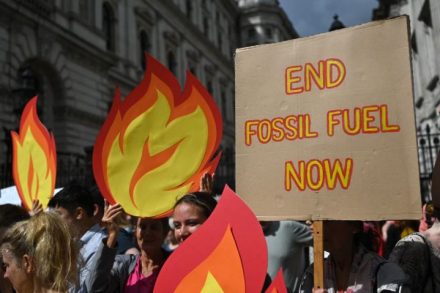
Hurrah, we can all relax. We have been granted an extra two years to save the planet. So suggested Simon Stiell, executive secretary of the United Nations Framework Convention on Climate Change in a speech at Chatham House yesterday. Some people might say that calling a speech ‘two years to save the planet’ might be a bit melodramatic, he added. But not at all. It is nice to have the luxury of all that extra time, given that I thought we were supposed to have had it already. That, at any rate, was the logic behind warnings such as that by the WWF in 2007 that we then had five years to save the planet.

The truth about ‘boardroom diversity’

From our UK edition

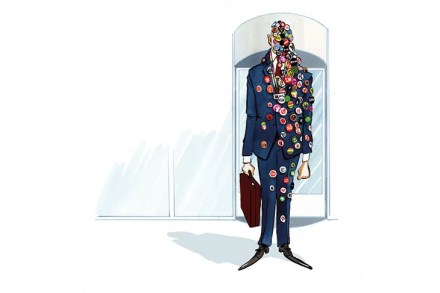
We all know that increasing the diversity of your boardroom increases the success of your company because politicians, business leaders and academics keep telling us so. No one has ever got into trouble for making this assertion and, in any case, we have the scientific evidence to prove it – in the form of four studies pumped out by management consultants McKinsey & Company over the past decade. The first of these, Why Diversity Matters (2015), claimed, for example, that companies in the top quartile for gender diversity were 15 per cent more likely to outperform the median company in their industry, and companies in the top quartile for racial/ethnic diversity were 35 per cent more likely to outperform the median.

Sadiq Khan’s Ulez has spectacularly backfired

From our UK edition

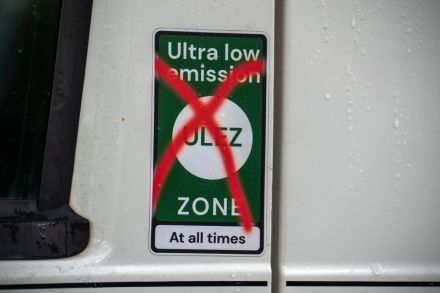
What was that about Sadiq Khan’s expansion of London’s Ultra Low Emission Zone (Ulez) supposedly helping to reduce our dependence on cars and clean up the air? As well as the stick of charges of non-compliant vehicles, Khan has rolled out a very large carrot: £121 million of funds to help motorists ‘transition to greener alternatives’. That includes £49 million worth of scrappage grants for cars, at £2,000 a time, and £72 million worth of scrappage payments for vans and minibuses. According to City Hall in a press release last October, the whole package has resulted in 80,000 fewer motorists driving around London. So London’s streets are presumably now much less congested than they were before Ulez was brought in? Er, not quite.

What’s the truth about Sure Start?

From our UK edition

Labour, unsurprisingly, is crowing about a paper published by the Institute for Fiscal Studies claiming that Tony Blair’s Sure Start centres improved the GCSE results of children from low-income families a decade after attending the centres. Children who lived within 2.5 km of a Sure Start Centre before 5, it finds, went on to score an extra 0.8 in their grades at GCSEs compared with children who lived further away. At their peak in 2010-11 there were 3,500 Sure Start centres, intended as ‘one-stop shops’ where parents could access healthcare, parenting support, early learning, childcare, as well as research employment opportunities for themselves.

The problem with Rachel Reeves’s non-dom tax plan

From our UK edition

By abolishing non-dom status, Jeremy Hunt was supposed to have clipped the wings of the shadow chancellor Rachel Reeves. Given that she had already earmarked the extra revenue – or what she hoped would be extra revenue – for free school breakfasts and a few other things, Hunt had suddenly punched a hole in her spending plans. But Reeves now claims to have filled that hole. She claims that she will raise an extra £2.6 billion – on top of what the Chancellor is expecting to raise – by closing a few loopholes. Non-doms will no longer be allowed to escape inheritance tax by placing wealth held overseas into trusts. Reeves will also remove the 50 per cent discount that Hunt offered non-doms on overseas earnings and capital gains during their first year living in Britain.

Scrapping Ofsted would suit teachers – but be terrible for children

From our UK edition

There is one thing that seems to have gone missing from the campaign by the National Education Union (NEU) to abolish Ofsted: children. They hardly get a mention. What we do learn, from the press release announcing the NEU’s latest motion to get rid of the government’s schools’ inspection regime, is that the teaching profession 'can be trusted to do their jobs effectively without a punitive, high-stakes system to keep them in line'. Further, Ofsted’s regime causes 'teachers and other school staff sleepless nights, anxiety, and an urge to leave the profession'. The teaching profession, we're told, 'can be trusted to do their jobs effectively' In other words, NEU members don’t like being inspected.

Don’t trust Labour to build houses

From our UK edition

Could a promise of more housebuilding win an election, or does the Nimby vote still rule the shires? Labour, it seems, has decided the former. The Times reports this morning that it has settled on a strategy of unashamedly promising more house-building, including on the green belt, after research by an outside organisation revealed that people on the party’s list of most winnable seats are strongly in favour of greater housebuilding. It is a long way from the Labour party of Tony Blair and John Prescott, which seemed to vie with William Hague’s Conservatives as to who could build the fewest homes.

House prices aren’t falling any time soon

From our UK edition

The thing about having three prominent house prices indices, all of which publish monthly figures, is that they are forever telling conflicting stories. Indeed, today’s Nationwide index, itself, nods in two different directions: prices were down 0.2 per cent in March, but the annual gain in prices was up from 1.2 per cent in February to 1.6 per cent in March. So is the housing market up or down? The first thing to note is that the Nationwide index is seasonally-adjusted – a process which is always at risk of giving a perverse outcome because it assumes that the same pattern of housing market activity will be repeated every year. Prices could well go up, but if that rise is less than in previous years, then in a seasonally-adjusted index it could register as a fall.

Why the council tax rise on second homes helps no one

From our UK edition

What a surprise. Given the choice of whether or not to double council tax for second home owners from next April, 153 English councils have already reportedly decided that yes, indeed they will. Even officials in that well-known holiday hotspot, Gravesham, have decided to introduce the levy, in spite of there being a mere 21 second homes in the district. Councils seem to be smacking their lips at the prospect. Cornwall council is reckoning on pulling in an extra £24 million, Westmorland and Furness an extra £10 million. I wouldn’t spend the money quite yet, if I were they. There is always the chance, of course, that they might end up with less revenue.

Martin Lewis is wrong about the ‘energy poll tax’

From our UK edition

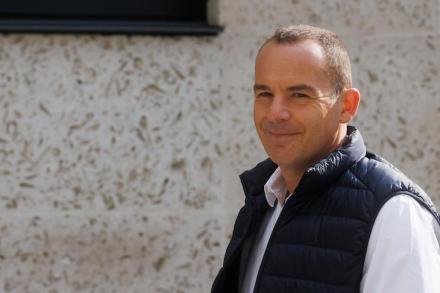
Given that a fair proportion of the UK public seem to want Martin Lewis to be prime minister, the government might well hesitate to dismiss the Money Saving Expert’s latest grumble: that Ofgem’s cap on standing charges is to be jacked up from today – from 53 pence to 60 pence per day in the case of electricity and from 29 pence to 31 pence in the case of gas. This rise comes in spite of the sharp fall in Ofgem’s energy price cap, which should see average annual dual fuel bills fall from £1928 to £1690. Lewis is not the least bit pleased, tweeting that standing charges are 'an unfair energy poll tax and a moral hazard that disincentivises people from cutting bills'. Ofgem’s cap on standing charges is to be jacked up from today But is that really true?

Thames Water proves privatisation has failed

From our UK edition

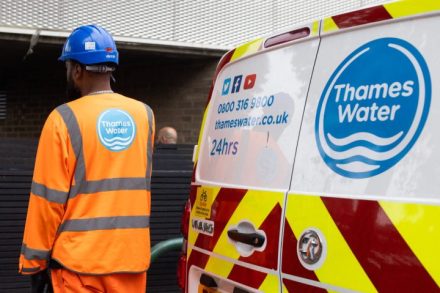
Why do the Conservatives find it so difficult to admit that the privatisation of public utilities has in many cases been a disaster? It was supposed to bring heaps of finance into public services, protect taxpayers from financial risk and bring prices down through competition. Yet we have ended up with energy prices fixed by Ofcom, a rail industry which is swallowing vastly more subsidy in real terms than British Rail ever did – with unions bidding up pay to astronomical levels and taxpayers forced to cough up to fund those rises. Royal Mail has flogged off valuable city centre development sites while it jacks up the price of stamps and tries to wriggle out of its obligation to deliver post six days a week.

You’re not being paranoid: smart meters are out to get you

From our UK edition

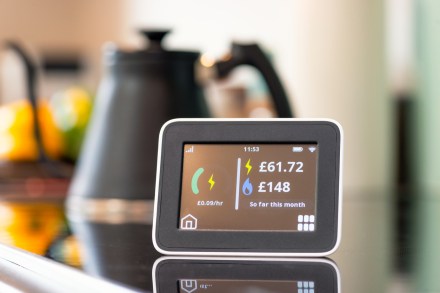
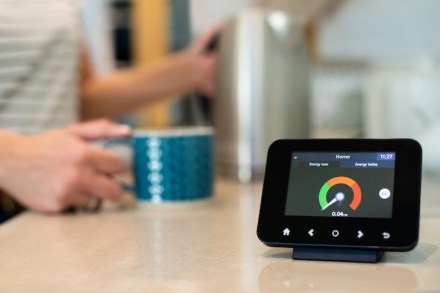
If anyone was still in doubt as to why the government is keen to press ‘smart’ meters onto us, those doubts will surely now be dispelled by the latest intervention of Ofgem, which has proposed abolishing the current electricity price cap and replacing it with a cap which varies throughout the day in response to the wholesale price of electricity. No, the smart meter sitting in your home is not there just to help you manage your electricity use – it is there to facilitate a future ‘dynamic’ pricing structure for electricity consumers. It is there so that we can be offered cheap electricity when wind and solar power is plentiful – and be hammered with Uber-style surge pricing when it is scarce.