Ross Clark

Ross Clark

Ross Clark is a leader writer and columnist who has written for The Spectator for three decades. He writes on Substack, at Ross on Why?

Stanley Johnson and the trouble with Green Tories

From our UK edition

I have a theory about intra-Johnson family politics. Some time in 2017 or 2018 Stanley agreed to shut up about his opposition to Brexit if Boris dropped his climate scepticism and threw himself wholesale into green issues. A truce between father and son certainly seemed to emerge around that time, and Boris, the man who a few years earlier had written that wind farms 'couldn’t pull the skin off a rice pudding' was reborn an environmentalist. If I am right, Boris sure kept his side of the bargain. But if so, Stanley evidently no longer feels bound to keep quiet about Brexit, or even to remain loyal to the party which his son once led and for which he once stood as a Westminster candidate.

What Labour gets wrong about inheritance tax

From our UK edition

What is the primary purpose of a tax: to raise revenue to fund public services or as a tool to help engineer society in a way which the government favours? It should disturb us that Darren Jones, the shadow chief secretary to the Treasury who is likely to be holding the real job by Friday, seems to believe the latter. Addressing a public meeting in Bristol in March he hinted that Labour will seek to increase inheritance tax, telling his audience 'you need to think of the inheritance tax as a way to redistribute money'. He added that a Starmer government will seek to use the tax to tackle 'inter-generational unfairness'. We will start to see punitive taxation This is not to say that inheritance tax is an unfair tax.

What Labour means for housing

From our UK edition

Labour appears to be planning to make housing a big priority for its first weeks in power, which is perhaps unsurprisingly, given that it will have gained power thanks in part to the growing number of frustrated young would-be homeowners. We are being led to expect a housebuilding bill within three weeks of Keir Starmer taking power, to effect the party’s promise to build 1.5 million new homes over the course of a five-year parliament. There is a very large Nimby tendency in the environmental movement Labour’s manifesto suggests what will be in it: local authorities will once again be set housebuilding targets, abolished under Rishi Sunak. There will be an extra 300 planning officers, funded, so it says, with higher stamp duty bills for overseas buyers of UK property.

The shame of Royal Mail’s postal vote delay

From our UK edition

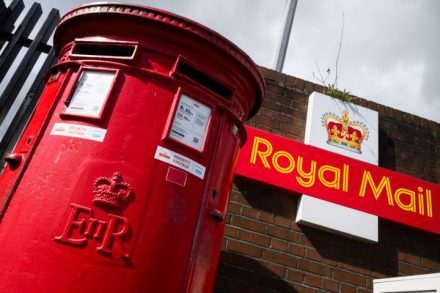
Britain’s creaking infrastructure and frequent paralysis of public services deserved to be a bigger factor in the election campaign than it has been. But could it now actually affect the result by disenfranchising some voters? A growing number of voters have complained about failing to receive their ballot papers in the post. Given that many people requested postal votes because they knew they were going to be away from home this week, it will now be too late for them to vote, even if delays are sorted out at the last moment. Come Friday, and the late arrival of postal ballots threatens to become a major scandal It is not just ballot papers, either, which have been delayed.

Proportional representation won’t save the Tories

From our UK edition

Members and supporters of the Conservative party do not generally speak in favour of proportional representation (PR) – which is hardly surprising given that the current system has given them 49 out of the past 79 years in power. There are exceptions: Ferdinand Mount, head of the No. 10 Policy Unit under Mrs Thatcher, briefly advocated it during the Conservatives’ long period out of office in the 2010s before changing his mind after the Conservatives returned to power. In a debate in 2019, Conservative MPs Dan Poulter (who defected to Labour earlier this year) and Derek Thomas spoke in favour. Whatever the iniquities of this week’s result, Conservatives should plot a path back to power within the current system, not seek to change it.

The problem with Reform’s plan to scrap Net Zero money

From our UK edition

Never mind net zero – let’s spend the money on the NHS instead. That, in an echo of the infamous promise on the side of the Vote Leave battle bus, is what Reform chairman Richard Tice announced this morning at the party’s latest press conference. Achieving net zero, he said, would cost £30 billion a year. Drop that and the party would be able to spend more money on the NHS. Reform’s plans, he said, would involve spending an extra £5 billion a year on extra NHS staff, £7 billion a year on commissioning independent treatment for NHS patients and £3 billion on tax relief for people using private healthcare. With a contingency, he said, that would come to £17 billion a year.

The bookies must learn from the Westminster betting scandal

From our UK edition

Nothing excuses the behaviour of the Conservative MPs, party officials and police protection officers who took a flutter on the date of the general election, but honestly, what did the bookmakers expect? If you are going to offer odds on events which come down to the decision of one individual or organisation you can hardly be surprised when you receive a flurry of bets which might be traced back to inside information. The past fortnight has been one big advert for political betting The political betting scandal has similarities to the spot betting scandal of 2010 involving the Pakistan test cricket team, three members of which were later convicted of defrauding bookmakers after being caught in a sting by the News of the World.

The Greens’ heat pump plan won’t work

From our UK edition

‘I’m literally in the process of getting quotes’ may well make it into the pantheon of feeble political excuses alongside ‘I did not inhale’ or ‘I was just watching badgers’. They were the words uttered by Green party co-leader Carla Denyer to explain why her home is still heated with a gas boiler rather than a heat pump – something her party advocates for others. She went on to say that she has some quotes for heat pumps in her email inbox but that she has had to put the project ‘on pause’ during the general election campaign. When Denyer does get around to opening those emails – which I suspect won’t be in the flat above No. 10 – she may gain insight into why most homeowners have been resistant to politicians trying to persuade them to install a heat pump.

How has Farage fallen for the idea that the West provoked Russia?

From our UK edition

Nigel Farage enjoyed a combative exchange with Nick Robinson in his BBC Panorama interview this evening, and acquitted himself well on many issues. True, the tax cuts and spending rises in his manifesto don’t add up – they rely on a rather over-hopeful expectation of the economy, as indeed do Labour’s. But then Farage is honest that he is not really selling us a programme for government, only giving an indication of the issues on which Reform UK will be pressing if succeeds in gaining a Commons presence. Therefore, his party can get away with some loose budgeting. But at the same time Farage made his first big error – and one that could cost him dearly among many of his potential voters.

Economic recovery has come too late for Sunak

From our UK edition

Today’s retail sales figures, showing that volumes increased by 2.9 per cent in May after a fall of 1.8 per cent in April, provide yet another sign of economic recovery. But there must be a horrible and growing realisation in Downing Street that it is all coming too late – and that it will be an incoming Labour government which benefits from economic recovery. Rishi Sunak is doomed to end up looking a hopeless PM As for the sales figures themselves, they are not as dramatic as they might at first appear. Rather, the plunge in sales in April, followed by the sharp rise in May, shows how volatile these statistics are.

Lawfare: how Starmer will govern through the courts

From our UK edition

40 min listen

This week: Lawfare Our cover piece examines how Keir Starmer’s legal experience will influence his politics. Ross Clark argues that Starmer will govern through the courts, and continue what he describes as the slow movement of power away from elected politicians. As poll after poll predicts an unprecedented Labour majority, what recourse would there be to stop him? Ross joined the podcast to discuss alongside solicitor and commentator Joshua Rozenberg (02:15). Next: we’ve become accustomed to the police wearing cameras, but what’s behind the rise in bodycams in other industries? In her article this week, Panda La Terriere highlights the surprising businesses that have begun using them, but what are the implications for daily life and how concerned should we be?

The Surrey oil judgment undermines our democracy

From our UK edition

The Conservatives are in favour of granting licences for new oil and gas extraction; Labour is against it. But what does it matter what either party have put in their manifestos when the Supreme Court has just asserted the right to decide Britain’s energy policy for us? In a judgment this morning the Supreme Court decided that Surrey County Council was wrong to determine a planning application for a small oilfield near Gatwick Airport without considering the carbon emissions which would be released in burning the product.

How Keir Starmer plans to rule through the courts

From our UK edition

Never mind Labour’s promise not to raise income tax, national insurance or VAT – the party will soon be jacking up taxes for everyone. That sums up the Conservatives’ attack line for this election campaign. But in focusing almost wholly on tax, the Tories are missing what threatens to become the real theme of a Keir Starmer government: the eclipse of elected politicians and the continued draining away of power to the courts. The Labour leader effectively decriminalised assisted dying in 2009, before he was even an MP According to polls, Labour is heading for a majority of more than 200. That in itself would clip the wings of the House of Commons.

It shouldn’t be surprising that a Muslim son of immigrants is funding Reform

From our UK edition

Should it really be a surprise that Zia Yusuf, a Muslim entrepreneur who made his fortune setting up a company that runs an app providing concierge services for posh blocks of flats, has chosen to support Reform? It is clear that Mr Yusuf has not thrown his lot in with Reform in spite of its policies on migration, but because of them. Britain, he says, has ‘lost control of its borders’, adding, ‘my parents came here legally. When I talk to my friends they are as affronted by illegal Channel crossings, which are an affront to all hard-working British people but not least the migrants who played by the rules and came legally.

What’s the real reason Jim Ratcliffe is backing Starmer?

From our UK edition

On the face of it, there could hardly be a better example of a turkey voting for Christmas than the news that Jim Ratcliffe has come out and backed the Labour party. Yes, a Brexiteer who owns one of Britain’s six oil refineries really is throwing his weight behind Keir Starmer, a man who wanted to frustrate Brexit through a second referendum and whose party is committed to speeding up net zero by refusing to issue new licenses for oil and gas extraction in the North Sea and by decarbonising all power by 2030. Clearly, Ratcliffe is not stupid, so is he suffering from Stockholm Syndrome, or is there some expedience in his political declaration? Ratcliffe has no doubt worked out that there will be plenty of public dosh on offer I suspect the latter.

Why the Tories’ tax black hole attack on Labour will backfire

From our UK edition

The Conservatives love trying to reduce their estimates for the cost of a Labour government down to a neat per-household figure, which makes it easy for voters to appreciate but comes with the danger that the figure will fall apart on closer examination. That is what happened with Rishi’s Sunak’s claim, made in his ITV two-way debate with Keir Starmer, that Labour is planning tax rises of £2,000 per household. That turned out to be over four years rather than one, as many people might have assumed, and turned out to rely on all kind of assumptions which were made by Conservative party researchers rather than the Treasury officials to whom the Prime Minister tried to attribute the whole exercise.

David Cameron is driving voters into Farage’s arms

From our UK edition

Who on earth at Tory campaign HQ thought it was a good idea to send Lord Cameron into battle to attack Nigel Farage and try to head off the gathering threat from Reform UK? In an interview with the Times today, the Foreign Secretary accused Farage of dog-whistling. He may well be right: it doesn’t take too much imagination to see how Farage's assertion that Rishi Sunak 'doesn’t understand our culture' will have gone down with some voters. The trouble is, though, that Lord Cameron reminds many Reform-leaning voters of everything they dislike about the Tories. He represents the privileged, patrician wing of the Conservative party – the toffs and landowners, the green welly, ‘get orf my land’ brigade.

Starmer wants to go for growth – but will he end up like Liz Truss?

From our UK edition

Keir Starmer, it turns out, was a secret Liz Truss fan all along. Launching his party’s manifesto this morning he is going to tell us that growth will be the overriding preoccupation of his government. That, if you remember, is what the Truss premiership was going to be all about: ‘growth, growth, growth.’ How is he going to generate growth, and in a way that doesn’t have him landing flat on his face like Truss herself? Starmer has decided that he is going to take the levellers and the greens head-on. ‘Some people say that how you grow the economy is not a central question – that it’s not about how you create wealth but how you tax it, how you spend it, how you slice the cake, that’s all that matters. This manifesto is a total rejection of that argument.

When will the Greens get real?

From our UK edition

There is something a little refreshing about the Green party. In contrast to Rishi Sunak, who has no option but to carry on pretending he has the slightest chance of remaining in Downing Street after 4 July, Green party co-leader Adrian Ramsay admitted at his manifesto launch this morning that his party isn’t looking to form the next government. The party’s realistic hope seems to be to double its number of Commons seats, from one to two. Nevertheless, the Greens do have a full manifesto for government, so let’s do it justice by taking it seriously. Mercifully, the Greens seem to have not bought into the fashionable concept of ‘degrowth’ (i.e., permanent recession). In fact, there is a rash of spending promises that seem to rely on a rapidly-growing economy.

Sunak’s National Insurance pledge could backfire

From our UK edition

Two years ago, as Chancellor, Rishi Sunak chose to jack up National Insurance contributions. It is a mark of how all over the place this government has been that cutting NI has now emerged as Sunak’s big idea.  Fairness to the Conservatives seems to mean the self-employed being excused from a 6 per cent tax which is paid by employees Abolishing the main rate of NI for the self-employed by the end of next parliament is the one eye-catching initiative which was not trailed before the launch of the Conservative manifesto – the now customary ‘rabbit out of the hat’. Employees will get an NI cut, too – their rate will fall to 6 per cent by 2027. But there is a clear risk with Sunak’s strategy. Employees might feel a little hard done-by by comparison.